avatarCosmic Wonders

Free AI web copilot to create summaries, insights and extended knowledge, download it at here

3510

Abstract

have been deposited when the young Earth was bombarded with asteroids and comets.</p><p id="d644"><b>Asteroids.</b></p><p id="19d1">In July 2019, an asteroid with an estimated diameter of between 57 and 130 metres came very close to the Earth; it was only 73,000 km from the surface of our planet, which is less than one-fifth of the distance to the Moon. In 2004, a much larger asteroid named Toutatis came as close as 4 times the distance of the Moon and measured 5 km across.</p><figure id="be4e"><img src="https://cdn-images-1.readmedium.com/v2/resize:fit:800/1*QOjDMDfA8jm6v-38VJDD-Q.jpeg"><figcaption>Image by <a href="https://pixabay.com/users/urikyo33-11404887/?utm_source=link-attribution&amp;utm_medium=referral&amp;utm_campaign=image&amp;utm_content=6075441">urikyo33</a> from <a href="https://pixabay.com/?utm_source=link-attribution&amp;utm_medium=referral&amp;utm_campaign=image&amp;utm_content=6075441">Pixabay</a></figcaption></figure><p id="3f09">The Earth has not always been so lucky in the past; there are a few places on Earth that were the target of large asteroids. One such place is in South Africa, the Vredefort crater, estimated to have happened 2 billion years ago. The asteroid is thought to have been 10 km wide, excavating a hole ten times the depth of the Grand Canyon and leaving a crater 300 kilometres wide.</p><p id="e274">Most of the features of that impact were eroded a long time ago. When looking at the Moon, visual evidence can still be seen of the many asteroid and meteor impacts that have occurred in the past.</p><p id="10d8">The Earth is different as it is very efficient at eroding most of the evidence; wind, rain, floods, ice ages, and plate tectonics all help to constantly reshape the surface of our planet.</p><p id="5350">In reality, the Earth, being larger and having more of a gravitational pull than the Moon, will have been impacted more often.</p><p id="7440">Asteroid Day, or International Asteroid Day, takes place annually on June 30. It aims to raise awareness globally of the dangers to the human population and all other life on our planet.</p><p id="30a4">A black hole is an area in space that holds a large amount of matter squeezed into a small volume. A black hole’s gravity is so strong that anything venturing too close will be consumed. Nothing in the universe has enough escape velocity to break free from its massive gravitational pull, not even light, hence its name, a “black hole.”</p><p id="5f19">Scientists can pinpoint where black holes are positioned in space due to the unusual movement of stars close to them.</p><p id="a253">A stellar black hole is formed by the gravitational collapse of a massive star when it comes to the end of its life. There could be hundreds of millions of them in our galaxy alone. When a massive star collapses, it can have the equivalent of 20 Sun masses or more packed into a small space.</p><figure id="c242"><img src="https://cdn-images-1.readmedium.com/v2/resize:fit:800/1*3Y7n7p2dvWInIAkJWpp-Vw.jpeg"><figcaption>Image by <a href="https://pixabay.com/users/geralt-9301/?utm_source=link-attribution&amp;utm_medium=referral&amp;utm_campaign=image&amp;utm_content=4118711">Gerd Altmann</a> from <a href="https://pixabay.com/?utm_source=link-attribution&amp;utm_medium=referral&amp;utm_campaign=image&amp;utm_content=4118711">Pixabay</a></figcaption></figure><p id="905a">Supermassive black holes are found in the centre of large galaxies; the biggest could be TON 618, with an estimated mass of ove

Options

r 60 billion times the mass of the Sun.</p><p id="42fe">Black holes don’t scour the universe, gobbling up everything in sight, but if something gets too close to one, there will be no turning back.</p><p id="3e7a"><b>We have now been travelling for 3 billion years.</b> By this time, the Earth’s average surface temperature will be roughly 150 degrees Celsius, and the Sun will be approximately 30% hotter than it was when we left our home planet.</p><p id="f5cd">Pulsars can vary in size from 10 to 15 km in diameter; they are highly magnetised rotating neutron stars. The first one was discovered in 1967. They are fascinating objects for astronomers to study. They can spin at tremendous speeds, from one rotation per second (slow pulsars) to hundreds of rotations per second (millisecond pulsars).</p><p id="ddc3">Their strong magnetic field and fast spin create flashing beams of light that can be detected on the Earth. Millisecond pulsars can spin for billions of years, but eventually, they will slow down. The only object in the universe with more gravity than a pulsar is a black hole.</p><figure id="f4c1"><img src="https://cdn-images-1.readmedium.com/v2/resize:fit:800/1*IsFj-bI68mEKaIM-er8IQA.jpeg"><figcaption>Image credit: X-ray: NASA/CXC/George Washington Univ./N.Klingler et al; Optical: DSS; Radio: CSIRO/ATNF/ATCA</figcaption></figure><p id="7aff">So far, well over 3,000 pulsars have been detected, but the number of discoveries keeps growing. 99% of the known pulsars reside within our galaxy. The closest one to the Earth is PSR JO108–1431, with an estimated age of 166 million years.</p><p id="b21e">Quasars are found at the centre of young galaxies and are thought to be powered by large amounts of mass being pulled into supermassive black holes. These black holes are thought to contain millions or even billions of times the mass of our sun.</p><p id="53d3">When matter nears the event horizon, particles accelerate at a very high speed and emit electromagnetic radiation. Quasars emit energies of millions, billions, or even trillions of electron volts, and this energy can outshine all the light within their galaxy.</p><p id="c05b">They can shine between 10 and 100,000 times brighter than the Milky Way. It was 1964 when they were given the name quasars, and around 750,000 have been observed. The closest quasar to the Earth is at an incredible distance of 600 million light-years.</p><p id="6d04">Hypernovae are thought to be extremely energetic supernovae and possibly the most powerful explosions that have occurred in the universe since the Big Bang; they could have energies up to 100 times greater than a supernova explosion.</p><p id="3c1b">Astronomers think hypernovae could explain the mysterious phenomena known as gamma-ray bursts, which occur randomly in space and can be detected on Earth. Once they fade away, some are never detected in that area of space again.</p><p id="fab9"><b>part 14</b></p><div id="ab73" class="link-block"> <a href="https://readmedium.com/our-space-journey-part-14-56185d316c36"> <div> <div> <h2>Our Space Journey, part 14</h2> <div><h3>Come and join me</h3></div> <div><p>medium.com</p></div> </div> <div> <div style="background-image: url(https://miro.readmedium.com/v2/resize:fit:320/1*sXXVpS8S8LBicL7CO6NsAA.jpeg)"></div> </div> </div> </a> </div></article></body>

Our Space Journey, part 13

Image by Yuri_B from Pixabay

British spelling

To make sense of my story and obtain the best knowledgeable experience, please go to the beginning and read part 1 here.

Part 13.

Looking back again, 2 billion years have passed since leaving home, and by all predictions, I think it would be fair to say that there is zero chance of any life living on Earth; all life will have become extinct a very long time ago. The sun will be about 20% hotter than it was when we started on this long journey.

It is highly unlikely that any water remains on the Earth’s surface; it will have evaporated and added to the atmosphere.

When we left our world behind all those years ago, there was plenty of water and perfect temperatures, which produced the right conditions for life to flourish.

Water was so important for the evolution of life on Earth. It is a transparent, odourless liquid that forms the seas, lakes, and rivers and is the basis of all living things.
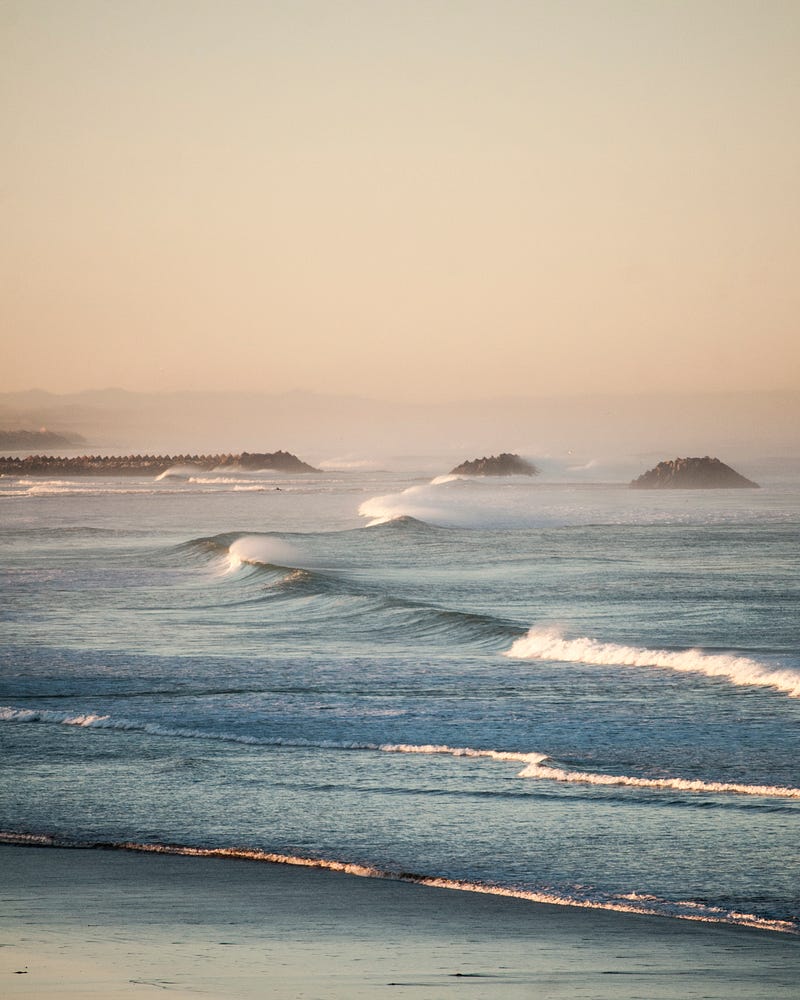
Photo by Juli Kosolapova on Unsplash

Water covers just over 70% of the Earth’s surface; it also makes up 60% of the human body, so you can see how important water is to our species and all other life.

The total volume of water contained on and around the Earth is approximately 1,386,000,000 cubic kilometres; freshwater accounts for only 10,530,000 cubic kilometres.

At any one time, there could be as much as 13,000 cubic kilometres of water in the atmosphere.

It is just as well that the surface of the Earth has deep oceans and high mountains; if our planet were a smooth sphere, there would be no dry land, and the depth of the water all around the globe would be roughly 2.7 kilometres.

If that were reality, then we land-dwellers would not exist.

In the early universe, hydrogen was already in existence; oxygen came along later, maybe as soon as 600 million years after the Big Bang.

Oxygen was manufactured in stars by nuclear reactions. At the end of some stars’ lives, oxygen was blasted far out into space. That is where oxygen atoms met up with hydrogen atoms; they bonded in the coldness of space to create water. A water molecule consists of two hydrogen atoms and one oxygen atom.

The universe is abundant in water in the form of ice. Scientists are unclear as to why there is so much water on Earth. It is reasoned that some water existed when the Earth was being formed, and the remainder is thought to have been deposited when the young Earth was bombarded with asteroids and comets.

Asteroids.

In July 2019, an asteroid with an estimated diameter of between 57 and 130 metres came very close to the Earth; it was only 73,000 km from the surface of our planet, which is less than one-fifth of the distance to the Moon. In 2004, a much larger asteroid named Toutatis came as close as 4 times the distance of the Moon and measured 5 km across.
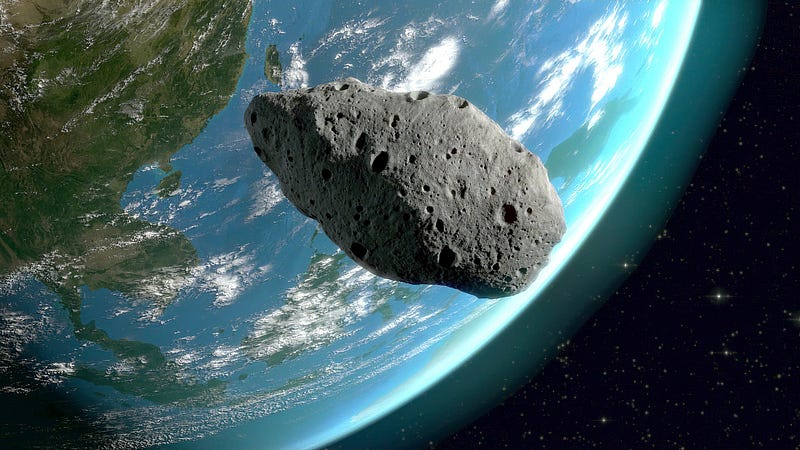
Image by urikyo33 from Pixabay

The Earth has not always been so lucky in the past; there are a few places on Earth that were the target of large asteroids. One such place is in South Africa, the Vredefort crater, estimated to have happened 2 billion years ago. The asteroid is thought to have been 10 km wide, excavating a hole ten times the depth of the Grand Canyon and leaving a crater 300 kilometres wide.

Most of the features of that impact were eroded a long time ago. When looking at the Moon, visual evidence can still be seen of the many asteroid and meteor impacts that have occurred in the past.

The Earth is different as it is very efficient at eroding most of the evidence; wind, rain, floods, ice ages, and plate tectonics all help to constantly reshape the surface of our planet.

In reality, the Earth, being larger and having more of a gravitational pull than the Moon, will have been impacted more often.

Asteroid Day, or International Asteroid Day, takes place annually on June 30. It aims to raise awareness globally of the dangers to the human population and all other life on our planet.

A black hole is an area in space that holds a large amount of matter squeezed into a small volume. A black hole’s gravity is so strong that anything venturing too close will be consumed. Nothing in the universe has enough escape velocity to break free from its massive gravitational pull, not even light, hence its name, a “black hole.”

Scientists can pinpoint where black holes are positioned in space due to the unusual movement of stars close to them.

A stellar black hole is formed by the gravitational collapse of a massive star when it comes to the end of its life. There could be hundreds of millions of them in our galaxy alone. When a massive star collapses, it can have the equivalent of 20 Sun masses or more packed into a small space.
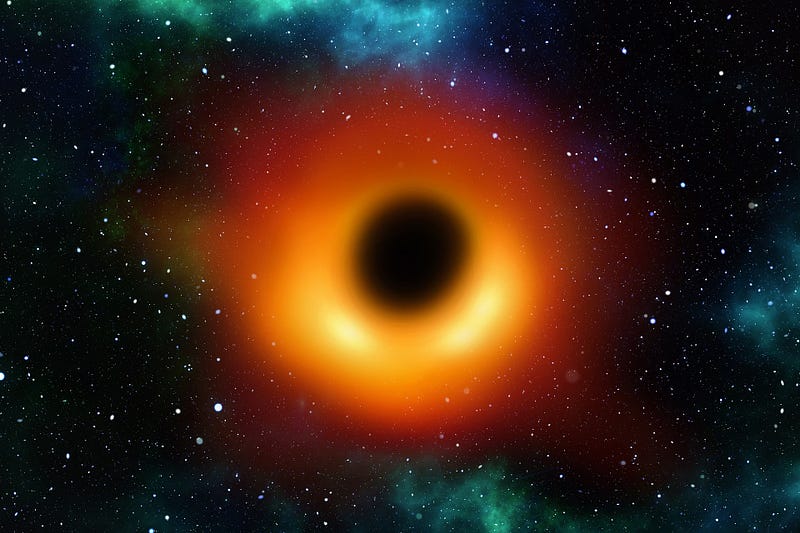
Image by Gerd Altmann from Pixabay

Supermassive black holes are found in the centre of large galaxies; the biggest could be TON 618, with an estimated mass of over 60 billion times the mass of the Sun.

Black holes don’t scour the universe, gobbling up everything in sight, but if something gets too close to one, there will be no turning back.

We have now been travelling for 3 billion years. By this time, the Earth’s average surface temperature will be roughly 150 degrees Celsius, and the Sun will be approximately 30% hotter than it was when we left our home planet.

Pulsars can vary in size from 10 to 15 km in diameter; they are highly magnetised rotating neutron stars. The first one was discovered in 1967. They are fascinating objects for astronomers to study. They can spin at tremendous speeds, from one rotation per second (slow pulsars) to hundreds of rotations per second (millisecond pulsars).

Their strong magnetic field and fast spin create flashing beams of light that can be detected on the Earth. Millisecond pulsars can spin for billions of years, but eventually, they will slow down. The only object in the universe with more gravity than a pulsar is a black hole.
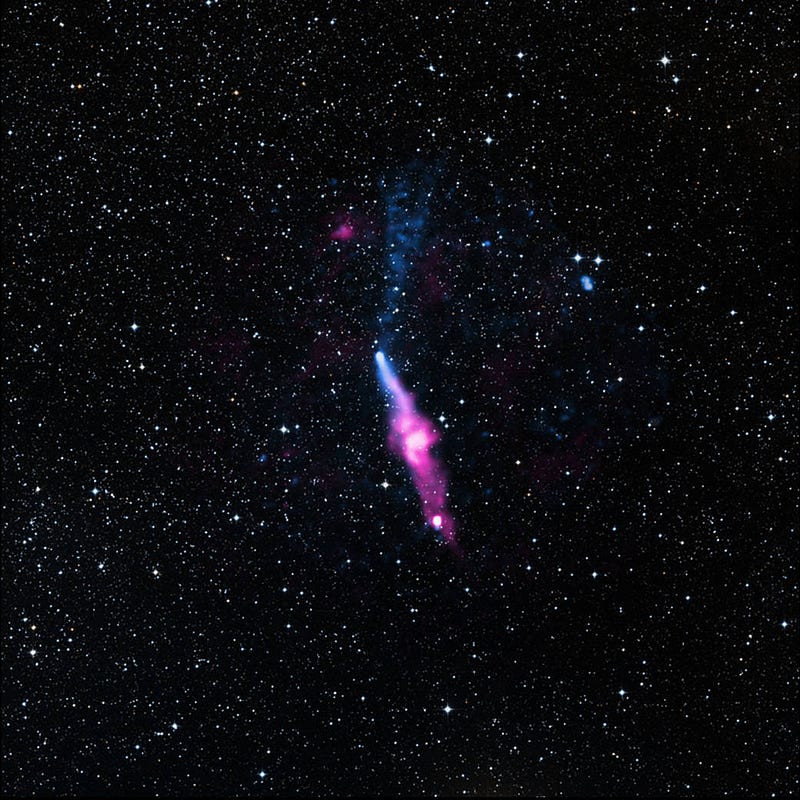
Image credit: X-ray: NASA/CXC/George Washington Univ./N.Klingler et al; Optical: DSS; Radio: CSIRO/ATNF/ATCA

So far, well over 3,000 pulsars have been detected, but the number of discoveries keeps growing. 99% of the known pulsars reside within our galaxy. The closest one to the Earth is PSR JO108–1431, with an estimated age of 166 million years.

Quasars are found at the centre of young galaxies and are thought to be powered by large amounts of mass being pulled into supermassive black holes. These black holes are thought to contain millions or even billions of times the mass of our sun.

When matter nears the event horizon, particles accelerate at a very high speed and emit electromagnetic radiation. Quasars emit energies of millions, billions, or even trillions of electron volts, and this energy can outshine all the light within their galaxy.

They can shine between 10 and 100,000 times brighter than the Milky Way. It was 1964 when they were given the name quasars, and around 750,000 have been observed. The closest quasar to the Earth is at an incredible distance of 600 million light-years.

Hypernovae are thought to be extremely energetic supernovae and possibly the most powerful explosions that have occurred in the universe since the Big Bang; they could have energies up to 100 times greater than a supernova explosion.

Astronomers think hypernovae could explain the mysterious phenomena known as gamma-ray bursts, which occur randomly in space and can be detected on Earth. Once they fade away, some are never detected in that area of space again.

part 14

Pulsar
Quasar
Event Horizon
Supermassive Black Holes
Water Molecule
Recommended from ReadMedium