
Our Cosmic Infancy: Why We’re Lagging on the Kardashev Scale
The existence of extraterrestrial civilizations remains a hypothesis, yet science entertains the idea that perhaps we aren’t alone in the Universe. Furthermore, scientists consider that in countless galaxies, there might be beings representing a level of advancement that we may hypothetically achieve only after many centuries. Over the years, several methods for ranking potential extraterrestrial civilizations have been developed, but the Kardashev scale has gained the most recognition among astrophysicists and astronomers.

Nikolai Kardashev undoubtedly belongs to the ranks of the most eminent astrophysicists. He was a graduate of Moscow University and one of the pioneers in Soviet research on extraterrestrial life. He advocated the idea that there exists an infinite number of civilizations in the Universe. In 1964, shortly after the first scientific conference dedicated to SETI issues, he proposed a hypothetical classification of highly developed forms of extraterrestrial life. Kardashev’s classification was exceptionally simple (the document was only five pages long) yet incredibly practical, swiftly gaining worldwide recognition.
Types of civilizations, or the Kardashev scale
As a classification criterion, Nikolai Kardashev adopted the amount of generated energy in his work. The Soviet scientist assumed that while various variables might emerge in different conditions of civilizational development, a constant value distinguishing primitive civilizations from advanced ones is their energy consumption.
The scientific community had to agree with this assertion because humanity itself is a clear example of its validity. With the rapid advancement of civilization, in the last 50 years, our ever-growing energy needs have forced us to triple our energy supply and explore new sources. The more extensive the knowledge base, the greater the energy demands. More available energy leads to greater access to new research methods, and progress accelerates. It’s an evident correlation that cannot be denied.
Based on this assumption, Nikolai Kardashev pointed out three stages of civilization development. It’s crucial to emphasize that there’s an enormous technological leap between each phase, achievable through thousands of years of evolution (perhaps even longer).
Type 0 Civilization
The first stage, or “zero,” isn’t part of the original Kardashev scale. However, the addition of this developmental phase was necessary, which I’ll explain further in the article.
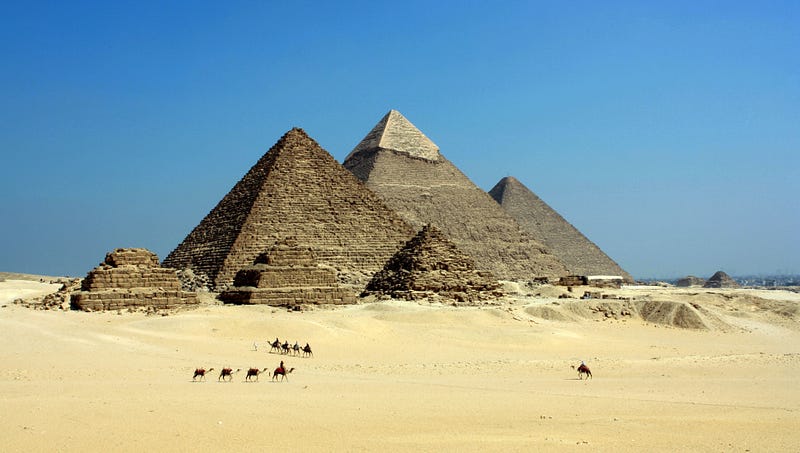
Within Type 0, intelligent beings possessing basic civilizational and social abilities are classified. They lead herd-like lives, communicate through symbols, understand and practically utilize basic economic systems, and introduce a certain form of organization within their occupied territory. They can build structures and harness energy from their immediate environment. For Earth-like conditions, this might include energy derived from burning solid fuels like wood.
Type 1 Civilization
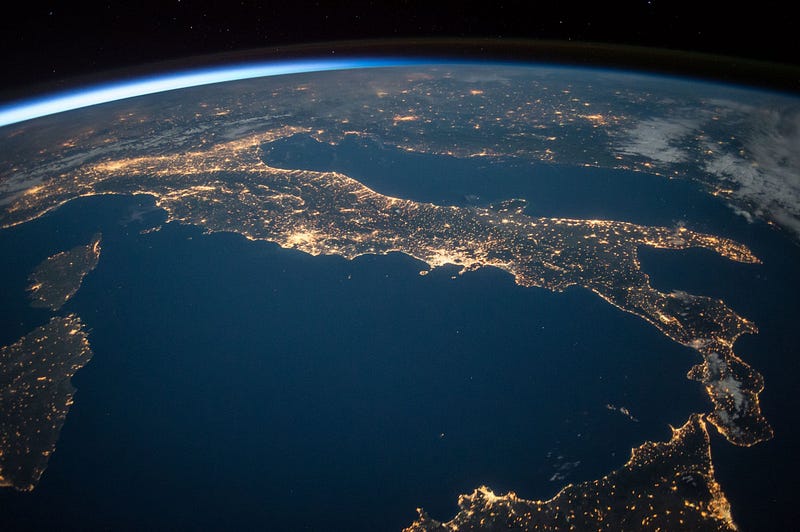
The original Kardashev scale suggests that intelligent beings of the lowest level, Type 1, can utilize all the energy available on their inhabited planet. This ability should grant them significant control over the planet. In practical terms, if applied to Earth as an example, when humanity reaches this level of development, it could restrain natural disasters or mitigate their effects. The estimated potential of such a civilization also includes control and utilization of thermonuclear reactions.
Type 2 Civilization
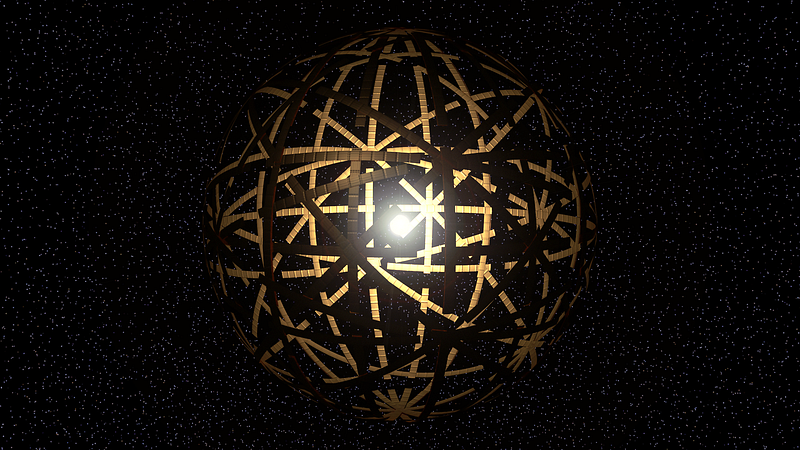
According to Nikolai Kardashev, a Type 2 civilization can harness all the energy emitted by its parent star (for Earth, this would mean the complete utilization of solar energy). According to the scale’s assumptions, such advanced beings could colonize their planetary system. Harnessing all the energy generated by the parent star would be possible through surrounding arrays of devices.
It’s worth mentioning that this concept was proposed before Kardashev by Freeman Dyson, an American physicist. The system of solar cells surrounding a star was named Dyson Sphere.
Type 3 Civilization
The highest stage of civilization development in the Kardashev scale presupposes the ability to harness energy comparable to the light energy emitted by an entire galaxy. This doesn’t only refer to the energy from millions of stars but also the energy generated by black holes. This capability would enable interstellar travel. Kardashev proposed that such highly developed beings would likely control a galaxy.

Types of Civilizations Beyond the Kardashev Scale
Isaac Asimov expanded Kardashev’s method of hierarchizing hypothetical extraterrestrial civilizations. The American biochemistry professor and science fiction writer added further levels of development to the scale.
In his view, a Type 4 civilization would be capable of utilizing all the energy available within its supercluster. On the other hand, a Type 5 civilization would harness the energy of the entire universe.
The subsequent two stages of development imply the existence of multiverses (parallel worlds). In this context, a Type 6 civilization would be capable of tapping into the energy from multiple universes. Representatives of a Type 7 civilization, on the other hand, would be considered “god-like,” possessing the ability to create and annihilate universes.

What level of development does humanity represent?
If one were to rely solely on the original Kardashev scale, humanity would be classified as Type 1. However, this would be a mistaken assumption because we still cannot harness the full extent of energy available on our planet. This is where the role of the previously mentioned zero level begins. Indeed, according to the Kardashev scale, humans are at zero.
Perhaps not entirely zero, as we are getting closer to the first level. At the lowest rung of Type 0 hierarchy are the earliest Earth civilizations. It’s often claimed that the ancient Egyptians were the earliest representatives of this level. However, it’s essential to highlight that the Sumerian civilization, older than the Egyptian one, also fits the criteria at the scale’s beginning. The representatives of the first Mesopotamian civilization knew cuneiform writing, erected megalithic structures, organized their lives in cities, engaged in trade, and had a hierarchical society. Hence, it’s fair to recognize that the Sumerians fulfilled all the prerequisites to classify them as the first Type 0 civilization.
Where does contemporary civilization stand on the Kardashev scale? According to scientists, we represent a level of development equal to 0.72. Researchers reached this conclusion based on Carl Sagan’s formula, which heavily relies on the amount of energy produced annually worldwide. At the turn of the 19th and 20th centuries, humanity was at a development level of 0.58. By the end of the 20th century, we had reached a 0.7 level. Thus, it’s evident that we are getting closer to advancing to Type 1. When will this happen?

The Vision of Humanity’s Development
There are various assumptions about the pace of our civilization’s development. Michio Kaku, an American physicist, predicts this will occur in the year 2100. However, the latest computer simulations conducted by researchers at Cornell University, utilizing Sagan’s formula, suggest that the leap to a higher level will only happen in approximately 350 years.
They reached these conclusions by analyzing the supply and consumption of energy from three main sources: fossil fuels (such as oil, natural gas, and coal), nuclear energy, and renewable energy. Environmental constraints resulting from ongoing climate changes were also factored into their calculations.
What does the future of humanity’s development look like? According to futurologists, the foremost expectation is the advancement of nanotechnology, which will drive progress in medicine. Innovative non-invasive surgery techniques will become available. Robotics will also develop, with robots present on battlefields, armies armed with exoskeletons and advanced kinetic weaponry. Armed forces will possess suborbital aircraft and hypersonic missiles. Energy objectives will be achieved through small nuclear cells. Supersonic intercontinental travel will become more prevalent.
Upon reaching Type 1, colonization of other planets will begin. Cyborgs, the integration of the brain with machines, will emerge. Weaponry will utilize plasma energy. Nanotechnology will leap into femtotechnology.
All this might sound like science fiction today. However, it’s worth considering the stage of development humanity was at the turn of the 20th century and where we are now. Yet, one worrying aspect in the futurologists’ vision is the significant development of military technologies. In this context, a pertinent question arises: will our civilization manage to survive the next 350 years, the time period scientists estimate we need to reach the next level of development?
Attention all readers!
As content creators on Medium.com, we face minimal compensation for our hard work. If you find value in my articles, please consider supporting me on my “Buy Me a Coffee” page. Your small contributions can make a big difference in fueling my passion for creating quality content. Thank you for your support!


.png)
.jpg)