
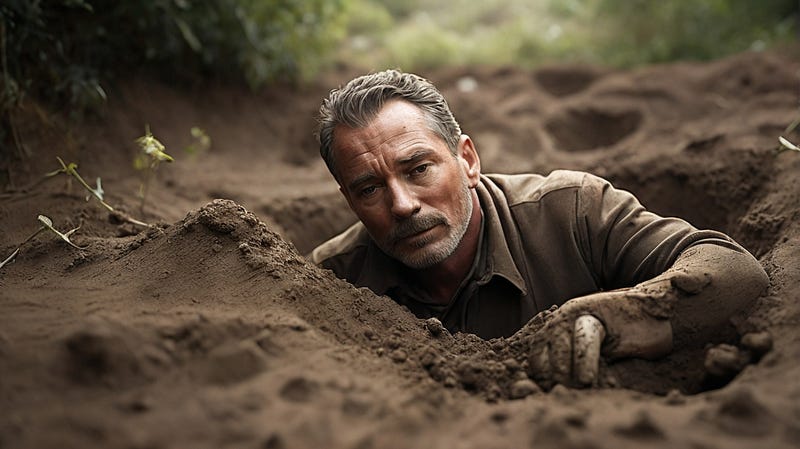
Taenatophobia is the fear of being buried alive. Have such cases really occurred?
People who have never suffered from any form of this condition consider the phobia as an irrational, incomprehensible fear. For those afflicted by this disorder, their illness is a battle against their own mind, an opponent that often seems unbeatable — without specialized help. Since ancient times, humans have feared various things and phenomena. One of the most severe forms of uncontrolled, paralyzing fear is taenatophobia.
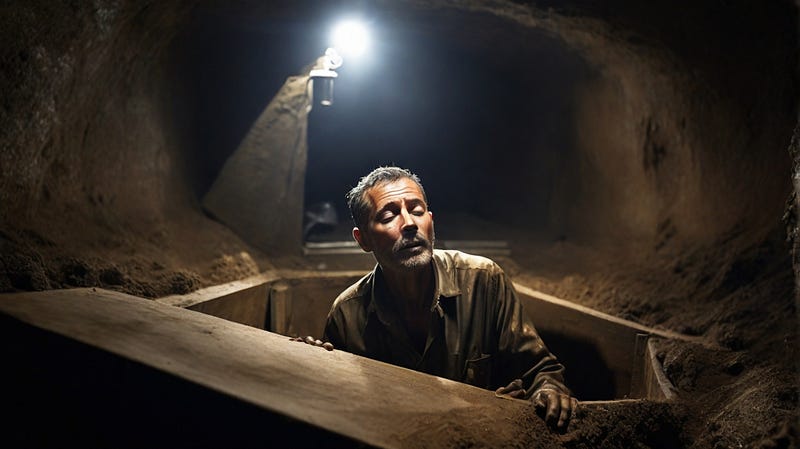
Phobias take on various forms. Some are terrified of insects (entomophobia), others fear dirt and germs (mysophobia), while some cannot control their fear at the mere thought of darkness (nyctophobia). What do people suffering from taenatophobia fear? Being buried alive.
The origin and symptoms of taenatophobia
It’s challenging to pinpoint when the first cases of this condition appeared worldwide. Fear of premature burial was documented as early as the 16th century. Taenatophobia gained strength during the Enlightenment era, from the late 17th to the early 19th century. During this time, Christian doctrines began to be questioned, and death was increasingly discussed as the ultimate end of life. This further fueled the fear.
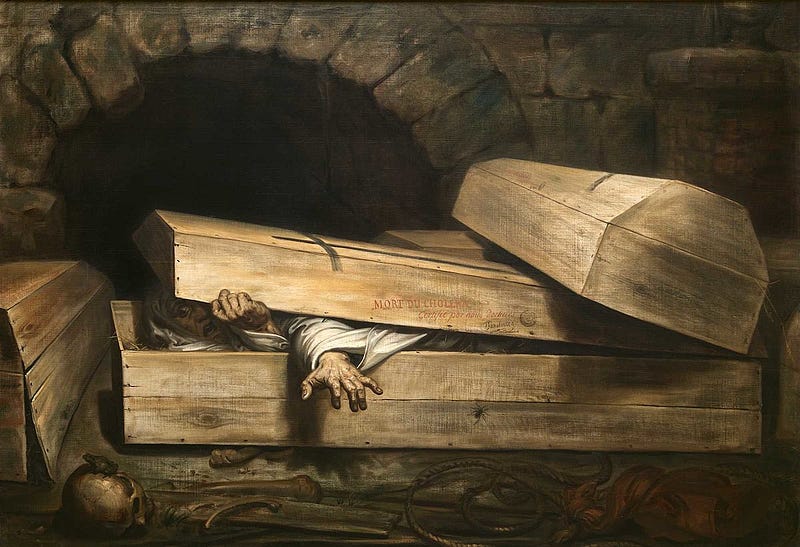
The 19th century, in turn, witnessed a peak of panic that took on the form of a mass phenomenon. Why? Because Europe was struck by successive cholera epidemics. Bodies of the deceased were hurriedly buried. It’s important to note that at that time, death was determined by the absence of detectable pulse and breath. Rushing, coupled with relatively limited medical knowledge compared to today’s standards, led to situations where still-living individuals were placed in graves. There were instances where physicians pronounced death based on misleading evidence, while the diagnosed person was in a state of coma, lethargy, catatonia, or even fainting. Thus, the root of taenatophobia lies in a lack of trust in doctors and other medical professionals.
How does this disorder manifest?
The symptoms of taenatophobia resemble those that appear in other anxiety disorders, including:
- trembling hands,
- excessive sweating,
- palpitations,
- insomnia,
- recurring panic attacks,
- varying degrees of depressive episodes.
Many people suffering from taenatophobia avoid any places associated with death, such as cemeteries, hospitals, or hospices.
Where does taenatophobia come from? Historical cases of premature burial
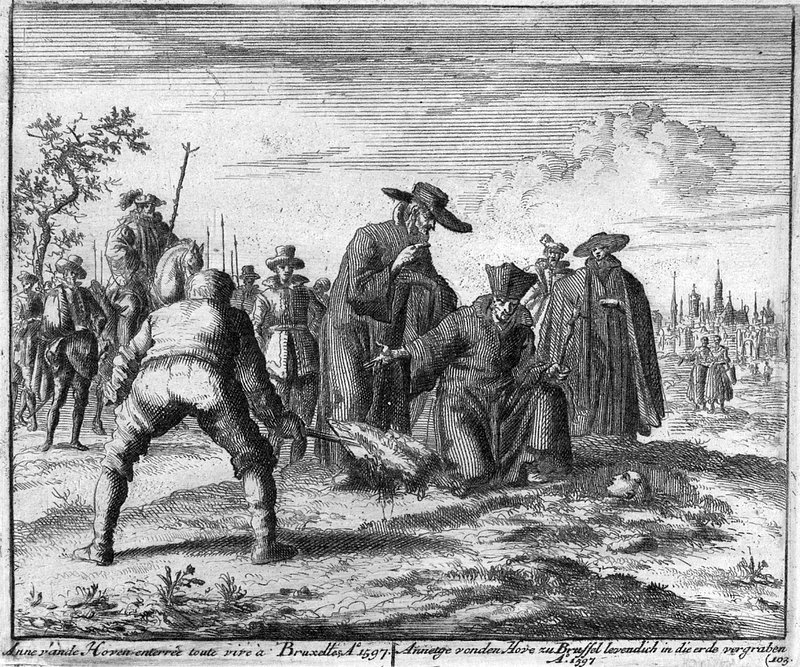
Today, stories of premature burial cases sound so improbable that they might seem like repeatedly told legends that people began to believe. Nothing could be further from the truth. History holds numerous cases of misdiagnosed death leading to the premature burial of living individuals.
One of the most famous incidents is the burial of Mary Hart on October 16, 1872. A young orphan under the care of her aunt, Sarah Hart, collapsed while doing household chores. The girl’s burial took place later that same day. Her guardian was haunted by nightmares all night. The next day, she requested the clergyman who conducted the ceremony to permit the exhumation of the grave. Upon opening the coffin lid, a horrifying sight met their eyes. Deep scratches were visible on the wooden boards. Mary’s fingers were scraped down to the bone, and her face was frozen in a grimace of panic.
Let’s rewind to the 16th century. Andreas Vesalius, a Flemish scholar and creator of modern anatomy, clandestinely performed dissections. When he incised the body of a nobleman under study, the man suddenly came to life, or rather, regained consciousness.
.PNG)
Premature burial also befell Nikolai Gogol, the Russian writer, and playwright (March 4, 1852). Several years after his burial, his grave was exhumed, revealing that his body was positioned unnaturally. What makes this story most chilling is the fact that Gogol suffered from taenatophobia. Therefore, if the positioning of his body indeed resulted from awakening in the coffin, his greatest fear had come true.
These are just a few examples of premature burials. Are they true? It’s hard to determine. History isn’t always clear, as evidenced by the so-called “black legend” about the burial of Father Piotr Skarga. The Polish Jesuit was said to have been buried in a state of suspended animation. However, this was never unequivocally confirmed, and many suggest that these rumors were deliberately spread to hinder the clergyman’s beatification process.
Not every premature burial can be confirmed, but historians have no doubt that such cases occurred. They point out that these incidents were not as widespread as believed. Undoubtedly, the panic was fueled by 19th-century press, for which sensational stories were a driving force for sales. Writers specializing in horror literature also contributed their share. The theme of premature burial was addressed in works by authors such as Edgar Allan Poe.

Taenatophobia — Rituals and Practices Used in Treating Fear
Press reports and dark narratives created an atmosphere of fear. People terrified of being buried alive started seeking solutions to avoid this dreadful fate. To prevent it, a ritual of several days of vigil over the deceased was adopted. Although this tradition has different origins, during the widespread fear of premature burial, it began to serve as confirmation that the deceased person was indeed dead.
Other methods, often bordering on the macabre, were also employed. To confirm death, doctors would rub tobacco onto the gums of the deceased. There were also instances of piercing the body with needles, pouring molten wax on it, or burning it with metal. Drastic? Undoubtedly. However, the most terrifying practice was the severing of the fingers of the deceased.
Today, we know that the lack of reaction to pain stimuli is not proof of death. However, in times when medical knowledge couldn’t match today’s standards, erroneous diagnoses still led to cases of premature burial. Thus, people sought other, more practical solutions. What were they?
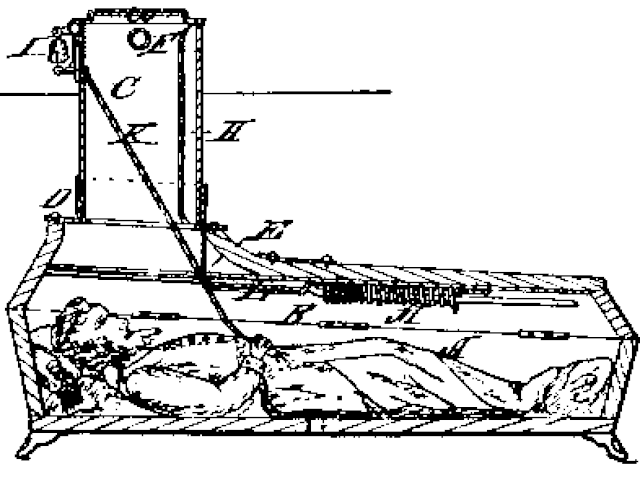
To enable buried individuals to contact the outside world, strings connected to bells were placed inside coffins. Whistles served the same purpose. Channels providing airflow were also installed. Mausoleums were constructed to allow escape to the outside.
These solutions were immensely popular in England and the United States, among other places.

Prominent Figures Afflicted by Taenatophobia
Taenatophobia affected individuals from all social classes. The irrational fear of being buried alive afflicted both simple peasants and well-known personalities. Hans Christian Andersen was one of them. The Danish fairy tale writer feared that his family might mistake a deep sleep for death. Guided by this fear, he left a note by his bedside, explaining that he was still alive. As his days neared their end, in his final will, he requested to have his veins opened before his burial. Alfred Nobel expressed a similar wish for the same reason before his death.
Another great figure afflicted by Taenatophobia was Fryderyk Chopin. The composer ordered that his body be opened and his heart removed on his deathbed. Other well-known individuals tormented by the irrational fear of premature burial include George Washington, Fyodor Dostoevsky, and Arthur Schopenhauer.
Taenatophobia in Contemporary Society
Do we still fear premature burial? Yes, taenatophobia has not been forgotten. Although it occasionally happens that a person declared dead “comes back to life,” such cases are very rare. The law prohibits burial within 24 hours of death being certified (with certain exceptions). Nevertheless, the fear persists, as evidenced by the tradition in Ireland of running strings with bells into coffins. Worldwide, there have been instances of burying the deceased with mobile phones.
The continued interest among writers and filmmakers in the theme of premature burial is a testament to the fact that fear remains relevant. Stephen King, for instance, confronted the fictional story of a man declared dead but ending up on the dissecting table after being bitten by a spider in his narrative “Autopsy Room Four” (published in the collection “Everything’s Eventual”). It raises the question of whether popular culture taps into our fears or whether it generates fear itself. Nevertheless, the dark vision of premature burial still evokes strong emotions.
Attention all readers!
As content creators on Medium.com, we face minimal compensation for our hard work. If you find value in my articles, please consider supporting me on my “Buy Me a Coffee” page. Your small contributions can make a big difference in fueling my passion for creating quality content. Thank you for your support!

