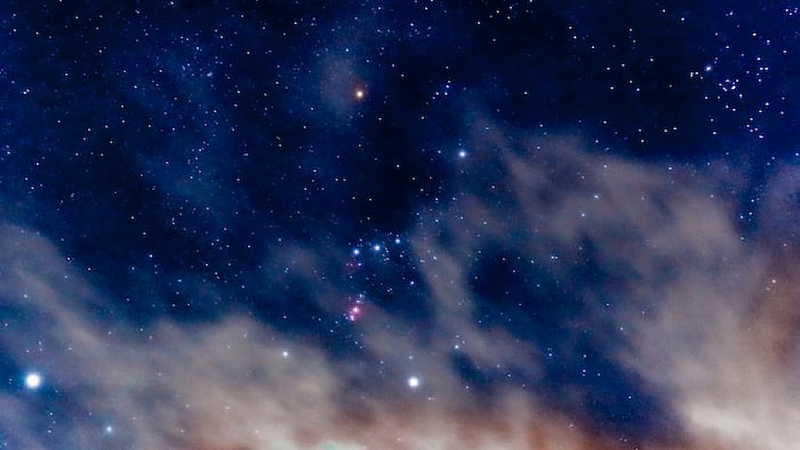
Orion the Mighty Hunter, What Magnetism You Hold
Response to reciprocal nature prompt: shining stars.
It is becoming nearly impossible to see the stars and distant galaxies at night. To an amateur star gazer they were visible ten years ago. The culprit is the preponderance of artificial lights across America. I live in Iowa. Just look at a night time satellite image of our country. The only state that appears unscathed is Montana.
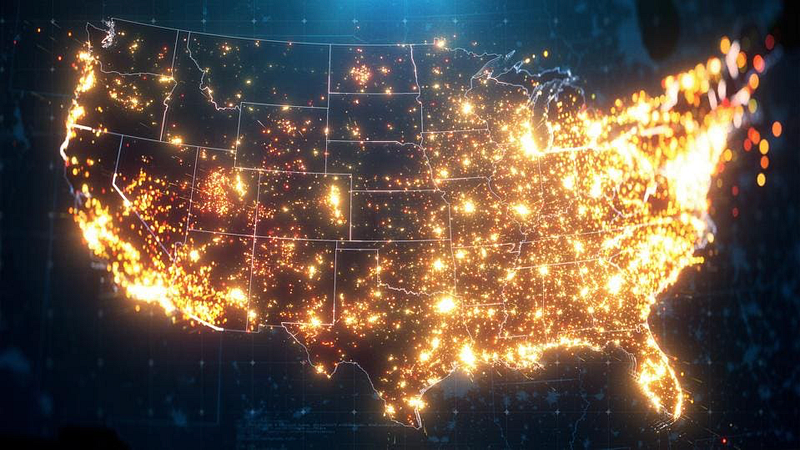
I remember as a young girl, the night sky fascinated me. The constellations were readily visible in the 1950s. It was easy to identify them. Now I go out at night in Iowa and the stars are indistinct, hard to see. Thank God, the one constellation that stands out is Orion from October to March.
It is easy to spot because of its blue white light. Its distinctive pattern is recognized around the world. Known as the hunter or warrior, he holds a club above his head. Orion’s belt consists of three bright stars. His sword which lies south of his belt contains a galaxy, the Orion Nebula.
Orion served as a compass of orientation for many civilizations over the years. It is often used as a calendar for planting and harvesting too. It’s considered to be one of the doors to heaven, the closest thing to divinity, by some of the ancients.
With a polluted sky I can’t see the constellations of Cassiopeia, Cepheus, Ursa Major or Ursa Minor. But on rare clear nights they stand out.
I remember a night camped on the boulder field in Colorado. My son, Paul, and I were leading 9 year old grandson, Chad, on a climb of Long’s Peak. It is 14,255 feet high in Rocky Mountain National Park. It has awesome granite faces and overhanging rock outcrops. Its distinctive square top makes it memorable.
Far away from city lights, the heavens revealed itself in all its glory. The Milky Way and thousands of stars shone above us. A sight that few get to see in America today. It was difficult to leave our unique sighting and crawl into the tent. But we had an early climb ahead of us in the morning.
Most of my best star viewings have been from mountain peaks. But another spot that is far from civilization is the Boundary Waters of Minnesota. An isolated wilderness canoe trip usually offers a star studded night. This is often accompanied by the music of busy beavers felling aspen trees. And wonder of wonders, an occasional wolf howling chorus. It doesn’t get any better than that.
I’m drawn towards Orion. Do I know you? I wonder — did I originate from the Orion galaxy? Whenever I see him, it’s like meeting an old friend. There’s an intimate memory I can’t quite grasp. My soul embraces his image with my whole being.
I’m thrilled that he still shines bright in the night sky. Other constellations are fading from the star gazer’s naked eye. Our artificial lighting is affecting bird and animal behavior. The worldwide lockdown during Covid gave our earth a chance to heal. Should we turn off all lights for a period of time? And observe the dramatic effect that would happen?
This post is written for the prompt suggested by Reciprocal Nature editor Sahil Patel.
Lisa Precious / Smiley Blue writes a beautiful poem about connecting to heaven during meditation.
Janin Lyndovsky writes a poignant article about the important effect of our words.


