
Optimism Is the Last Thing You or the World Needs Right Now
Welcoming home Stoicism, and how our future — individually and collectively — needs us to deal better with reality
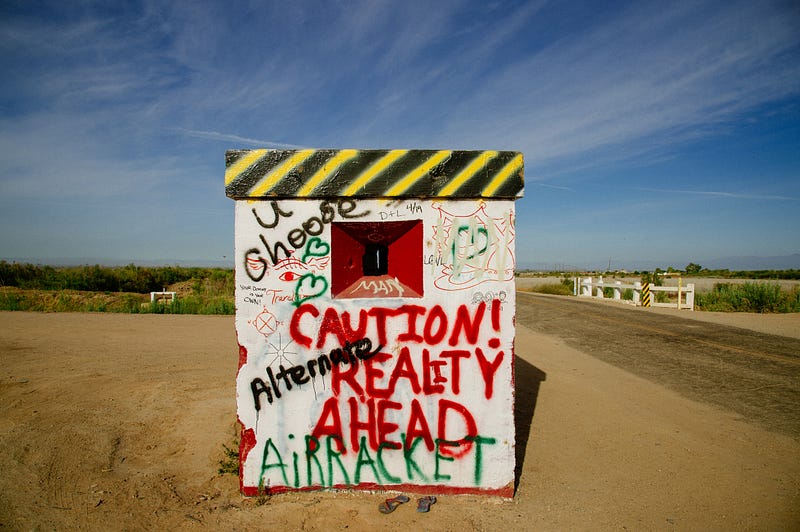
For the longest time, people have described me as the most optimistic person they know. But right now, I’m not quite sure it is a compliment. I’m beginning to see a more powerful way of seeing life.
On the surface, it may seem that decrying optimism risks being pulled down a slippery slope of hopelessness. But here’s a great irony: more power and positivity can be found in facing reality than by creating false optimistic hope.
The Great Decade of False Hope
I was a child of the 1980s. Eighties children are a unique breed; entirely separate from all other generations alive on the planet right now.
We grew up under different conditions to other generations. And I’m not talking about synthetic pop or colorful fashion. I’m talking about deeper social, economic, cultural undercurrents.
The 1980s was a period of economic boom and affluence. It was also the only decade that the West was not at war in the past eighty years — insulating us from the harsh realities the rest of the world experienced.
We watched on TV the ravages of apartheid in South Africa and the international boycotts that made us feel like we were actually doing something to change things. And when apartheid collapsed — through efforts that weren’t our own — we convinced ourselves how righteously powerful we were.
We saw the end of the Cold War. Within twelve months over 1989–90, the Berlin Wall and the Iron Curtain fell. Democracy prevailed and Eastern Europe could now benefit from the miraculous healing powers of capitalism. Or so we told ourselves.
Yet, the 1980s were in no way perfect. The moral failing in how governments responded to the AIDS crisis revealed how truly inequitable and accepting we really were (or weren’t). Demonizing gays absolved society of any sense of compassionate responsibility.
Instead, we focused on our accomplishments and turned our backs on reality. By 1989, it seemed, we won the decade. And despite the injustices, all we had to do was remind ourselves that things do eventually get better.
Spiritual bypassing and the power of positive thinking
My depression was already well-established by 1990, although we didn’t call it that then. Sadness, maybe. Anger was not respected as an emotion, even though underneath it all I was probably angry. I just learned to internalize it. Things would get better, or so I was told.
Out of concern for my wellbeing, my mother took me to a personal development seminar at fifteen. In hindsight, a therapist would probably have been more helpful. But therapy wasn’t for people like us. We were into self-help.
And I share all this with love and gratitude for my mother, who did her best with what we all knew. This thinking was not hers, but that of our culture. One that didn’t like to deal with things as they were. We liked to deal with things as they could be.
The personal development seminar is everything you could probably imagine. It was the palatable bastard cousin of self-help guru Werner Erhard’s controversial EST seminars.
There we learned about the power of positive thinking. I learned that reality doesn’t exist as we see it. The world is simply a reflection of what exists in our minds.
Now, to be fair, like anything there may be some truth to this. But when positive thinking is a way of avoiding reality, it’s basically like Afterpay for your emotions. Eventually, the bill comes due, but with a cost.
Hope is just an empty promise
I am a writer, and therein lies my great love for words. So, of course, I loved Obama. How refreshing it was to listen to a political leader who spoke so eloquently of justice and equality, especially having lived through the bottom-feeding politics of Australia and the US of the previous decade.
But Obama traded on hope, and hope is often little more than an empty promise. The rhetoric of hope played right into America’s messianic ideal of a presidential savior. In this sense, while opposites in demeanor and respectability, the phenomena of Obama and Trump were not all that different.
Each side saw their leader as the savior that would forever change America. But in the end, little substance survived. It is doubtful whether the country changed on a civilizational level because of them. In fact, they probably inadvertently fueled the problem.
Obama saw what happened. His farewell speech was not celebratory. In it, he sent several strong warnings about reality.
How do we excuse ethical lapses in our own party, but pounce when the other party does the same thing? It’s not just dishonest, this selective sorting of the facts; it’s self-defeating. Because as my mother used to tell me, reality has a way of catching up with you. — Barack Obama, Farewell Speech, 2017
I suspect Obama entered the office with very noble intentions, but ultimately saw the futility of placing so much trust and power in one person. It is unlikely Americans will give up their savior-seeking ways any time soon though.
Stoicism is the perennial comeback kid
“The chief task in life is simply this: to identify and separate matters so that I can say clearly to myself which are externals not under my control, and which have to do with the choices I actually control. Where then do I look for good and evil? Not to uncontrollable externals, but within myself to the choices that are my own . . .” Epictetus
The pandemic welcomed home Stoicism as the great balm for our age. A basic principle is of Stoicism is:
Change the things you can and accept the things you can’t.
Stoicism is almost the defining characteristic of the generation that grew up in the Great Depression. It forced a reckoning on how to deal with difficulty and change. And we are now in a great societal change not unlike that of the Depression.
Welcoming failure
I recently walked away from a career, relationship, and community to return to Australia. It was not an easy decision or move, but ultimately one I needed.
In the period of self-reflection since then, I’ve had this overwhelming sense that I somehow failed.
I recently shared this with a friend who was also known for her unending optimism. Out of an unasked-for need to encourage me, she kept listing all my successes — all the things I had done for the communities and causes I had contributed to.
While what she pointed out was correct, I had to tell her that ninety-nine successes could never make up for what I perceived as a singular and more monumental failure — how I fell asleep to myself.
It sounds dramatic to write that, but it is true. What on earth does “fall asleep to yourself” even mean? Without boring you with a complex backstory, I had stayed too long in a job that I had fundamental ethical issues with.
I had compromised my own values by focusing on the positives, or worse, by convincing myself things would change when there was no evidence they would. I fell asleep to my own values, or in other words, to myself.
I respect that this might seem heavy. But I can’t express how liberating it feels to honor my failure. And yes, while it does feel heavy at times, I don’t want to look away from it. If I truly connect with this deep inner reality, I hope to never compromise myself again in this way.
There is something inherently trustworthy about someone who honors reality.
A friend last year was invited to become principal of a rough school. He had no experience as a principal, but he was a great teacher, and more so an awesome human being. He got the job because no one else wanted it.
Upon entering, the school had a 17% satisfaction rate amongst teachers and parents, and the small school had over 250 suspensions in the previous year.
When Michael became principal, he didn’t sugarcoat anything. He made no promises or grandstand speeches of how he would change things.
Instead, he honored every complaint and grievance. He received abuse and negativity until eventually, he earned their trust. How? He honored their reality.
At the risk of short-changing his difficult and ongoing story of transformation, Michael talks about his role with love, grit, honesty, and detachment. Where other people would quit, he is looking forward to continuing the challenge of transforming the school.
In some ways, Michael may seem stoic. But I believe he possesses something greater than that. He was also unwilling to accept the things he couldn’t change. This takes courage and humility. He never pretended like he had the answer, but he does believe that an answer exists.
Progress starts with facing reality
The media reports around the pandemic are tiring. And perhaps the most exhausting sentiment is this falsely optimistic idea that we will someday get back to normal. As if 2019 was the pinnacle of civilizational achievement and bliss.
The principle of facing reality works on the personal and collective levels. I am a coach. It’s a modality largely focused on strengths. But equally, one must face the reality of their current situation, as therein lies some of the most powerful learning and discovery.
And the same is in the collective. Isn’t this the time to look at the harsh reality that our economy and society are inequitable and unjust? And inequity for some is inequity for all. The pandemic has amplified that. But we still carry on with this bizarre “let’s get back to normal” rhetoric.
Progress and change don't come through slogans of hope or campaigns that try to convince us that if we do “such and such,” life will automatically get better. People are done believing that stuff.
We need to learn to sit in the darkness. To honor that our failures are trying to show us what, where, and how we need to change — personally and collectively.


