avatarSheng-Ta Tsai

Free AI web copilot to create summaries, insights and extended knowledge, download it at here

3179

Abstract

counter a Christian who would look in my eyes and tell me a loud and unhesitating “Yes”. Including myself, when I was a practicing evangelical Christian. Almost all the apologetic classes I took (or taught, for that matter) would teach that “nobody knows for sure” should be Christians’ response to such question.</p><figure id="57f1"><img src="https://cdn-images-1.readmedium.com/v2/resize:fit:800/1*6OwriJkkOSbDsv_-C46PMg.jpeg"><figcaption>Photo by <a href="https://unsplash.com/@nachristos?utm_source=unsplash&amp;utm_medium=referral&amp;utm_content=creditCopyText">Nachristos</a> on <a href="https://unsplash.com/s/photos/not-sure?utm_source=unsplash&amp;utm_medium=referral&amp;utm_content=creditCopyText">Unsplash</a></figcaption></figure><p id="af78">But why?</p><p id="d0ac">If they do believe that salvation comes from faith alone, “I don’t know” should not be the standard response.</p><p id="0dfd">Christians will come up with all sorts of excuses. It’s when they can get really creative. In the following section, I will discuss two excuses that I encounter most frequently.</p><h2 id="0ff8">Excuse #1: If people did not have a chance to hear the gospel and died, God will judge them by their conscience instead of faith.</h2><p id="0fe7">But the whole point of Jesus coming down to earth and dying for humanity’s sin is that people are not able to save themselves by living out their conscience or by good deeds, right? The Bible is clear on this point. Romans 3:23 says, “For <b>all have sinned</b> and fall short of the glory of God.” Also Romans 5:12, “Therefore, just as sin entered the world through one man, and death through sin, and in this way death came to all people, because <b>all sinned</b>.”</p><figure id="3257"><img src="https://cdn-images-1.readmedium.com/v2/resize:fit:800/1*OYlx50blBOG3jIh19ddrrA.jpeg"><figcaption>Photo by <a href="https://unsplash.com/es/@loganrfisher?utm_source=unsplash&amp;utm_medium=referral&amp;utm_content=creditCopyText">Logan Fisher</a> on <a href="https://unsplash.com/s/photos/give-up?utm_source=unsplash&amp;utm_medium=referral&amp;utm_content=creditCopyText">Unsplash</a></figcaption></figure><p id="8e7f">So are Christians saying, “Well, actually, not all people have sinned. Some can still go to heaven by their own merit”? With or without themselves knowing the implications of this excuse, they have tossed out the doctrine of salvation by faith alone, just like that. I presume there could be a few Christians who do hold this view consciously and persistently, but most churches would disagree with them. Christians can’t have their cake and eat it too. Either they claim that nobody can be saved except through faith in Jesus Christ, or they claim that some can be saved (or save themselves) without a belief in Jesus. They can’t claim both views at the same time.</p><h2 id="2950">Excuse #2: We don’t know what was on the mind of the deceased people before they took their last breath. Maybe they did believe in Jesus after all.</h2><p id="2dee">This response conveniently dodges the problem of people having no chance to hear the gospel during their lifetime. Apart from that, it just sounds like denial. To

Options

give an example, Carl Sagan had been outspoken about his non-belief. If Christians say, “I am not sure if Carl Sagan is in hell now. He could have relinquished his atheism and embraced Jesus before he died,” doesn’t that sound disrespectful and/or condescending? They would be essentially refusing to acknowledge Sagan’s self-description. But this kind of response is all too common in reality. No one ever said that my grandparents, who died without believing in Jesus, are in hell now. Are Christians really that embarrassed to positively declare this “truth” they supposedly endorse with all their heart? It’s almost like part of their conscience still does not want to accept the doctrine that people will burn in hell for non-belief.</p><p id="7214">Furthermore, by the same logic, when Christians attend other Christians’ funerals, they should not say that the deceased is now resting in God’s bosom or something like that. They should say, “Well, I can’t be sure. Maybe they relinquished their belief and became an atheist at last. Who knows?” But you don’t hear Christians say stuff like that, do you?</p><figure id="5e4f"><img src="https://cdn-images-1.readmedium.com/v2/resize:fit:800/1*rHcrpf33jllYaGLp6V7W2Q.jpeg"><figcaption>Photo by <a href="https://unsplash.com/@20164rhodi?utm_source=unsplash&amp;utm_medium=referral&amp;utm_content=creditCopyText">Rhodi Lopez</a> on <a href="https://unsplash.com/s/photos/christian-funeral?utm_source=unsplash&amp;utm_medium=referral&amp;utm_content=creditCopyText">Unsplash</a></figcaption></figure><p id="47e5">There are other excuses, but I won’t cover them all in this short post. Please leave comments if you would like to discuss other responses you find helpful or unhelpful.</p><h1 id="3952">The Point</h1><p id="aace">Many Christians simply have not thought through the full implications of their belief system. They only focus on the aspects that appeal to them and soothe them, e.g. assuring them that they will go to heaven. So it’s quite easy to direct them to say things that are actually at odds with their fundamental faith statements, often without them realizing it.</p><p id="230d">The point is, the rest of us should not take their claims seriously, because they don’t themselves.</p><h1 id="cfd2">Further Reading</h1><div id="9ba9" class="link-block"> <a href="https://readmedium.com/christians-i-believe-you-are-better-than-this-68028566325c"> <div> <div> <h2>Christians, I Believe You Are Better than This</h2> <div><h3>Your rationality, humanity, and mental strength are more capable than what you are told.</h3></div> <div><p>medium.com</p></div> </div> <div> <div style="background-image: url(https://miro.readmedium.com/v2/resize:fit:320/1*8J1rgjCo4bcmdHr_XAGnJQ.jpeg)"></div> </div> </div> </a> </div><p id="3364">If you are not a Medium member yet, please consider signing up using my <a href="https://medium.com/@sttsai/membership">referral link</a>. I will get a small commission at no extra cost to you.</p></article></body>

One Way to Make Christians Instantly Toss out Salvation by Faith
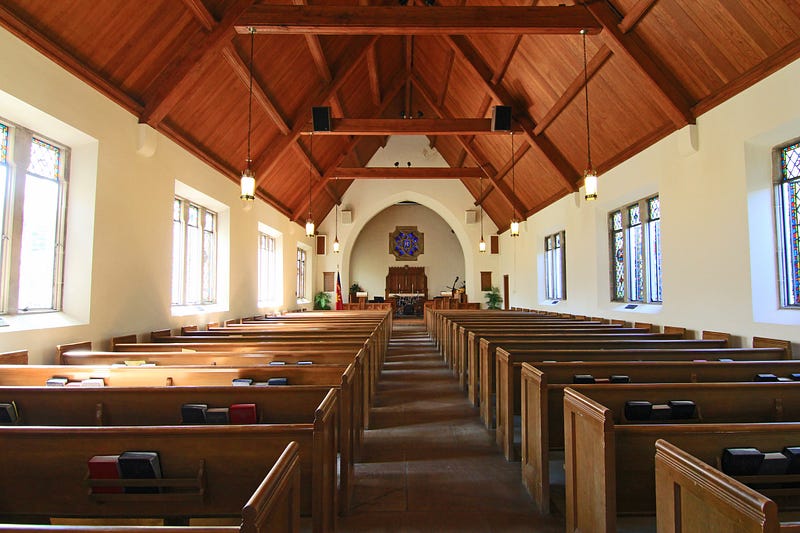
Photo by Debby Hudson on Unsplash

You may think that Christians are serious about this fundamental aspect of their faith, but you can actually ask them one certain question, and they will most likely throw out this doctrine eagerly to answer your question.

The majority of Christian churches teach that all people sin and are destined to go to hell. There is only one way out of this tragic fate: believing in Jesus. If you believe in Jesus, all your sins will be forgiven, and you can enter heaven after you die, enjoying eternal life forever. The idea is not that you have a higher chance of going to heaven, but that you will surely go to heaven; 100%, they say. As long as you hold on to your faith, your salvation is certain. This is the main sales pitch churches use to get new converts. After all, if you can be saved without believing in Jesus, or if you still can’t be sure you will be saved after conversion, the idea of becoming a Christian becomes far less appealing.

Not only that, but churches also use the doctrine of salvation by faith alone to get Christians to go out and spread the gospel. It’s almost like emotional blackmail, meant to make believers feel bad if they don’t do all they can to witness for Jesus, to win souls into heaven. “Do you really want to see your friends burn in hell forever? Because you certainly don’t look like you are taking this thing seriously.” It’s manipulative, but for those who are completely bought into it, they may feel they are doing the most important work in the world, and are proud of it.
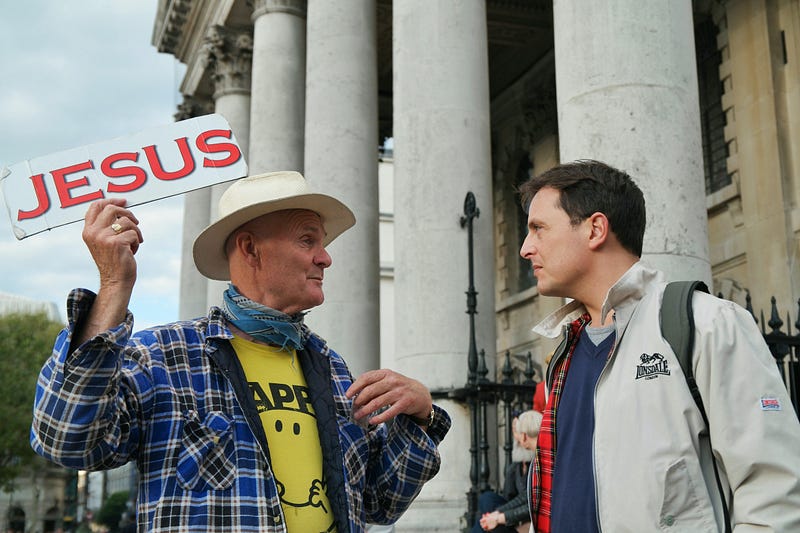
Photo by Malcolm Lightbody on Unsplash

But for most Christians, all that conviction is just superficial, meant to bring peace and assurance to themselves and tame their own doubt and fear of what’s going to happen after death. If you ask them the following question, they are more than happy to tell you that they don’t actually believe in that stuff:

So you are saying that my family members, including my ancestors, who have died without believing in Jesus, are all being tormented in hell now and forever?

The answers I got to this question are almost always the same: “Nobody knows for sure”. I have yet to encounter a Christian who would look in my eyes and tell me a loud and unhesitating “Yes”. Including myself, when I was a practicing evangelical Christian. Almost all the apologetic classes I took (or taught, for that matter) would teach that “nobody knows for sure” should be Christians’ response to such question.

Photo by Nachristos on Unsplash

But why?

If they do believe that salvation comes from faith alone, “I don’t know” should not be the standard response.

Christians will come up with all sorts of excuses. It’s when they can get really creative. In the following section, I will discuss two excuses that I encounter most frequently.

Excuse #1: If people did not have a chance to hear the gospel and died, God will judge them by their conscience instead of faith.

But the whole point of Jesus coming down to earth and dying for humanity’s sin is that people are not able to save themselves by living out their conscience or by good deeds, right? The Bible is clear on this point. Romans 3:23 says, “For all have sinned and fall short of the glory of God.” Also Romans 5:12, “Therefore, just as sin entered the world through one man, and death through sin, and in this way death came to all people, because all sinned.”

Photo by Logan Fisher on Unsplash

So are Christians saying, “Well, actually, not all people have sinned. Some can still go to heaven by their own merit”? With or without themselves knowing the implications of this excuse, they have tossed out the doctrine of salvation by faith alone, just like that. I presume there could be a few Christians who do hold this view consciously and persistently, but most churches would disagree with them. Christians can’t have their cake and eat it too. Either they claim that nobody can be saved except through faith in Jesus Christ, or they claim that some can be saved (or save themselves) without a belief in Jesus. They can’t claim both views at the same time.

Excuse #2: We don’t know what was on the mind of the deceased people before they took their last breath. Maybe they did believe in Jesus after all.

This response conveniently dodges the problem of people having no chance to hear the gospel during their lifetime. Apart from that, it just sounds like denial. To give an example, Carl Sagan had been outspoken about his non-belief. If Christians say, “I am not sure if Carl Sagan is in hell now. He could have relinquished his atheism and embraced Jesus before he died,” doesn’t that sound disrespectful and/or condescending? They would be essentially refusing to acknowledge Sagan’s self-description. But this kind of response is all too common in reality. No one ever said that my grandparents, who died without believing in Jesus, are in hell now. Are Christians really that embarrassed to positively declare this “truth” they supposedly endorse with all their heart? It’s almost like part of their conscience still does not want to accept the doctrine that people will burn in hell for non-belief.

Furthermore, by the same logic, when Christians attend other Christians’ funerals, they should not say that the deceased is now resting in God’s bosom or something like that. They should say, “Well, I can’t be sure. Maybe they relinquished their belief and became an atheist at last. Who knows?” But you don’t hear Christians say stuff like that, do you?

Photo by Rhodi Lopez on Unsplash

There are other excuses, but I won’t cover them all in this short post. Please leave comments if you would like to discuss other responses you find helpful or unhelpful.

The Point

Many Christians simply have not thought through the full implications of their belief system. They only focus on the aspects that appeal to them and soothe them, e.g. assuring them that they will go to heaven. So it’s quite easy to direct them to say things that are actually at odds with their fundamental faith statements, often without them realizing it.

The point is, the rest of us should not take their claims seriously, because they don’t themselves.

Further Reading

If you are not a Medium member yet, please consider signing up using my referral link. I will get a small commission at no extra cost to you.

Religion
Christianity
Jesus
Spirituality
Faith
Recommended from ReadMedium