
One of Japan’s First Serial Rapists and Serial Killers
He raped over 100 girls and killed seven.
Many great and not so great men have been written into history. Sometimes they are great heroes in battle or politicians fighting for freedom, other times evil dictators and mass murderers who wreak havoc on society. Similarly in Japan, some figures have brought great respect to this small island country, while others have brought shame and disgust.
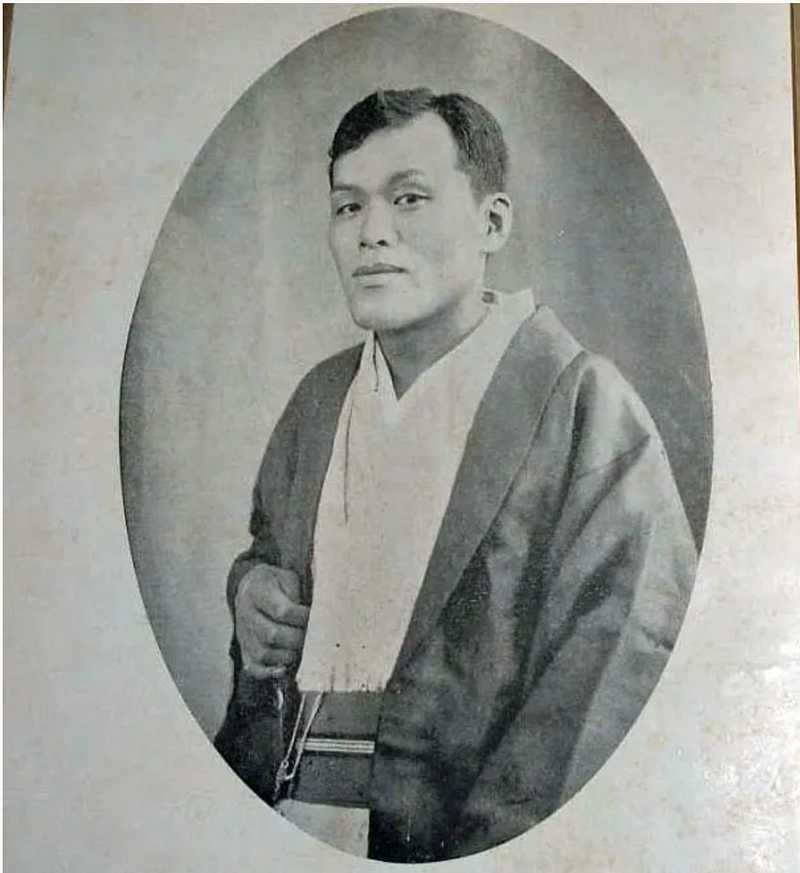
This is the story of a man named Sataro Fukiage, who is one of the earliest recorded serial killers in Japan. With a tough childhood, odd sexual encounters and experiences, and an escalating record of crimes, Sataro targeted over 100 girls as young as 4 years old. Why did he rape so many girls and women? How did he target his victims? What was his childhood like and what led him to commit murder?
Sataro’s Childhood
“The poor forget hunger with sexual pleasure.” -Sataro
Sataro was born in Kyoto, Japan in 1888. He was the oldest of many brothers and sisters and was part of a family of craftsmen and weavers. His father was a mechanical craftsman who married the daughter of an executioner and had Sataro when he was 21 years old. Though his mother was strong and motherly, she couldn’t control her husband’s alcoholism and cheating.
The family of six children all lived in a small dwelling and there was never enough food so Sataro would often go to sleep hungry. He slept in a small room with his parents and siblings so would often hear and see his parents having sex. He also wrote in his biography that he would often fondle his younger sister who slept next to him.
His family, desperate for money, sent Sataro at age 9 to be an indentured servant with a family of weavers. At first, he was happy because he received three meals a day, but working 18 hours a day, he would be beaten if he nodded off during work. He was caught stealing money and fired.
On and off he kept being sent to families as a servant and he would either run away or get fired for stealing. He was also kicked out at age 11 at a family’s home when he was caught sleeping with the 17-year-old maid.
When he was 13, he once again stole money from one of the families he was working at but this time was arrested. He was sent to Kyoto Prison.
Life In Prison
The prison was surprisingly good for Sataro. He preferred it to life with his family or as a servant. He received meals and most importantly, an education. His cellmate taught him math and Japanese and the prison officials treated him kindly as well.
After a year in prison, he was released and went to Osaka. During this time, his family had been kicked out of their home and were homeless drifters begging around Japan.
Sataro, with no money started working at a factory. But he wanted to go back to prison so he decided to order a meal then leave the restaurant without paying. He was caught by police and sent to a rehabilitation center.
Unfortunately, this rehabilitation center was being controlled by yakuza gangs and many gang members used it as a place to train and recruit members. Here, Sataro was given a different kind of education. He was taught how to pickpocket, steal and become a con artist.
Being released from the center he went out and used his skills to carry out various crimes, burglaries, and even rape. But wanting to reconnect with his family he went back to Kyoto and found that his home was gone and his family was homeless.
At age 16, Sataro then decided to continue robbing places, shoplifting and saving money so he could buy a place for his family to live. He was also able to buy equipment so his father could go back to work.
During his time as a thief, he was sleeping with many women. Some who were consenting, some who were not. He was in love with a 13-year-old girl but their relationship ended when her family moved away. He was then in a relationship with a 20-year-old woman but left her when he came back to Kyoto.
In Kyoto, he started living with an older woman who was in her 50s. He was sleeping with her but also raped her 11-year-old daughter. He was also caught raping the neighbor’s daughter and was kicked out.
Sataro’s First Murder
As Sataro kept wandering around from job to job and girl to girl, he also could feel a sexual deviancy in him that he felt was the devil. He later wrote in his autobiography that he felt like he had a split personality. One was a regular man, and the other a “colorful demon” who forced him to commit sexual and evil acts.
On September 24, 1906, when he was 17 years old, he ran into an 11-year-old girl he knew from his childhood near Kinkakuji Temple. He invited her to go pick locusts in the mountains together and she agreed.
While in the mountains, Sataro sexually assaulted the girl, then strangled her with a towel. When asked by police why he decided to kill this girl, he told them he was scared he would be caught since she knew him.
After raping and killing the girl, he was thinking of running away to Gunma Prefecture where there was a large population of weavers but he had no money and was caught by detectives before he could escape.
He was charged and convicted of the murder of the girl and was sentenced to life in prison. His defense appealed the decision but it was dismissed.

Sataro’s Rampage
Satoro remained in prison for only 15 years and was released early in 1922. During the time in prison, he had become engrossed in books, philosophy, religion, and a variety of academic topics. Once released he tried to find work and lead an honest life but he was fired from various jobs because of his criminal record or affairs with girls.
In 1922 he was caught trying to molest a 4-year-old girl but the case was dismissed. After being jobless and wandering around from town to town, he started becoming more frustrated with life and more violent with girls. He found a 16-year-old girl walking near Nagoya Castle and attacked her.
From 1923, in a span of 10 months, he raped both women and girls and ended up killing atleast six of them.
- In March, Kei Mizuno, a 16-year-old maid in a village in Saitama was assaulted and found dead.
- In April Chiyo Kato another 16-year-old was killed in the mountains of Gunma.
- In June, a 12-year-old girl named Hatsu Wakagi was found assaulted and killed in a mulberry field in Gunma.
- In August a 14-year-old girl Kichi Kobayashi was also strangled and left in a mulberry bush in Nagano.
- In September, a 13-year-old girl was found strangled in the mountains of Chiba.
A meeting of investigators of the Kanto area, including the Metropolitan Police Department confirmed that all the killings were done by the same offender as the method of killing and disposing of the corpse was always the same.
Police were trying to get as much information and find any witnesses that would help capture the culprit. However, on September 1, 1923, The Great Earthquake of Kanto occurred and because of the magnitude and destruction, the police investigations were called off.
Sataro’s Capture
After the earthquake, Sataro continued to rape and murder women throughout Tokyo and Yokohama. He attempted to rape the daughter of the rice shop owner he was working at but was caught and beaten by the father. He was arrested by Constable Ono.
Satoro apologized for the assault on the rice shop owner’s daughter and promised he would never do it again. He also had his brother act as guarantor and was given another chance. Had Constable Ono linked Sataro to the other rapes and murders he might have been captured.
Once the country had recovered from the earthquake, investigations into the serial girl murders continued, and a witness who said he saw a man with one of the girls came forward. With the description of the man, investigators were able to close in on Sataro.
When a picture of Sataro was shown to the witness, they identified him positively and the search for Sataro Fukiage began. His picture was distributed all over the country and Constable Ono who had captured and released Satoro once before, quickly went to Sataro’s brother’s house, found the location of Sataro, and arrested him.
Arrest and Sentencing
“One yen to buy nourishment is better than one yen to buy medicine.” -Sataro to parents about their children
Sataro was arrested by Constable Ono on July 28, 1924, when he was 36 years old. He was taken to the Tokyo Metropolitan Police department and questioned. He originally admitted to raping hundreds of girls and killing 13. But later he recanted and said he only killed six. Sataro told police,
“I have never seen a pleasant sun in my entire life, only dark days. I’ve done things so bad that I think it’s rare in the world, so I don’t have a clear memory of it all.”
In the end, Sataro was only tried for 3 of the rape and murder charges and convicted and sentenced to death. After the verdict, he yelled at the judge angrily saying, “I actually killed six.” His defense told him to control his anger by writing an autobiography which he did.
A 3000 page manuscript with his life stories, opinions about society, and message to parents of children were included in the book titled Shabu, which means The Street. On May 17, 1925, Sataro was sentenced to death. He appealed the next day but the Judge denied his appeal.
He pleaded with the Judge,
“I would like to write and publish the autobiography I am writing now. I want time to do so, so I appeal to the Court of Justice. I am not trying to escape my sins. As soon as the autobiography is completed, the appeal will be withdrawn.”
In July, once again the Supreme Court dismissed the appeal and Sataro Fukiage was executed on September 28, 1926. Although his book was published, it was banned from sale. In the book, he left five guidelines he felt would benefit society and would stop people from becoming like him and succumbing to evil. These were his five bits of advice to parents,
Don’t let your children feel sick or concerned
Try to give your children the best education
Try to play with your kids as much as possible and give them a lot of attention
If parents are grateful for their kids, the home can be a fun place
Avoid doing obscene or nasty things in front of your children
The life and struggle of Sataro is a complex one. At times, he is doing his best to take care of his family and bring them out of poverty. Other times, he is lashing out at innocent girls and sexually assaulting and strangling them. He is interested in literature and education and gives parents advice on how to raise their kids. Then he molests his sister and has a string of lewd affairs.
Regardless of whether Sataro’s crimes were a result of his “colorful demons” or because of his dire circumstances dealing with poverty and hunger, there is no doubt he had a troubled life.
Unfortunately along with his pain and trauma in his life, he also caused pain and trauma to hundreds of girls and their families. He may not be a great figure in history but he will be remembered as one of the cruelest sexual predators of girls and first serial killers in Japan.
If you liked this article, please check out these stories of true crime from Japan: