
The Story of a Sexual Predator and Serial Rapist Killer
He drugged and raped over 400 women and killed two.
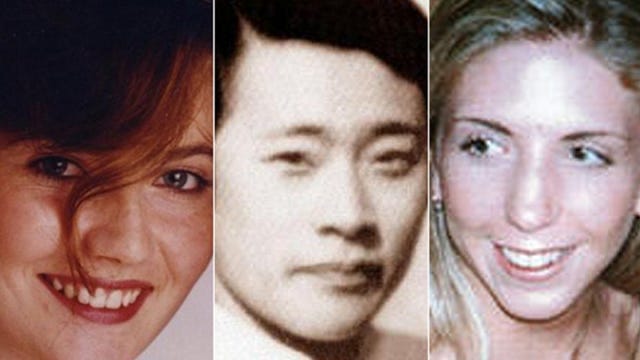
“I lost my daughter and everything we’d ever share with her. I’ll never know the grandchildren she might have had. Her future disappeared because one man wanted to satisfy some weird sexual urge.”
-Mother of Carita
Traveling to a foreign country for work is always a risk. With no friends, family or people you can trust to help or support you, it can be quite scary. Especially if you don’t speak the language. But sometimes, moving to another country and starting fresh can be more trouble than just finding an apartment or getting along with coworkers. It can sometimes become dangerous.
This story is about one of those dangerous people who took advantage of young girls coming to work in Japan. Using his vast amounts of money, connections and resources, he was able to convince more than 400 girls to come to his apartment.
What they thought was a nice, Japanese businessman wanting to speak English and share a drink with beautiful foreign women, turned into a date with a serial rapist who used drugs and chloryform to incapicitate and rape them repeatedly for hours. And unfortunately in at least two cases, it led to their death.
How did he find his victims? How was he caught? What happened to one of the most notorious sexual predators in Japan?
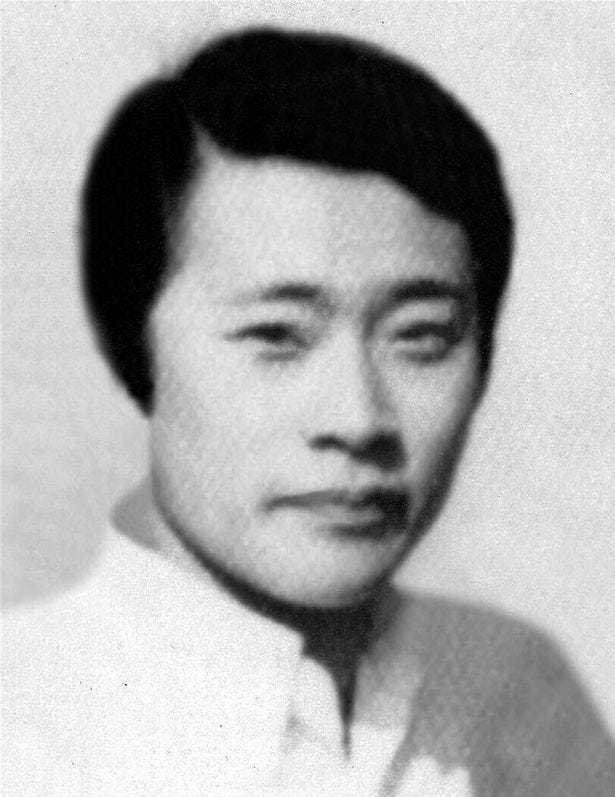
Joji
Joji Obara was actually of Korean descent. His real name was Kim Sung Jong. He later changed it to Seisho Hoshiyama in college to avoid discrimination from Japanese students and teachers. He then once again changed it to Joji Obara after becoming a naturalized citizen of Japan.
He was born in Osaka on August 10, 1952 and was one of three sons. His parents were of a lower middle class family in Japan. But his father was quite hard working and went from being a scrap collector to an owner of a chain of pachinko parlors. Pachinko parlors are slot machine centers popular across Japan.
Because of the wealth acquired by his father, Joji was able to go to elite private schools in Tokyo and received the highest education possible. He was a student at one of the most prestigious universities in Japan, Keio University where he graduated with a degree in politics and law.
Along with an elite university, he was also able to travel abroad and spent time in the US and Sweden during summers. He was fluent in English, was polite, social and also liked to live a comfortable lifestyle that was provided by his father.
Traveling to the US and Sweden, Joji felt inferior because of his Asian ancestry and the fact that he was only 5’5” tall. He would wear stilts in his shoes to seem taller, took growth hormones to help him grow taller, and even had surgery to make his eyes look more rounder like caucasians.
In the 1970s, Joji’s father died while on business in Hong Kong. As Joji’s father’s death occurred under “unknown circumstances,” it may have been connected to Japanese Yakuza gangs. Yakuza gangs often use pachinko parlors, love hotels, and other businesses to launder their money.
After Joji’s father died, he left his fortune to his sons. Joji used his assets to invest in real estate and property development in the 80s and 90s when Japan was having a boom. He was quite successful and it was reported that at one point he was worth up to $45 million dollars.
Along with all the money, Joji’s taste for the finer things increased. He purchased many luxury condos and apartments, various automobiles like Ferraris, Rolls-Royces, and Maseratis. He often dined at fancy restaurants and visited the most fancy hostess clubs around Tokyo. Hostess clubs are drinking bars where rich Japanese businessmen sit with beautiful women who pour them drinks and stroke their ego.
Unfortunately, with the burst of the financial bubble in Japan at the end of the 80s, Joji lost a lot of money, assets, and had to borrow millions putting him into debt. He also had to do business with the Yakuza gangs in order to stay afloat.
Since Joji was very secretive and very rarely caught on camera or among socialites, Joji’s darker secrets didn’t come out until 2000. In fact, Joji had a very devious and secretive life that he was able to hide for decades.
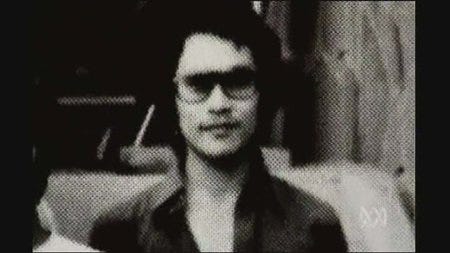
Joji’s Modus Operandi
Along with Joji’s access to cars, trips, and luxury items, he also had access to drugs. He was a drug user himself and used drugs to get what he wanted. And what he wanted was women. Especially beautiful, white women. Although he also admired Japanese women as well.
Joji would visit nightclubs and hostess clubs where he would target a woman he liked and would invite her to his beachfront apartment. He would then offer a drink spiked with rohypnol, also known as roofies. Once the woman passed out, he would tie them up and sexually assault them. He called this “conquer play”
The assault that would last upto 12 hours was filmed. Every time the woman seemed to be regaining consciousness, Joji would use a rag soaked in chloroform to knock them out again. After some women came forward, they told police they recalled drinking a wine given to them and waking up the next day feeling hungover and sore.
Joji would tell them they had drank way too much the night before and had passed out. He often told them he was at fault for making the women drink so much and would give them some money for their lost time and send them home. The girls were suspicious but couldn’t go to the police as they were working at the hostess clubs illegally and didn’t want to get in trouble and be deported.
After police raided Joji’s home years after the attack, they recovered hundreds of video tapes of the rapes as well as a journal with detailed entries on his conquests. The videos were sometimes 12 hours longs and Joji was often wearing a Zorro mask raping the women who were tied up. Joji enjoyed having sex with women who were unconscious or were feigning death.
His journals contained description such as,
“My goal is to have sex with 500 people by the age of 50,”
“I can’t do women who are conscious.”
“Women are only good for sex, I will lie on them. I will seek revenge. Revenge on the world.”
“Foreign hostesses are all ugly. Not in the sense of appearance, but in their minds.”
Then one entry contained the words, “Carita Ridgway, too much chloroform.”
It was this entry that police were able to match with one of the videos. In the video Joji is seen raping Carita while she is unconcious. Then when she starts moving, he covers her mouth with a chloroform soaked towel. Along with this video and journal entry, they also found a hospital receipt which was for the day when Carita was mysteriously brought to a hospital by a Japanese man named “Nishida.” Carita had died in 1991 and finally in 2000, police started to investigate her death.
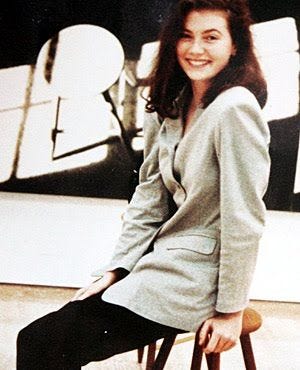
Carita Ridgway
Carita Simone Ridgway was born in Perth Australia in 1970. She was a model who decided to come to Japan to do modelling and teach English. The appeal of living in the glamorous Tokyo area and getting paid lots of money for being pretty and “foreign”, it was a good way for her to save money for acting school.
She arrived in Japan in December 1991. Her sister Samantha was already in Tokyo living with her boyfriend and teaching English. Carita only wanted to stay a few months to save some money for her and her fiance waiting for her in Australia. She unfortunately wasn’t able to find a job right away as a teacher so decided to use her looks to work at a hostess bar.
As a hostess, she wasn’t required to perform any sexual acts or strip. She simply dressed nicely, smiled, chatted, and poured drinks for rich businessmen. One of the customers of the hostess bar was Joji Obara.
On Valentine’s Day 1992, a group of businessmen and hostesses, including Joji and Carita, left the hostess club and went on a group dinner date. What happened during that date is not clear but most likely Joji chose Carita and invited her to his beachfront property for a drink.
Carita’s sister spent Valentine’s weekend at her boyfriend’s home but when she returned home she found a message saying that Carita was going away with friends for the weekend. The person who took the message didn’t know who the caller was.
After the weekend, when Carita still hadn’t returned Samantha became worried. Then at night a call came from a hospital in Kichijoji Tokyo saying that Carita had been admitted and was being treated for severe food poisoning.
At the hospital, the staff told Samantha that a man named Akira Nishida had dropped Carita off. He told doctors that Carita had eaten some shellfish and gotten sick. He then quickly left.
Doctors deduced that Carita must have Hepatitis D or E but had no idea what had caused it. A couple of days later, still unconscious, she slipped into a coma. Unfortunately, chloroform used in large amounts can cause liver failure and organ damage. Carita’s liver was failing and doctors started a liver treatment and placed her on life support. Carita’s mother recalls,
“We didn’t know what had caused her condition, or what we could do about it, apart from the treatment she was having. We had to stand by helplessly and watch her die.”
Doctors transferred Carita to the Tokyo Women’s University Hospital but she was pronounced brain dead. The family decided to take her off life support and Carita died in the hospital. There was no autopsy done and she was cremated which is customary in Japan.
While Carita was in hospital “Nishida’’ called Samantha several times to find out Carita’s condition and to explain that after she got food poisoning he had had his personal doctor try to help her before dropping her off at the hospital. But despite the phone calls, he would never reveal any information about his identity or his personal details.
After Carita died, Samantha and her boyfriend went to police and tried several times to have them investigate the mystery caller, but police refused and grew agitated.
After the parents received the remains of Carita, “Nishida” called and arranged to meet her parents at the airport and pay for Carita’s funeral expenses. The parents recalled their meeting with “Nishida” who was actually Joji.
They mentioned he spoke about being connected to the yakuza gangs, then repeating his story about Carita eating bad oysters. Carita’s mother told police, “he was sweating profusely and mopping his face with a handkerchief the whole time.” Carita’s mother also recalls “Nishida” saying, “I loved your daughter and I wanted to spend much more time with her.” He also gave the parents a diamond necklace and ring he was planning to give to Carita for her birthday.
Despite the strange and unusually generous “Nishida” meeting Carita’s parents and sister, the police never investigated nor tried to find out more about him. Joji had successfully gotten away with murder and even was thanked and shook hands with the family of the girl he murdered.
Nine years would pass with Joji living life as usual, including partying, bringing girls home to his apartment and sexually assaulting them. Then in 2000, another girl died.
Lucie Blackman
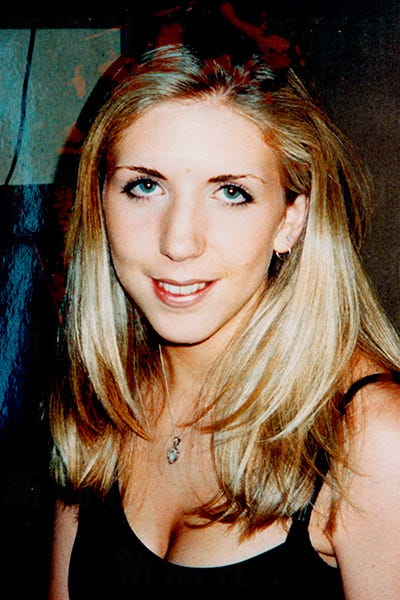
Lucie Jane Blackman born on September 1, 1978 in Kent, England was 21 when she met Joji in a hostess club in Roppongi, Tokyo. She had come to Japan after she was burnt out from being a flight attendant for British Airways. She decided to move to Tokyo and was only on a tourist visa so was not allowed to work but found a job and worked illegally as a hostess.
Joji seemed to like Lucie and wanted to take her out. Unfortunately, hostesses are not allowed to date their customers freely. They must arrange a date with the hostess club owner. Called a dohan, the customer pays the club to be allowed to take a hostess out. These dates can be anything from a dinner or shopping to a sexual encounter depending on the hostess and customer.
On July 1, 2000, Joji arranged a dohan to meet with Lucie. She told her friends that she was going to go driving by a beach with one of her clients. Joji took her to his beachside apartment in Zushi, Tokyo.
Police later learned that Lucie had called her friends using Joji’s cellphone. That was the last anyone heard from Lucie. A couple of days later when Lucie never returned home, her roommate Louise Phillips called police and reported her missing. But the police didn’t think it was a big deal for a hostess who went out with rich business clients, to not return for a few days.
But Louise, who along with the British consulate went to police insisted that Lucie had disappeared and wouldn’t leave for so long without contacting someone. After Lucie disappeared, her friend Louise got a call from a man telling her that Lucie decided to join a religious cult and run away. He insisted that Lucie did not want to be contacted by anyone or be found. Louise found this very odd and immediately contacted Lucie’s sister Sophie, in England.
Sophie came to Japan to look for Lucie. When she also went to police to report Lucie missing, once the police learned that she was referring to a hostess, they once again dismissed her saying hostesses often run off when men offer money.
Because the police were no help, rather than do nothing, Sophie and Lucie’s father, Tim, held a press conference with the help of the British Secretary as well as a mention from Prime Minister Tony Blair. They also started a hotline for anyone with information on her disappearance. The media campaign gathered tons of publicity both in Japan and England and many hostesses who had woken up sore and confused called in naming Joji Obara.
Once women started coming forward, some mentioned that they had reported him to police but nothing had been done. With mounting pressure from the media, British government, family of Lucie, and growing reports from other women, the police finally questioned Joji Obara and started the search for Lucie.
On February 9,2001, the police finally recovered Lucie’s body. She had been buried in a shallow grave covered by a bathtub in a seaside cave just a few hundred meters away from Joji’s apartment. The body had been cut into 8 different pieces and put inside garage bags. Her head had been shaved and encased in concrete. Strands of her hair were later found in Joji’s apartment and DNA confirmed they belonged to Lucie.
Unfortunately, the body was too badly decomposed to find the cause of death or to see if she had any toxins in her system. Along with the hairs of Lucie, the journal with all the entries, including the one referring to Carita, they also found large amounts of sedative, roofies, and chloroform. Although the tapes had hundreds of different females being raped by Joji, they couldn’t find one with Lucie.
They did however find a receipt dating back to 1991 for the hospital visit when Joji had dropped off Carita. There were also receipts for a chainsaw and shovel, most likely bought to dismember and bury Lucie.
The hospital where Carita was treated in 1991 still had a liver sample and were able to test it. They found it had toxic levels of chloroform. In Joji’s residence they also recovered Joji’s deceased pet, a German Shepherd, in his freezer.
Arrest and Sentencing
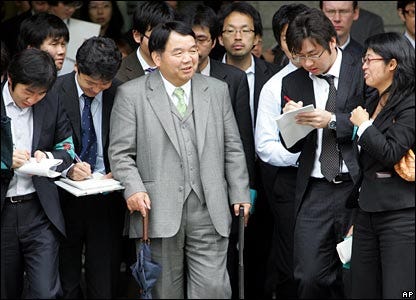
In October of 2000, Joji was finally arrested and charged with the rape of eight different women who had come forward, the manslaughter of Carita Ridgway, and the rape, murder and disposing of a body of Lucie Blackman.
During the trial the Ridgway family returned and positively identified Joji as the man they had met nine years ago with the alias “Nishida.”
The trial lasted six long years and finally on April 24, 2007 Joji was found guilty of the rapes of the eight women as well as the manslaughter. He was given a life sentence for his crimes but he was acquitted for the rape and murder of Lucie as prosecutors could not prove he had committed the acts. The body was too badly decomposed to check for any toxins and the cause of death was also undetermined.
Judge Tsutomu Tochigi felt that despite it being clear that Joji was with Lucie before she vanished, it was not enough to secure a conviction. Adding, “There is nothing to prove that Mr. Obara was involved in the rape and her death. The court cannot prove he was single-handedly involved in her death.”
Despite all the evidence against Joji, he continued to plead his innocence. He told the court that he paid Lucie to sleep with him but she self administered the drugs that led to her death and he wasn’t involved. Unlike most cases in Japan where a confession is made, Joji refused. It was also thought that the shovel, chainsaw and video of Lucie was destroyed by Joji before police could raid his apartment, making it harder to prove his guilt.
The public prosecutor appealed the decision stating that they had “crucial forensic evidence not heard at the original trial” and on December 16, 2008, the Tokyo High Court found Joji guilty on the counts of abduction, dismemberment, and disposal of Lucie Blackman. Joji tried to appeal his life sentence but the Supreme Court of Japan rejected it and upheld his life sentence.
Unfortunately, despite Joji getting a life sentence, hundreds of women and their families will never be able to go back to normal. Lucie’s siter Sophie tried to commit suicide in 2005 and her brother is also dealing with trauma from her death. Hundreds of women who were on the tapes will always have to live with knowing that they were also victims of this sexual predetar and serial rapist.
If you like this article, please check out some more stories of true crime from Japan:


