
On Reading
And how it was a solace to an imaginative girl
A sequel to ‘Dilli of my Heart’
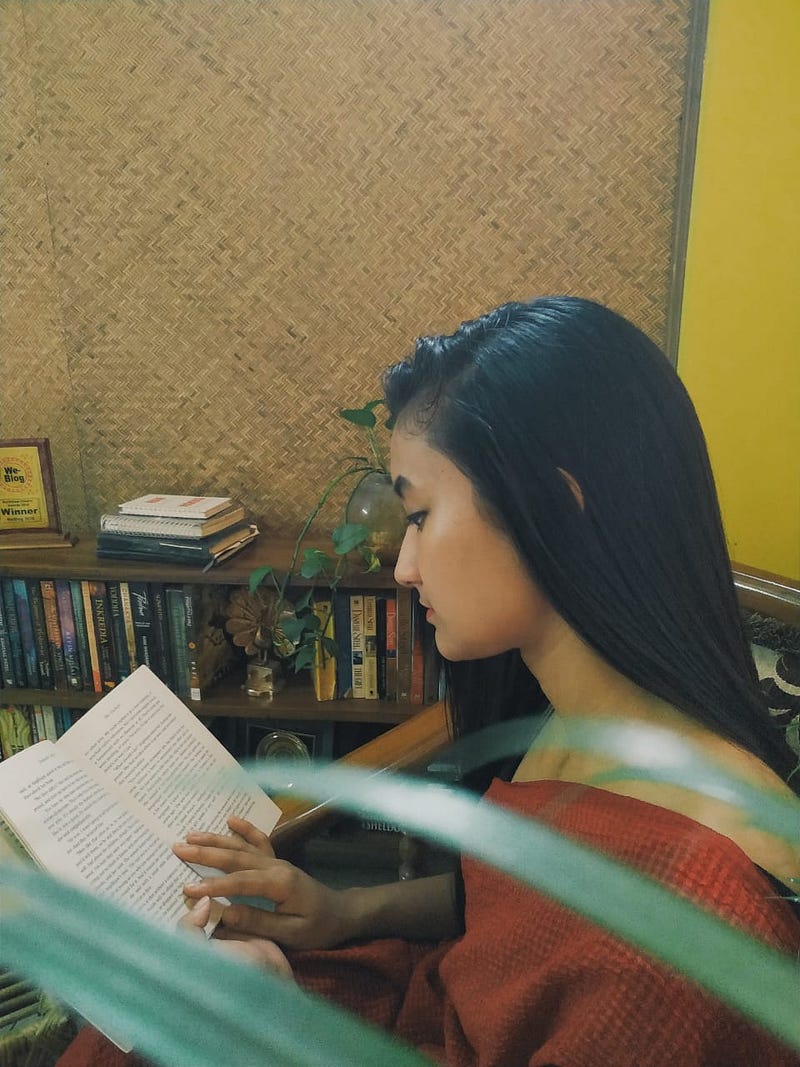
The girl sits by the window, the last rays of the day’s sun casting long shadows on her dusky skin. She seems absorbed in reading the book in her henna-dyed hands, the rust-brown a startling compliment to the heirloom red saree expertly draped, and gracing a shoulder.
She is so absorbed in her book, she pays no mind to the old Kishore Kumar songs playing in the background, or the evening azan from the community mosque. She is lost to this world.
But then, she looks up, staring into the distance. She does not notice the bamboo latticework on the wall ahead, handcrafted by the best craftsmen in the land. Her eyes carry a vacant look in them, as the dark, almost-black, flecks reflect scenes from a faraway land, with palaces of now-dead maharajas and maharanis, crowning the lush landscapes.
There are beautiful princesses and ladies, some poring over texts of statecraft and art, some training with brothers and the best masters in sword-play, some frolicking about in the garden, chasing restless rabbits. There are handsome princes and soldiers, galloping away on exotic Arabian horses, off to battle against the enemies of their land. Colourful bands made of brocades and silks adorn their wrists — something to remember the families they leave behind.
The girl sees this battle in her mind’s eye — the scarlet sky a glaring foreshadowing of the deaths that will turn the rivers red. It is a dark and savage time — losses and gains on both sides; a time when warring clans and factions was a way of life.
She sees swayamvars, beautiful brides choosing able husbands from hundreds of eligible bachelors. She sees the grand festivities, the celebrations that brought the people together; intimate dinners among family members that were fun and happy times, but often overflowing with talks of statecraft — the princesses chiming in with their own reflections to help their father king and often his chief queen.
The reader-girl sees political intrigue, of whispers behind imported tapestries and delicate curtains, notes carried and brought by messenger pigeons, gift boxes of gold, inlaid with rubies and pearls, containing blood-red garnets and sparkling emeralds. She sees desperate letters being written by the window on a moonless night, the candle being the only source of light — as a princess writes to her prince-lover from an enemy kingdom, asking him to whisk her away before she is married off to one she does not love.
The girl sees it all in her imagination, the book a ladder into the realms of heavenly knowledge and creativity. The four walls around her are not a barrier — they do not even exist. She is alive in the world of her choosing, in the fetes and wars of her imagination, in the swayamvars of her fancy.
Suddenly, the dark-eyed reader is brought back to the here, the present — her four-year-old brother has climbed onto her lap. With an affectionate smile and a resigned sigh, she clasps the book close and carries him off, to an hour of playing with her own little prince.
Meanings/References:
Henna — is a dye that is prepared by grinding the leaves of the henna tree ( Lawsonia inermis). It is a temporary dye that stains the skin and based on the application, can last from 7 to 20 days. Girls often use it to colour their hands (for festivities and also just for fun), hair (acts as a natural and healthy alternative to chemical hair colouring agents) and nails (henna stains on nails last for far far longer than stains on the skin).
Kishore Kumar (1929–1987) — was a famous Indian playback singer and actor whose songs ranged from soft romantic songs to peppy songs, which continue to be favourites still today. My favourite ones are Bheegi Bheegi Raton Mein, Roop Tera Mastana, Tere Bina Zindagi Se, O Hansini, and, Mere Samne Wali Khidki.
Swayamvars — these were basically the ‘bachelorettes’ held in ancient regal India where many eligible men (mostly kings and princes) would arrive. The princess-bride of the host kingdom would then have her pick from these eligible spouses. Often the father-King would have set conditions that these men should meet in order to be eligible/or be able to marry the princess. Famous swayamvars include those of Sita (from the Ramayana), as well as Draupadi and Kunti (both from the Mahabharata).
The word can be divided into two — ‘swayam’ meaning self, and ‘vara’/’var’ meaning the bridegroom. Therefore, together it means that the bride chooses her bride-groom herself.
Nayanika Saikia graduated summa cum laude with a Bachelor’s degree in English Literature and was also a Dean’s List student. She is currently pursuing her Master’s degree. At the moment, she is working as a Booktuber, blogger, and reviewer with various national and international publishers. She can often be found on her Instagram account Pretty Little Bibliophile.


