avatarBenighted

Free AI web copilot to create summaries, insights and extended knowledge, download it at here

945

Abstract

Among pain and dirt A new rose garden emerges From the decaying soil of this mundane world Existence carries on Towards the true Source</p><p id="7bb5">Away from the deception Of the cunning Demiurge</p><p id="c274">This poem was not written about death and the afterlife, but I guess it could be… <i>if you want it to be</i>.</p><p id="0a0d">As always, I’d much rather leave space for everyone’s personal interpretations.</p><p id="e020">What prompted the creation of this poem was my reflections on my mental health journey so far, and the journeys of others that I’ve been privileged enough to observe as a therapist.</p><p id="78f3">In that context, the <i>Ruler</i> and the <i>Demiurge </i>are references for the Ego and the collective consciousness<b></b>, respectively, with all of their conventionality<b></b>.</p><p id="d5c2">The <i>Source</i>, therefore, would be the Self<b>*</b>. And the <i>Tetrahedron</i>, a sacred soul structure

Options

.</p><p id="177b">However, since the poem is about transcending the confinements of mental health struggles, I guess it could be about transcendence in a broader sense.</p><p id="712c"><b><i>Which is exactly why this poem can be about anything you want.</i></b></p><h1 id="67cc">*Notes:</h1><ul><li><b>Ego:</b> The conscious mind; the sum of our conscious awareness.</li><li><b>Collective consciousness:</b> The sum of thoughts, ideas, behaviors, and feelings shared by a group of people or humankind in general.</li><li><b>Conventionality:</b> The generally accepted truths according to religion, science, or society.</li><li><b>Self:</b> The product of the union of the conscious and unconscious parts; the result of individuation (more about these terms can be found in <a href="https://readmedium.com/the-language-of-symbols-in-our-dreams-6c2b07adcee9">this older article I wrote about the symbolism in dreams</a>).</li></ul></article></body>

On Life After Death

A poem
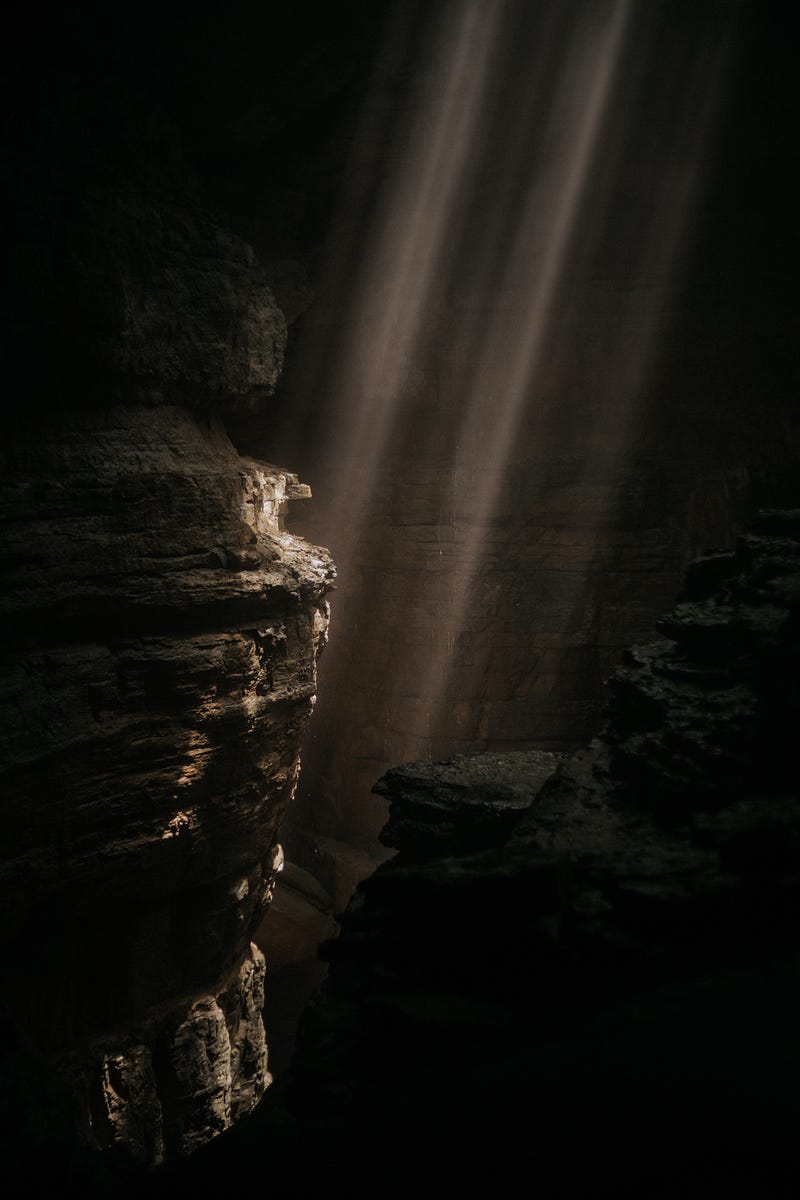
Big rocks inside a cave are illuminated from above by the sun’s rays./ Photo by Ivana Cajina on Unsplash

The brightest star upholds its light Another beautiful horizon imbued in sorrow and despair A fraying hope to witness the lament of the spirits Gone without a trace

Justice and fire tear apart the mind Love and darkness join their forces

A lonely melody repeats itself The energy flows within the Tetrahedron

And all sigils come to life

Keeping up with the pace of the relentless Ruler Among pain and dirt A new rose garden emerges From the decaying soil of this mundane world Existence carries on Towards the true Source

Away from the deception Of the cunning Demiurge

This poem was not written about death and the afterlife, but I guess it could be… if you want it to be.

As always, I’d much rather leave space for everyone’s personal interpretations.

What prompted the creation of this poem was my reflections on my mental health journey so far, and the journeys of others that I’ve been privileged enough to observe as a therapist.

In that context, the Ruler and the Demiurge are references for the Ego and the collective consciousness*, respectively, with all of their conventionality*.

The Source, therefore, would be the Self*. And the Tetrahedron, a sacred soul structure.

However, since the poem is about transcending the confinements of mental health struggles, I guess it could be about transcendence in a broader sense.

Which is exactly why this poem can be about anything you want.

*Notes:

  • Ego: The conscious mind; the sum of our conscious awareness.
  • Collective consciousness: The sum of thoughts, ideas, behaviors, and feelings shared by a group of people or humankind in general.
  • Conventionality: The generally accepted truths according to religion, science, or society.
  • Self: The product of the union of the conscious and unconscious parts; the result of individuation (more about these terms can be found in this older article I wrote about the symbolism in dreams).
Poetry
Mental Health
Psychology
Carl Jung
Analytical Psychology
Recommended from ReadMedium