
On Being Neurodiverse
Am I interesting? Or am I just weird?
This article is an exploration of my uniqueness. You may not find it engaging, however I found it helpful to write about my experience being neurodiverse in a world that wants me to fit a mold that never felt comfortable.
If you decide that this is not your cup of tea, I understand. In that case I encourage you to jump to the end of the article and explore the links I have provided to a couple of Medium writers who I find very interesting.
While I’ve never been formally diagnosed as neurodivergent, I recognized from an early age that I did not fit the norm. Things I found interesting, others didn’t. Things I found boring, others found endlessly fascinating.
I was sensitive to loud noises and too many things going on at one time. (Think sporting events or circuses.)
I was not aggressive and ended up being bullied.
I did not understand why boys were treated as special and girls like second class citizens.
I tended to prefer solo pursuits such as reading and exploring nature.
I was never much good at team sports even though I was big enough that people thought I should be. The sports I did at well at were solo sports such as shot put, discus, and archery.
At school and university I quickly figured out that being silent and invisible were usually the safest survival strategy.
Socializing worked one on one, if I could find someone with any kind of similar interests, which wasn’t very often. Group events were exhausting and I was quickly looking for ways to escape. This didn’t do much for my dating life.
I never really had a girlfriend until I finished university and she was even more introverted than I was.
I never had friends as such. I did know some people that would let me hang around now and again but they rarely included me in their plans. This was true even as an adult. Actually, this is still true today in my 70’s.
I have one close friend: my wife. And that works for me. There are people in our lives that socialize with us as a couple now and again but I run out of social energy fairly quickly so an occasional get together satisfies me for a long time.
When I was in my 60’s I met someone who assumed that I knew I had Aspergers Syndrome. This person, who had a similar condition, communicated with me in ways that made sense and were much more comfortable than I was used to. So I researched what Aspergers was all about. This introduced me to a host of overlapping “symptoms” that I appeared to manifest.
If you don’t know what Aspergers Syndrome is, as of DSM-5, it is considered a part of the autistic spectrum. Prior to that it was considered a condition of its own. Doctors used to consider Aspergers as sort of a “high functioning” autistic.
The symptoms listed in the DSM-5 are primarily aimed at children. However, there are a lot of us “undiagnosed” adults who fit the category. The psychology discipline seems to assume that if we make it to adulthood and figure out ways to function in the neurotypical world then it isn’t worth them worrying about.
Aspergers Syndrome symptoms can include:
- Difficulty making eye contact (True for me though I’ve learned to fake it.)
- Awkward in social situations (Also true for me. I can function reasonably well in a work situation where there is a common goal. However, once the work is dealt with, I have limited social skills. I have learned how to fake it with a list of questions that I use to get others talking about themselves. Most people don’t seem to notice that they are doing all the talking.)
- Miss social cues that are obvious to others. (True for me. I have worked at learning a number of standard cues but there are still many that I miss. I particularly struggle with metaphors with which I am unfamiliar. I have made it a practice to notice when people are using metaphors that I don’t understand and then research them on my own time so that next time I’m not so confused.)
- Don’t show emotions. (This doesn’t mean that I don’t feel emotions. I, and many autistics, just don’t express them with the visual, body language cues that others seem to expect. Again, I’ve learned to fake the cues. Emotions can be intense and once I get a handle on them I have learned to show some of the cues that are expected, though sometimes in an awkward manner or with awkward timing.)
- Can express an extreme level of interest in a particular topic and not notice that others may have little or no interest. (Yes, I can be like that, though I learned early that most people did not share my interests so I mostly learned not to talk about them. Instead I fall back on my conversational questions list, looking for what they are interested in and trying to find something in common.)
- Dislike change. (This can manifest in many ways. For example, I am happy eating a similar set of meals on a regular basis. My wife likes to try making different kinds of dishes. Fortunately she is vegan and therefore the dishes are all variations on vegetables for which I have developed a fondness in the twenty-five years we have been together.)
You can see why meeting someone with Aspergers Syndrome was a revelation. They were the one employee I supervised at work which made for an easy, functional working relationship. Others found them difficult to work with. I found them refreshing.
Along with various autism characteristics I also fit, to varying degrees, characteristics of other psychological “conditions”, including:
- Introvert (The key aspect of introversion for me is my limited social energy. I can only interact with other people for a short while before I’m emotionally exhausted and then usually only one-on-one or in very small groups. Then I need to be alone for a while to recharge.)
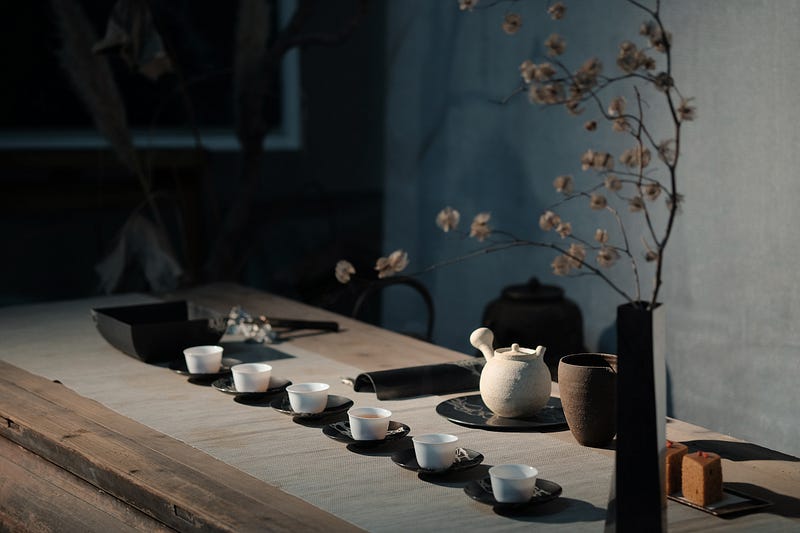
- Obsessive Compulsive Disorder (Again, not extreme but there are a lot of things I like just so. For example, I have to close open cupboard doors and dresser drawers. Also, every evening before bed, I get the tea kettle, coffee pot, tea bags, cups and other items ready in advance for morning tea and coffee for my wife and I. And I don’t feel done until I have lined everything up just so!)
As you can tell, I have a number of personal characteristics that don’t fit the neurotypical norm. And, strangely enough, I am quite happy with them.
One of the challenges I have with DSM-5 and the terminology related to these various “conditions” is that they assume that their interpretation of “normal” is the only healthy way to live. Terms such as syndrome, condition, disorder, or divergent all seem to include the unspoken assumption that being different from “normal” is an illness or handicap, to be cured if possible.
Having lived more than seventy years with my differences from the norm, I disagree. I am not ill. I am not handicapped. I am just different!
I like who I am. So what if I am different than what you would like me to be? I earn a living. I pay my taxes. I clean up after myself. I am polite and friendly in ways that work for me.
The only problems I seem to cause for other people are that I don’t interact with them in ways that they would prefer. Well I say, “get over yourselves!”
I’ve spent my whole life dealing with neurotypical people who don’t behave in ways that would be most comfortable for me. If you have to put up with the diversity of me and others who march to a different drummer, then too too bad. Learn to stretch your comfort zone. You may find that you actually enjoy experiencing the world through the eyes of people who see things differently.
No matter how much you would like to think you are “normal”, you are wrong. There is no normal.
Current estimates are that we will pass the 8 billion world population count in less than a year. That will be 8 billion unique individuals. Each with their own mix of idiosyncrasies, most of which are learned behaviours based on a combination of their culture, their genetic makeup, and their family dynamics.
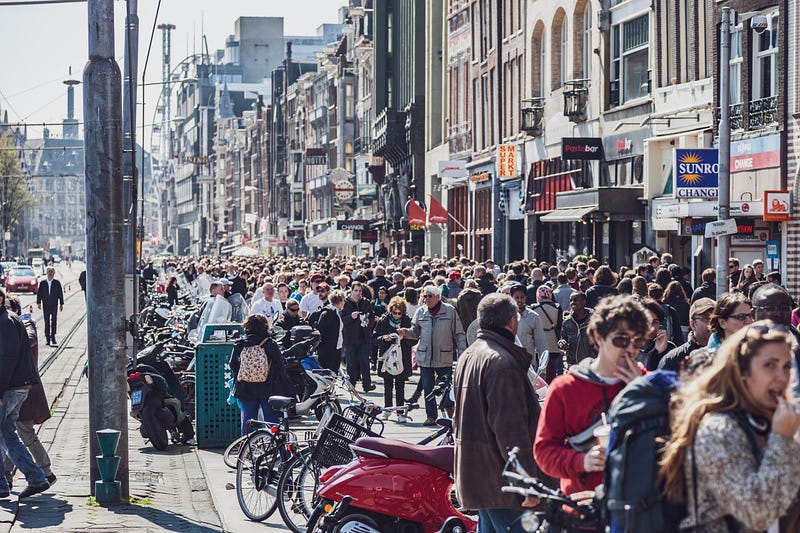
What appears normal in one place can appear extremely “divergent” in others.
So, back to my original questions:
Am I interesting? To some people, yes. To some others, no.
Or am I just weird? By some people’s standards, yes I am. But it works for me.
There is a term that Robert Fulghum used in one of his books that always resonated with me: Mutually compatible weirdness.
I believe that most of us are looking for people to whom we make sense who in turn make sense to us. Few of us who appear “divergent” are in fact ill, or broken, or otherwise in need of fixing. We are just looking to be accepted as we are. To be treated as the unique, interesting individuals each of us is. We are looking for “our people”, those with mutually compatible weirdness.
The place to start looking for “your people” is within yourself. Begin by finding the real you. Not the mask that you present to the world because that feels (and sometimes is) safer. While presenting a false front to the world may be necessary, don’t make the mistake of believing your mask. Don’t lie to yourself. Until you understand who you really are, you will have little success finding compatible souls, people who get you.
Figure out who you are. Lead a life that moves you closer to being able to be that person all the time. Don’t reach the end of your life with the regret of never having been your best, beautiful, weird self because fear has stopped you. Or of never having anyone in your life who accepted you just as your are. Look for your people.
There is a wonderful poem by Rosa Zagnoni Marinoni that speaks to this whole topic. I will start it here but, so that I don’t violate any copyright, you will need to go to the link to see the whole peom.
Who Are My People?
by Rosa Zagnoni Marinoni
My people? Who are they?
I would love to hear how you celebrate your uniqueness. What challenges have you overcome? What changes are you trying to implement in your life so that you can be more truly yourself?
If the truth can set you free, then I would love to hear about your truth!
Thank you for reading my article. If you found it interesting, here is one of my recent pieces that a number of people found interesting.
Here are some articles by writers who inspire me to write. If you enjoyed my article, perhaps you will also enjoy theirs:
For me, Dr. Preeti Singh is a constant spur to write. She comes up with the most interesting nature topics for me to explore. The only challenge is keeping up with her! I keep falling behind. Oh well. Here is her latest.
Pierre. Autistic & proud. recently published this piece. He has definitely dealt with issues similar to the ones I discussed above:
If you enjoyed these articles, please remember to let the authors know. We who sit alone and write can always use the encouragement.
I wish to thank the following new people who have commented on and/or clapped for my articles since my last publication and to thank those who have chosen to follow me. It is the encouragement from people like you that makes the writing process worthwhile:
Trisha Faye, Dr. Fatima Imam, ItsAlwaysRightNow, Indigo, Doubbleconsciousness (2 b's), Nobel Peasant, Kassondra O'Hara, Annie Wegner, A Lago, Sarah Bernier, Jim Parton, Stacey, Janin Lyndovsky, Gauri Sirur, Casey Stanley, Lourdes Sanchez, Qasir, Jeremy Andrews, Jevon, Lynn Winborn, Sandra Kemp, Karthik Rajan, Ken Firestone, HUMAN [R]EVOLUTION, David Price, Vin Bhalerao, Dr. Psychology, Kat Wexford, Marta Henriques, Hwynhistory, kanchan chauhan, The Coffee Wrangler
Thank you for spending your time with me.
I wish you well!


