
FUTURE BUSINESS
Old Marketing Is Dead. Long Live True Price and Real Connection
New marketing is about true price, real impact, and making contact with loyal fans
A few days ago, Paul Myers MBA challenged me, and some other thought leader writers in different fields of business, to give our perspective on a post-pandemic sustainability strategy for multinationals.
“With that in mind, I invite all writers to identify and critically analyze trends, opportunities, risks, and challenges that corporate leaders at Multi-national corporations (MNC’s) face today; to develop, implement and maintain a post-pandemic sustainability strategy.” — Paul Myers
Well, my answer is valid for multinationals and startups both.
Paul writes a lot about anticipatory leadership. In short: being ready for what to expect instead of using the old-school innovation methods of just looking backward to what has already been done and just tweak those buttons a little bit.
Paul is definitely right to think that old-school innovation will not get us anywhere. The problems have become too big. The challenges too vast. So we need a different outlook on business and economy to find the answers.
But he’s also right to think that entrepreneurs are the ones who can get us out of this mess. They are the people who are willing to take risks. They embrace creativity. They can make all the difference in the world with new business models, new materials, and new outlooks on life.
So, here’s my first answer to this challenge. And keep watching this space on Illumination because I’ll be writing more. I notice a strong yearning to learn lately. I now write for students of high fly universities who scream for new knowledge. And I get many requests from young startup people and CEOs of big companies both.
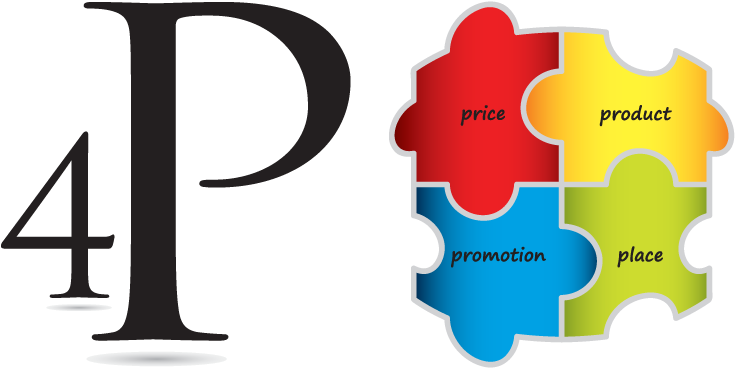
So, here we go. Today I will enter the matter via a well-known route: the 4-P marketing strategy by Philip Kotler. In this story, you’ll find new deep knowledge for business leaders and as an extra, a solid opportunity for writers.
Marketing Strategy
Having been an old-school-marketeer for ages, I know the 4 Ps as described by Philip Kotler by heart.
- Price: we have to choose the right price, which is dependent on what our market recognizes as its value
- Product: we have to make a quality product in enough quantity. And the product should meet a specific customer need or demand
- Promotion: we have to promote our product. Convince people to buy it. Tell people how good it is and why they need it
- Place: we have to make sure the product is available at a location where a customer can buy it. We need to have a distribution strategy
Sometimes, marketeers add one other P.
- People: we need to have the employees, the human resources, available to make it happen
And I’m now saying to you: this old school marketing is dead.
How come?
What’s taking its place?
Well, this story will shed some light on future trends I see in the world. And of course, you are always welcome to share your own thoughts in the comments.
Marketing 3.0 by Philip Kotler
In 2010, Philip Kotler wrote a new book, together with Hermawan Kartajaya and Iwan Setiawan. It is called ‘Marketing 3.0’.
“Today’s customers are choosing products and companies that satisfy deeper needs for creativity, community, and idealism. Leading companies realize they must reach these highly aware, technology-enabled customers, and that the old rules of marketing won’t help them do this. Instead, they must create products, services, and corporate cultures that inspire, include, and respect their customers’ values.” — Marketing 3.0
Kotler and his colleagues define marketing 1.0 as product-based. Marketing 2.0 is consumer-based. And marketing 3.0 takes a holistic approach to customers as multidimensional, value-driven people, even as potential collaborators.
The ten commandments of Marketing 3.0 are:
1. Treat your customers with love and your competitors with respect
2. Be ready for transformation and change
3. Make your values clear and support them
4. Focus on the segment that can give you the greatest benefits
5. Price fairly to convey your quality
6. Help potential customers to connect with your company and its products
7. Look upon your customers as customers for life
8. View each business as a service. Because each product is tied to a service
9. Improve your business process every day
10. Consider various aspects and information — not just finance-related — before making a decision.
(Taken from this explanatory blog by the Rome Business School)
Marketing Strategy Trends
But I see many more trends emerging since 2010 to substantiate my claim that even marketing 3.0 is no longer fitting the bill. We need completely new marketing strategies that are full of real value, honest stories, and strong connections with all stakeholders.
1 Price. Externalities such as waste, pollution, and bad employee conditions will soon have to be included in the balance sheet of companies. Regulations in many countries will see to it and customers are becoming aware enough to demand it. And it will have a big influence on the price of products if companies keep their business models unchanged.
Luckily, many companies have already taken the lead and calculate true prices by themselves. Organizations such as True Price (since 2012) and the Association of Investors for Sustainable Development (since 1995) ask challenging questions at shareholders’ meetings and help companies to make the shift happen.
New business models that include externalities such as waste and turn them into an opportunity are emerging fast now. Big companies such as Novamont (biochemistry) and Interface (carpets) have implemented this trend already in their business models and are flourishing because of it.
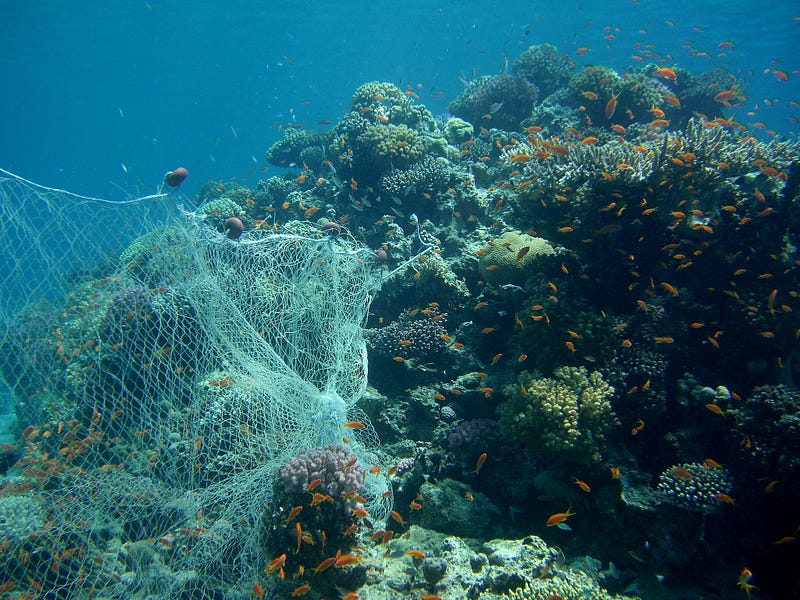
Stock-exchange-listed company Interface e.g. uses discarded fishing nets to produce its carpets and clean the oceans at the same time.
2 Product. Raw materials are getting scarce. We cannot go on with our economies of unlimited growth on a planet with finite resources. I chose this report from PwC Megatrends to tell you about it but many more reports are available online.
“While scientific debate continues, we believe the fundamental analysis of the challenge facing the planet is correct: the planet is unable to support current models of production and consumption […]
The expectation on business today is increasingly recognised as needing to go beyond maximising return to shareholders. Companies must understand and measure wider concerns and understand impacts on society and the environment. This will require new ways of measuring things, and longer time frames for return on investment.”
— PwC Megatrends
And essential raw materials are more and more reliant on just one or two countries. Take the example of phosphorus needed for the production of our food. They are now mainly taken from rock mines in China and Marocco and made into artificial fertilizer.
High time to include local sources of phosphorus (as done in regenerative agriculture) into our business models for food again.
And of course, phosphorus is not the only scarce resource that is in trouble. Earth Overshoot Day fell on August 22 this year. Earth Overshoot Day marks the date when humanity’s demand for ecological resources and services in a given year exceeds what Earth can regenerate in that year.
Luckily, many companies are adopting regenerative business models based on what’s locally available as a resource. This can be abundantly available organic crops, such as bamboo, industrial hemp, or seaweed. Or it can be local waste streams, such as coffee grounds or waste mining stone.
Cool new products are being produced with these. From hemp batteries made with nano-technology to stone paper that is endlessly recyclable.
3 Promotion. Customers do not believe the innocent blue eyes of company owners anymore. So trying to convince and to manipulate is ending. Greenwashing may be helping business for a short while, but the age of the internet is so all-encompassing now that customers will find out the truth soon enough. And we all know that reputation is all.
So what’s the alternative? Honest stories. Transparency. And a real connection with our loyal fans.
People want to trust the companies they deal with. It’s as simple as that.
Storytelling with reality as a strong foundation is a good alternative for old-school advertisements. And here, an opportunity for writers emerges.
Companies will need skilled writers who know how to tell the hero’s stories (a narrative made popular by Joseph Campbell and based on psychology by Carl Jung). In our marketing communication, we will focus on the complete journey.
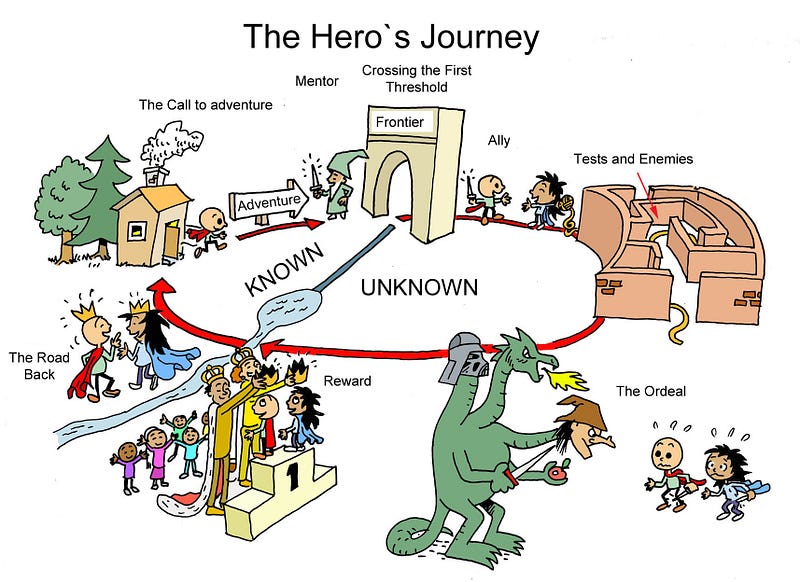
Going regenerative is a journey. And companies will have to tell about their successes and their failures to build a tribe of loyal fans. They have to keep their eyes on their long-term vision. They have to tell their investors about the value they created.
And value is more than just money-figures. It is also about impact. About clean air. And clean water. And healthy soil. About health for people and for other species. About biodiversity and social equality.
In short: about all the things we have seen as externalities in the past and that are now a source of business opportunities for us.
Stories enough to tell.
And the audience has changed from just customers and shareholders to all stakeholders.
4 Place. Distribution has changed big time and will change even more. First of all, internet trade has changed the scene. We are globally connected now. Secondly, 3D printing or additive manufacturing makes it possible to produce anything locally with just a printer and an (often open-source) design drawing.
The trend of ‘place’ has recently been hugely affected by COVID. Traveling is not easy anymore. Tourism is collapsing. And if we combine the trend of true pricing with the trend of place, we see that in order to make an honest impact, we have to include transportation impact on our balance sheets.
So, we have to ensure our local markets are as vibrant as possible. How? We can focus on basic needs (everybody needs to eat, needs to have a healthy house, needs to wear clothes, etc.) and we can produce what’s needed with local, abundantly available materials.
If we do that with diversity in mind, adopting the methods of Blue Ocean strategy, we do not have to compete in red oceans any longer. We can thrive in blue oceans. And collaborate.
If we design our business models cleverly with synergy as a basis instead of scale, we can even create enough multiplier effect to pay for the commons. Wow, that would make a difference in our societies…
Think global, act local.
We can definitely combine digital connections with local physical products. We just have to think for ourselves all the time: is this a technology that serves life? All life? And then make it happen.
5 People. And the people? We will become more aware and demanding than ever. We will be employees who demand honesty, and ethical leadership. We will request social equality and jobs with purpose.
We will be customers who demand honest stories. And we will be investors who will judge you on impact as well as monetary value.
Are you up for it, trendy strategy makers?
The world is changing fast now!
Let me tag the other writers whom Paul mentioned in his challenge. I hope you’ll tag me too, as I’m mighty interested to read your views. Bill Kathryn Tree Dr Mehmet Marcus Joe Britni George Jessica Michele Aurora B. A. Tony Rasheed
Just today, I had a great discussion with the professional business developers and marketeers of Bluehub in Venlo about this subject. I’m glad to see that change is happening. And North Limburg is onto it.
And if you want to connect, you can find me on LinkedIn or Twitter or somewhere in the world, surfing the waves of change…
Or behind these links. LinkedIn, Facebook, Twitter, Instagram, Pinterest, ManyStories, my website. I’m always open to connecting.
© Désirée Driesenaar


.jpg)
