
Time
Ol’ Man River Just Keeps Rolling Along
Exploring the Echoes of Eternity: What if time knew no bounds?
Oh my goodness… time really is the most confusing concept. Many theories exist, as it seems people want an answer to the question:
How does TIME work?
I can understand that. It is a baffling concept which I am going to delve into while taking a look at some of my personal experiences. Although you and I may finish this article without any more idea what the heck time is all about than when we started. But I think exploration in general is a good thing. So hop into my time capsule and enjoy the ride.
Thinking
This past year or so has had me thinking of all kinds of things which I haven’t spoken about. One of them being time, and what it means to be human.
2022 felt like a covid hangover. Many people including me still came down with the virus, yet the main headache has been the fall-out from shutting down a country — on and off — for a few years.
Putting the state of the economy aside, the results of the lockdowns have been far-reaching in regard to human behaviour. I was always a bit of a loner but after the restrictions found myself craving solitude even more. Yet I know human interaction helps a person in many ways by challenging viewpoints and is beneficial for the mind. It is a basic human need. The effects of disallowing all but virtual socialising are still ricocheting within society, having directly impacted on people’s mental and physical health.
Not only that, some almost forgot how great it is to have the emotional capacity to feel. Such as the thrill of just being alive and having the opportunity to learn and reflect.
I actually wonder if what it is to be human changed somewhat? I know my approach to many things altered, which led me to ruminate on the past and reflect on how privileged I was to have been a child of the 1970s.
It was these thoughts, and perhaps because I am getting older, which led me to explore the concept of time, in regard to not only my waking hours but also dreams.
Theories and Rivers
Two from the many schools of thought on the nature of time are: Eternalism and Presentism¹.
Presentism is the philosophical view that only NOW is real. Events come into being as the present moment constantly changes into the past. Consequently, the future has no existence until it becomes the present.
This is a good theory for those who do not believe in fate or destiny, as nothing is predetermined until it happens.
Eternalism is in contrast to Presentism. It suggests past, present, and future events all exist simultaneously. Like a river with its beginning, middle, and end… yet flowing around curves with tides changing, making time mutable — because you can float either way.
Eternalism sits well with those who believe in destiny and also Einstein’s special theory of relativity². Which basically states time isn’t the same for everyone. Not absolute. When an object is in motion, it undergoes time dilation, which means, when it’s moving very fast, time appears to pass more slowly compared to when it’s stationary. Therefore, the experience of time depends on the condition of the observer.
Einstein’s theory (and Eternalism) both support the simile which likens time to the curves of a river — and who am I to argue with the genius that was. Remember, rivers can be bow shaped, and life often makes us feel as if we are getting nowhere fast.
I also wonder about round rivers. If we equate time to a river flowing in a circle, then we could move forward and back, maybe drifting into different dimensions briefly or for a longer flurry such as a dream.
That ol’ man river he must know something But he don’t say nothing
Cause he just keeps rolling He keeps rolling along
Paul Robeson
Slipping through time
Timeslip — a paranormal occurrence where it’s suddenly possible to see the same spot but from many years ago³.
My daughter — not prone to exaggeration — told me about something which happened to her recently.
While on a night out to an Italian restaurant in Bristol — housed in a Victorian building — she needed to use the bathroom upstairs. She climbed the steps before entering another room, from which the toilets were accessed. The moment she walked through the door, she felt odd. Something about the room was strange. It was dark, gloomy, and chilly, with some old furniture dotted around. The decor was very different from the vibrant walls downstairs.
She quickly went through to the toilets — a normal bathroom. Then, headed down.
When it was time to leave, her friend mentioned she would pop to the ladies. My daughter exclaimed, “let me come with you, it was pretty spooky up there.”
And yes, you’ve guessed it. When they went back, the previous drab room had changed and now fitted in with the general way the whole restaurant had been decorated. This caused some confusion before her friend mentioned the idea of a timeslip.
You could postulate my daughter had been washed along the river of time to a spot from the past.
When I was a child, I woke in the night and there staring down at me were three young women, possibly mid to late teenagers — however, they wore their hair and clothes differently to anything I was used to seeing. I knew without a doubt they were spirits, and later realised the teens appeared as if they came from the 1930s/40s.
Timeslips can also explain my childhood experience. The girls from the past had somehow swum forward in time, as the rest of the room looked the same as always to me, only they were out of place.
I like that the river of time could— at a push — explain the appearance of spirits, or a timeslip. After all, ghosts may simply be leftover energy, and Einstein stated changes in energy distribution can influence the flow of time itself — e.g. gravitational time dilation⁴. Although, I suspect I have just taken a huge leap, applying GTD to the above scenarios.
And what of dreams which come true? Can we account for them using a theory about time?
Dreams
Many people have dreams which seem to later come true. I’ve had too many to mention. So much so, I wondered if a person who has dreams which prove to be predictions, may only remember those that are truly significant. Such as a death or strange occurrence.
I began to keep a dream diary when I was 29. Whenever I awoke in the night, I would immediately make a written record of my dreams. Then roll back over to sleep. Often I could hardly read my handwriting, yet sometimes the mere fact of having written jogged my memory as to what the dream had been about.
After doing this for several months, I can tell you that a great many of those scribbles came true — although some not for years.
I didn’t really think about how this may relate to TIME. Then I was recommended — An Experiment with Time by JW Dunne⁵ — first published in 1927.
Dunne’s book is such an eye-opener. He proposed a theory called Serialism, where time is not experienced in a linear form (like the previously discussed Presentism) rather, events in time are interconnected beyond the immediate present — having similarities with Eternalism.
In a nutshell, Dunne believed when we are awake we cannot see beyond the present moment. However, while dreaming, the daily focus fades, and we gain the ability to actually live more of our timeline. This allows fragments of our future to appear in pre-cognitive dreams. And it has to be said, events predicted in my dreams present as authentic.
Perhaps Dunne’s explanation can account for those oh so real dreams when a loved one who has passed appears, and seems to convey important information? Maybe what we are witnessing is a future dream they once had, which we become privy to later. Of course, this would mean people can share a sleeping dream — which I have actually done — and if, as Dunne suggests, we may actually live part of our lives in dreams, it stands to reason we could be doing this in tandem with others.
Thinking about these things too deeply can almost blow your mind.
Flashbulb moments
I’ll close by delving into a universal experience to which we can all likely relate. It’s the distinct sensation when a memory rushes into your consciousness so vividly that, for an instant, you find yourself transported back to the very moment, reliving the scene. The imagery is exceptionally sharp, and your senses awaken to the smells and sounds of that time, making it feel less like a mere recollection and more like a tangible return to when it originally unfolded.
I have an enhanced episodic memory, which means these flashbulb visions almost enable me to subjectively travel in time.
Conclusion
It really does seem TIME is a baffling enigma.
After delving into my own (and family’s) personal experiences, I find that Einstein’s special theory of relativity, resembling the curves of a river, sits well with how I imagine time may work. The concept includes a kind of layer, suggesting time is not universally fixed, rather dependent on the individual. And let’s not forget, the man was an out-and-out genius! It also addresses the seemingly blurred boundaries — some people have experienced — between past, present, and what is yet to come.
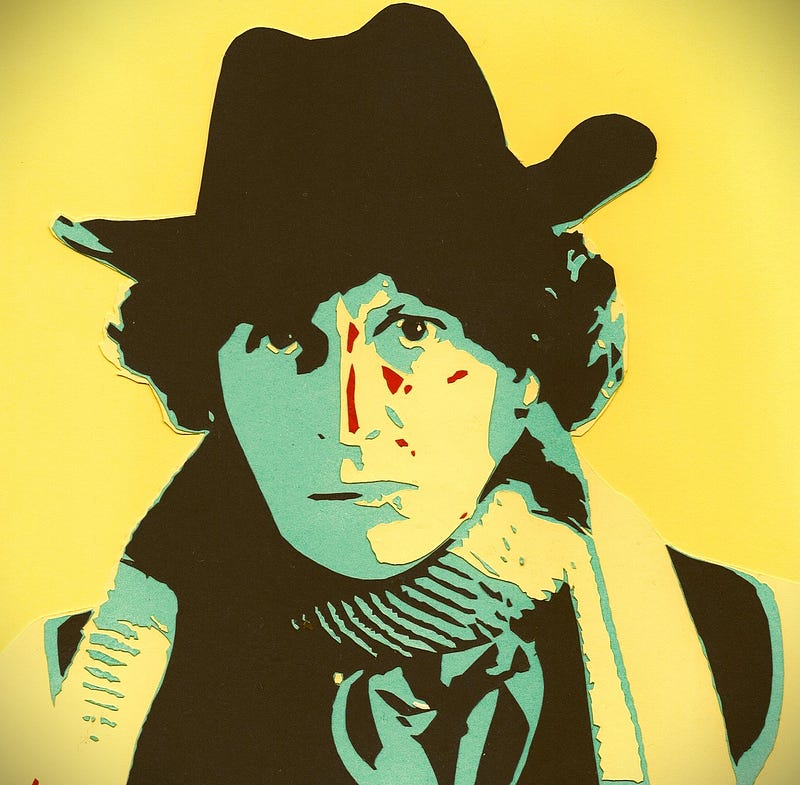
In a world where so much is ever-changing or unknown, theories about time will continually evolve. Even though we don’t yet have a Tardis like Dr. Who, the need to understand this intricate concept will no doubt continue way past our lifetimes, until perhaps an actual time-travelling machine — or even an ark to navigate the river — is created.
What do you think? And Who is your Dr?
This post was a half written draft until I saw the PW Monthly Theme for August “TIME” — by ADEOLA SHEEHY-ADEKALE. And also chatted with Claire Kelly about ‘time.’
If you’d like an email each time I post, please subscribe here.
References:
1] Presentism & Eternalism — https://www.samwoolfe.com/2013/05/presentism-and-eternalism-two-philosophical-theories-about-time.html
2] Einstein’s Theory of Special Relativity — https://www.space.com/36273-theory-special-relativity.html
3] Have you experienced a time slip? — https://www.dailymail.co.uk/home/you/article-9565865/Have-experienced-time-slip.html
4] Gravitational Time Dilation — https://en.wikipedia.org/wiki/Gravitational_time_dilation
5] An Experiment with Time — An Experiment with Time — Wikipedia


