
Okay, So We Need a New Economy. Is Europe Doing It Better?
Some ramblings on economies, continents, and transition inspired by umair haque
Let me first tell you how this story came about. It’s umair haque. I really love his stories. He calls himself ‘The Vampire’. I imagine him writing through the night, getting all worked up over human behavior and the American economy.
Umair drew me in, writing about his dog.
“Here and now is where we must start to build a world of unconditional love.” — Umair Haque
Nowadays, he is raging about American society and the lack of health care.
We agree, Umair and me. On the surface, we seem very different. Me being European, a woman and probably much older. Different generations, different cultures. I write first thing in the morning, he writes at night.
But we agree on the fact that we need to build a world of unconditional love. So what do I want to add to his words with my own?
Three things:
- Don’t idealize Europe
- Don’t forget we live on a planet that has her own needs and laws
- How to build an economy that is better on all counts
Europe
When Umair writes, he often quotes Europe in a kind of idealized way. In Europe, they have socialist democracies. In Europe, everything is better.
Well, I’m European. I’m living in Holland. I know the European Union and the so-called socialist democracies from the inside out. And let me tell you, what seems so rosy on the outside, is in reality as neoliberal as it gets.
The whole world embraced neoliberal capitalism as God, not only America.
And the consequences are that we all have economies that fail in times of crisis. Like now. That our companies are laying off people as if they are old shoes. No need for them anymore.
It’s all because our companies are thriving on exports. Or on tourists. Or on producing stuff that we don’t need and that we don’t buy in times of crisis.
And the solution we come up with? Printing more money. Pumping money into our stock markets. So a few already billionaire shareholders can enrich themselves even more over the back of other people.
Europe is no different, Umair. We might have sugarcoated the outside. We might have made you believe differently by creating a shiny surface.
But in our cities, people are now dying in their hallways because they call 112 (your 911) and nobody listens. And when the death certificates are given out, they are just not registered as corona deaths. He died of a heart attack, they say. Our health care system is failing us, too!
Don’t get me wrong. I’m applauding the health care workers, the doctors the nurses, who are risking their lives to care for the sick! It’s the system that fails us, not these hardworking people.
Only a few months ago, these same nurses needed to fight hard for a few euros extra in Holland! They are the heavily underpaid ones in Europe! They are having burnouts by the dozens. And I’m talking before this crisis. I’m talking about November 2019.
Many doctors and nurses are giving up on their jobs because they are sick and tired of the bureaucracy. Paperwork is smothering the system.
They are underpaid and the work is full of stress. And no, the stress is not coming from the job itself. They love their work. They have a passion for caring. No, the stress is because of budgets. Money again.
The whole problem is that we made money our God. All of us! America and Europe alike. We think we won’t have jobs if we do it differently. We think we’ll starve.
Well, the opposite is true. We CAN build an economy on unconditional love. It’s called a regenerative economy and I’ll explain it. Bear with me. Let me first ramble on a bit about our planet. Because she’s important too. And she has the key to an alternative.
She’s our home. She’s Nature. She has her own needs and laws. It’s an incredibly intelligent blue marble that we live on. And we will only survive if we take her into account. And we can, believe me, we can.
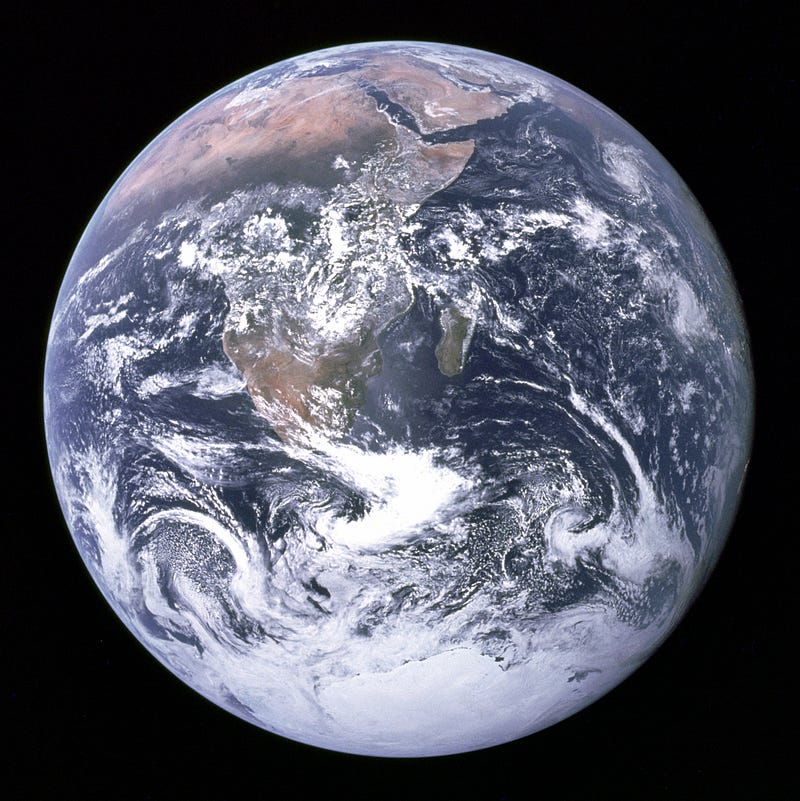
Living, breathing planet
Yes, we need a better economy for the people. But we also need a new economy because the old one is ruining the planet. And it’s in our own interest to do something about that.
Nature doesn’t need people. People need nature.
In the distant past, our earth has already thrown a species off. The dinosaurs have come and have gone… It’s no big deal for our planet to throw us off next.
And maybe she’s doing that right now. Freeing up new viruses because we are exterminating other species than our own…
Don’t get me wrong, I don’t believe in revenge of either a God or Nature. I just believe in cause and effect.
If we keep on destroying the planet, there will be consequences for us, people. The scientific researcher David Quammen explained it beautifully in this TEDx talk recorded in 2013. He explained about ebola, another virus. But it’s the same thing.
We, humans, exterminate other species. These species are host to unique viruses. The viruses can live happily without causing any disease in their hosts.
But if we destroy their hosts, they’ll look for other species to invade. That’s what viruses do. Invade species. And now they invade humans because they have nowhere else to go. It’s cause and effect.
So, it’s time to do something about it. It’s time to prevent further attacks from viruses, to deal with climate change, to tackle poverty and inequality. It’s time to restore the balance between economy, ecology and the human spirit and find new ways of living.
Do we have to change our comfortable lives for that? Yes.
Are we getting poorer this way? No.
We just need to think about what’s really important for us. Just money? You must be kidding! Look where it gets us… Of course, we need money, but we need a system that does more.
As Umair says: “We must build a world with unconditional love.”
Don’t worry, I’ll not be talking about taking shorter showers, dressing in yucky baggy clothes or eating beans and lentils every day.
I’m not a ‘geitenwollen sok’ (a goat wool sock) as they call them in Holland. I’m not obsessed with windmills. I’m not into flower-power. Although I do like their love-comes-first-philosophy. And I love that they are dancing a lot. And I’m certainly not an extremist.
Some of the most innovative thinkers on this planet are working on this! We’re standing on each other’s shoulders, building a new reality. Developing nature-based-solutions. Using systemic thinking to facilitate change. Aligning the economy, ecology and the human spirit.
And it’s time to get into action now. Start doing. All of us! That’s why I write. To motivate as many people as possible to create this different economy. An economy that works for all species. It can be done! Let’s go for it!
Regenerative Economy
So what will this economy look like? It will be inspired by local ecosystems, globally connected. We will be living in diverse, self-sufficient economies. More resilient economies. Sturdy, connected to the natural environment.
The money will be kept as active as possible in these economic ecosystems so everybody can buy their basic needs. We’ll make those basic needs from different materials than nowadays. Kelp, for instance. Or industrial hemp and bamboo. Those materials can be locally and abundantly available.
We’ll be wearing beautiful dresses, but they will be made of nettle. We’ll be living in normal (maybe smaller) houses made of mycelium. We‘ll be living in cities with streets that soak up excess rainwater and refrain from flooding.
Technology will be used, definitely, but it will be designed in such a way that the planet will thrive as well. There are already many examples. We can create our food with regenerative farming and produce enough for everybody.
We can create energy, clean air, and clean water while we divide the proceeds fairly among the people who do the actual work.
Okay, Umair, so you have a point here. The smallest Canary island, El Hierro, part of Spain is on to it. And that’s Europe. But it’s not the European economy you’re talking about…
There are examples as well in South America. Be inspired by Las Gaviotas in Colombia. They are great! They are saving lives by creating healthy drinking water as well as an active economy.
The business models exist. We just have to apply them more, and more, and more. We can create many jobs this way. We can make a living!
These regenerative economies will combine the best of many worlds. Entrepreneurship and socialism. In the future, there will be no right or left. There will just be regenerative or destructive. Local combined with global. And we can apply that to economies, politics, technologies, etc.
We will unleash the abundance of nature, build our human economies with it taking care that we keep the balance. And we will share the proceeds fairly. Among humans. Among other species.
We will subsidize what we DO want, investing in and enhancing nature-based technologies, care, education, etc. And we will phase out what we DON’T want. As I said, we’ll combine the best of both worlds.
And before you say: ah, that’s politics, there’s nothing I can do on my own. Wrong! We have made the economy, we can change her.
As consumers, we can start by making our lives more simple. Who needs a big house that just stores stuff that we don’t need anyway? We spend our money on the wrong things.
Spend your money where your heart is. Pay a bit extra for the food that has been farmed organically with love and care. Go to your local farmer and buy directly.
Stop buying to impress. Egotripping is so 2019! Stop buying useless stuff just because it makes you feel better. A long walk in nature helps more.
If you want to travel, stay longer. Interact with the locals. Try to understand their lives for real. Skip the five stars and go to an ecosystem restoration camp where you can learn how to live within the boundaries of our planet. And have loads of fun while you learn.
And for the professionals among us: create your own job, contributing to this new vision. Or go work for a company that understands the regenerative economy and makes it happen. There are some big ones among them. Novamont, a biochemical producer in Italy. Sundrop Farms, large scale greenhouses in Australia.
These companies are popping up like daisies now. Just keep your eye out and jump on the bandwagon when it comes your way. Or start your own bandwagon, help your own company transitioning. It can be done. Look at Interface’s story, a worldwide producer of carpet tiles, also in the USA.
These are the jobs of the future. And it takes only one voice to inspire colleagues and bosses, make a herd and get the transition going.
Well, here my ramblings on economies, continents, and transition come to an end. I hope you get the gist. I hope you’ll join me and my fellow changemakers. It’s fun out there!
But I won’t sugarcoat it. Before we can dance on the ashes, we will have lost a lot from this corona crisis. My heart weeps thinking about it and we have to mourn our losses. Transition is never painless.
But now is the time to do it. Mourn and change. We have no other choice. The alternative is to follow the dinosaurs and get kicked off our planet.
Nature knows no politics. Nature just has her own laws. And it’s time we abide by these laws and use them in wise ways to make a living for ourselves. Abundance is possible, but we have to create it together with Nature…
If you want to connect, you can find me on LinkedIn or somewhere in Nature, learning about her laws. Laughing out loud with a squirrel…
And if you want to ask questions, please do! Put them in the comments and I’ll clarify. You might inspire me to write my next article.
Thank you, umair haque, for inspiring me to write this story. You’re most welcome to react in comments. There are many perspectives. And yours is as good as mine because it comes from our hearts…
Thank you, Mike, for adding your wise energy to my ramblings. It always inspires me to write even clearer ramblings next time…
Further reading
For whoever thinks it is difficult to find systemic solutions for the big problems of our time. It’s easier than you think…


