
Parable, Photography, Essay
Of Elephants and Hydrangeas
Oh, the things we can see…
An old Indian fable tells of a group of blind men who have heard that a strange animal, called an elephant, had been brought to the town square. None of them had ever encountered such a creature before and they were curious to investigate.
Since they had no sight, they sought to learn about this new creature by touch. One of them placed his hand on the trunk and said, “It’s like a huge snake.”
Another touched the elephant’s huge leathery ear and concluded that this creature seemed like a kind of fan.
The third man touched the elephant’s leg and concluded that this animal was like a pillar or a tree-trunk. Another placed his hand upon its side and concluded that the elephant, “is a wall.” Another felt its tail and deduced that it was like a rope. The last felt its tusk and proclaimed that the elephant was hard, smooth and like a spear.
Soon an argument ensued about the nature of the elephant. Each man exerted his opinion that his perception was the true perception. But, after a while, they realized that each of their perceptions was just a part of the whole. And it was only then that they finally understood what the elephant was.
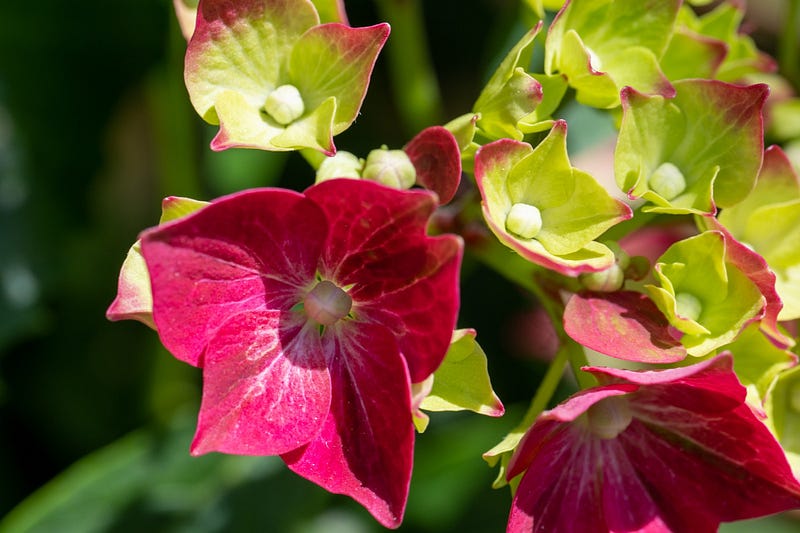
I was reminded of this fable while photographing the unfurling of a particularly colorful hydrangea in my backyard. I recently bought the new 105mm macro lens for my Nikon Z9 and I’ve been testing it out around my garden.
The thing I love about macrophotography is that you can see a part of a flower, leaf, or even a bee in such exquisite detail. But, the thing is, you can never get the whole subject in focus at one time.
It’s looking through a pair of glasses set for only one focal point. One plane is in perfect focus, but anything not on that plane — at that exact distance from the lens — will be softly blurred.
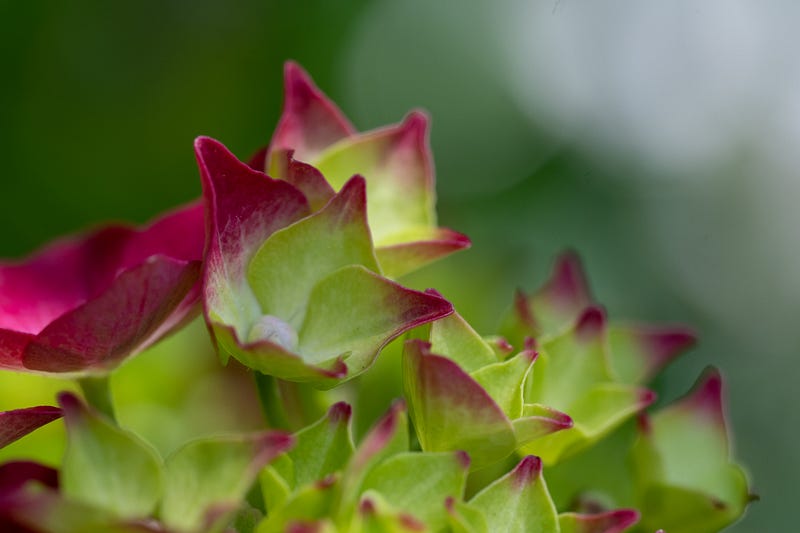
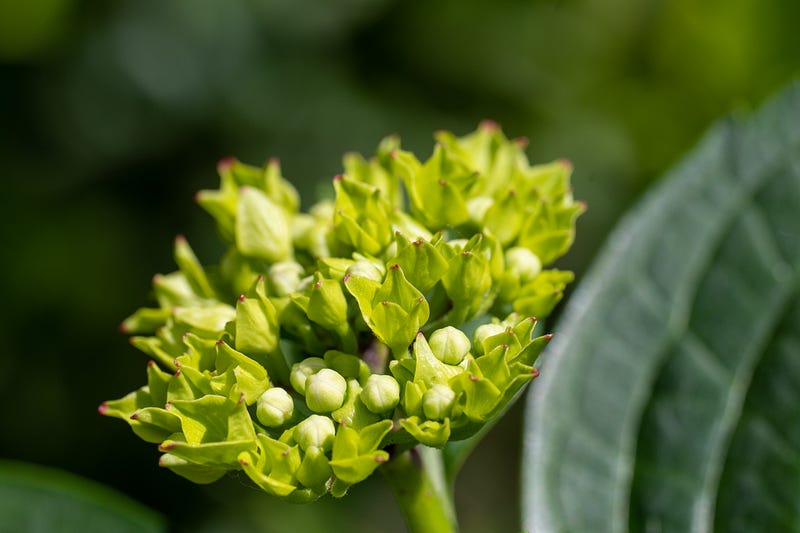
This hydrangea was just beginning to bloom. Some of the little buds still nestled like pearls within the cradled cup of the nascent, still-green, flowers.
And other flower clusters (those facing into the sun) had already burst into flaming glory.
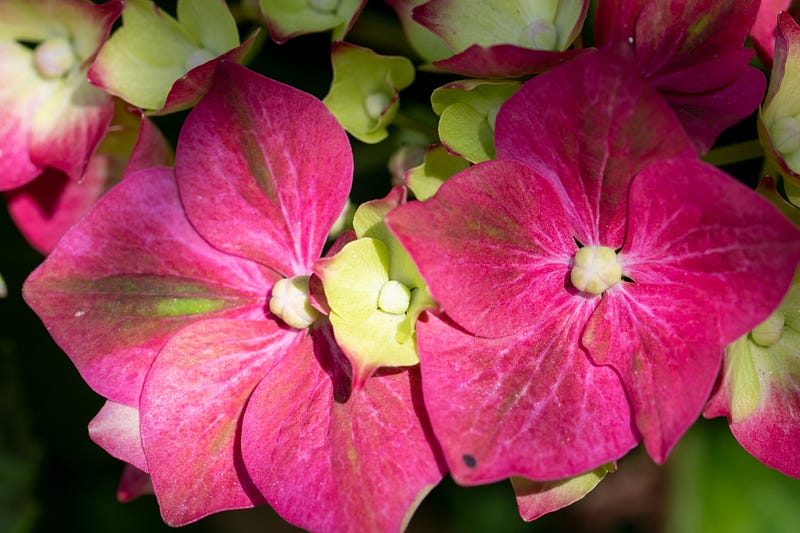
And in other sections, some of the buds still retain their green while others are already in full flame.
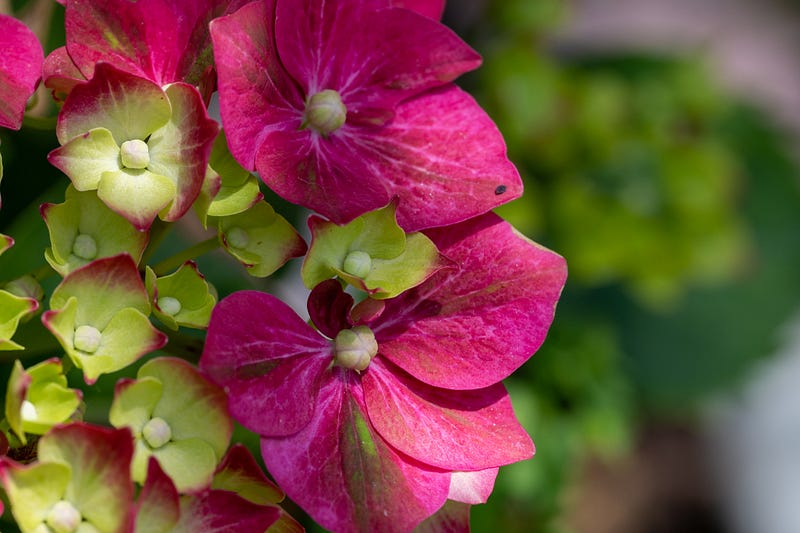
It gives perspective to the conception of the plant — both as a whole and as a collection of its myriad expressions.
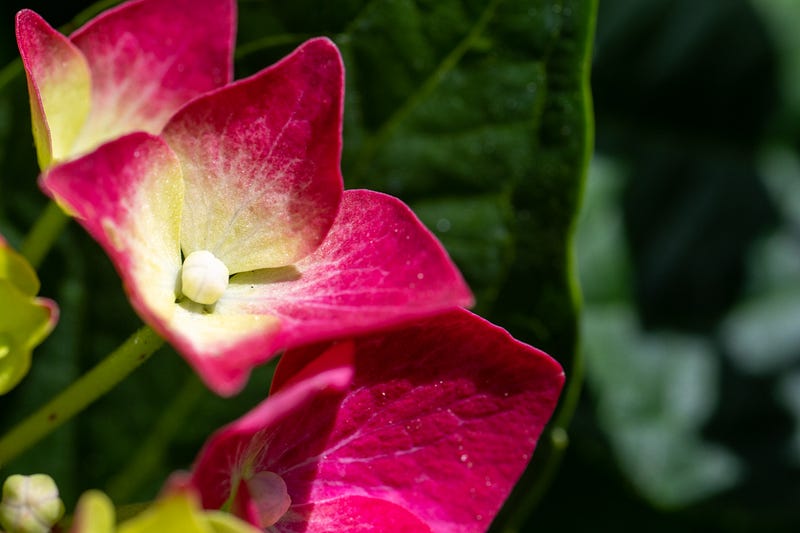
And it is a reminder that we all view the world through different lenses.
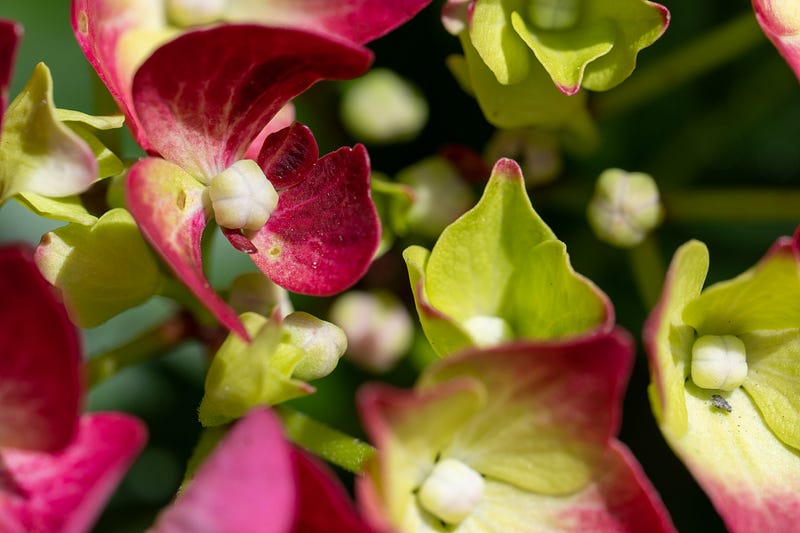
It’s so easy to get trapped into thinking that our perspective is the only one. But we need to remember that we are only one among many.
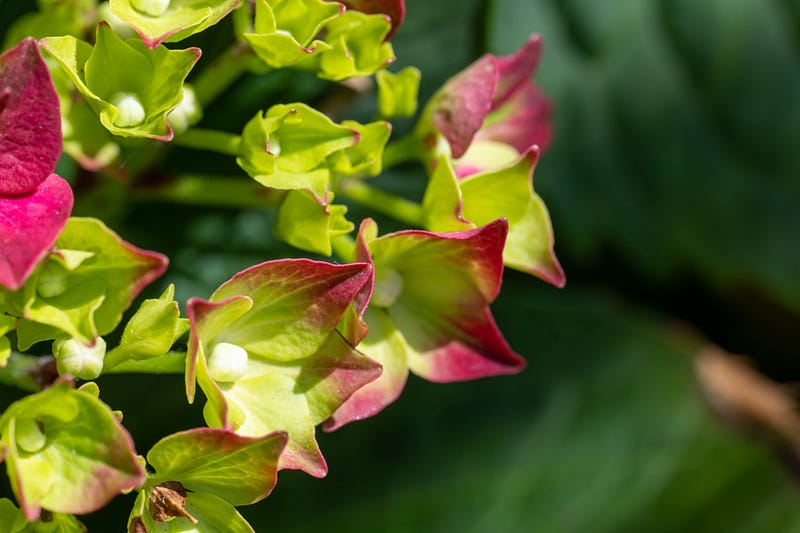
Even the way that we view the world can change from moment to moment, and from day to day.
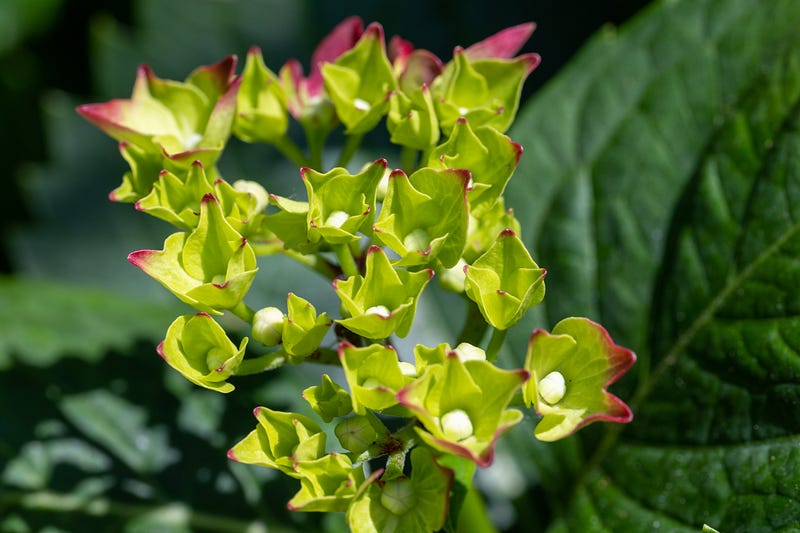
There is a much bigger world out there than we can ever be completely aware of.
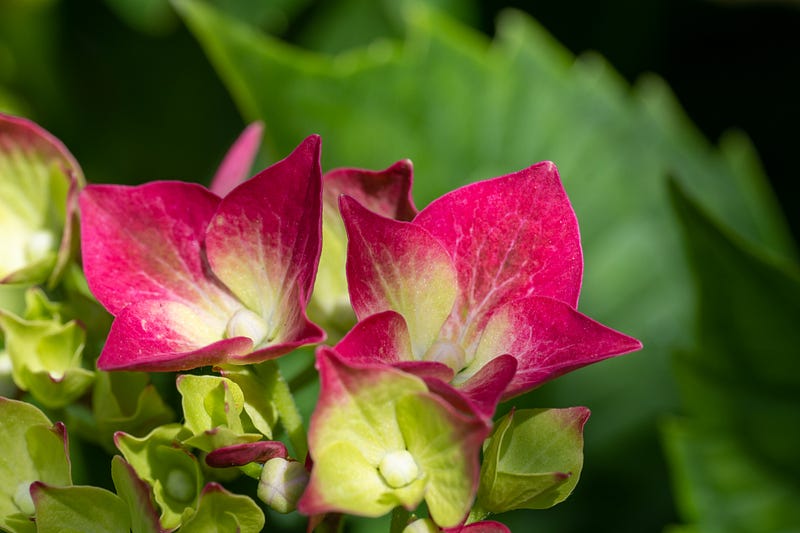
But if we all come together, with open minds and hearts, there is so much to see — things we haven’t even imagined yet. The blind men had never experienced an elephant before. It was so hard for them to conceive of it.
What wonders are waiting out there for you to explore today?
Erika Burkhalter is a yogi, neurophilosopher, cat-mom, photographer, and lover of travel and nature, spreading her love and amazement for Mother Earth’s glories, one photo, poem or story at a time. (MS Neuropsychology, MA Yoga Studies).
All photos were taken with a Nikon Z9 and Nikon’s new 105mm macro lens.
You might also enjoy:
If you enjoyed this piece, you might consider subscribing to my stories. You’ll get an alert whenever a story gets published. While I do normally post my stories with free “friends” links on social media, if you enjoy reading on medium, you can help the many talented writers here by joining. It helps to support the arts and to keep us writing!
And, because I’ve had a few people asking lately, if you’re ever interested in purchasing a photo, just leave me a note.
Photos and story ©Erika Burkhalter. All rights reserved.
Ian Hanson, my fellow Z9er with a 105mm macro lens, I thought you might like this one, so I’m tagging you.


