
Ocicat
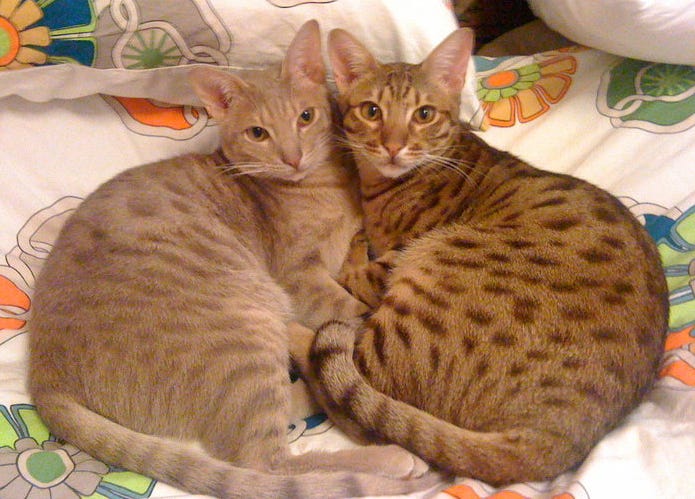
I’m counting on this cute cat to increase my readership
Today’s New York Times Spelling Bee letters:
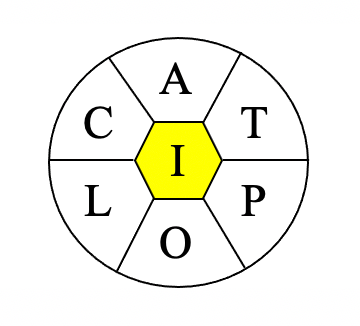
A, C, L, O, P, T, and center I (all words must include I)
Merriam-Webster says…
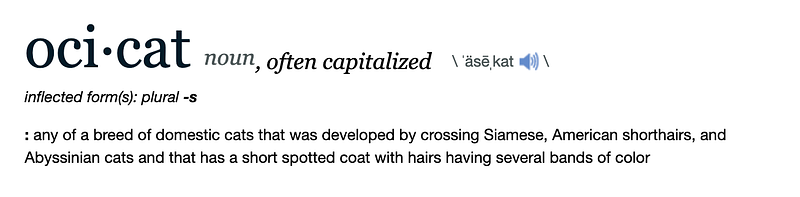
Silly little dictionary! Don’t you know that ocicat can’t possibly be a word if the New York Times says it ain’t?
For further fascinating facts, check out the Spelling Bee Master.
What’s your favorite dord* from today’s puzzle?
My Two Cents
When picking from the list of dords*, or “words that the editors of the Spelling Bee think are ghosts”, I prefer to go with things, or nouns. It’s easier to research and write about them. Adjectives, adverbs, and verbs can also work as long as I can riff off their noun forms.
When it comes to things, my favorites are animals. Everyone loves to read about animals, right? Triple bonus today, as I got a noun, animal… and cat. After all, cats are the apple of the internet’s eye.
Especially if they are lol-ing.
Temper, temper… not!
The ocicat’s main appeal appears to be the contrast between its appearance and its character. Namely, the spots on its fur are reminiscent of a feline in the wild, but its behavior is very domestic. So much so that some characterize it as more canine than feline.
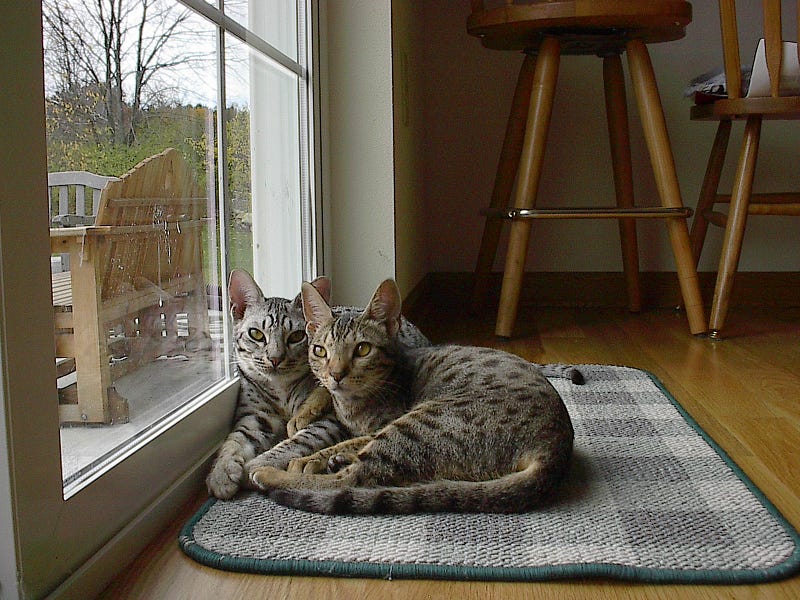
(By the way, grimmcar wants us to know that the one on the left is Oreo and the one on the right is Shadow.)
This “dog in a cat’s body” can be trained to walk on a leash or harness, come when called, speak, sit, lie down, and even fetch. And unlike your stubborn cocker spaniel, the ocicat will let go of the stick when it brings it to you.
Ocicats make great pets, especially for dog people. They get along well with the other animals in the house — including people — and will even greet your guests if you’re having a party at home. However, ocicats draw the line when it comes to serving drinks to guests. That you’ll have to do yourself.
According to the Cat Fancier’s Association (CFA), ocicats come in twelve colors. I think what they mean is that there are twelve different varieties of the cats according to their color, not that each one look like a patchwork quilt:
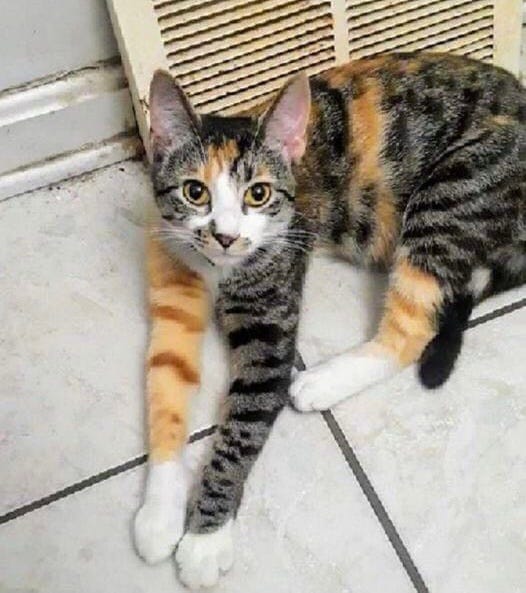
The one drawback ocicats have is they are very frisky, which means they need owners who can devote time to them… or get them a companion. Possibly in a different color. For variety’s sake.
Wrong recipe
The name ocicat was coined by the daughter of the woman who bred it. Virginia Daly, of Berkley, Michigan, combined a Siamese and an Abyssinian cat in 1964.
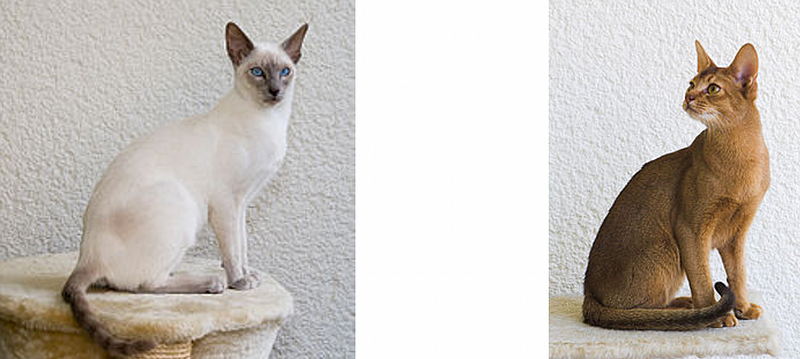
The first generation of kittens looked more like the cat on the right (Abyssinian), but the second generation featured a spotted kitten, the first ocicat. Ms. Daly named him Tonga, but her daughter, Virginia E. Daly, later came up with the nickname ocicat.
Why not call this new breed a “daly”? Or a “virginia”? Clearly mother and daughter Daly were much humbler than Karl Friedrich Louis, better known as Herr Doberman, the German tax collector who first bred the dog that carries his name. Then again, if you’re a tax collector you may want people to associate a tenacious guard dog with your name.
According to the CFA:
“Tonga, the first Ocicat, was neutered and sold as a pet. When the Detroit newspaper publicized the lovely spotted cat, noted geneticist Dr. Clyde Keeler expressed his desire to see a domestic cat which would mimic some of the vanishing wild species. With this in mind, the breeding was repeated, and the Ocicat breed was truly born!”
Except… the CFA screwed up the “formula”, so to speak. They recorded the cross as Siamese-Abyssinian-American Shorthair. This guy (or gal):
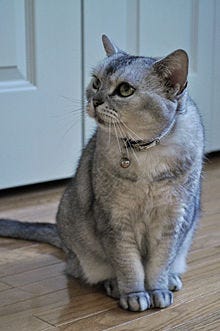
Now, the amazing ocicat was trending even without the help of the internet, so a bunch of breeders naturally got in on the action. They had the CFA’s recipe, so they added that pinch of American Shorthair. That ended up giving the ocicat a larger bone structure and added six variety colors. So now you know, half of its current color options come from one type of cat.
The ocicat was initially accepted for registration in The Cat Fanciers’ Association, Inc., and was first moved into Championship for showing in 1987.
And yet… despite its interesting history and all the photos of cute cats I posted here today, the ocicat was rejected by the Spelling bee today. Why?!? The rules do say they don’t accept proper nouns, and the dictionary says the word is “often capitalized”. However, the dictionary entry is not capitalized, and I’ll rest my case on that.
The editors of the Spelling Bee game should have allowed this cat-dog as a word, and not declared that ocicat is a dord.*
You can check out my previous entry on another dord* here:
*What the heck is a dord, you ask? Here’s the answer: