
Elevon
This word is not misspelled, and neither is “ailavator”
Today’s New York Times Spelling Bee letters:
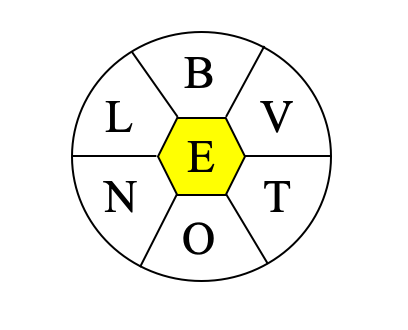
B, L, N, O, T, V, and center E (all words must include E)
Merriam-Webster says…
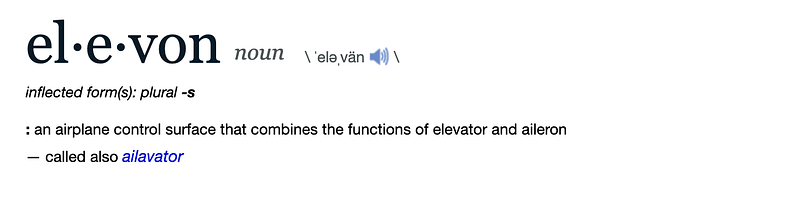
Silly little dictionary! Don’t you know that elevon can’t possibly be a word if the New York Times says it ain’t?
For further fascinating facts, check out the Spelling Bee Master.
What’s your favorite dord* from today’s puzzle?
My Two Cents
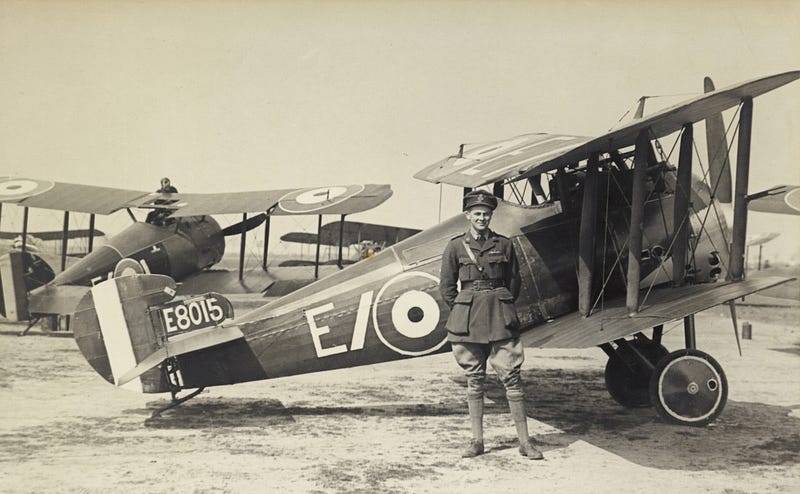
The biplane in the photo at the top of the article does not have an elevon. Nor does it have an ailavator (because they’re the same thing). So why did I pick that image? Well, I liked it, for one. It struck my fancy and struck it hard. Also, it does contain the predecessors of the elevon.
Namely, the aileron and the elevator. See below:
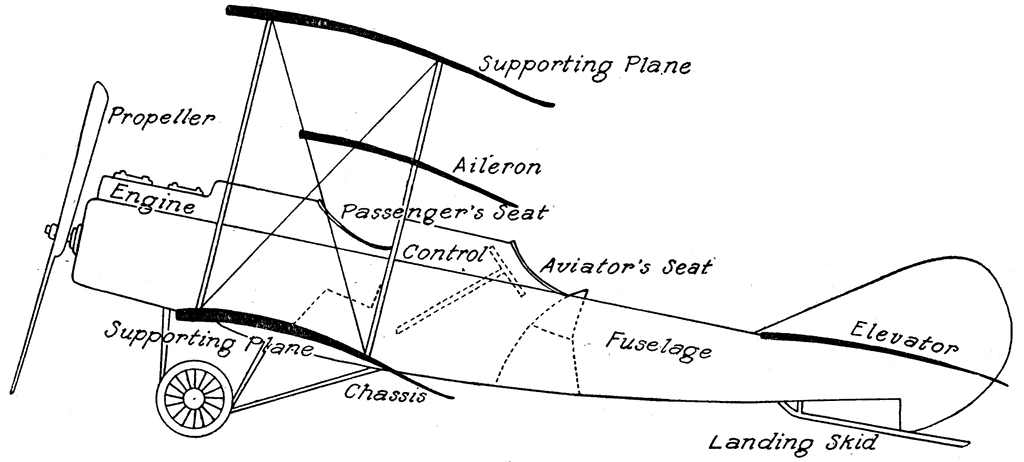
The aileron is located between the two wings, while the elevator is located at the tail. Both are illustrated as thick, tapering lines because you are viewing them from the side, not the top. (Don’t confuse the elevator with the rudder right above it.) Also, please note that there are ailerons and elevators on both sides of the plane.
Tools of the trade
The word elevon is a portmanteau, or, as the dictionary explains: “a word or morpheme whose form and meaning are derived from a blending of two or more distinct forms” The classic example is the well-known term for urban pollution, smog, a portmanteau made from smoke and fog.
So, when you combine elevator and aileron, you get elevon, a word whose recorded usage goes back to World War II. Conversely, if you combine aileron and elevator, you get the less commonly-used term ailevator, or ailavator.
Let’s move about a hundred years forward from biplanes and discuss modern airplanes.
Elevators are usually found at the rear of an aircraft and serve to control its pitch, or up-and-down movement. In turn, this determines the angle of attack and the lift of the wing. Early airplanes sometimes had elevators located at the front, but today they are usually connected to the tail of the airplane or horizontal stabilizer. When the entire tailplane functions as an elevator, this is known as a slab elevator or stabilator.
This animation courtesy of Wikipedia shows the control provided by the elevators.
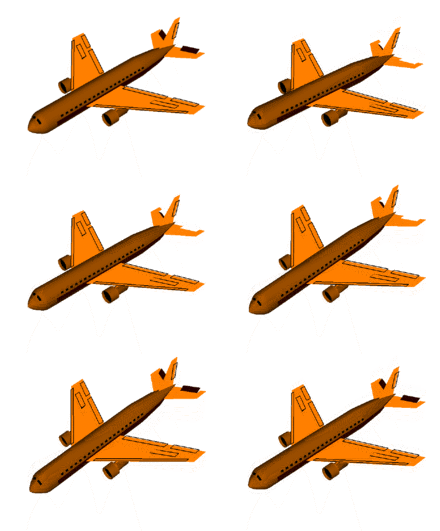
On the other hand, an aileron (from the French word meaning “little wing”) is a hinged flight control surface usually located on each wing. Pairs of ailerons work together to control the roll of an aircraft. Roll is the movement around the aircraft’s longer axis. Movement around this axis is called ‘rolling’ or ‘banking’ and is used to change the path of a flight.
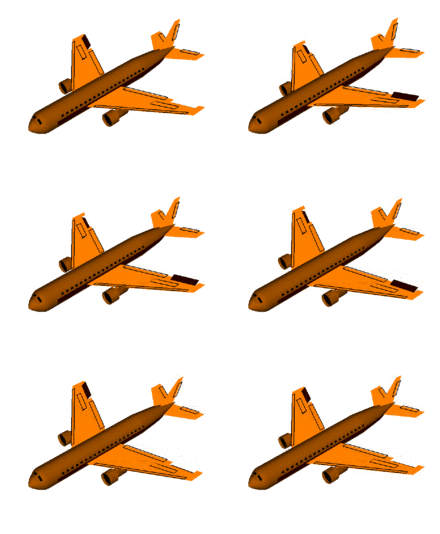
Combining both functions, elevons are installed on each side of an aircraft at the trailing edge of the wing. When both elevons move in the same direction (up or down) they will work like an elevator, changing the pitch of the plane up or down. When the elevons move separately, (one up, one down) they will operate like an aileron and generate a roll, or sideways motion.
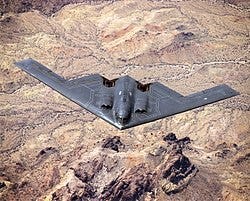
Elevons are common in tailless aircraft known as “flying wings”, for example, the Northrop B-2 Spirit stealth bomber.
Perhaps one of the best-known airplanes with an elevon was the famous Concorde, a supersonic plane commercial passenger plane that could fly at twice the speed of sound. This plane entered service in 1976 and made its last flight in October of 2003. Even if you weren’t around during those years, you may have seen a photo of the famously needle-thin fuselage with a delta wing:
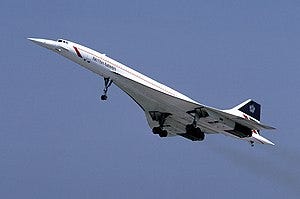
You can see the delta, or triangle-shaped wings, below in in the silhouette of an early prototype of the Concorde:
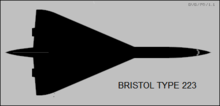
The elevons go on each side of the base of that wing triangle. When the Concorde flew at regular commercial aircraft speeds, the outer elevons would be used. But at supersonic speeds, they would be deactivated and only the interior elevons, attached to the stiffest section of the wings, would be used.
The Concorde was an expensive and controversial project — flying faster than the speed of sound creates a loud boom — and had very limited use in its three decades of service. A joint effort by Britain and France, the airplane flew mostly out of Heathrow and Charles de Gaulle airports across the Atlantic to the United States.
The fastest transatlantic flight happened on February 7, 1996, when a British Airways Concorde flew from New York (JFK) to London Heathrow in 2 hours, 52 minutes, and 59 seconds from take-off to touchdown. This was aided by a tailwind of 175 mph (282 km/h).
Flight-less
The Concorde started operating when I was a kid, and I remember being excited about finding out how fast it could go. People must have thought this was another giant step into the future of air travel. But the Concorde ended up being a big disappointment. Barely five years after its first takeoff, the supersonic service was almost cancelled. But British Airways started making a profit and Concorde flights lasted another twenty-plus years.
The airplane’s look was unlike any other commercial aircraft of the time. Not just because the very narrow fuselage contrasted with the wide delta wings. The airplane’s nose could move downwards, or droop, for takeoff and landing. This was done because otherwise the nose itself would obstruct the pilot’s view. Once airborne, the nose would be pulled up again to streamline the Concorde so it could achieve its sound-breaking speeds.
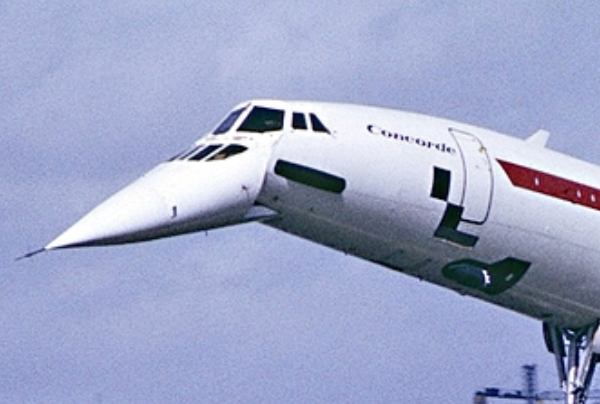
Between the Air France and British Airways flights, the Concorde had one of the safest records in the history of commercial service. The only accident ever involving fatalities happened with Air France on July 25, 2000, when the airplane crashed on departure, killing everyone on board.
Concorde flights were very, very expensive and ended up becoming an ultra-luxury airline service. As an example of prices, in 1997 a round-trip ticket from New York to London cost almost $8,000, or $13,000 in 2020 dollars. Now, imagine paying that for this interior layout:
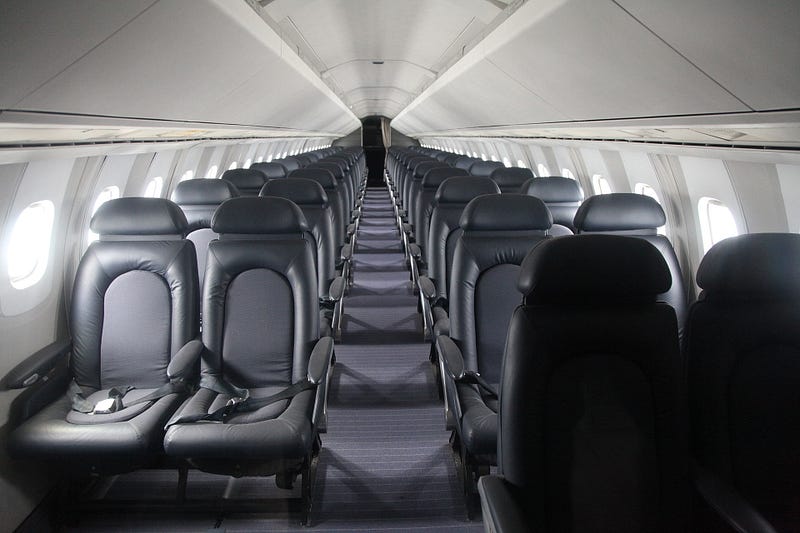
If you were very tall, you had to watch your head when getting up from your seat.
There were a couple of advantages. You could boast that you had flown faster than the speed of sound, most times twice as fast (Mach 2). The Concorde also cruised at an altitude of around 60,000 feet, almost double that of typical commercial aircraft. At that altitude, you were the closest you’d ever be to flying like an astronaut. And you had a shot of actually seeing the curvature of the Earth.
The link provided above describes the experience in detail, with plenty of photos.
For those two reasons, one of my dreams in life growing up was to fly on the Concorde. I figured it was my only chance at breaking the speed of sound. (I was never a fast runner). Unfortunately, I was never able to save up for just the one-way ticket before the Concorde was retired to pasture.
I’ll resign myself to living the experience vicariously via the detailed report offered by Nathan Roemer, known as the “Travel Scholar.”
So, after writing all this, I still wonder why elevon was rejected by the Spelling Bee. The only reason I can come up with is that, with the “death” of the Concorde, the New York Times editors decided that elevon should also be sacrificed… and so declared that this word was a dord.*
You can check out my previous entry on another dord* here:
*What the heck is a dord, you ask? Here’s the answer: