avatarAvi Kotzer

Free AI web copilot to create summaries, insights and extended knowledge, download it at here

3230

Abstract

plethora of odd jargon: <i>double top</i> (a double twenty), <i>bag o’ nuts</i> (score of 45)<i>, Shanghai</i> (a score of a single, treble and double in that order), <i>mugs away</i> (inviting the losing player to start the next round), or <i>mad house</i> (double one).</p><p id="6e50">So <i>oche</i> fits right in, as far as I’m concerned.</p><p id="4773">One theory, that it derived from the Old French <i>ochen</i> meaning “to cut a deep notch”, is easily dismissed because, as mentioned before, it was first spelled <i>hockey</i> and only later as <i>oche</i>.</p><p id="2ff3">A former popular story held that the crates of an English brewery called “S. Hockey and Sons” were used to measure out the throwing distance from the dartboard. This yarn is also sometimes associated with the phrase “toeing the hockey” — which, like you, dear read, I first heard about <b>today</b>. However, the Brewery History Society squashed that theory in 1990s by saying they could find no record of an English brewery by that name.</p><p id="299d">Why no one founded “S. <b>Oche</b> and Sons” right then and there is beyond me. Truly a missed business opportunity. And if anyone reading this decides to open a brewery with that name, please give me credit for the idea. Or at least mention my column on Medium.</p><h2 id="7986">Spitting distance</h2><p id="cd3a">One of the most credible theories for the origin of <i>oche</i> lies in a darts competitions sponsored by <i>News of the World</i>. That would be the tabloid, not the album by Queen with the bone-chilling cover.</p><figure id="3f95"><img src="https://cdn-images-1.readmedium.com/v2/resize:fit:800/1*DRf5YXbXxhn0vv9NsEHZ_A.png"><figcaption>Screenshot collage: Iva Reztok</figcaption></figure><p id="8207">The newspaper used the word <i>hockey</i> in their tournament rules to refer to the throwing line, and many experts think they were the first to do so. This happened in the 1920s, and <i>oche</i> started being used regularly about a decade later.</p><p id="52bf">In this case,<i> hockey</i> might have derived from the Old English <i>hocken, </i>“to spit”. It seems that spitting competitions were a thing in English pubs back then, and the “hockey line” was determined by the length that a given player could <i>hocken</i> a loogie from a position with his back to the dartboard.</p><p id="d786">In case you’re wondering: spitting, not a sport. No defense.</p><p id="2196">So, what is this infamous distance between the dartboard and the oche?</p><p id="175b">Currently, it measures 7 feet and 9 ¼ inches. Although it seems oddly precise, that length is the result of a long, complicated negotiation. And who better to explain it to us than Patrick Chaplin, also known as <a href="https://patrickchaplin.com/">Dr. Darts.</a></p><blockquote id="9ee3"><p>“…in 1977, its member countries looked to agree a ‘world’ standard length of throw, a happy medium between the NDAGB length (7 feet 6 inches) and that of the <i>News of the World</i> (8 feet). Logically this would surely have meant 7 feet 9 inches but instead of setting the standard at that, the WDF came up with 7 feet 9¼ inches.</p></blockquote><blockquote id="1f33"><p>For many years it was believed and blogged th

Options

at 7 feet 9 inches did not ‘translate’ into metric (metric being all the rage back in ’77) but 7 feet 9¼ inches (2.37metres) did, thus explaining the strange length of oche. I included this ‘fact’ in a Unicorn blog some years ago, believing it to be true but then some wise person responded pointing out that 7 feet 9 ¼ inches did <i>not </i>translate exactly to 2.37 metres but 2.368852 metres.</p></blockquote><blockquote id="2a8d"><p>On putting this to the WDF the truth was finally revealed. <b>The measurement was never intended to be an ‘exact’ equivalent in metres but a compromise.</b> At the WDF Meeting at Wembley in 1977, where the very first WDF World Cup was discussed, the distance of 2.37m was adopted as the official WDF Standard. It was proposed (it is believed by the Swedish delegate) that the 7 feet 9¼ inches be adopted in its’ metric equivalent which happened to be extremely close to 2.37 metres. This was seconded and approved unanimously by all countries present.</p></blockquote><blockquote id="bd62"><p>It had to be a compromise. After all, it could hardly be expected that tournament organisers would, or even could, measure out a 2.368852 metre oche!”</p></blockquote><figure id="f559"><img src="https://cdn-images-1.readmedium.com/v2/resize:fit:800/0*aDVWo8i91PGaw6MP.png"><figcaption>Credit: Darts501.com</figcaption></figure><p id="d2f0">Above, a quick and handy guide for setting up your dartboard so you can play this sport… er, game, at home.</p><p id="9073">Next time you saunter into an English pub, be sure to join in with the locals as they imbibe room-temperature ales and sling sharp-tipped objects around the place.</p><p id="bd32">Just don’t mention the word <i>oche</i>. Because the editors of the Spelling Bee decided that it’s a <a href="https://www.merriam-webster.com/words-at-play/dord-a-ghost-word"><b>dord</b></a><b>.</b></p><p id="1f9c">Please check out my previous entry on another <b>dord:</b></p><div id="479e" class="link-block"> <a href="https://readmedium.com/leno-627131e5fd3b"> <div> <div> <h2>Leno</h2> <div><h3>A weave and a talk show host who didn’t need one</h3></div> <div><p>medium.com</p></div> </div> <div> <div style="background-image: url(https://miro.readmedium.com/v2/resize:fit:320/1*yHYI-7Ai7siRBJKrWzVcyA.jpeg)"></div> </div> </div> </a> </div><p id="54ec">*What the heck is a <b>dord, </b>anyway? Here you go:</p><div id="62ae" class="link-block"> <a href="https://www.merriam-webster.com/words-at-play/dord-a-ghost-word"> <div> <div> <h2>'Dord': A Ghost Word</h2> <div><h3>One of the questions people like to ask lexicographers is this: Can you sneak something into the dictionary? Can you…</h3></div> <div><p>www.merriam-webster.com</p></div> </div> <div> <div style="background-image: url(https://miro.readmedium.com/v2/resize:fit:320/0*RhTFyfr8r09pKKZo)"></div> </div> </div> </a> </div></article></body>

Oche

You’ll toe the line with this one
Photo by Museums Victoria on Unsplash

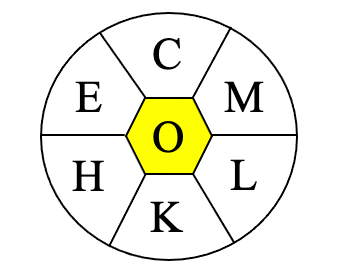
Today’s New York Times Spelling Bee letters:
Art: Iva Reztok

C, E, H, K, L, M, and center O (all words must include O).

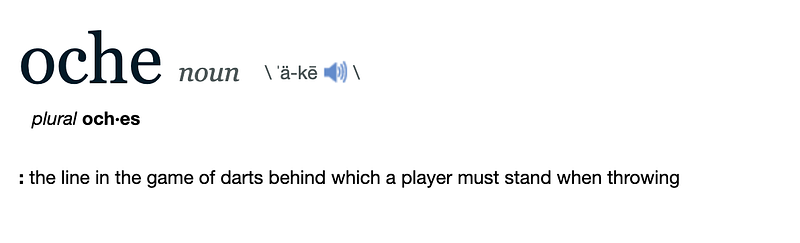
Merriam-Webster says…
Credit: merriam-webster.com

Silly little dictionary! Don’t you know oche can’t possibly be a word if the New York Times says it ain’t?

For further fascinating facts, check out the Spelling Bee Master.

What’s your favorite dord* from today’s puzzle?

My Two Cents

Those of you who play darts on a regular basis or watch darts tournaments on ESPN5 or just enjoy reading about the minutiae of darts are probably screaming: “Oche is a well-known word; it should have been included in today’s Spelling Bee puzzle!!!” (In my mind, when people scream they use semicolons and three exclamation marks.)

Exactly. That’s my point! In fact, that’s my point every time I write this column.

I appreciate the support.

For those of you not familiar with game of darts, let me first clarify why I’m not calling it a sport, and in the process get darts fans screaming again with their semicolons and three exclamation marks.

There is sort of widely-held theory that in order for a competitive physical activity to qualify as a sport, there has to be the possibility of playing defense. So, no defense… no sport. I realize this eliminates popular games like tennis, golf, most track and field events, and even swimming.

According to that definition, darts cannot be a sport, unless there is a defensive strategy I’m unaware of, like flicking the dart sideways at your opponent’s eye.

Oche-dochey

First off, pronunciation. Not OH-chee or OH-cheh. The ch does not carry the regular ch sound nor the hard ch as in challah or chuppah.

Think of how most Americans might say “hockey”… and then slice of both ends, the h and the y. Oche. Interestingly enough, the darts term was originally written like the sport played on both ice and grass, with the current spelling becoming standard only in the 1970s.

So where did word come from? Darts has a plethora of odd jargon: double top (a double twenty), bag o’ nuts (score of 45), Shanghai (a score of a single, treble and double in that order), mugs away (inviting the losing player to start the next round), or mad house (double one).

So oche fits right in, as far as I’m concerned.

One theory, that it derived from the Old French ochen meaning “to cut a deep notch”, is easily dismissed because, as mentioned before, it was first spelled hockey and only later as oche.

A former popular story held that the crates of an English brewery called “S. Hockey and Sons” were used to measure out the throwing distance from the dartboard. This yarn is also sometimes associated with the phrase “toeing the hockey” — which, like you, dear read, I first heard about today. However, the Brewery History Society squashed that theory in 1990s by saying they could find no record of an English brewery by that name.

Why no one founded “S. Oche and Sons” right then and there is beyond me. Truly a missed business opportunity. And if anyone reading this decides to open a brewery with that name, please give me credit for the idea. Or at least mention my column on Medium.

Spitting distance

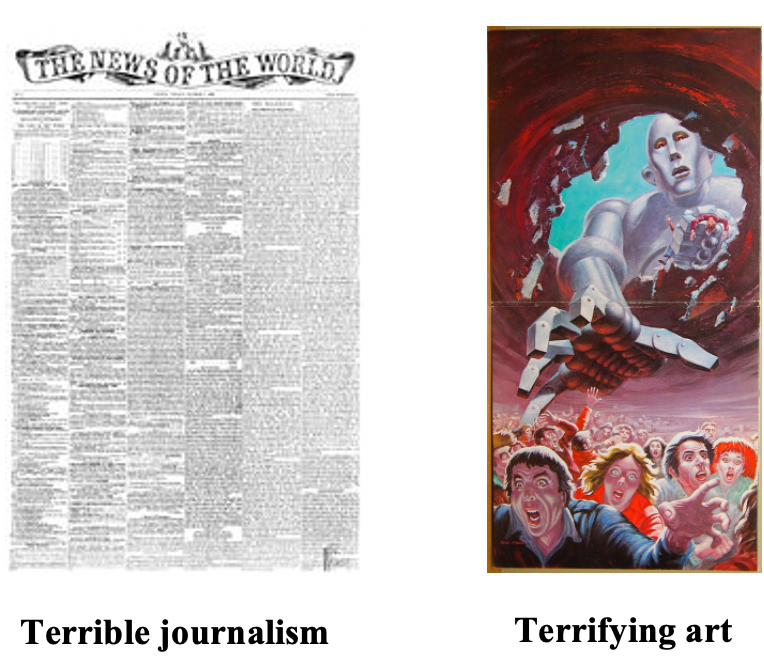
One of the most credible theories for the origin of oche lies in a darts competitions sponsored by News of the World. That would be the tabloid, not the album by Queen with the bone-chilling cover.
Screenshot collage: Iva Reztok

The newspaper used the word hockey in their tournament rules to refer to the throwing line, and many experts think they were the first to do so. This happened in the 1920s, and oche started being used regularly about a decade later.

In this case, hockey might have derived from the Old English hocken, “to spit”. It seems that spitting competitions were a thing in English pubs back then, and the “hockey line” was determined by the length that a given player could hocken a loogie from a position with his back to the dartboard.

In case you’re wondering: spitting, not a sport. No defense.

So, what is this infamous distance between the dartboard and the oche?

Currently, it measures 7 feet and 9 ¼ inches. Although it seems oddly precise, that length is the result of a long, complicated negotiation. And who better to explain it to us than Patrick Chaplin, also known as Dr. Darts.

“…in 1977, its member countries looked to agree a ‘world’ standard length of throw, a happy medium between the NDAGB length (7 feet 6 inches) and that of the News of the World (8 feet). Logically this would surely have meant 7 feet 9 inches but instead of setting the standard at that, the WDF came up with 7 feet 9¼ inches.

For many years it was believed and blogged that 7 feet 9 inches did not ‘translate’ into metric (metric being all the rage back in ’77) but 7 feet 9¼ inches (2.37metres) did, thus explaining the strange length of oche. I included this ‘fact’ in a Unicorn blog some years ago, believing it to be true but then some wise person responded pointing out that 7 feet 9 ¼ inches did not translate exactly to 2.37 metres but 2.368852 metres.

On putting this to the WDF the truth was finally revealed. The measurement was never intended to be an ‘exact’ equivalent in metres but a compromise. At the WDF Meeting at Wembley in 1977, where the very first WDF World Cup was discussed, the distance of 2.37m was adopted as the official WDF Standard. It was proposed (it is believed by the Swedish delegate) that the 7 feet 9¼ inches be adopted in its’ metric equivalent which happened to be extremely close to 2.37 metres. This was seconded and approved unanimously by all countries present.

It had to be a compromise. After all, it could hardly be expected that tournament organisers would, or even could, measure out a 2.368852 metre oche!”
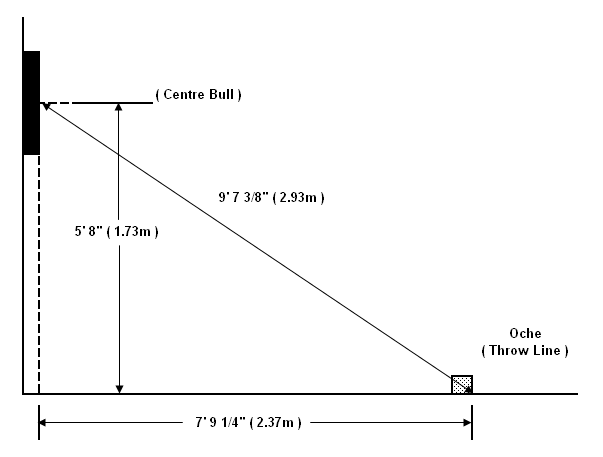
Credit: Darts501.com

Above, a quick and handy guide for setting up your dartboard so you can play this sport… er, game, at home.

Next time you saunter into an English pub, be sure to join in with the locals as they imbibe room-temperature ales and sling sharp-tipped objects around the place.

Just don’t mention the word oche. Because the editors of the Spelling Bee decided that it’s a dord.*

Please check out my previous entry on another dord*:

*What the heck is a dord, anyway? Here you go:

Spelling Bee
Language
Sports
History
Darts
Recommended from ReadMedium