avatarRhonda Carrier

Free AI web copilot to create summaries, insights and extended knowledge, download it at here

2076

Abstract

shop in Damascus or to visit new archeology sites. We were accustomed to encountering welcoming people who were happy to share their customs and culture with us as we traveled through Syria.</p><p id="2b49">That is not what we found that day in Hama. Part of our error was arriving in Hama on a Friday afternoon just a short time after the Muslim men had attended the mosque. The garden area around the noria is only a short distance from the main mosque and the area was full of men who had just come from their Friday prayers at the mosque.</p><p id="47a4">Having a group of foreigners including women and children arriving and wandering around the garden was not welcome. I did not detect any hostility, but a Jordanian friend who was with us understood what was being said and caught the mood of the crowd. Within a few minutes of getting off the bus, he quietly and quickly notified the adults to gather the kids and get back on the bus. Now. We needed to leave the area. We quietly, calmly got our kids and got on the bus. We left.</p><p id="b18f">It was only later that I realized the difficult politics of the area. As early as the 1960s Hama was a center of conservative Sunni Muslims who were in opposition to the Syrian government. The government attacked Hama with military force. This was repeated in the 1980s, both the opposition and the military attack. We were there in 1993 but it was obviously very conservative, much more than what we had encountered in the rest of Syria. In 2011, Hama was again one of the targets of the Syrian civil war.</p><p id="a6d8">Hama has a long, long history. Evidence indicates it has been occupied since the early Neolithic (6000 BC). During the Bronze Age, around 1350 BC, the Hittites controlled northern Syria including Hama. During the Iron Age, the Assyrians took control of the area.</p><p id="0ecb">Alexander the Great’s campaign brought the area under his rule and influence. This put Hama on the trade routes from Asia to Greece and brought wealth to the area just as it did in Palmyra, Damascus, and Petra. After Al

Options

exander the Great’s death, Arab dynasties began to gain control of the area.</p><p id="3f57">The Romans gained control of the area in 64 BC. During the Roman rule, the city continued to prosper. The region continued to be conquered by one group after another. The Muslim conquest in the 7th century was followed briefly by Crusader rule but then returned to Muslim rule. It was included in the area control by the Mongols for a year but passed to Mamluk control.</p><p id="9817">For more details of the history of Hama read about <a href="https://en.wikipedia.org/wiki/Hama"><b>Hama</b></a>, on Wikipedia.</p><p id="3646"><b>My Additional stories of Jordan and Syria here on Medium:</b></p><blockquote id="01a0"><p><a href="/globetrotters/speaking-in-a-roman-amphitheater-in-jerash-jordan-21910b556e54?sk=c3dead4acd5068a25e27601f352c5971"><b><i>Speaking in A Roman Amphitheater on Jerash</i></b></a><b><i> (Jordan)</i></b></p></blockquote><blockquote id="e89c"><p><a href="/globetrotters/palmyra-a-greco-roman-city-e4cf4ccd4f7c?sk=3b0b2a8ec2d28b2da589794e265df2d3"><b><i>Palmyra: A Greco-Roman City</i></b></a><b><i> (Syria)</i></b></p></blockquote><blockquote id="aa6b"><p><a href="/globetrotters/crusader-castle-crak-des-chevaliers-2527ce100d44?sk=4fc036214402fc66eee8211154232e04"><b><i>Crusader Castle: Crak Des Chevaliers</i></b></a><b><i> (Syria)</i></b></p></blockquote><blockquote id="9f56"><p><a href="/globetrotters/ebla-syria-an-ancient-city-3d2f00ba6775?sk=27a611e9461b1e491175b677f889acd2"><b><i>Ebla, Syria — An Ancient City</i></b></a><b><i> And Early Dictionaries (Syria)</i></b></p></blockquote><blockquote id="127f"><p><a href="/globetrotters/mount-nebo-memorial-to-moses-d0ebe2774026"><b><i>Mount Nebo, Memorial to Moses</i></b></a><b><i> (Jordan)</i></b></p></blockquote><blockquote id="cf03"><p><a href="https://readmedium.com/petra-the-rose-red-city-and-7th-wonder-of-the-world-70e18c28973e?sk=efcfaff98f29e5b42aef0e7481d3f185"><b><i>Petra: The Rose-Red City and 7th Wonder of the World</i></b></a><b><i> (Jordan)</i></b></p></blockquote></article></body>

Norias, Wooden Water Wheels of Hama, Syria

Historic Mechanical Engineering Landmark
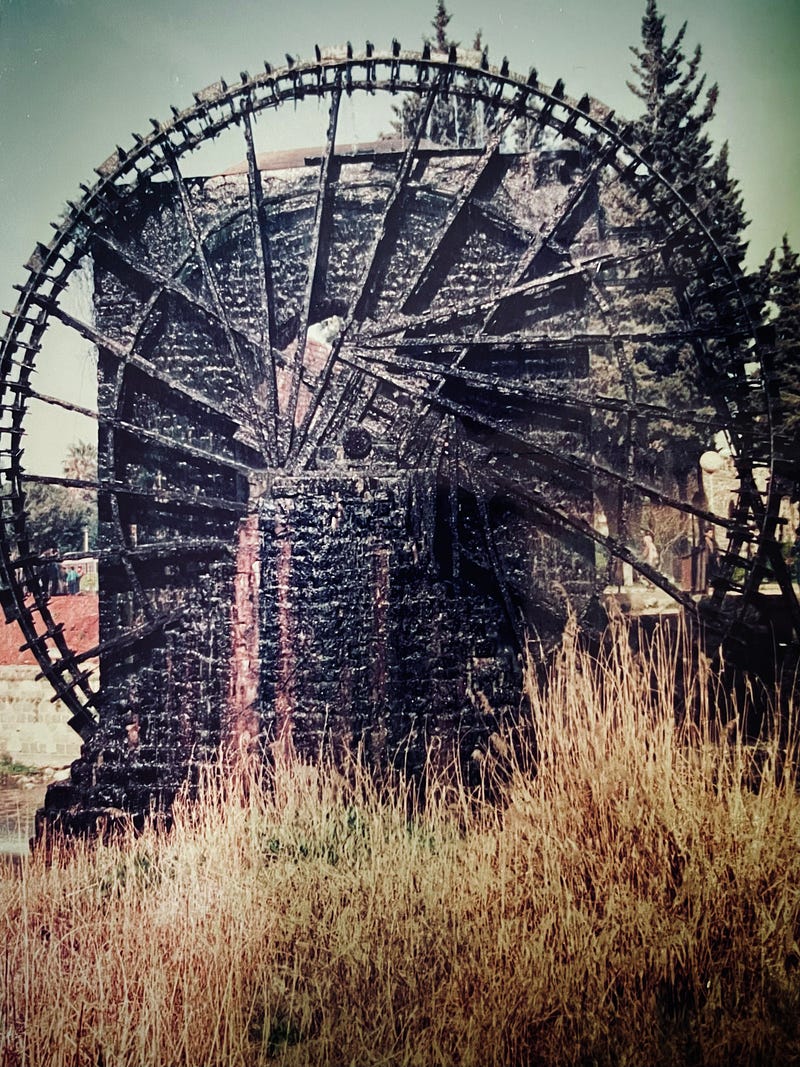
Noria in Hama, Syria (Photo by author)

On our 1993 road trip with a busload of friends through northern Syria, we briefly stopped to visit the city of Hama. Hama is 210 km (130 miles) north of Damascus. It is the provincial capital of the Hama Governorate of Syria.

We stopped in Hama to view the norias. The norias are water wheels that were operating in the 12th century during the Mamluk era along the Orontes River, although there were probably some norias in use there as early as the 9th century. Flowing water in the river turns the wheels. As the wheels turn, box-like water collection compartments fill with water that is then emptied into aqueducts for use in farmland, gardens, and buildings.

The water wheels were the tallest water wheels in the world for over 500 years. The tallest one is 21 meters (69 feet) in diameter. They are made from local wood, so the parts need to be repaired frequently as the wood deteriorates. “The water delivery of Hama’s norias ranges between 50,000 and 200,000 litres per hour, depending on a noria’s size (13,200 to 52,800 US gallons)” (Norias of Hama)
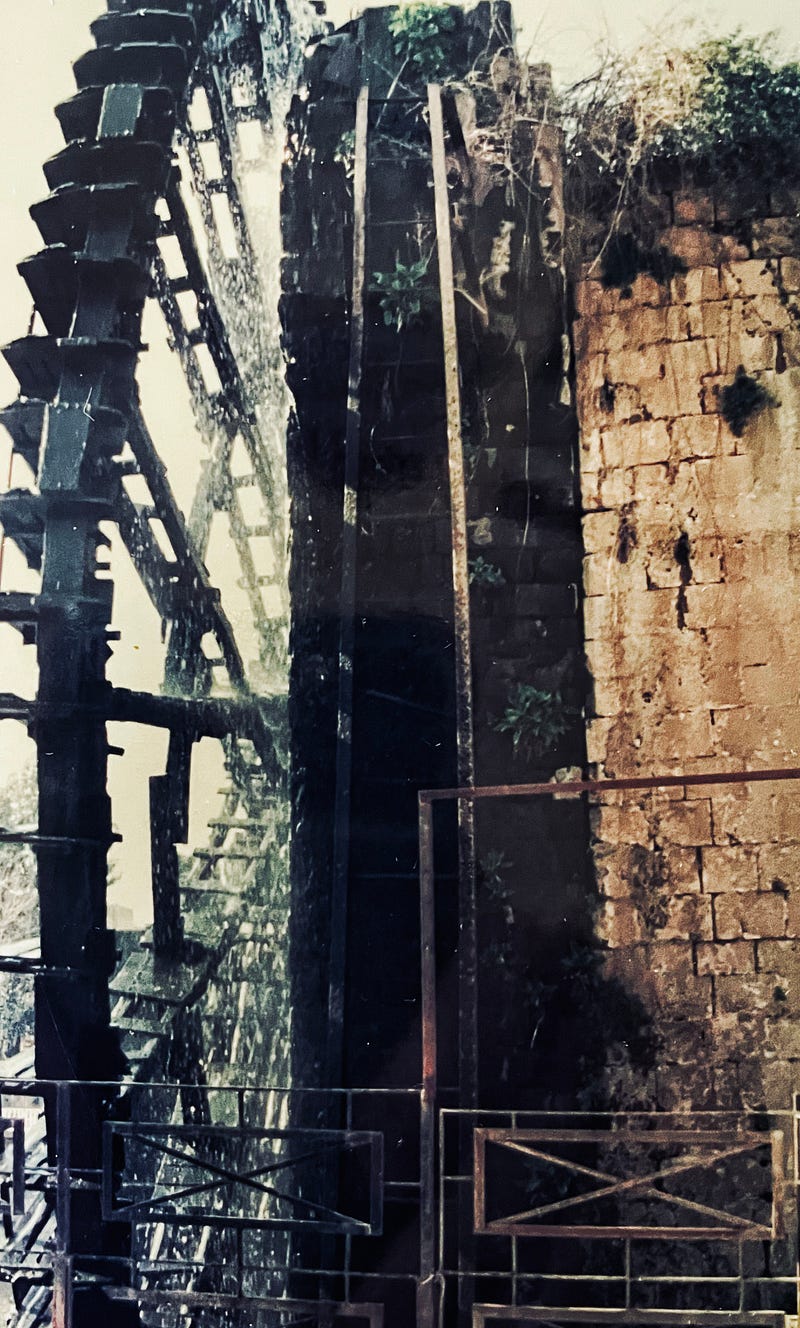
Noria of Hama, Syria (Photo by author)

The water wheel in the photo supplies water to the Great Mosque of Hama, about 1 kilometer away. That is where we ran into difficulty.

We were a group of Americans, Canadians, and Jordanians traveling through Syria. We had already been on the road on this trip for several days, but we visited Syria often to shop in Damascus or to visit new archeology sites. We were accustomed to encountering welcoming people who were happy to share their customs and culture with us as we traveled through Syria.

That is not what we found that day in Hama. Part of our error was arriving in Hama on a Friday afternoon just a short time after the Muslim men had attended the mosque. The garden area around the noria is only a short distance from the main mosque and the area was full of men who had just come from their Friday prayers at the mosque.

Having a group of foreigners including women and children arriving and wandering around the garden was not welcome. I did not detect any hostility, but a Jordanian friend who was with us understood what was being said and caught the mood of the crowd. Within a few minutes of getting off the bus, he quietly and quickly notified the adults to gather the kids and get back on the bus. Now. We needed to leave the area. We quietly, calmly got our kids and got on the bus. We left.

It was only later that I realized the difficult politics of the area. As early as the 1960s Hama was a center of conservative Sunni Muslims who were in opposition to the Syrian government. The government attacked Hama with military force. This was repeated in the 1980s, both the opposition and the military attack. We were there in 1993 but it was obviously very conservative, much more than what we had encountered in the rest of Syria. In 2011, Hama was again one of the targets of the Syrian civil war.

Hama has a long, long history. Evidence indicates it has been occupied since the early Neolithic (6000 BC). During the Bronze Age, around 1350 BC, the Hittites controlled northern Syria including Hama. During the Iron Age, the Assyrians took control of the area.

Alexander the Great’s campaign brought the area under his rule and influence. This put Hama on the trade routes from Asia to Greece and brought wealth to the area just as it did in Palmyra, Damascus, and Petra. After Alexander the Great’s death, Arab dynasties began to gain control of the area.

The Romans gained control of the area in 64 BC. During the Roman rule, the city continued to prosper. The region continued to be conquered by one group after another. The Muslim conquest in the 7th century was followed briefly by Crusader rule but then returned to Muslim rule. It was included in the area control by the Mongols for a year but passed to Mamluk control.

For more details of the history of Hama read about Hama, on Wikipedia.

My Additional stories of Jordan and Syria here on Medium:

Speaking in A Roman Amphitheater on Jerash (Jordan)

Palmyra: A Greco-Roman City (Syria)

Crusader Castle: Crak Des Chevaliers (Syria)

Ebla, Syria — An Ancient City And Early Dictionaries (Syria)

Mount Nebo, Memorial to Moses (Jordan)

Petra: The Rose-Red City and 7th Wonder of the World (Jordan)

History
Water Wheels
Syria
Mechanical Engineering
Touring
Recommended from ReadMedium