Nonna (Grandma), I Had to Go
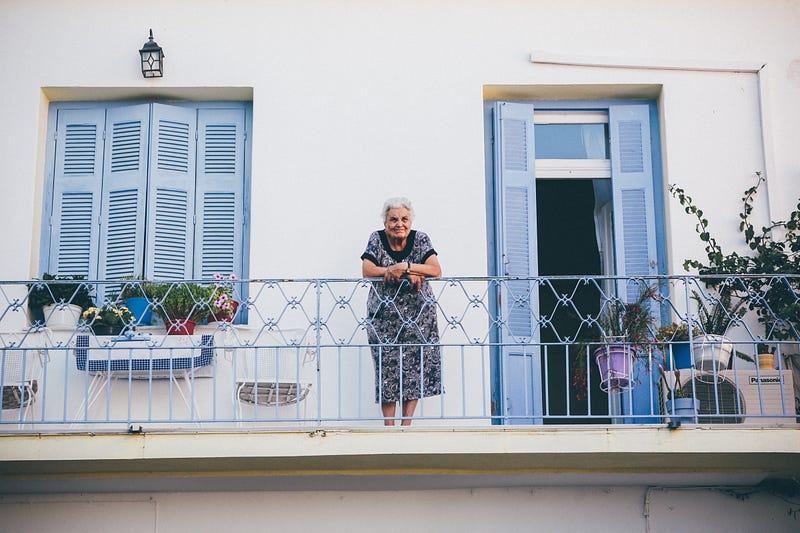
Both of my nonnas are called Tina (though we call one Titi’). Tina in Italian tends to be an abbreviation of several names. In my case, one nonna’s full name is “Annunziata”, and the other’s “Concetta”. Which funny enough, I had never realised mean “annunciation” and “conception”, roughly.
One of them lives in Italy, the other moved as a kid, with her parents to Australia.
“We” migrated, like storks, like birds searching for better worlds, like humans.
Human Migration
Humans have always migrated from one locality to another, sometimes more, sometimes less. We moved across the globe, and we moved from country to cities, or cities to country. We moved for warmth, more money, more safety, change, or self-actualization. Some of us move for love
Anthropology has historically always been interested in migration as part of human behaviour.
Different needs for migrating have been discussed over the years, as well as different nomenclatures of “types of migration.” For example:
- internal migration: moving but only between cities (internal in relation to country) or state/country (while staying in the same continent)
- external migration: moving state, nation, or across continents.
- emigration: moving from one country to another
- immigration: moving to a new country
- return migration: going back to where one’s from
- seasonal migration: moving according to labour or climate conditions
After growing up in Italy, I emigrate and “migrated back” to my mother’s home. Australia. A melting pot of many beautiful cultures. We shall remember that we, humans, are from everywhere, and belong to places. We don’t own land in nature.
But, the history of migration and colonization of my country is also a bloody history. White Australians have “stolen” the land of the Aboriginals and declared this country “terra nullius,” nobody’s land. And although Aboriginal Australians do not think of themselves as owners, they were here. They were here for thousands and thousands of years, taking care of this humongous land. They have been the custodian of Australia, and all Australians, of any sub-culture, should keep that in mind.
On that note, I would like to pay respect to the traditional owners of the land I stand on, and where I write from, the Wurundjeri people.
I would like to acknowledge the Wurundjeri people who are the Traditional Custodians of this Land. I would also like to pay respect to the Elders both past and present of the Kulin Nation and extend that respect to other Indigenous Australians.
Grandmas I love you both, Grandma; I miss you.
Thank you, R. Rangan Ph.D., for the tag in another amazing prompt.
From the prompt:
[…] if you have a favorite grandparent or older caregiver’s story, or perhaps you are a grandparent yourself, we would love to read about it :)
**This story is part of the S&S Prompt series — science-inspired prompts to get you inspired — Our dear readers — have a little fun exercising your artistic creativity and write a science-inspired story — the format is entirely up to you — haiku, sciku, limerick, poetry, prose, painting, etc. — if you do — feel free to publish it anywhere on medium, just tag it with #SnSPrompt.
Tagging people, I would love to read grandparents stories from:
yesnodunno, La campana di vetro, Mattia Zaminga, Terry Mansfield, Carlos Garbiras, Annamaria Illiano, Midori by the Sea, Roberto Quezada-Dardon, Rochelle Silva, Kasun Ranasinghe