
S&S Prompt: Anthropology Inspired Poetry
Grandmother Hypothesis
A sciku inspired by Anthropology
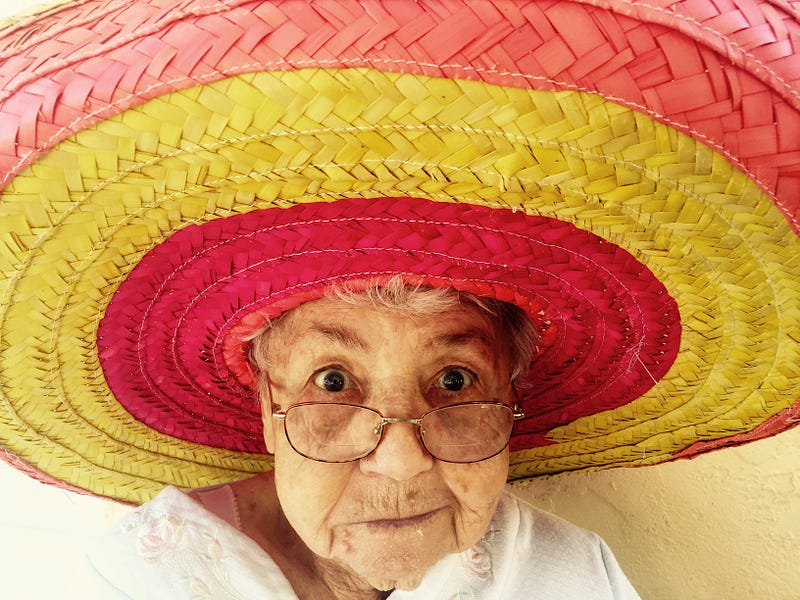
longer adult lifespans grandmother hypothesis the love is so real
It is really quite simple — grandmothers are important for our survival.
How so — ask anyone who is lucky enough to have spent time with their extended family, and quite possibly the highest poll numbers would be for grandmothers. Studies show that the usual ranking goes like something like, from closest to least close: a maternal grandmother, maternal grandfather, paternal grandmother, paternal grandfather. Exceptions, of course, do occur.
Evolutionary biologists have also been interested in grandmothers, specifically Kristen Hawkes, professor of anthropology with the University of Utah and co-author of the ‘grandmother hypothesis,’ a theory that humans evolved longer adult lifespans than apes because grandmothers helped feed their grandchildren. Typically, female chimps rarely live past child-bearing years, usually into their 30s and sometimes their 40s, whereas human females often live decades past their child-bearing years.
“The shift to longer adult lifespan caused by grandmothering is what underlies subsequent important changes in human evolution, including increasing brain size,” Prof Hawkes said.
“If you are a chimpanzee, gorilla or orangutan baby, your mom is thinking about nothing but you. But if you are a human baby, your mom has other kids she is worrying about, and that means now there is selection on you — which was not on any other apes — to much more actively engage her: Mom! Pay attention to me!”
“Grandmothering gave us the kind of upbringing that made us more dependent on each other socially and prone to engage each other’s attention,” she said.
Recent research supports the ‘grandmother hypothesis’ by showing that new computer simulations predict that without any assumptions about human brain size and with only a little bit of grandmothering, animals with chimpanzee lifespans can evolve in less than about 60,000 years to approximate a human lifespan.
From historical, anthropological, and archeological data, it is quite clear grandmothers and, perhaps more accurately, grandparents or older caregivers are important. One of their most important roles may be that they carry the wisdom of generations, a favorite recipe, a hidden manuscript, a secret or two — chances are they have experienced life and its many trials. They might have a tip or two to share.
For the fortunate few of us, who have been able to spend some time with their grandparent, there is no denying the love, and sometimes, even if you haven’t had a chance to meet them or spend too much time with them — their stories can still be passed on in family lore and be a source of wisdom, guidance, and strength.
It is also important to note that we are all different; we have different families with unique ties and relationships. So, let us take this moment to be mindful of each other, and perhaps we can all be thankful and appreciate the love, care, and wisdom in any form it shows up in our lives — grandparents, uncles, aunts, best friends, or any others.
Perhaps one lesson of the grandmother hypothesis is that collective and social connections can really help humanity grow leaps and bounds and overcome situations previously not thought possible — let's find a way to share some grandmotherly love and wisdom in our lives, fill the universe with a blend of grandma’s special.
And if you have a favorite grandparent or older caregiver's story, or perhaps you are a grandparent yourself, we would love to read about it :)
Thank you all for reading.
*This content is not intended to be a substitute for professional advice, diagnosis, or treatment. Always seek the advice of your physician or another qualified health provider with any questions you may have regarding a medical or mental health condition.
**This story is part of the S&S Prompt series — science-inspired prompts to get you inspired — Our dear readers — have a little fun exercising your artistic creativity and write a science-inspired story — the format is entirely up to you — haiku, sciku, limerick, poetry, prose, painting, etc. — if you do — feel free to publish it anywhere on medium, just tag it with #SnSPrompt.
For some grandma inspired stories:
A recent story by Sarah Cords
Or perhaps other S&S prompt responses:


