THE CASE FOR THE 1619 PROJECT: CASE STUDY + IMPLICATIONS
The 1619 Project is the Raw Material for Black Imagination
To create a future where justice thrives, Black children need an accurate vocabulary of the past.
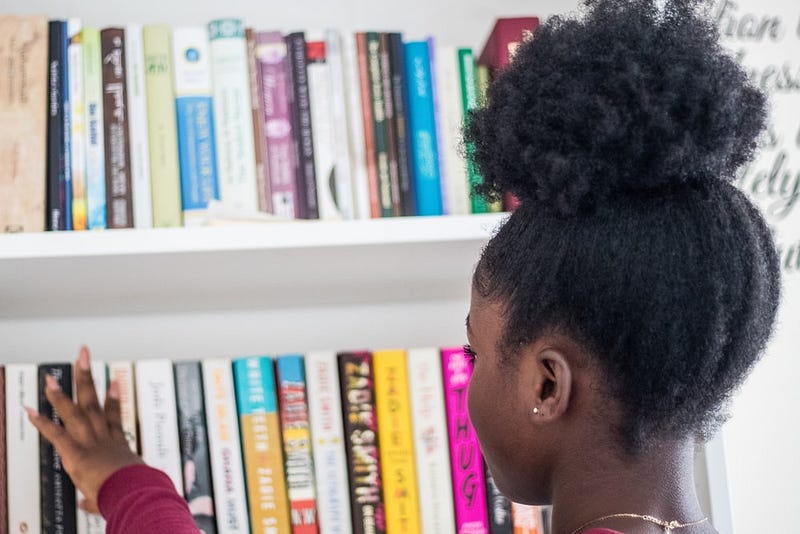
I was a child when I ran out of a movie theater screaming in fear after watching Jurassic Park. Right then and there, I abandoned my dreams of being an archeologist. I decided to become an FBI agent instead. However, my mom always nurtured my ambitions. As a result, she began taking me to the library to read about what I thought it would take to become one.
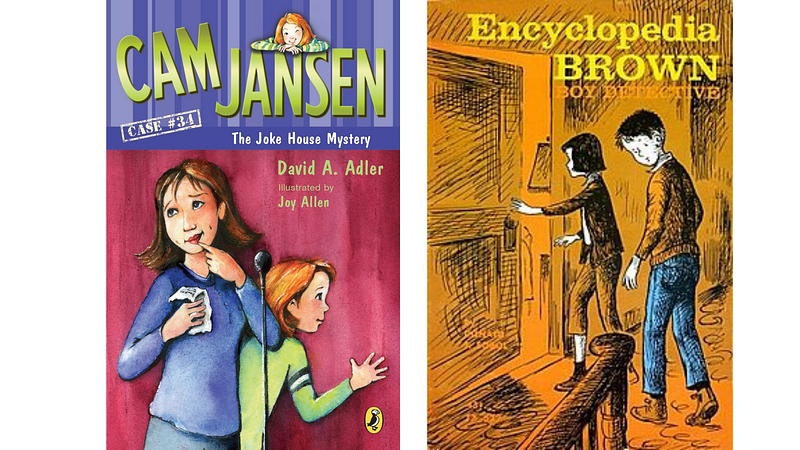
In third grade, before I began looking at career guides or reference sources, I settled on two children’s book series — Cam Jansen and Encyclopedia Brown. Jansen had an eidetic memory which she activated by saying “CLICK” when she needed to remember the details of an object; this gimmick helped her crack cases.
Brown used his problem-solving skills to assist his police chief father and thwart the machinations of the town’s scammers and bullies. I would scour my school’s library for unread copies of these books. Later, Momma would take me to the larger branches within the New York Public Library system, where I’d research and read for hours at a time.
My father noticed my career ambitions and decided I needed to begin reading Black history. I remember him shoving two books into my young hands — Roots by Alex Haley and the Autobiography of Malcolm X. My memories of reading those books are hazy. I partially recall nightly reading by ambient light in the Farragut Houses of Brooklyn’s Vinegar Hill neighborhood.
Like faded film movie reels, I recalled a weekly family visit in South Carolina, where I read about Malcolm in between competitive sessions with my brother on Nintendo 64.
However, the words from both books stuck with me. Mandinka. The Gambia. Slave ships. Plantations. The whip. Cotton fields. Slave rape. Freedom papers. Confederate. Lansing. Detroit Red. Prison. Playin’ the numbers. Islam. Segregation. Chicago. Hajj. The FBI. Assassination.
Those books gave me the vocabulary to begin challenging a lot of what I read and encountered in school.
Where were the Black people in Cam Jansen’s and Encyclopedia Brown’s communities? Why did Momma have to go to lily-white Brooklyn Heights to take me to the library instead of having one near the projects we lived in? I began to critically consider the neighborhood I called home.
The biggest conflict came in a 4th-grade social studies project where we made clay dioramas based on the Civil War armies. My teacher was a well-intentioned but culturally incompetent white woman at P.S.8 in Brooklyn Heights. She assigned me “the Confederacy.” All the horrors Kunte and Kizzy and Chicken Geroge suffered flooded my consciousness. All of Malcolm’s anger came out of my mouth, and I nearly got myself suspended. All of the words I had acquired through my reading came out toward my teacher.
I now realize that the grammar of Blackness instilled in me from previous readings influenced my imagination.
The future my teacher envisioned for me was for a Black child to make art of their ancestor’s enslavers. But my creativity was greater. I now had the words. There would be no future where my Black hands would create a commemoration of slaver rebels.
My teacher reassigned me to make a Union diorama.
The 1619 Project expands the vocabulary we use to discuss American history. The work Nikole Hannah-Jones’ led was to expand the vocabulary we use to discuss American history. History is the ore for our imagination. We cannot mine up better futures without accessing our proper past.
In the conclusion of her essay America Wasn’t a Democracy until Black Americans Made It One, Hannah-Jones wrote about a project her elementary teacher assigned about the concept of the American melting pot.
“Slavery had erased any connection we had to an African country, and even if we tried to claim the whole continent, there was no ‘African’ flag.”
She and another Black girl in the class struggled with the work. Eventually, Hannah-Jones “walked over to the globe near my teacher’s desk, picked a random African country, and claimed it as my own.” [1]
Her teacher’s lack of historical vocabulary prevented her from realizing that the assignment she designed to express a hopeful future of the nation excluded Black personhood. Furthermore, there was no historical consideration to the task she assigned her students, which thus excluded Jones and her other Black classmate.
As a former secondary humanities teacher and school principal, I can point to the research that contextualizes the failure of imagination from Hannah-Jones’ teacher. Robert Marzano is preeminent in literacy circles for his research into direct vocabulary instruction.
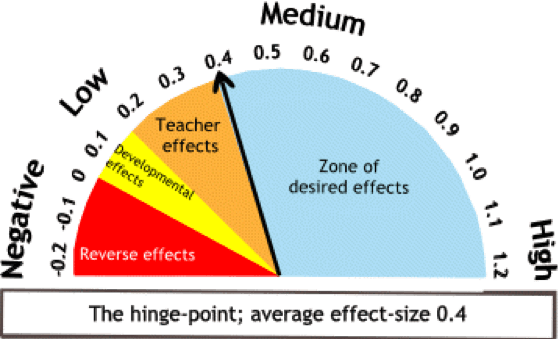
In his text Building Background Knowledge for Academic Achievement, he notes that “the reported average correlation between a person’s background knowledge of a given topic and the extent to which that person learns new information on that topic is .66.” [2] That 0.66 is what educational researchers refer to as effect size. John Hattie, another researcher, famed for his meta-analysis of effective educational practices, found that teacher practices with an effect size of .40 result in a year of academic growth for students. [3]
“The fact that we experience much of life through working memory opens the door to alternative ways of generating background experiences. Anything that creates representations in working memory is a potential source of background knowledge,” — Marzano noted [4].
The best way, he argues, to create such representations in the working memory of children is through direct vocabulary instruction. Reading is also a way of building up our working memory of concepts.
His research also advocates for the centrality of history and social studies in building that knowledge.
“One interesting aspect of the findings reported…is the highly uneven distribution of terms across subject areas”, he concluded.
“History, for example, has more terms by far than any other subject areas — a total of 2,579.” [5]
Those thousands of words, drawn from analyzing social studies standards documents across the nation, may also be biased toward white supremacy, as he observes that “the importance of one type of knowledge over another may be simply a matter of culture, not a matter on the inherent worth of the information itself.” [6]
Given that whiteness is the default historical vocabulary of the nation and that history education adds the most vocabulary to young minds, working to ensure that Black children are exposed to the grammar of Black personhood is a vital outcome of the 1619 Project.
Much of the controversy and reporting on Jones’ work centers on white people, white fear, white anxiety, and their power to quash the words we use to describe the behavior of their forefathers. Mainstream sources have paid less attention to how their behavior cuts the foundation of Black imagination. The past is the metal used to build fantastical futures where Blackness thrives. That future is the target of all the backlash toward Hannah-Jones and The 1619 Project.
“When people of color seek passageways into the fantastic, we have often discovered that the doors are barred. Even the very act of dreaming of worlds-that-never-were can be challenging when the known world does not provide many liberating spaces,” Ebony Elizabeth Thomas in The Dark Fantastic: Race and the Imagination from Harry Potter to the Hunger Games.
A researcher of children’s and young adult fiction, Thomas, noted that “over 85 percent of all books published for children and young adults feature White characters — a statistic that has barely moved since the 1960s.” [7] American publishing has made the enduring, sustained decision to push out literature that makes a fetish of Blackness. As a consequence, Thomas feels “racialized disparities in literacy among kids and teens may be ultimately rooted in a massive failure of the collective imagination.” [8]
Black children develop their collective imagination by a shared understanding of their history and then applying such knowledge into imagined future worlds.
“The Black fantastic has historically been liberating, activist artistic production in the face of erasure and marginalization.”[9]
She notes the plethora of material she was exposed to regarding slavery and the Civil Rights Movement, “books and movies and children and teens who looked like me were read and viewed out of duty, in order to learn about the past.”[10]
Such exposure, in line with Marzano’s insights into developing background knowledge in children, allowed Thomas to see that white supremacy stopgaps Black history from informing speculative imagination:
“Books and movies that showcased the pleasures of dreaming imagination and escape were stories about people who did not look like me.” [11]
“Something about Black childhood confounds children’s and young adult literature, which is why Black characters are often trapped in narratives about slavery, Civil Rights, ghetto survival, or survival in the White world,”[12] Thomas asserts.
Given the earlier evidence concerning the consistent appearance of white characters in literature and the importance of historical vocabulary in developing new visions for the future, I want to amend her statement to say the following: something about Black childhood confounds white writers, which is why their Black characters are often trapped in their narratives about the slavery their forefathers inflicted, Civil Rights that their forefathers did not acknowledge, ghetto survival that their forefathers enforced, or survival in the White world their forefathers shaped.
White writers and people have been exposed to the same basic vocabulary that Black children know regarding the history of this country. Thus, they have the background knowledge.
What the 1619 Project exposed, however, is their willingness to police historical knowledge in order to restrain Black imagination. The best way to do that is to restrain the words Black personhood is allowed to use in describing our past.
My parents made sure to bridge the gap between history and imagination. My teachers didn’t. I read more, and my vocabulary made me militant. COINTELPRO. Fred Hampton. John Edgar Hoover. Black Panthers. Redlining. Reconstruction. Sharecropping.
I aged and used that vocabulary to write raps, college and grad school essays, and blogs to imagine a future where Black personhood thrives in a future of resurgent white supremacy and global warming of their creation. The past allows me to conjure a fantastical future where Black folk gets their delayed justice on a cooled and stable planet.
The 1619 Project is our attempt to stop the annihilation of the Black imagination. Jones seeks to preserve the old words so that we can one day make new ones centered on justice.
Citations:
[1] Hannah-jones, Nikole. “America Wasn’t a Democracy until Black Americans Made It One.” The New York Times, The New York Times, 14 Aug. 2019, www.nytimes.com/interactive/2019/08/14/magazine/black-history-american-democracy.html.
[2] Marzano, R. J. Building Background Knowledge for Academic Achievement: Research on What Works in Schools. Association for Supervision and Curriculum Development, 2004. 1–2.
[3] Miles, Christine. “Know Thy Impact: What Works Best in Schools.” New Jersey Education Association, 26 Sept. 2019, www.njea.org/know-thy-impact/.
[4] Marzano, 35.
[5] Marzano, 115.
[6] Marzano, 115.
[7] Thomas, Ebony Elizabeth. The Dark Fantastic: Race and the Imagination from Harry Potter to the Hunger Games. New York University Press, 2020. 4.
[8] Thomas, 6.
[9] Thomas, 8.
[10] Thomas, 17.
[11] Thomas, 17.
[12] Thomas, 55.


