THE CASE FOR THE 1619 PROJECT + A GENEALOGICAL CASE STUDY
Blunted Roots: Navigating A Legacy Of Slavery
Reinforcing The 1619 Project through genealogical research
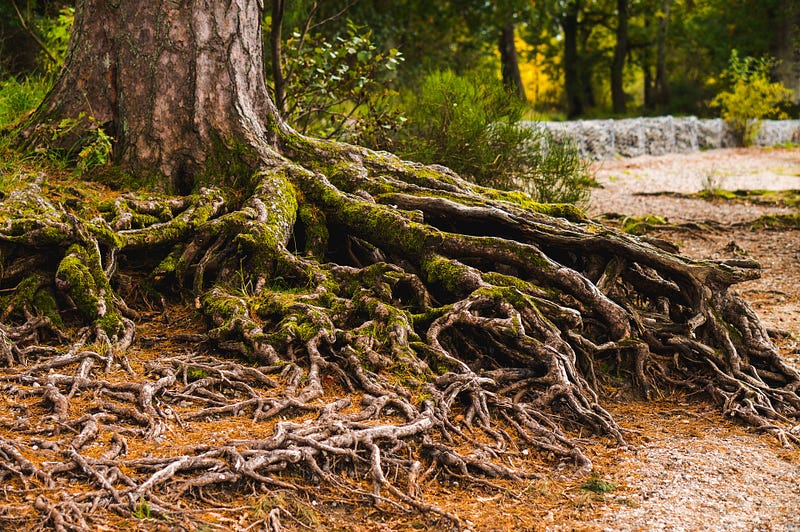
My experience navigating branches of my family tree highlights the efforts of 18th and 19th-century European slavers who orphaned Africans stolen from their homeland. Subsequently, these Europeans strived to indoctrinate those same Africans and their descendants with a false idea of White supremacy, which is reflected in the blunted roots that I have encountered in my genealogical research.
The 1619 Project’s purpose to establish a direct and extended correlation between current aspects of today’s society and the cagey practices of the institution of slavery is reinforced by the results of my genealogy research.
The colonial origin of African-American genealogy issues
In the mid-1600s, the British American colonies adopted an unholy legal tenet called “partus sequitur ventrem” to facilitate the indoctrination of slaves, as noted in “Slavery in the United States Persons or Property?”( p.7):
This was the legal rule applied to livestock and other domestic animals: that the offspring of a domestic animal belonged to the owner of the female who gave birth.
Treating slave women as property and reducing their status to that of domestic animals resolved some tough legal issues, and at the same time had the added virtue — if the word applies here — of benefiting white men, who could now freely prey on slave women without fear of legal consequences.
Any children resulting from such encounters would be slaves, belonging to the owner of the mother.
The outcome of the British colonies adopting this inhumane legal concept played a large part in obliterating future efforts of tracing genealogy for African-American descendants of slaves.
Start of my genealogy research journey
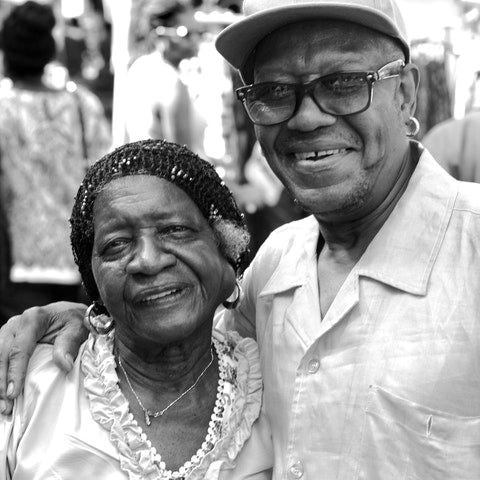
I’ve been a student of genealogy since the late 1970s. The 1977 miniseries “Roots”, inspired me to start asking my elders about my own roots. As a kid, and during a time preceding online resources or repositories, I relied on sitting with my grandma and tapping into the knowledge of our family lineage.
As a result, she would refer to the family Bible. We covered the names of folks I knew. There were many more out-of-town relatives who were unfamiliar to me. Sadly, some relatives had gone to glory. I appreciated my grandma’s openness to share an abundance of family information.
According to the Library Of Congress:
“…the easiest way to learn information about your family is to ask questions. Interview the oldest living relative in your family.”
This dearth of vital government records to corroborate family stories turned out to be a common outcome of most elder relatives I asked.
These discussions with my grandma slowly unearthed an ugly historical truth during my genealogy research — blunted roots from my family tree. It became painfully clear that my grandma could only share concise information with me back to the generation which coincided with the post-Civil War period.
She shared what information she could about her grandma, which was roughly a married name and approximate age. She knew few details about the generation prior to her grandma. My frustration grew when I determined that no records existed to shore up the gaps in the research of my family history.
In researching African-American genealogy according to PBS.org:
“One potential obstacle to tracing African-American lineage is slavery, an institution that broke family bonds and made record keeping nearly impossible.”
“Because African-American slaves were considered property, often a bill of sale — bearing just the age and gender of the person sold — is the only record for an individual living in a pre-Civil War slave-holding state.”
In addition, as Ancestry’s website states: “Due to the long history of slavery in the United States, …census takers rarely recorded the names of enslaved people and seldom listed family members together. Enslaved people were often subjected to forced name changes, family separation, and sexual violence.”
This dearth of vital government records to corroborate family stories turned out to be a common outcome of most elder relatives I asked. It seemed my innocent questions about family could also uncover a few family secrets or drama that some elder cousins, aunts, or uncles preferred to stay buried.
Part of that reservation may have to do with the adoption of the slavemasters’ surname upon the former slave’s release from bondage at the end of the Civil War. This still may have made the search difficult due to percentages of adoption of a slavemasters’’ surname.
From Ancestry’s Guide to Researching African American Ancestors:
“In order to find pre-1870 records that include your African American ancestor, you may need to find records for the slave owner.”
“If your ancestor has an uncommon last name, search censuses for white people with the same surname as your ancestor in the same area. When you find them, make a list; these are possible slave owners. Only about 15% of formerly enslaved people took the slave owner’s surname.”
Another aspect of an African-American family’s resistance to genealogy research could be due to asking elders to recall a traumatic community experience such as the Tulsa Race Massacre. While I’m personally not aware of family members who are connected to a domestic racial terror incident, I’m sure some African-Americans have dealt with elders who are triggered by requesting historical accounts of their upbringing. Since therapy has not been championed in the Black community, attempts to document family history, in this case, can be emotionally painful. When those domestic racial terror incidents occurred, records of births, deaths, & marriages were destroyed creating more gaps in African-American history.
Despite the daunting challenge, I pressed on to flesh out my extended family tree.
The rise of DNA genealogy tracing
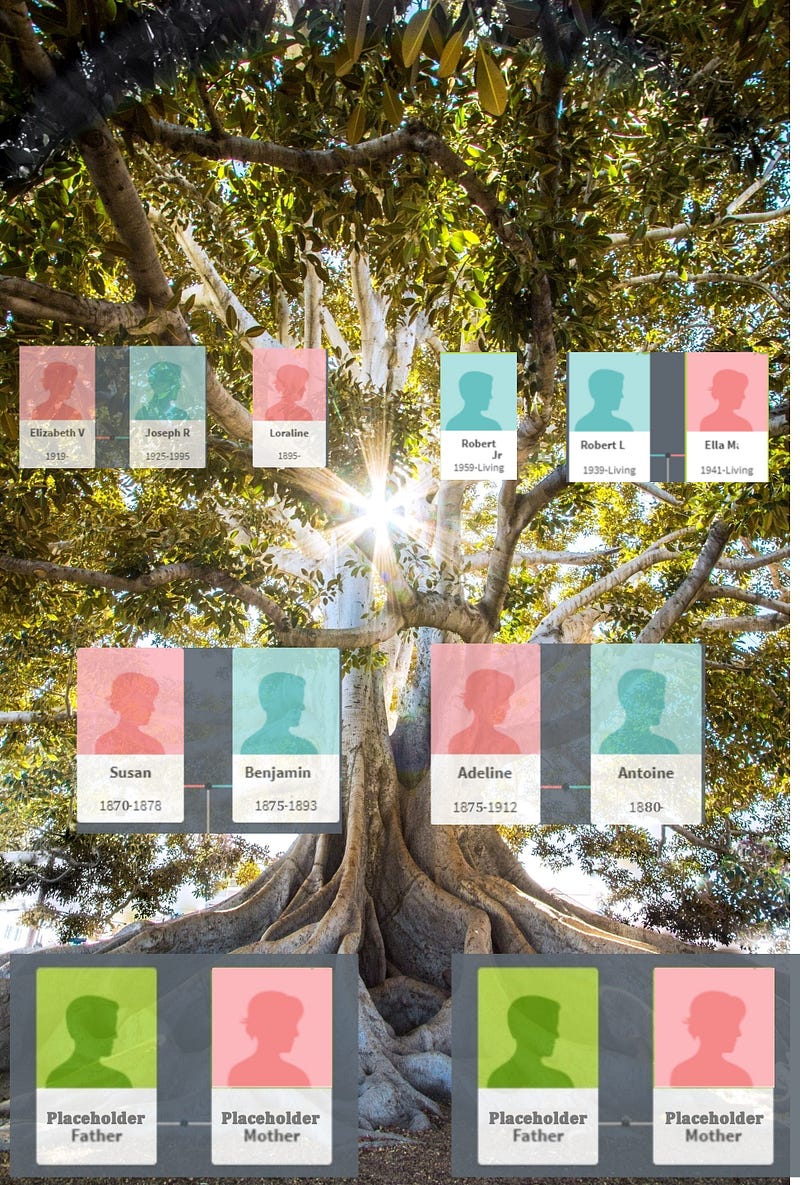
The “blunted roots” dilemma limited my genealogy efforts for decades. I’ve designated “placeholder” family members in the roots of the family tree to facilitate connections between branches that I knew were relatives but I couldn’t document. Thus, the tree grows laterally. Though I am an avid fan of the PBS series “Finding Your Roots”, I have not been able to trace my roots to a Kunta Kinte in Africa or any line of relatives outside of the U.S.
The rise of DNA genealogy tests only broadened my family tree by adding branches of cousins once lost to history. It hasn’t deepened the roots beyond countries in Africa because no trail of records exists to extrapolate the findings. To compound this problem, the concept of “white ignorance” has contributed to the absence of findings. According to “Linked Descendants: Genetic-genealogical Practices and the Refusal of Ignorance around Slavery”:
White ignorance is “an active historical project that works to prevent privileged groups from apprehending their links to, and positionality within, systems of racial oppression.”
In simpler terms, it is the present generations of Whites who actively deny or refute their connection to any ancestors who participated in the institution of slavery. This denial comes with the refusal to establish a link between their White family and an African-American family through records held by the White family. The Ben Affleck scandal that occurred on PBS: “Finding Your Roots”, is one example where Ben suppressed the slaveholder information of his family from being aired on the show before it was leaked to the public.
The struggle of citizenship affinity
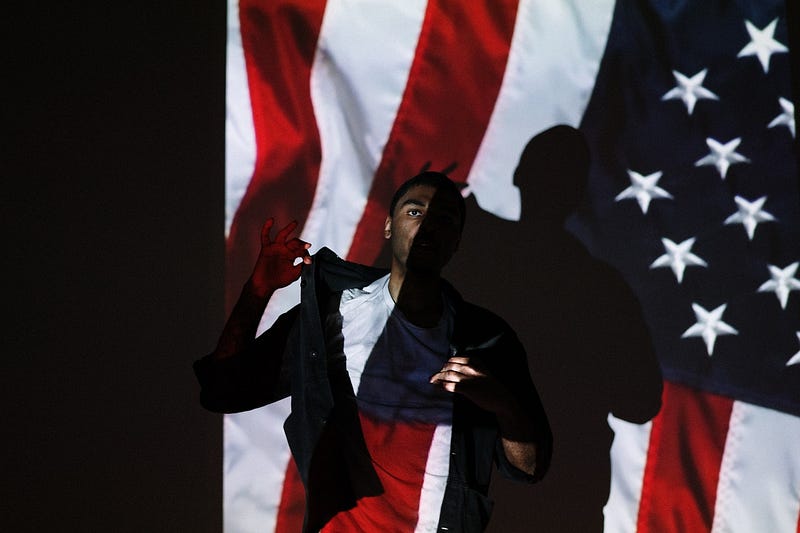
Even from a patriotic perspective, my practical attachment to the U.S has, to some degree, been impeded by this blunted roots impasse. I can relate to The 1619 Project essay of Dr. Nikole Hannah Jones about her dad’s tradition of flying the American flag. He honored the African-Americans who sacrificed for the U.S. though that sacrifice was never fully cherished by this country. Still, I admit to an internal patriotic conflict due to this genealogical records barrier.
The accomplishments of African-American ancestors are not historically celebrated on an individual level before the 1860s. The ancestors are acknowledged as a people for their survival of brutality while building the monuments and a national economy that is so highly regarded today. In the era from 1619 through 1865, the act of U.S. society wiping the identities of slave ancestors damaged the provenance of my American citizenship.
This malicious act further distorted the currency of that citizenship, especially for mainstream White America’s perspective as they gaze through the lens of systemic racism to question its degree of legitimacy. This act also hindered the ability of descendants of the Africans to trace their origin back to Africa, straining the terms of endearment I have for this country of which I am a citizen. All of this is intentional and exhibited in the essays of The 1619 Project.
References
African-American Genealogy: Searching For Yesterday by the Library Of Congress, online version, found at https://blogs.loc.gov/loc/2021/04/african-american-genealogy-searching-for-yesterday/
“After Ben Affleck Scandal, PBS Postpones ‘Finding Your Roots’ ”, online version, found at https://www.npr.org/sections/thetwo-way/2015/06/25/417455657/after-ben-affleck-scandal-pbs-postpones-finding-your-roots
History Detectives: African-American Genealogy by PBS.org, online version, found at https://www.pbs.org/opb/historydetectives/technique/african-american-genealogy/
Linked Descendants: Genetic-genealogical Practices and the Refusal of Ignorance around Slavery, online version, found at https://journals.sagepub.com/doi/full/10.1177/01622439211021656
Researching African American Ancestors by Ancestry, online version, found at https://support.ancestry.com/s/article/Tips-for-finding-African-American-ancestry-1460088565989-2219
“Slavery in the United States - Persons or Property?”, online version, found at https://scholarship.law.duke.edu/cgi/viewcontent.cgi?article=5386&context=faculty_scholarship
“Our democracy’s founding ideals were false when they were written. Black Americans have fought to make them true.” — The 1619 Project — The New York Times, online version, found at https://www.nytimes.com/interactive/2019/08/14/magazine/black-history-american-democracy.html
Up Next for WEOC’s Case for The 1619 Project: