avatarLucianoSphere (Luciano Abriata, PhD)

Free AI web copilot to create summaries, insights and extended knowledge, download it at here

3474

Abstract

which is nothing more than a plastic box that I fill up with water. More…</h3></div> <div><p>medium.com</p></div> </div> <div> <div style="background-image: url(https://miro.readmedium.com/v2/resize:fit:320/1*8eHbgDU4oz21eVG4vqon9A.jpeg)"></div> </div> </div> </a> </div><p id="1dd5">As you see in the photos of the sections below, the corn salad plants are growing well a week after transplantation. If they keep thriving, for the cost of one 200 g package of ready-to-eat leaves I will be able to harvest corn salad the whole summer.</p><h2 id="77b0">Basil</h2><p id="66fe">I got a bunch of basil with roots, placed it in water for a day, and then planted it on soil in the same pot where I plan to put tomatoes. They are a bit burnt because the sun is quite strong these days. But I know they will survive.</p><figure id="0e6d"><img src="https://cdn-images-1.readmedium.com/v2/resize:fit:800/0*wO3vI_WX7GOvMpxN"><figcaption></figcaption></figure><p id="afba">I plan to use these basil leaves probably this week either in a salad or pasta, and will then let the plants grow leaves again. It’s important to remove flowers if you want these plants to keep giving leaves, just like with the lettuce plants above.</p><h1 id="db24">A vertical rack to accommodate more plants</h1><p id="540a">I took the chance of a stunning Sunday to start setting up a wooden rack where to hang more pots:</p><figure id="00e6"><img src="https://cdn-images-1.readmedium.com/v2/resize:fit:800/0*cEWalZkV9q1DVWnj"><figcaption></figcaption></figure><p id="7a92">The rack is anchored in two pots, one with the basis in the front and one with an old thyme in the back. On the step of the rack you see several corn salad plants. And then on the top I have for the moment a succulent with a small lavender growing inside; also a sage and in the hanging pot a young thyme. I try to not remove weeds that bloom nice flowers, that’s why the pots don’t look very clean and you see shoots growing up -mostly snapdragons.</p><p id="c9c1">The pot hanger you’ve seen above was built by me, and I will probably build a few more. It’s not as fancy as those my sister-in-law crafts, but well… it’s functional. Here I’m building this one on the left, and testing it on the right with a small pot that has one small thyme and one small snapdragon, both grown wild:</p><figure id="667e"><img src="https://cdn-images-1.readmedium.com/v2/resize:fit:800/0*oCV1YQcsxtajRgKe"><figcaption></figcaption></figure><figure id="39f4"><img src="https://cdn-images-1.readmedium.com/v2/resize:fit:800/0*c6RJbj4tRloSrwMx"><figcaption></figcaption></figure><h1 id="c43a">Shots in the balcony garden</h1><p id="0f85">A few selected shots of how it’s all developing. I mark how each plant grew, because I tend to like it better when plants grow wildly or I make them root from seeds or cuts… but well sometimes one needs to buy!</p><figure id="8bcc"><img src="https://cdn-images-1.readmedium.com/v2/resize:fit:800/1*y0Pmo2wuaRJqVmSW3UAX5g.png"><figcaption></figcaption></figure><figure id="397d"><img src="https://cdn-images-1.readmedium.com/v2/resize:fit:800/1*de9j3dbNJcHjr7nRF5ezwQ.png"><figcaption>Left: a nice calendula that grew up alone from seeds. Right: A nice one that I had to buy :-)</figcaption></figure><figure id="3671"><img src="https://cdn-images-1.readmedium.com/v2/resize:fit:800/0*_lbswtlpoG2gMX1e"><figcaptio

Options

n></figcaption></figure><figure id="f6b4"><img src="https://cdn-images-1.readmedium.com/v2/resize:fit:800/0*bnnuSP6VbmnsZ9BY"><figcaption>Left: one of the many alyssum plants that grow wild from seeds that just fly from one pot to the other summer after summer. Right: same for snapdragons!</figcaption></figure><figure id="d677"><img src="https://cdn-images-1.readmedium.com/v2/resize:fit:800/0*TtZw7p5ZJzcrZf1j"><figcaption></figcaption></figure><figure id="15ce"><img src="https://cdn-images-1.readmedium.com/v2/resize:fit:800/0*VF8JW0uIHxKpPveM"><figcaption>Left: a succulent I grew from cuts years ago. Right: another one I had to buy :-)</figcaption></figure><figure id="e9aa"><img src="https://cdn-images-1.readmedium.com/v2/resize:fit:800/0*aFlVLWVi3rnyjaex"><figcaption></figcaption></figure><figure id="e1b4"><img src="https://cdn-images-1.readmedium.com/v2/resize:fit:800/0*8zMVHihgLJwmLDFj"><figcaption></figcaption></figure><figure id="12e8"><img src="https://cdn-images-1.readmedium.com/v2/resize:fit:800/0*-oxrYcRFV9rJVV_x"><figcaption>Many wildflowers whose seeds made it to my balcony, who knows how.</figcaption></figure><figure id="04b6"><img src="https://cdn-images-1.readmedium.com/v2/resize:fit:800/0*gT8ZQ0IA2_UMsoa1"><figcaption></figcaption></figure><figure id="65e2"><img src="https://cdn-images-1.readmedium.com/v2/resize:fit:800/0*dmkebWS6L4OyLaeX"><figcaption>And two more that I made from cuts. These spend winters inside, and I take them out in summer. The African violet (left) is going out today!</figcaption></figure><p id="ad6d">You know, wildflowers love to grow in my balcony garden:</p><div id="d59b" class="link-block"> <a href="https://readmedium.com/a-corner-of-jungle-and-wildflowers-on-my-balcony-cc92f0f68ca8"> <div> <div> <h2>A corner of jungle and wildflowers in my balcony</h2> <div><h3>My balcony has full sunshine all day long, which allows all kinds of local weeds and wildflowers to grow vigorously in…</h3></div> <div><p>medium.com</p></div> </div> <div> <div style="background-image: url(https://miro.readmedium.com/v2/resize:fit:320/1*W6Lp3vZp_eOGii-s_t_s4w.jpeg)"></div> </div> </div> </a> </div><h1 id="9817">What’s next?</h1><p id="c601">My tomatoes and that special kind of sweet pepper that I craved, are not growing… so I think I’ll have to get some plants somewhere… let’s see what I can find around that’s not expensive or worth paying for an interesting variety.</p><p id="e0b3">See you next time in 1 or 2 weeks!</p><p id="d13f"><a href="https://www.lucianoabriata.com/"><b><i>www.lucianoabriata.com</i></b></a><i> I write and photoshoot about everything that lies in my broad sphere of interests: nature, science, technology, programming, etc. <a href="https://lucianosphere.medium.com/membership"><b>Become a Medium member</b></a> to access all its stories (affiliate links of the platform for which I get small revenues without cost to you) and <a href="https://lucianosphere.medium.com/subscribe"><b>subscribe to get my new stories</b></a><b> by email</b>. To <b>consult about small jobs</b> check my <a href="https://lucianoabriata.altervista.org/services/index.html"><b>services page here</b></a>. You can <a href="https://lucianoabriata.altervista.org/office/contact.html"><b>contact me here</b></a><b>.</b></i></p></article></body>

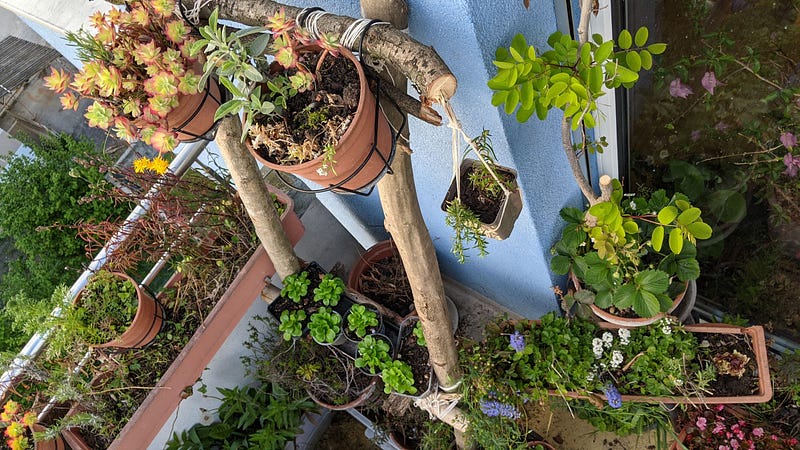
A corner of the growing edible balcony orchard, including a vertical wooden rack and a pot hanger. Just this small space fits corn salad, strawberries, a lettuce plant regrowing after having eaten it, and small plants of sage, thyme and lavender. And some wildflowers. Can you spot them all? This and all other photographs by author Luciano Abriata.

New report from the edible balcony garden

New plants for the balcony orchard and devising ways to fit them all!

Re-growing salad stems, buying a few key plants, arranging the balcony to maximize space, and building a vertical rack and pot hangers.

Last week I showed you how I was starting up my edible balcony garden:

Let’s now see some new plants I got and how I’m setting up the balcony including building a wooden vertical rack to accommodate more pots, some of them even hanging.

New plants

Free salad

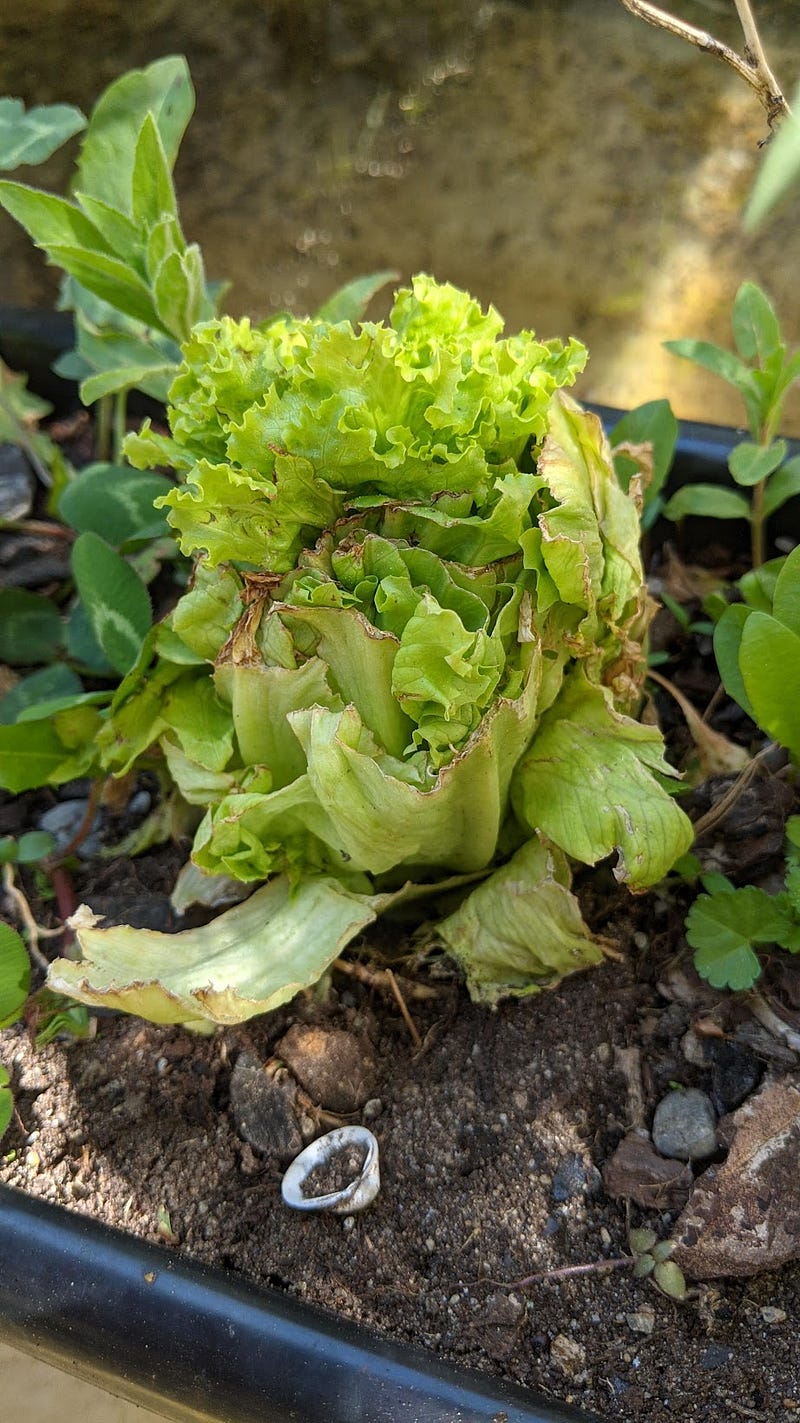
Every time you eat a plant of lettuce, keep the heart, put it in soil, and water it regularly to see how it grows! Ideally under protection from direct sun, until you see it begins to set.

Here’s one I planted on the left, and how it evolved in just over one week:
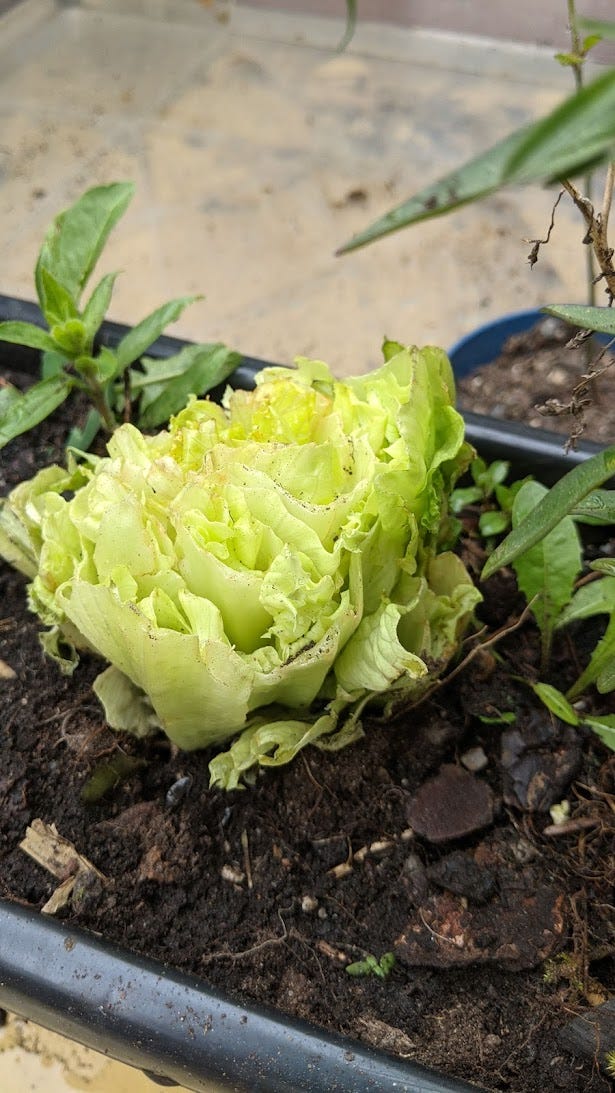
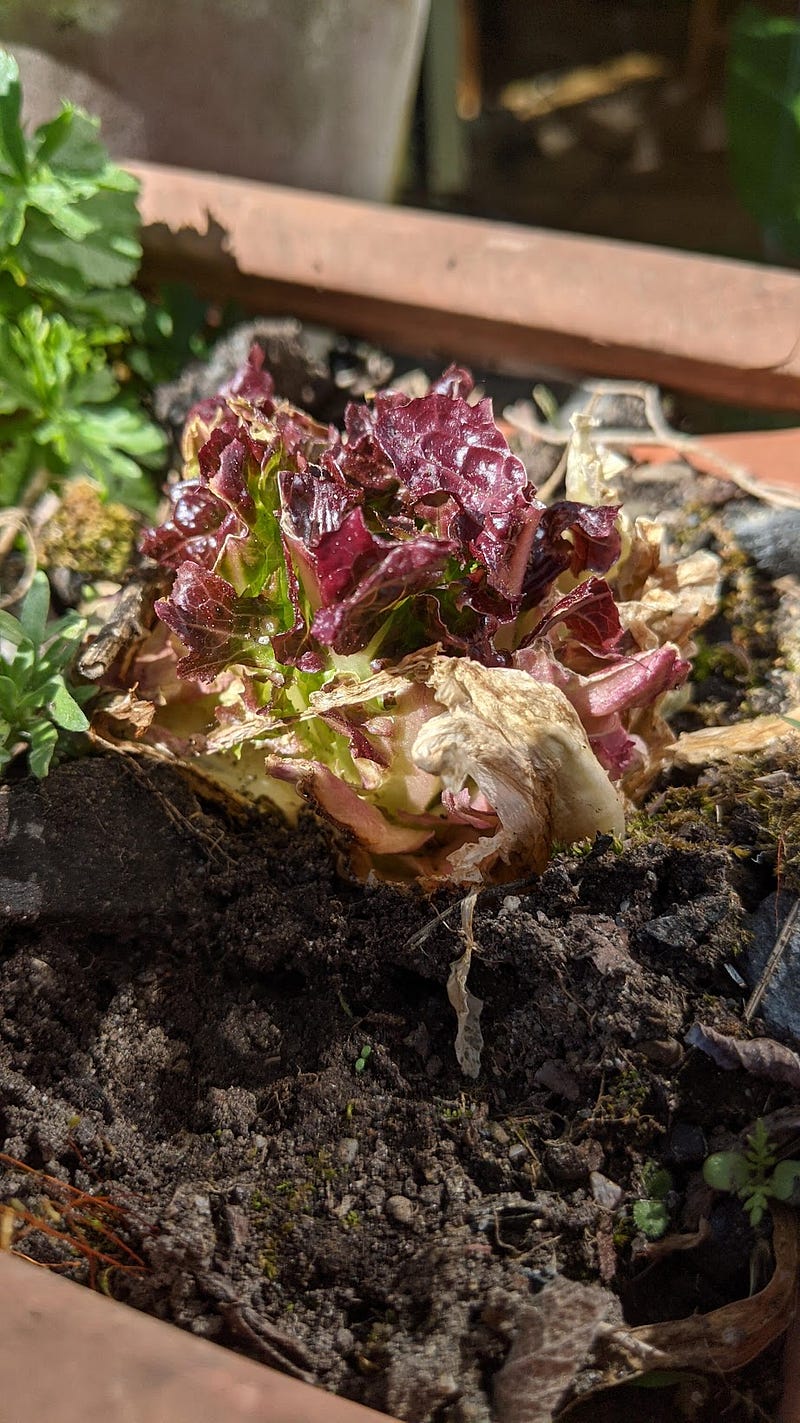
Here’s the heart of a red lettuce, also sprouting new leaves. Could you spot it in the lead photo?
First time I try to grow this one: corn salad

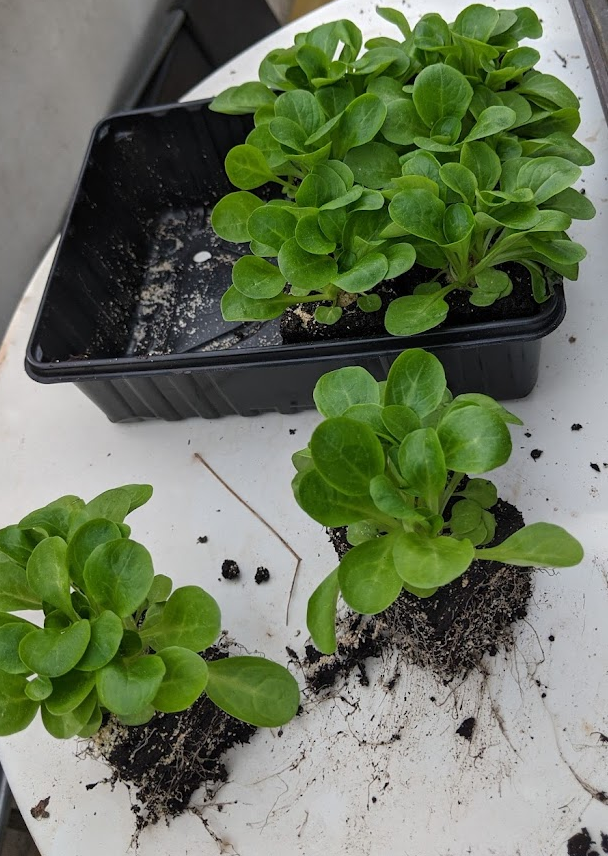
I also bought some corn salad (a.k.a. mache, Valerianella locusta) and split it into separate pots after a rapid hrehydration in the artificial pond:
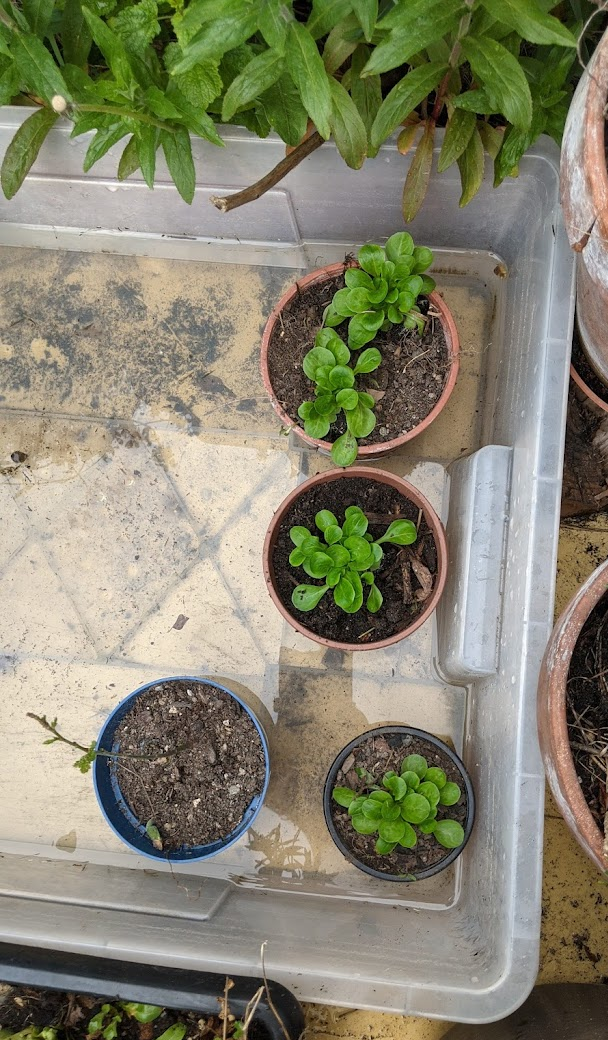
That’s the same pond you saw here:

As you see in the photos of the sections below, the corn salad plants are growing well a week after transplantation. If they keep thriving, for the cost of one 200 g package of ready-to-eat leaves I will be able to harvest corn salad the whole summer.

Basil

I got a bunch of basil with roots, placed it in water for a day, and then planted it on soil in the same pot where I plan to put tomatoes. They are a bit burnt because the sun is quite strong these days. But I know they will survive.
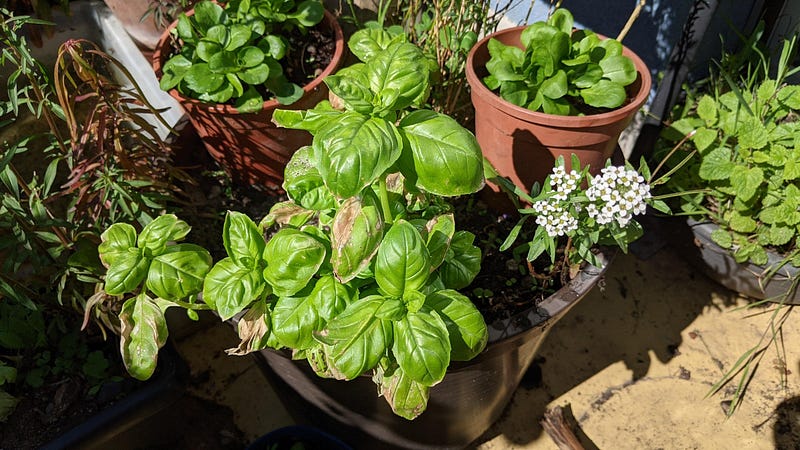
I plan to use these basil leaves probably this week either in a salad or pasta, and will then let the plants grow leaves again. It’s important to remove flowers if you want these plants to keep giving leaves, just like with the lettuce plants above.

A vertical rack to accommodate more plants

I took the chance of a stunning Sunday to start setting up a wooden rack where to hang more pots:
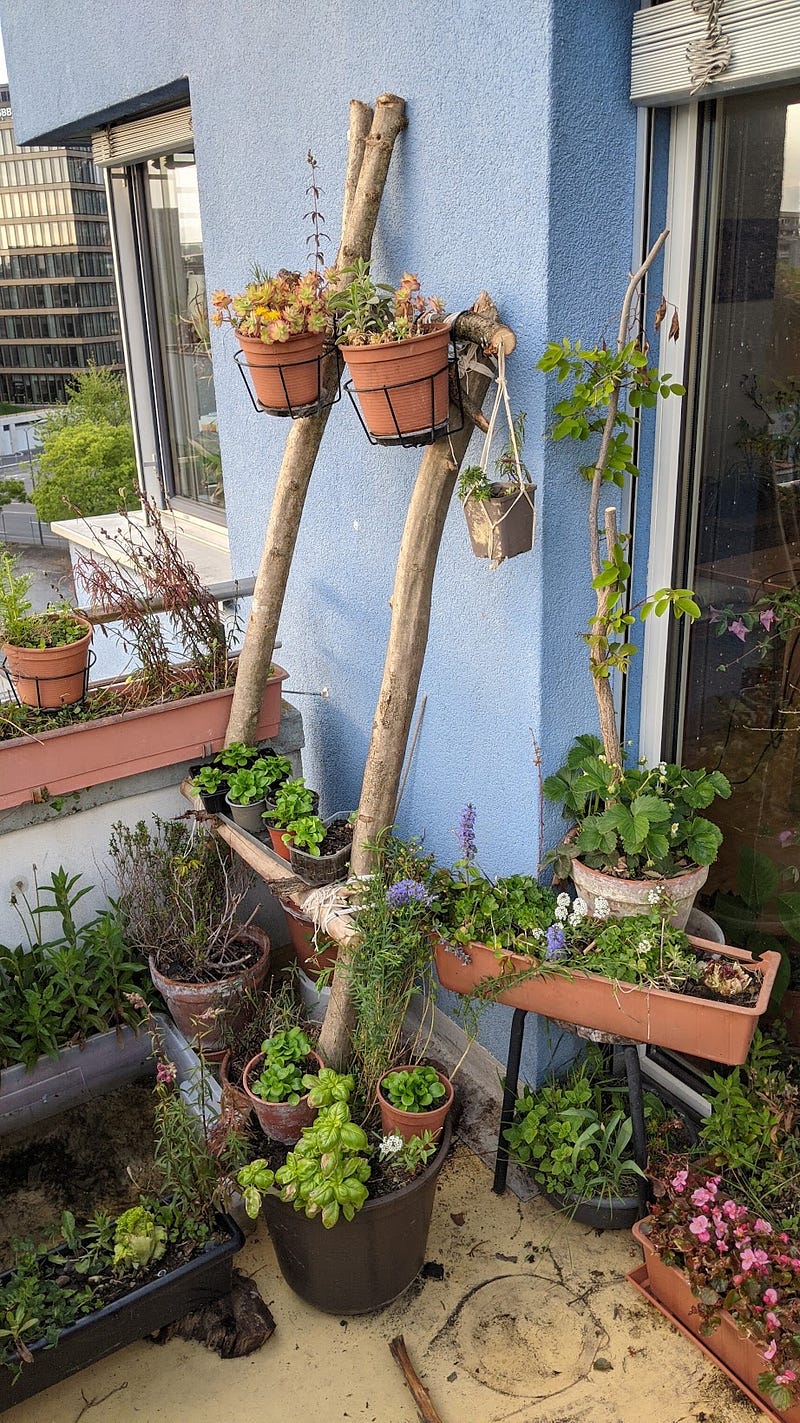
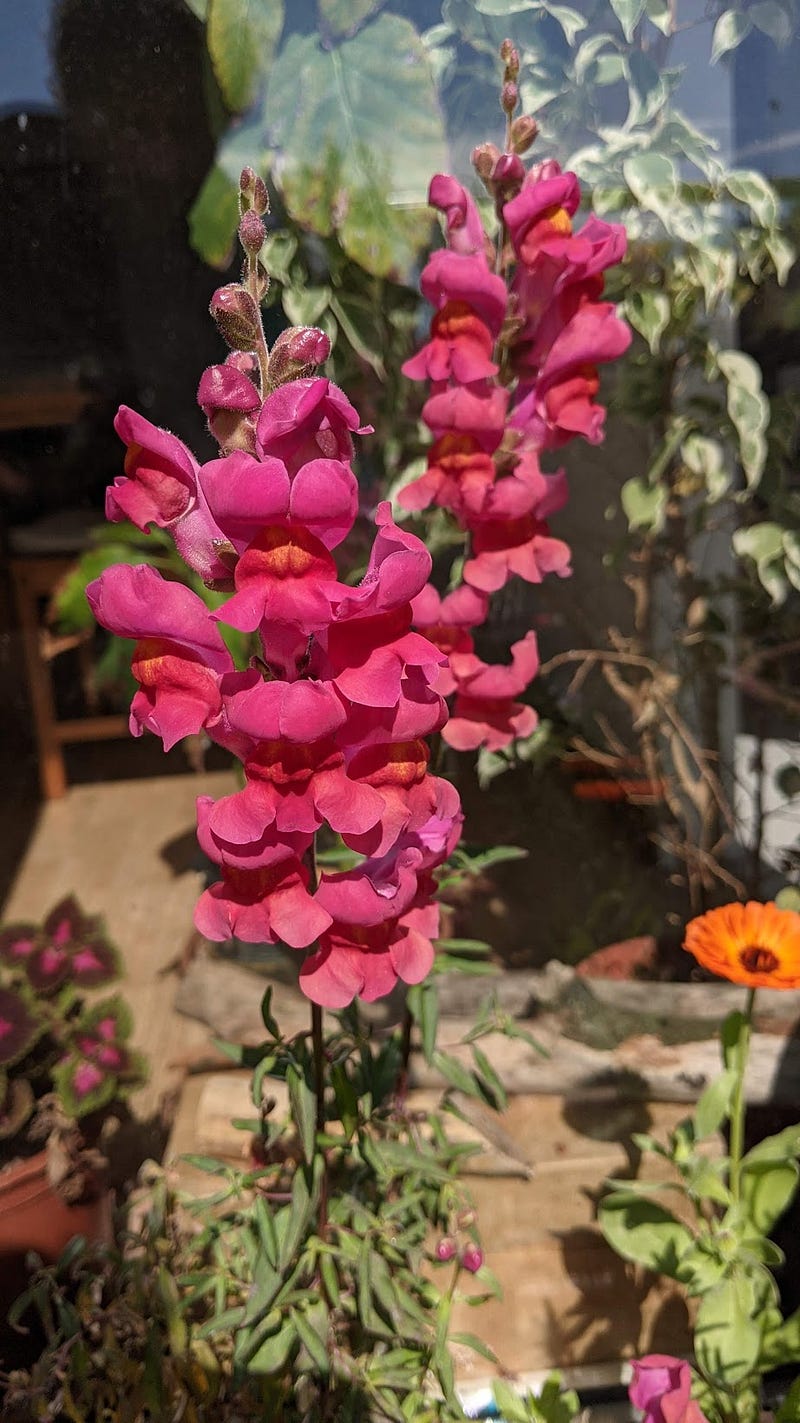
The rack is anchored in two pots, one with the basis in the front and one with an old thyme in the back. On the step of the rack you see several corn salad plants. And then on the top I have for the moment a succulent with a small lavender growing inside; also a sage and in the hanging pot a young thyme. I try to not remove weeds that bloom nice flowers, that’s why the pots don’t look very clean and you see shoots growing up -mostly snapdragons.

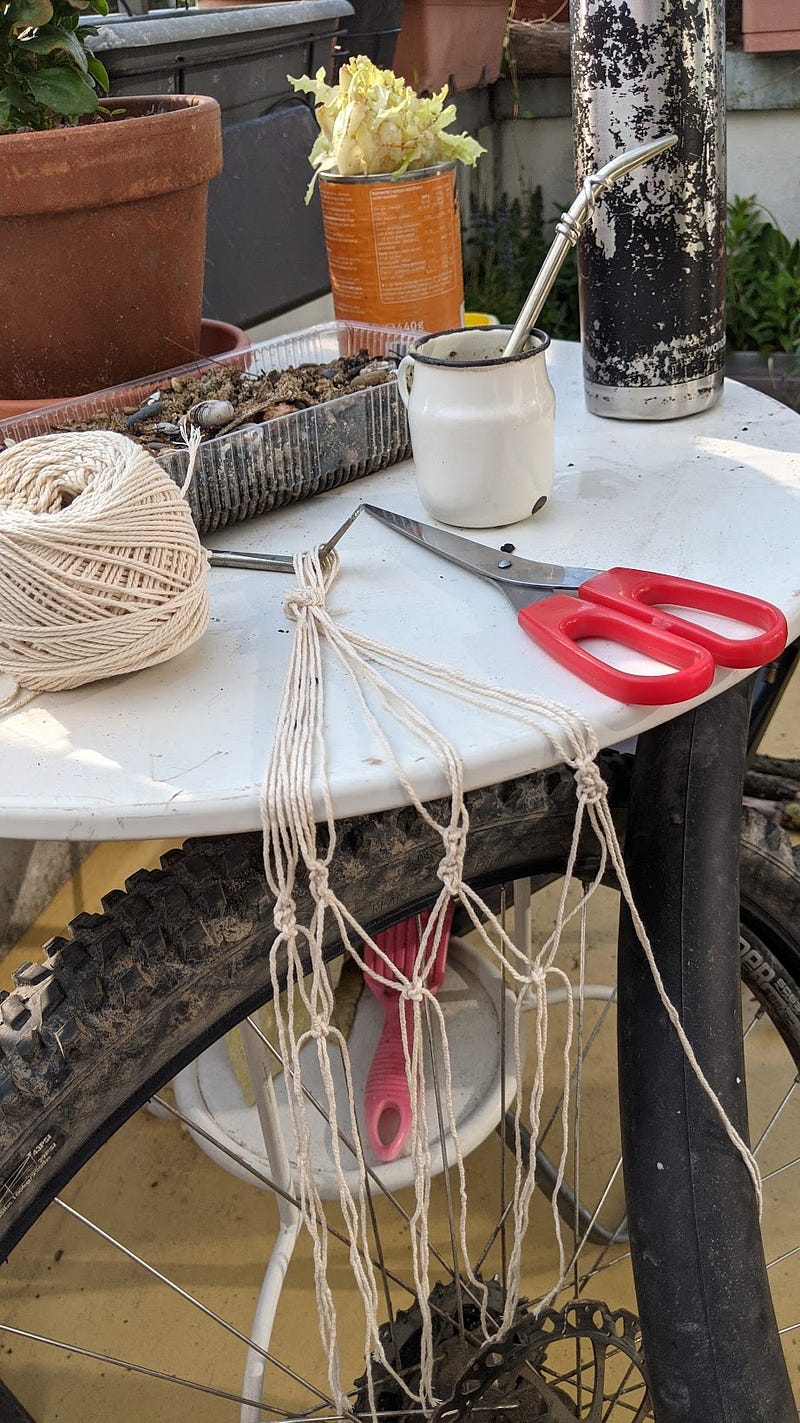
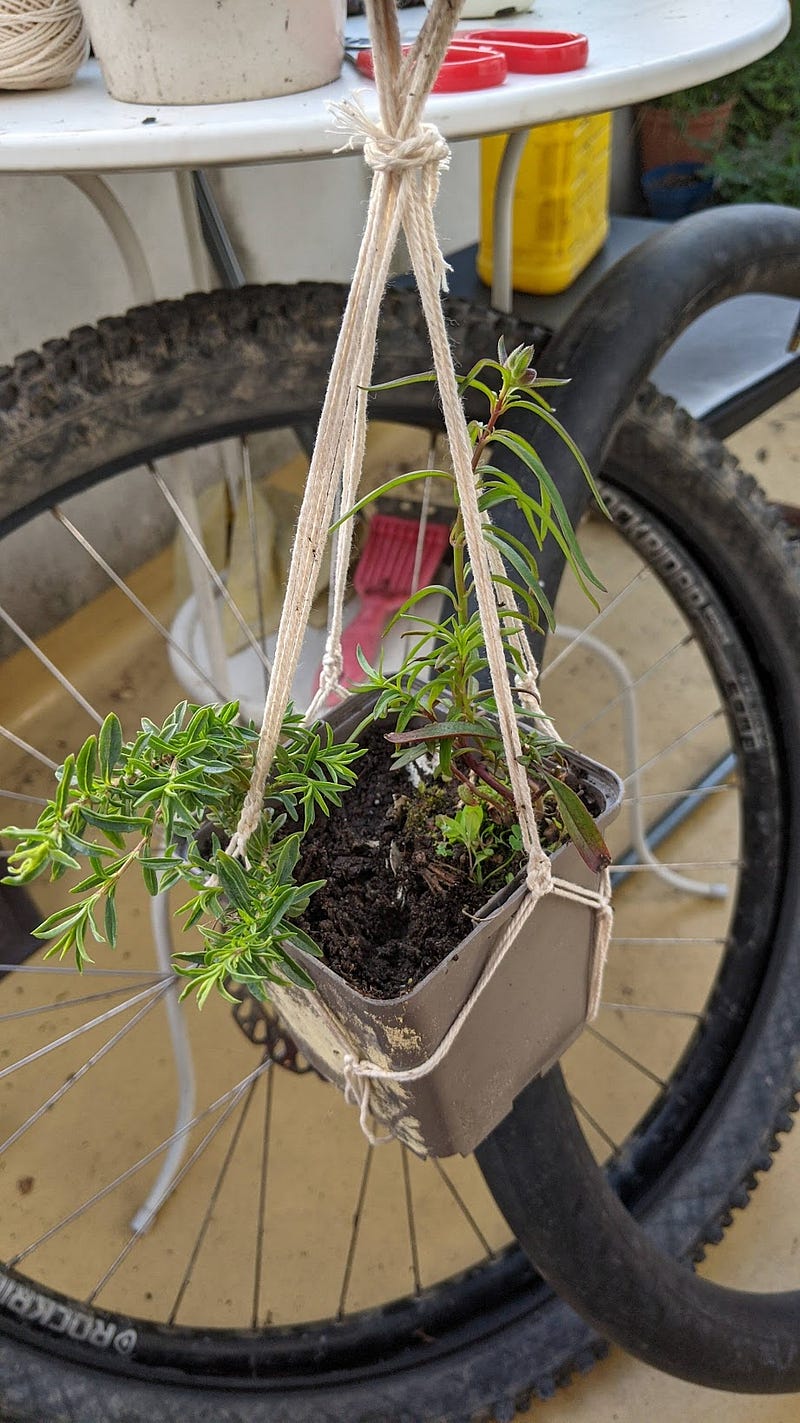
The pot hanger you’ve seen above was built by me, and I will probably build a few more. It’s not as fancy as those my sister-in-law crafts, but well… it’s functional. Here I’m building this one on the left, and testing it on the right with a small pot that has one small thyme and one small snapdragon, both grown wild:
Shots in the balcony garden

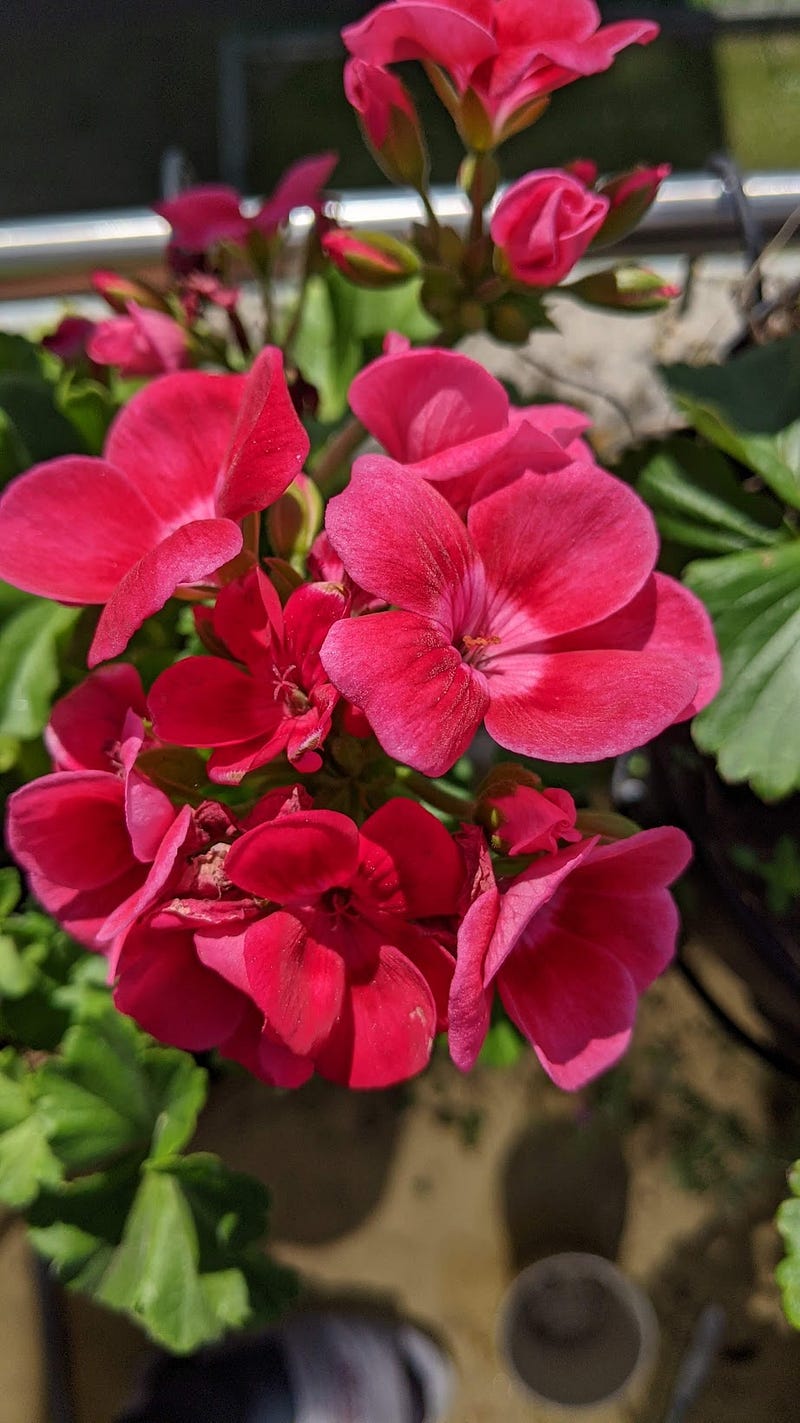
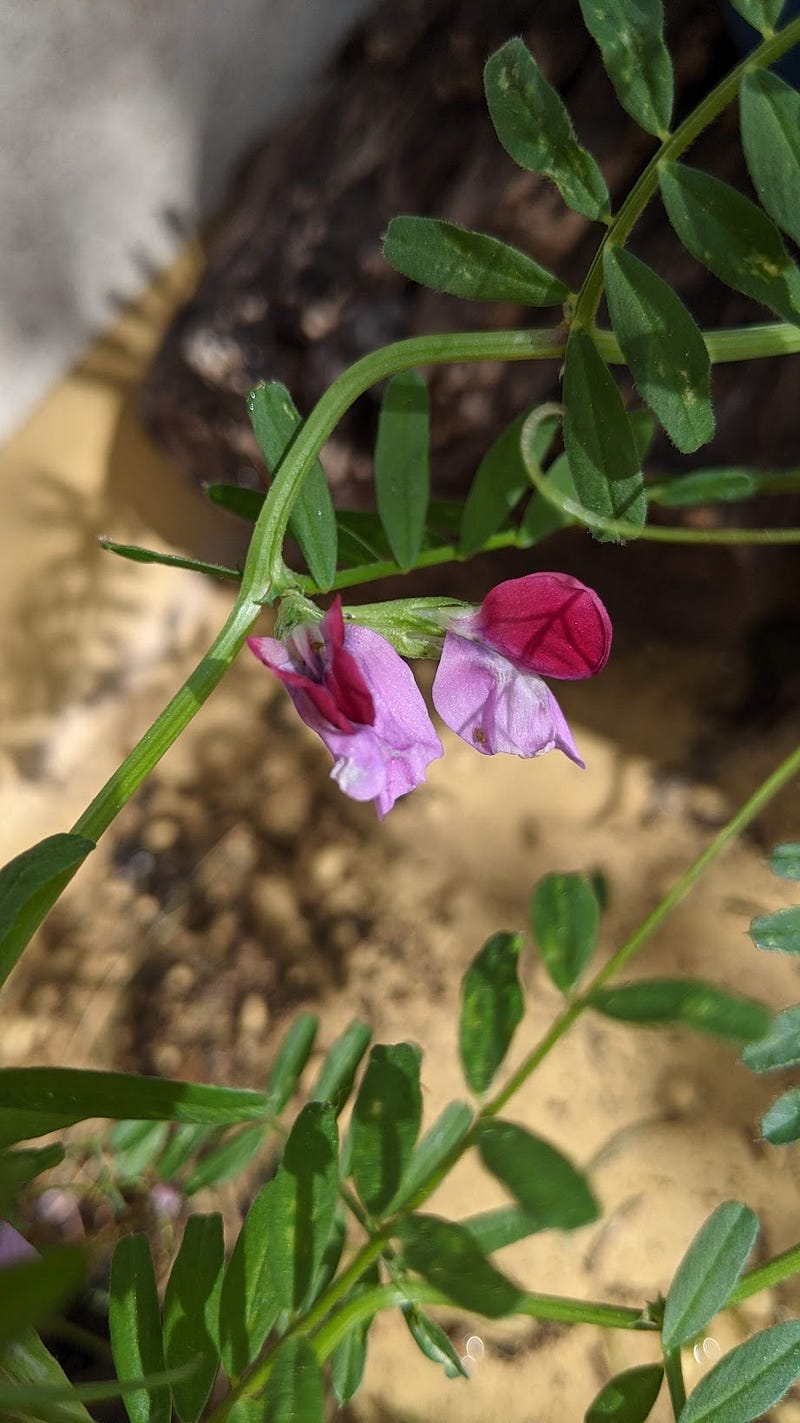
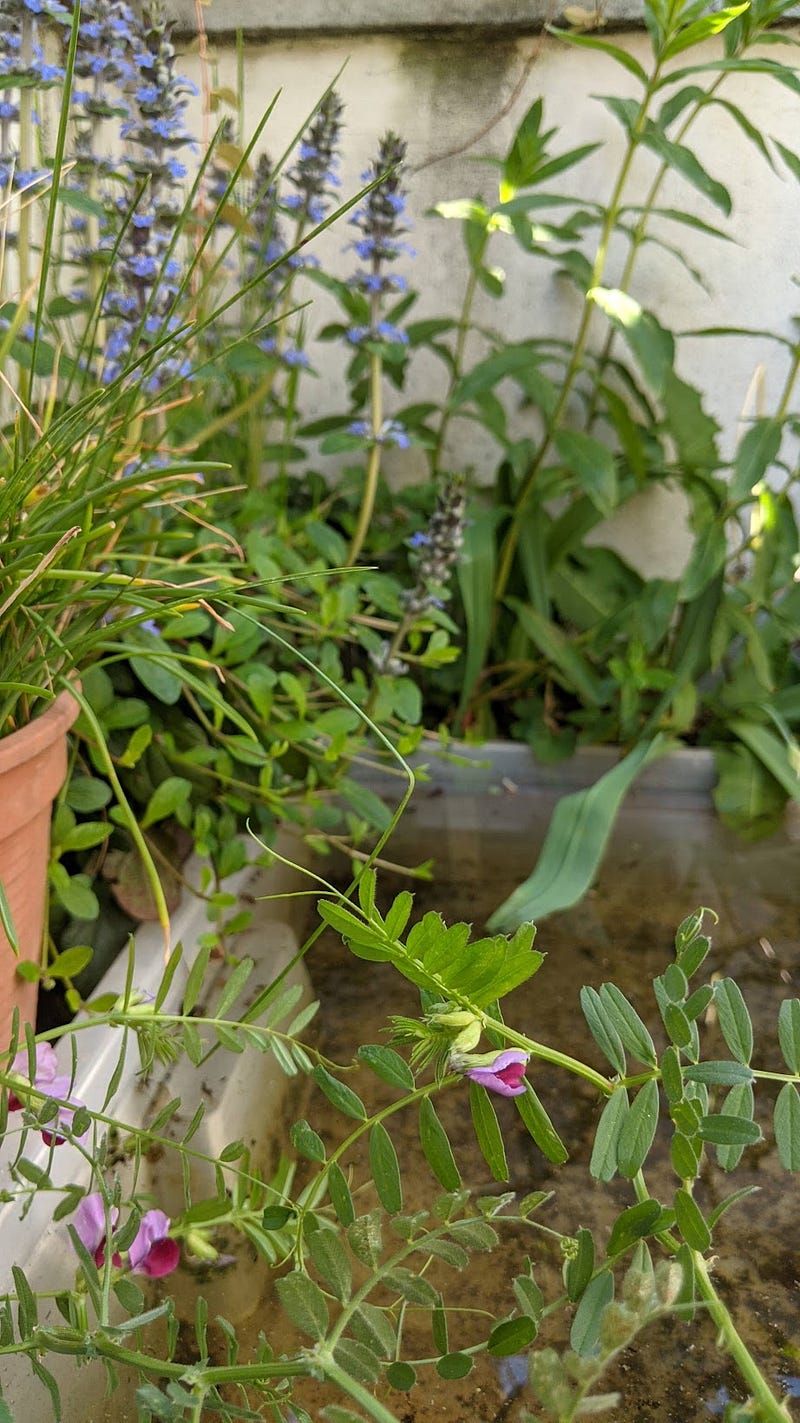
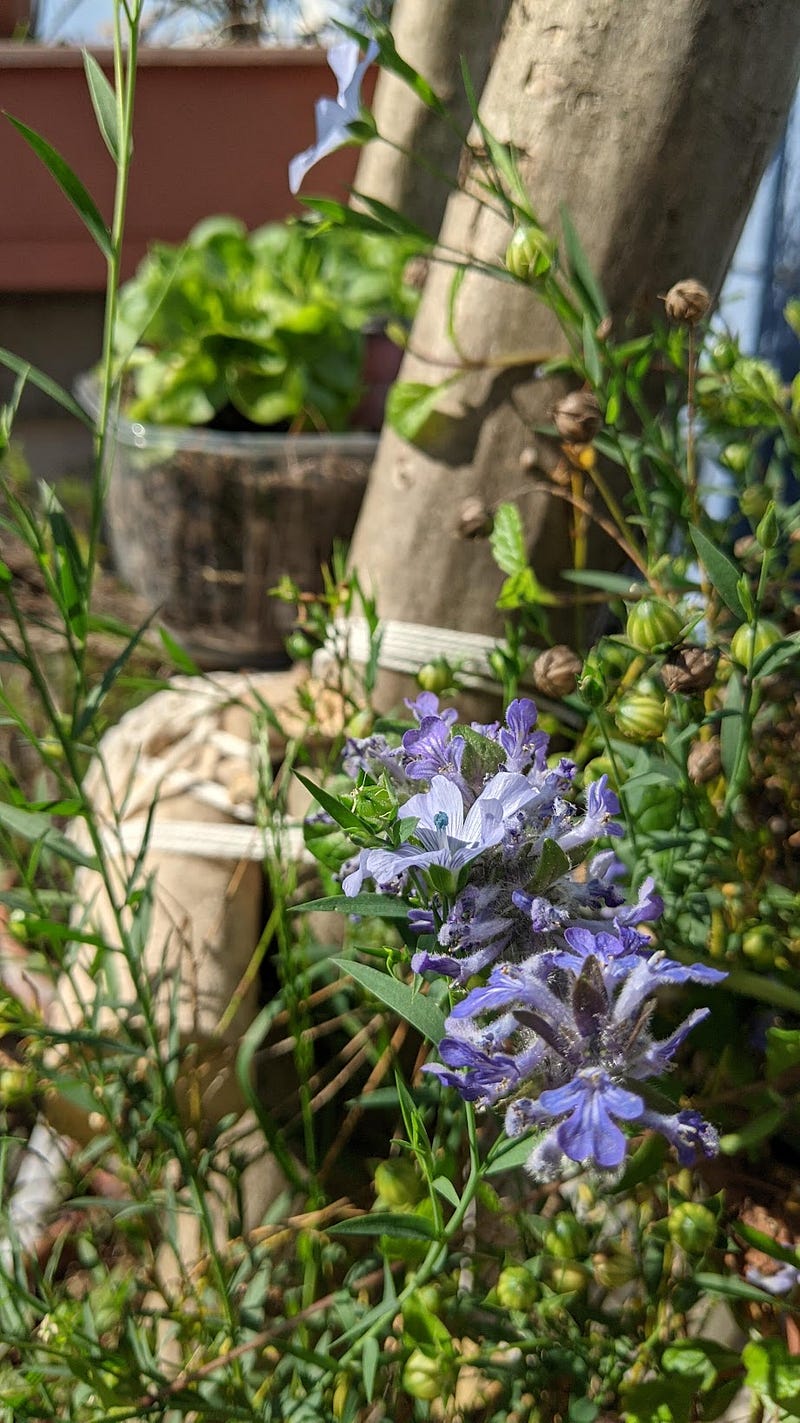
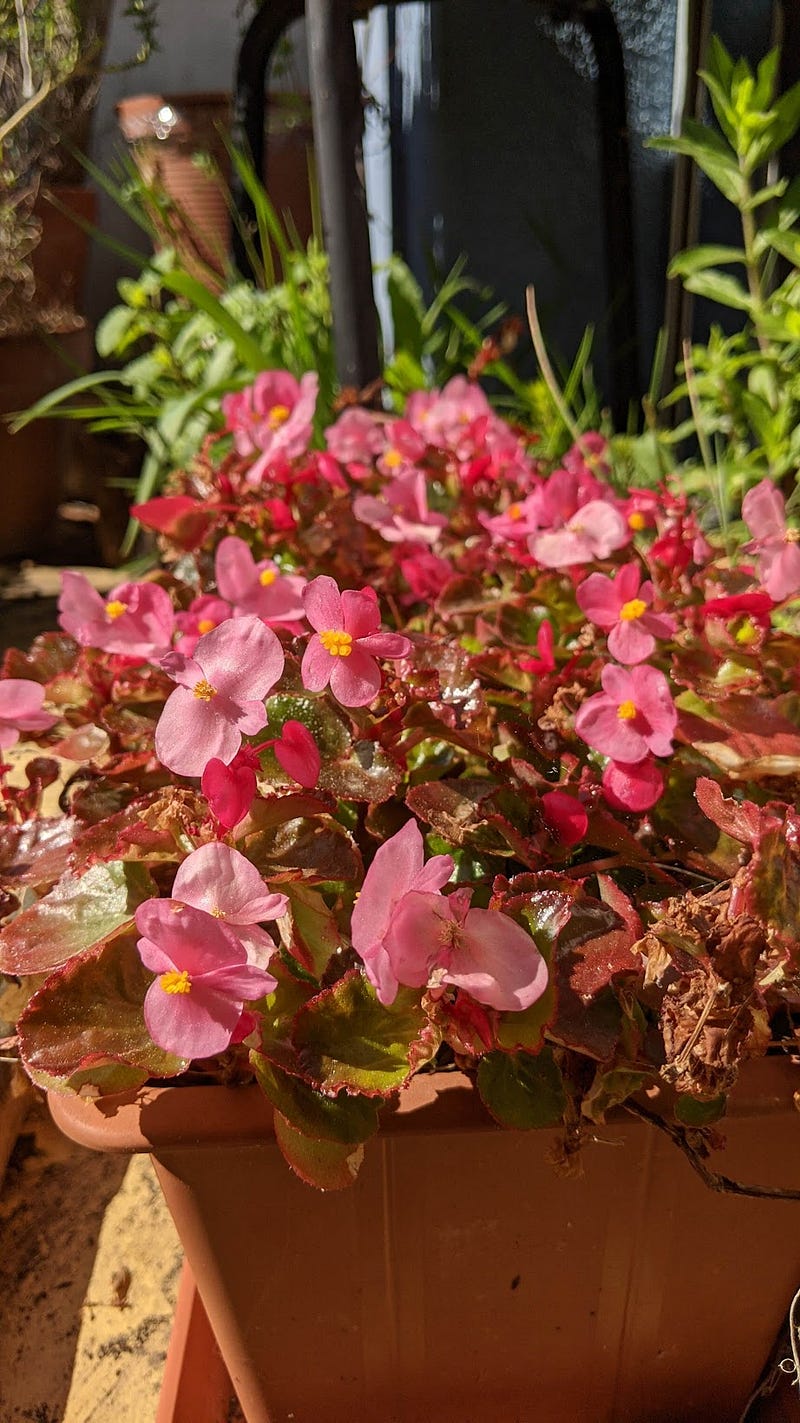
A few selected shots of how it’s all developing. I mark how each plant grew, because I tend to like it better when plants grow wildly or I make them root from seeds or cuts… but well sometimes one needs to buy!
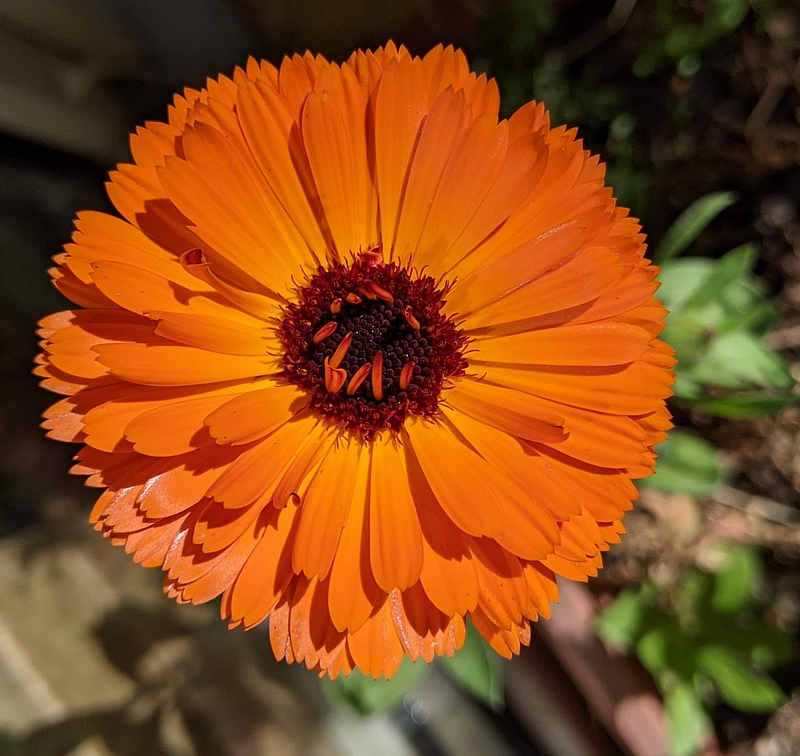
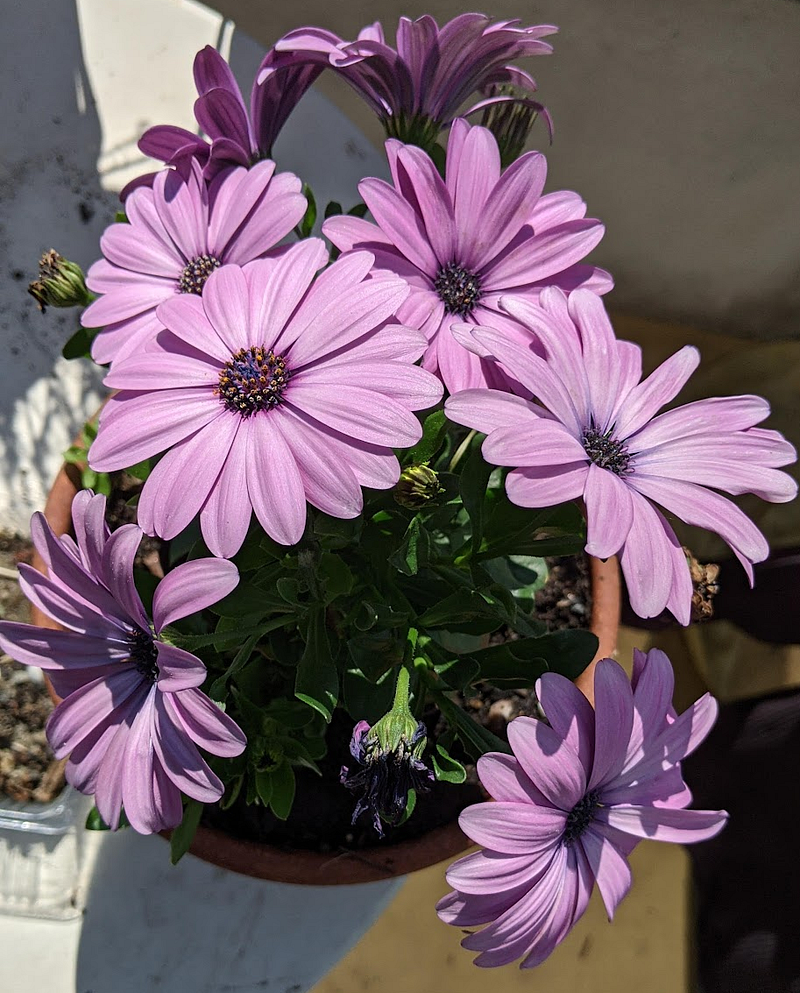
Left: a nice calendula that grew up alone from seeds. Right: A nice one that I had to buy :-)
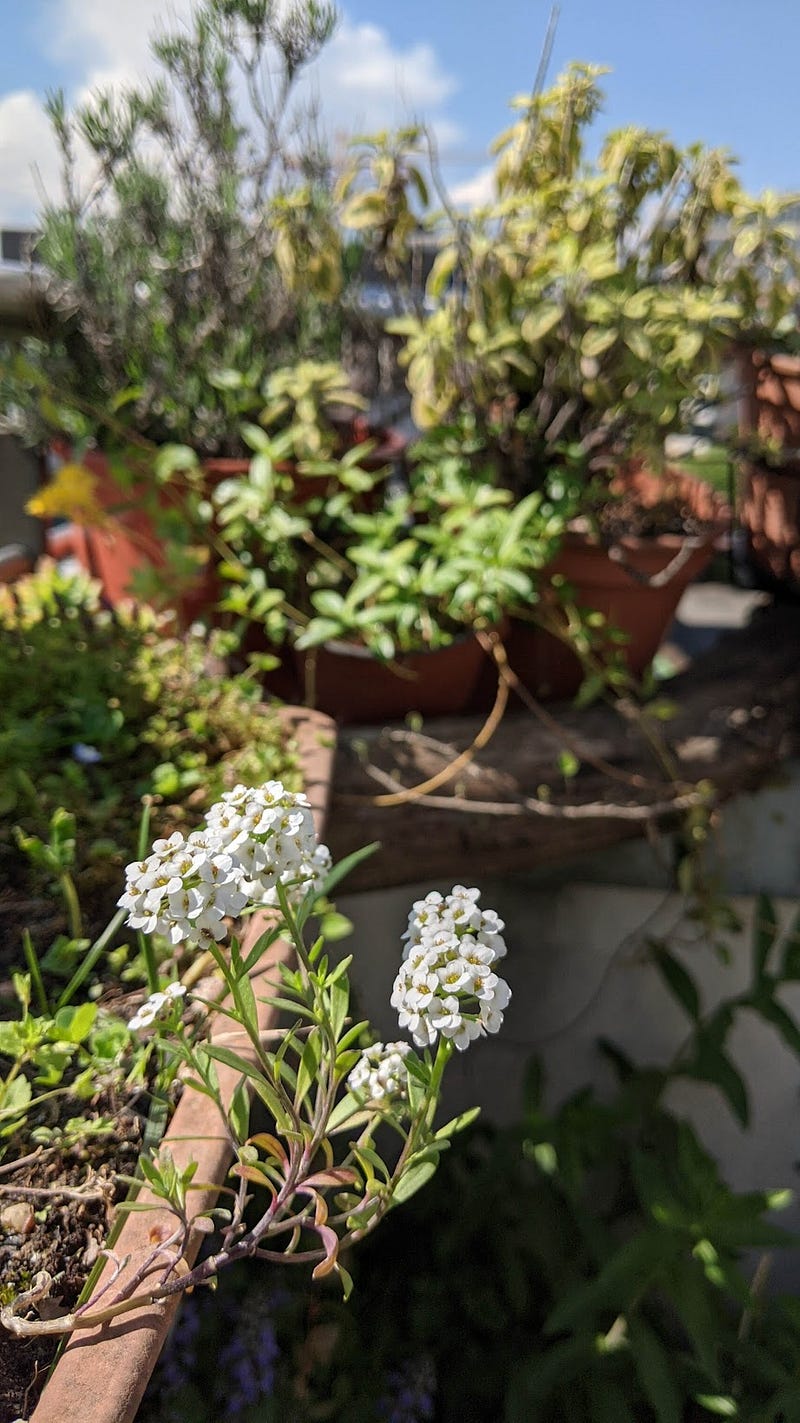
Left: one of the many alyssum plants that grow wild from seeds that just fly from one pot to the other summer after summer. Right: same for snapdragons!
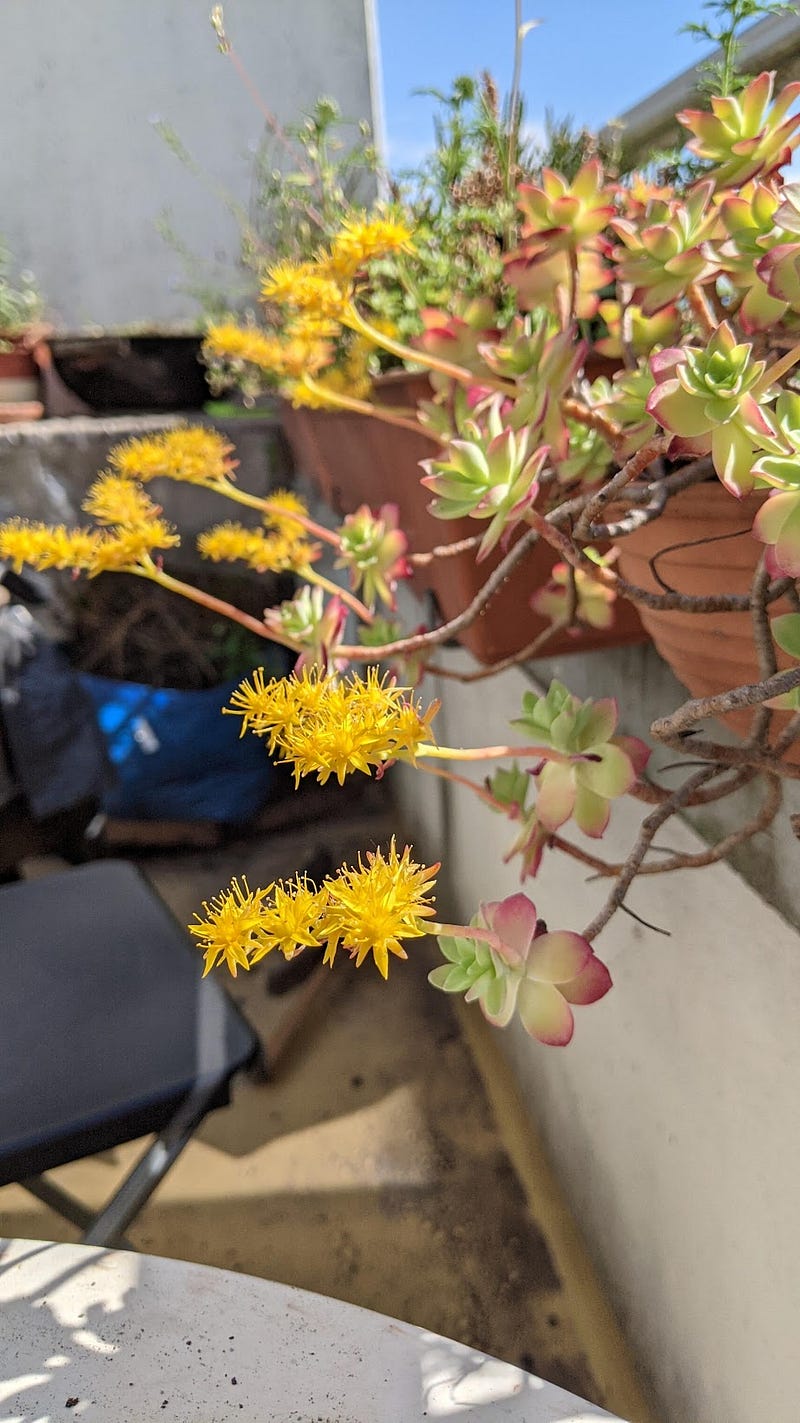
Left: a succulent I grew from cuts years ago. Right: another one I had to buy :-)
Many wildflowers whose seeds made it to my balcony, who knows how.
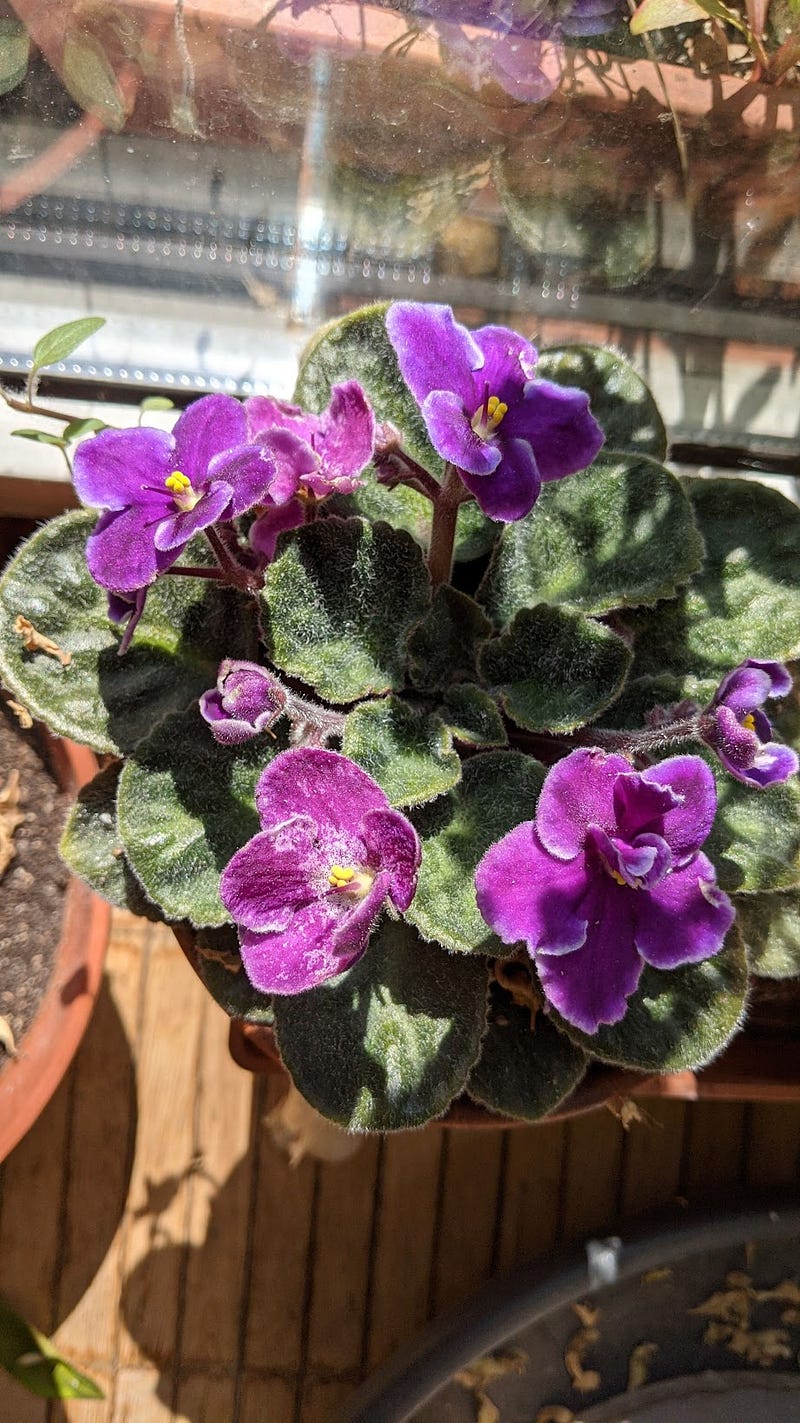
And two more that I made from cuts. These spend winters inside, and I take them out in summer. The African violet (left) is going out today!

You know, wildflowers love to grow in my balcony garden:

What’s next?

My tomatoes and that special kind of sweet pepper that I craved, are not growing… so I think I’ll have to get some plants somewhere… let’s see what I can find around that’s not expensive or worth paying for an interesting variety.

See you next time in 1 or 2 weeks!

www.lucianoabriata.com I write and photoshoot about everything that lies in my broad sphere of interests: nature, science, technology, programming, etc. Become a Medium member to access all its stories (affiliate links of the platform for which I get small revenues without cost to you) and subscribe to get my new stories by email. To consult about small jobs check my services page here. You can contact me here.

Nature
Outdoors
Sustainability
Development
Life
Recommended from ReadMedium