
TV, COMEDY
‘Never Have I Ever’ Thought That I’m Going to Enjoy A Netflix Show About A Nerdy Indian Teenage Girl
But I really did.
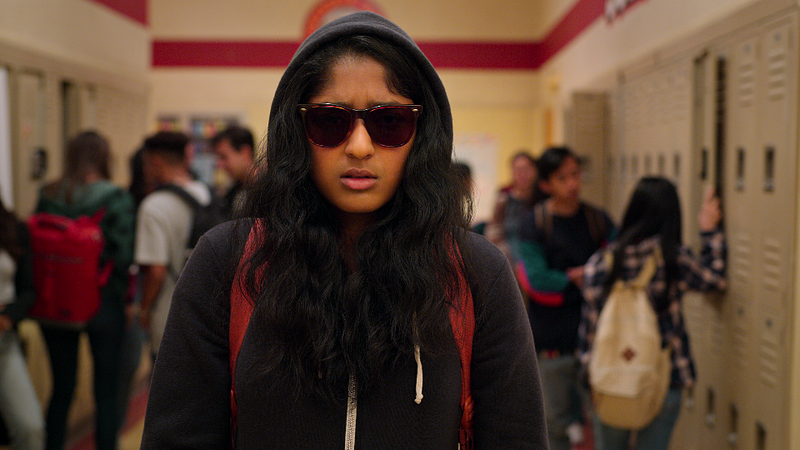
To be frank, I’m fed up with the overwhelming amount of mediocre teenage comedies lately. However, Netflix doesn’t seem to slow down on making them, instead, it piles up on the genre. The last one that showed some real potential was The End of the F***ing World, but even that burnt out by the end of its first season. (The HBO made Euphoria is a completely different animal.)
So Mindy Kaling’s show caught me by surprise when it was released last Monday (27th of March). The beginning of Never Have I ever is awkward, unbalanced, and it feels like another try-hard nerdy comedy portraying Indians in America. It’s not exactly a new perspective and, its focus is quite unclear. I almost gave up after 2 episodes, but for some reason, I stayed despite the slow build-up.
In the pilot, we learn that the 15-year-old Devi (Maitreyi Ramakrishnan) lost her father just a few months ago due to heart attack, which caused her legs to stop function, forcing her into a wheelchair for a while. At first, this seems like only a side note among the nerdy immigrant jokes, Indian stereotypes, and the desire of being cool in high school. But it’s actually the core of the whole premise. She recovers quickly when she first lays eyes on the school’s hottest guy, Paxton Hall-Yoshida (Darren Barnet). Devi does everything to earn his attention and tries to seduce him. This looks like the show’s main plot, but it hardly is.
We’ve seen that stuff way too many times before to be really engaging and, even though grief is also a worn-out subject if it’s written well, it’ll touch the audience’s heart.
The series’ best moments are Devi’s memories and her relationship with her surreally optimistic father. But just like Devi’s mind, the show itself tries to hide that to cope with life, seeking distraction in anything else. Once Devi realizes that she can’t escape from her own grief, the show genuinely opens up its heart.
“It is refreshing, and exciting, to see someone like Devi given the Fleabag treatment: space to avoid grief by misbehaving, an exploration of the bitter pills of growing up with a darkly comic touch.” — Adrian Horton, The Guardian
That’s something John Hughes had implemented perfectly in his cult classic ’80s-90s comedies. He knew well enough that vulnerability will make people relate whether they’re 15 or 42.
We could blame Never Have I ever for being too melodramatic or cheesy sometimes, but nevertheless, it works when it plays on the harp of emotions.
What seems unavoidable these days is not to play the LGBTQ card and attempt to be politically correct from every possible angle. I get it, I really do, but sometimes I just want to see a juvenile comedy that doesn’t build the supportive characters’ catharsis on a coming out. Last year, HBO’s Euphoria at least went as far as possible, destroying boundaries as they’ve never existed, treating them for what they were, given elements from the get-go.
However, Kaling’s dramedy at least attempts to make witty one-liners playing with stereotypes, and that’s something to be acknowledged, too.
The finale of the first season, where all emotions cultivate in a touchy moment, underlines the 10-episode-long journey as something worthwhile to see when the stormy and fragile relationship between mother and daughter comes to acceptance.
Never Have I Ever is streaming on Netflix.
If TV shows made you a junkie, you should give a read on this one, too:
If you’d like to read more from me, sign up for my monthly newsletter here.


