
Neuroplasticity: The Brain’s Remarkable Capacity for Change and Growth
Our brains renew themselves throughout life to an extent previously thought not possible. — Michael S. Gazzaniga

Neuroplasticity, also known as brain plasticity or neural plasticity, is the brain’s ability to change and adapt throughout an individual’s life (Zatorre, Fields, & Johansen-Berg, 2012). This concept is central to our understanding of brain development, learning, and recovery from brain injury. Neuroplasticity manifests in various forms, including the formation of new neural connections, the strengthening or weakening of existing connections, and even the generation of new neurons in certain brain regions (Pascual-Leone, Amedi, Fregni, & Merabet, 2005).
Synaptic Plasticity: Synaptic plasticity involves changes in the strength and efficiency of synaptic connections between neurons and is a primary mechanism of neuroplasticity (Malenka & Bear, 2004). This process, encompassing long-term potentiation (LTP) and long-term depression (LTD), is believed to be fundamental to learning and memory (Citri & Malenka, 2008).
Structural Plasticity: This aspect involves changes in the brain’s physical structure, such as the growth of new dendrites and the formation of new synapses (Holtmaat & Svoboda, 2009). There can also be changes in the size of certain brain regions as a result of learning and experience (May, 2011).
Functional Plasticity: Functional plasticity refers to the brain’s ability to move functions from a damaged area to undamaged areas, a phenomenon observed in individuals recovering from brain injuries or strokes (Kleim & Jones, 2008).
Critical Periods: Although neuroplasticity is most evident during critical periods of development, it continues throughout life, allowing for ongoing learning and adaptation (Hensch, 2004).
Neurogenesis: Recent research has identified neurogenesis, the birth of new neurons, in adult brain regions like the hippocampus, challenging the traditional belief that the adult brain cannot generate new neurons (Eriksson et al., 1998).
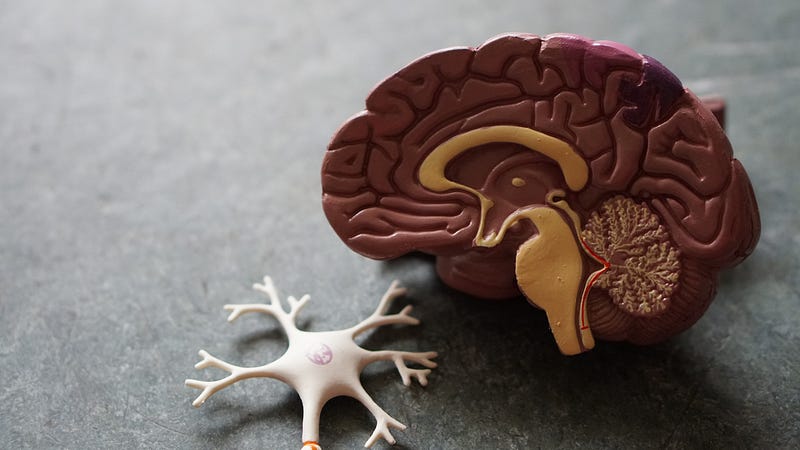
Historically, it was a widely held belief in neuroscience that the adult brain was a static, unchangeable structure, incapable of regeneration and substantial adaptation. This perspective, grounded in the early 20th-century neurological research, posited that, unlike other organs in the human body, the brain did not possess the capacity to regenerate neurons or substantially reorganize itself once it reached maturity. The implications of this view were profound, suggesting that any damage to the brain, whether from injury or disease, was largely irreversible, and that the brain’s capacity for learning and adaptation was significantly limited after a certain developmental stage. This belief was rooted in the observation that many patients with neurological damage showed limited recovery, and the prevailing understanding of the central nervous system as a rigid and unyielding network. The concept of neurogenesis (the birth of new neurons) in the adult brain was, at the time, a contentious and largely dismissed idea, further entrenching the notion of the adult brain’s rigidity and lack of regenerative abilities.
The concept of the brain’s incapacity for regeneration began to evolve with pioneering research in the late 20th century, which challenged the long-standing paradigm. Groundbreaking studies by researchers such as Altman (1962), who provided some of the first evidence of neurogenesis in adult rat brains, began to shift this perspective. This was further supported by Eriksson et al. (1998), who demonstrated adult human neurogenesis in the hippocampus, a region critical for learning and memory. These findings were complemented by extensive work in the field of synaptic plasticity, with seminal studies by Bliss and Lømo (1973) on long-term potentiation providing insight into the dynamic nature of synaptic connections in the brain. These discoveries collectively eroded the dogma of a non-regenerative adult brain, opening the door to a new understanding of the brain’s remarkable capacity for plasticity and adaptation throughout life.
Everything having to do with human training and education has to be re-examined in light of neuroplasticity. — Norman Doidge
This paradigm shift had profound implications in various fields, from cognitive neuroscience to clinical rehabilitation, reshaping our approach to brain development, learning, and recovery from injury. In education, it supports the idea of lifelong learning (Zull, 2002), and in rehabilitation, it underpins strategies to recover lost functions after brain injury (Kleim & Jones, 2008). It also plays a role in understanding and treating neurological and psychiatric disorders (Cramer et al., 2011).
References
Altman, J. (1962). Are new neurons formed in the brains of adult mammals? Science, 135(3509), 1127–1128.
Bliss, T. V. P., & Lømo, T. (1973). Long-lasting potentiation of synaptic transmission in the dentate area of the anaesthetized rabbit following stimulation of the perforant path. The Journal of Physiology, 232(2), 331–356.
Citri, A., & Malenka, R. C. (2008). Synaptic plasticity: multiple forms, functions, and mechanisms. Neuropsychopharmacology, 33(1), 18–41.
Cramer, S. C., Sur, M., Dobkin, B. H., O’Brien, C., Sanger, T. D., Trojanowski, J. Q., … & Vinogradov, S. (2011). Harnessing neuroplasticity for clinical applications. Brain, 134(6), 1591–1609.
Eriksson, P. S., Perfilieva, E., Björk-Eriksson, T., Alborn, A. M., Nordborg, C., Peterson, D. A., & Gage, F. H. (1998). Neurogenesis in the adult human hippocampus. Nature Medicine, 4(11), 1313–1317.
Hensch, T. K. (2004). Critical period regulation. Annual Review of Neuroscience, 27, 549–579.
Holtmaat, A., & Svoboda, K. (2009). Experience-dependent structural synaptic plasticity in the mammalian brain. Nature Reviews Neuroscience, 10(9), 647–658.
Kleim, J. A., & Jones, T. A. (2008). Principles of experience-dependent neural plasticity: implications for rehabilitation after brain damage. Journal of Speech, Language, and Hearing Research, 51(1), S225-S239.
Malenka, R. C., & Bear, M. F. (2004). LTP and LTD: an embarrassment of riches. Neuron, 44(1), 5–21.
May, A. (2011). Experience-dependent structural plasticity in the adult human brain. Trends in Cognitive Sciences, 15(10), 475–482.
Pascual-Leone, A., Amedi, A., Fregni, F., & Merabet, L. B. (2005). The plastic human brain cortex. Annual Review of Neuroscience, 28, 377–401.
Zatorre, R. J., Fields, R. D., & Johansen-Berg, H. (2012). Plasticity in gray and white: neuroimaging changes in brain structure during learning. Nature Neuroscience, 15(4), 528–536.
Zull, J. E. (2002). The art of changing the brain. Educational Leadership, 60(1), 68–72.