
Nests In Our Hair
Feelings are like little birds flying overhead. When they land upon us, without our awareness they build nests of negativity.
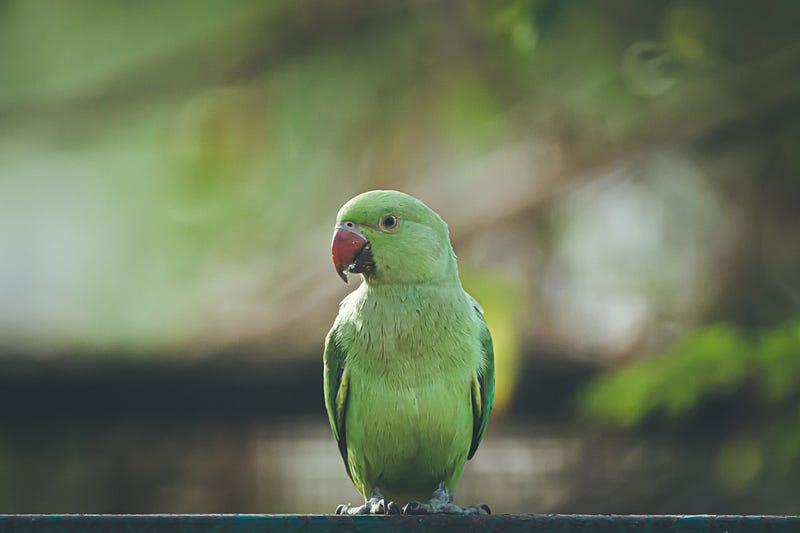
In the little store on Main Street in Canyonville, Oregon was a small yoga studio and naturalist shop. The lady who ran the shop was gentle, kind, and had a cute little green bird who recited the ABC’s as we did yoga. He perched on the little fountain and cheered us on as we stretched and relaxed. He was the life of the store. One day, Elona forgot she needed to clip his wings.
She pulled into her driveway, where out in the woods tall, green, spring grasses grew. Little birdie flew off into the grass. She saw him start to take off. He had not been flying at the store, and he nested in her hair most of the time. That was the last time she saw her beloved little green parrot. When it comes to containing birds, we have to remember they fly freely when we let them do what they want.
- Emotions and feelings are much like birds who have free flying wings.
Feelings and emotions are natural and helpful to guide us through life. They show up to warn us, comfort us, or signal something is amiss. By acceptance and honoring of our emotions we have better control over our feelings than if we neglect to ‘feel’ and continue to reduce them by isolation or using something to take the edge off.
- The reality of feelings scares people, especially those fresh into recovery.
The overwhelming emotional surges happen when the body is trying to restore homeostasis from long-neglected feelings. Since they are natural, we can use everyday ideas and concepts to bring them into awareness. Often, when someone names something they begin to build a platform of knowledge.
- The named item no longer scares them, but helps them awaken.
We cannot prevent birds of all kinds from passing over our heads. If we liken feelings to birds, they fall into two categories. Birds or sadness or birds of happiness, which are on a line of continuum may flit about.
- Feelings fly by or they land upon us.
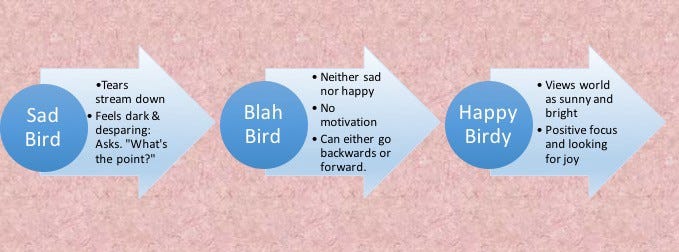
Birds of sadness and birds of happiness cling to us when we isolate and forget the gift of acceptance. Sticks, stones, paper, and dross cling to our minds. They keep landing and building the nests. When we allow nests to grow in our mind we forget how beautiful life is outside of negative thoughts.
- You can feel them, but you have to look in a mirror to see them clearly.
Little droppings fall upon our shoulders. Sometimes we never even know they landed, until we observe our image in the mirror. Once we see the little specks we can better address them in our life.
- Remember, we cannot prevent “feeling birdies” from passing over your head.
When someone has a pet bird, they often clip one side of the wings to help keep the bird safe at home. Once the feathers grow back, though, the bird takes off in flight excited to soar again.
- Feelings are like feathers. They grow back after a time.
After the initial trimming of feathers (reducing feelings by using substances, activities, or isolation) the longer a person limits them, the more powerful they are when they return. The overwhelming emotions send surges of negative based behaviors. When these behaviors show up, we quickly find ways to use them as excuses.
- Unfortunately, the fallout to these excuses damages relationships.
Excuses damage trust. People use feelings as excuses for bad behaviors. The saying, “You hurt me” becomes a tool to excuse smoking, drinking, or using other substances.
- Ownership of choices builds resilience in life.
Once we recognize how feelings and emotions show up in our life, we can take the power back they once held. To accept emotions as a passing bird helps to let them flow through rather than attach and plant a nest of negativity in our hair (mind).
- When we distract our birds from landing we give our mind strength.
The strength isn’t one to create havoc on the system, no, this strength is the way we honor the feelings and accept them as they move onward. See if you can capture and tame some run away emotions, reign them in, and turn them into stepping stones for tomorrow’s victories.
~Just a thought by Pamela


