
Pushing the Boundaries of AI Art Creation
Negative Prompts & Google Bard bla, bla, bla… the future of generative AI
Prompt Engineering: The Career of Future
Amidst the rampant advancement of generative AI technology, with even young students relying on the likes of ChatGPT for their homework, Google’s occasional claims of unveiling something remarkable have become mere caricatures of what once was.
🟠 The Dark Side of AI
The once mighty tech giant now struggles to capture the attention of its own top proponents, with prominent figures like Cassie Kozyrkov finding more solace in exploring the realm of Midjourney rather than focusing on the elusive Imagen, an AI art model shrouded in mystery and only known to a select few.
🟠 What exactly is a prompt injection?
Bard google ( chat gpt google )
ChatGPT and Google Bard are two AI chatbots vying for supremacy in the realm of language modeling. Created by OpenAI, ChatGPT is based on the formidable Generative Pre Trained Transformer-3 (GPT-3) technology. Meanwhile, Google Bard draws its power from the LaMDA (Language Model for Dialogue Applications) system, available through select users via the AI Test Kitchen program.
While both chatbots share a common feature of language modeling, they differ in their capabilities. ChatGPT is a self-contained entity, relying solely on its training data, while Google Bard has the advantage of accessing the vast information of the internet, making its responses more current and trustworthy.
The competition between the two chatbots is heating up, with Google Bard seen as a direct rival to ChatGPT. However, the outcome of this battle remains to be seen. Despite the much-anticipated arrival of Bard, it remains largely unknown to the public and is shrouded in mystery, like a fairy-tale imagen.
Generative AI for the Next Era
Google, a mighty multinational technology behemoth, has come to dominate our digital landscape, with an estimated four billion users worldwide. Despite its impressive growth, the company has not been immune to challenges and setbacks. For instance, its Cloud division incurred a staggering $5.6 billion loss in 2020. Additionally, its ambitious book-digitizing project, which began in 2002, failed to live up to its promise of creating a comprehensive “library of everything.”
Microsoft integrate OpenAI’s ChatGPT into its search engine Bing. Google is out
🟠 Large Language Model TOP bots. 2 rivals
Google irritates the AI community
As Google approaches its 25th anniversary, one cannot help but reflect on the company’s journey and impact on technology. However, the passage of time can often bring fatigue, and it may be time for the company to bid farewell and hand the baton to new innovators, eager for new challenges. We must acknowledge Google’s contributions and express our gratitude for their role in advancing technology as we know it today.

Google Bard vs Google stock
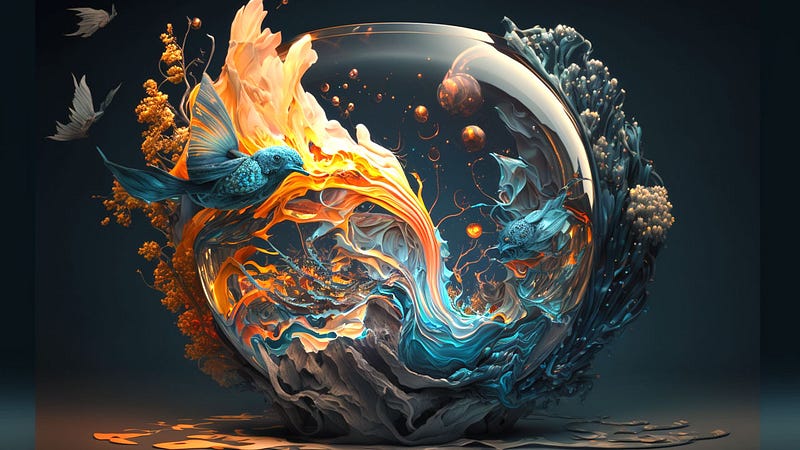
Google can be likened to a glass orb that affords us a glimpse into the future. Just as a crystal ball offers a window into the unknown, Google offers continual insights into what’s to come, through its innovative technologies and cutting-edge products. From its search engine to its AI-powered tools, Google consistently pushes the limits of possibility and provides us with a peek into the future of technology.
From Search Engine to Future Seer: The Magic of Google’s Glass Orb
The company’s mastery of data analysis and its ability to harness it to shape and predict the future make it a formidable force in our world. Like a glass sphere that reveals glimpses of what’s to come, Google continues to provide us with a window into the future and how technology will impact our lives.
However, we must acknowledge that the future-gazing provided by Google is not without limits. As others enter the arena with their own offerings, the foresight provided by this tech giant may soon run its course. Nevertheless, we must express our gratitude for the insights it has offered thus far.
The Perfect Reality with Negative Prompts:
🟠 HERE
The bard, a timeless figure in human history, has always been the keeper of our collective memories and the chronicler of our heroic tales. In times of yore, these professional storytellers, poets, and musicians were held in high regard by their patrons, tasked with capturing the pivotal moments of history and commemorating the deeds of the brave. Through the art of song and verse, the bard painted vivid portraits of the people and events that shaped the fabric of our past.
Today, the bard is often associated with musical performance, using their skills to create entertaining and thought-provoking works of art. However, with the advent of Google’s AI technology and the emergence of their chatbot, Google Bard, the role of the bard in our society has undergone a profound transformation.
As we move deeper into the digital age, the role of the bard has become increasingly intertwined with technology. The bard of today must contend with a world where information is readily available at our fingertips and memories are increasingly digitized. In this context, the question of how we preserve and transmit our cultural heritage becomes increasingly pressing.
Google Bard a mythical figure from stock market tales
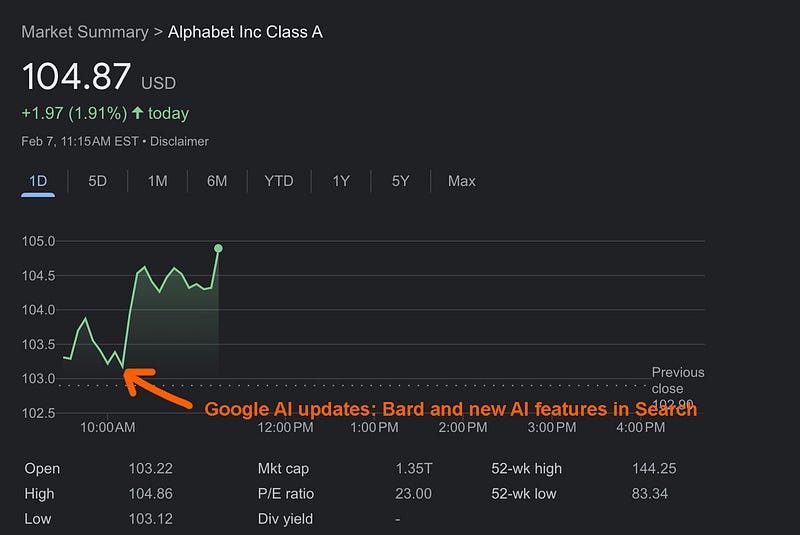
It remains to be seen what role Google Bard will play in this ongoing evolution of the bard. Will it become a new standard-bearer for the bardic tradition, using technology to bring our stories and memories to life in new and exciting ways? Or will it become a mere novelty, a symbol of our growing disconnection from the roots of our cultural heritage?
[update 12th February 2023]
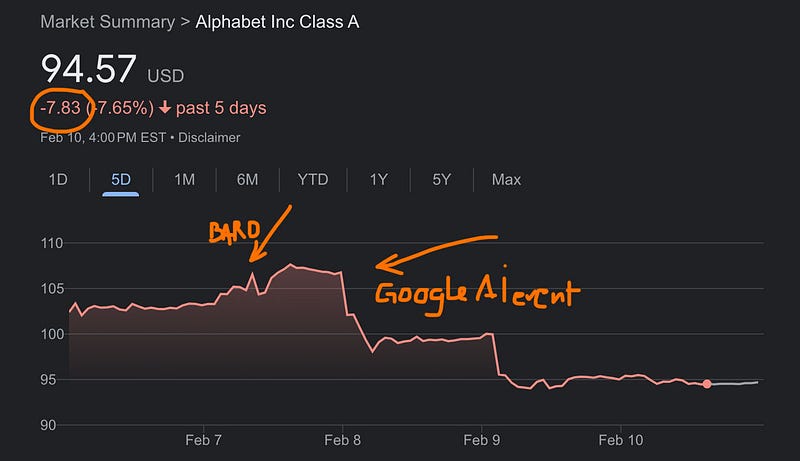
Only time will tell, but one thing is clear: the bardic tradition continues to evolve and the role of the bard remains as critical as ever.


