
Nearly Dead or Dying?
The differences between Near Death Experiences and End-of-life phenomena
While near death experiences (NDEs) and end-of-life phenomena (ELPs) share some similarities, they are two different experiences and can be easily distinguished by asking a simple question:
“Is the person alive and well (not dying anymore) after the experience?”
If the answer is “yes”, then we’re talking about an NDE. If the answer is “no”, then we’re talking about an ELP.
This could be the end of this article. But, let’s go a little deeper!
End-of-life Phenomena
In the previous article on whether we can predict death, it was explained that ELPs consist of things that a dying person experiences. This can include seeing and talking to dead loved ones, interacting with spiritual entities (depending on one’s faith and background), and having other auditory or visual hallucinations and delusions.
Usually, ELPs start when the person’s body is slowly shutting down. In some cases, this could start even 2–3 months before the actual death. However, ELPs become more intense and frequent in the final days of a person’s life. And, that is how death can be predicted. No metaphysical mystery here, sorry.
Near Death Experiences
NDEs are defined as the experiences a person can have when they are too close to death, or under extreme stress that would cause the body to think that it’s dying.
For example, a person who got into a car accident and is unconscious might have an NDE. Also, a person who is undergoing surgery might have an NDE.
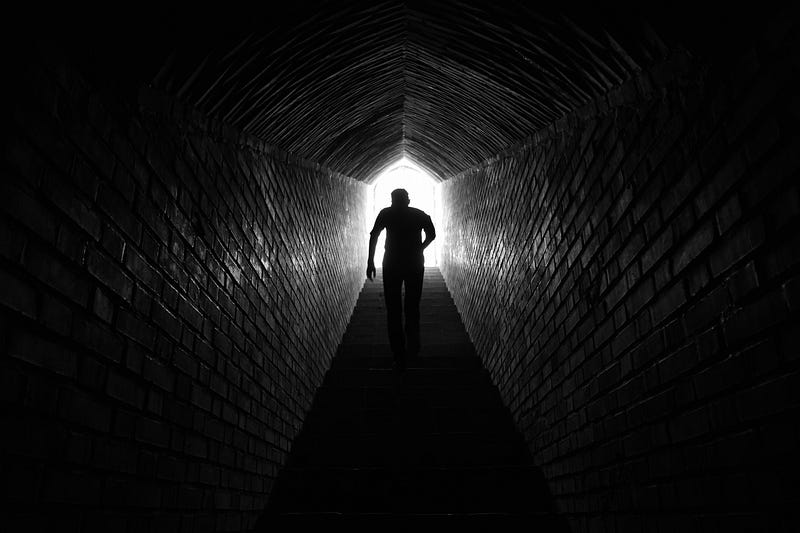
It’s rather difficult to pinpoint the range of NDEs. Many people describe their experiences as being out of their body, seeing a tunnel with light at the end, meeting “God” or deceased loved ones, and going to “heaven” or “hell” (source).
Research has shown that what a person experiences during an NDE depends on their cultural background and can also be circumstantial (source). For instance, the narratives of seeing a light at the end of a tunnel have increased since 1975. That is possibly because prior to 1975, the published accounts of NDEs focused more on religious aspects rather than transcendental experiences as a whole (source).
The role of the brain
Research findings so far indicate that stress and perceived danger are the main precursors of NDEs. Other conditions like anesthesia, low oxygen, and blood loss can trigger a brain response similar to what we would perceive if our body was actually dying.
That happens for several reasons.
First, hypoxia (low oxygen) can make us hallucinate. Combining hypoxia with other significant life-threatening conditions in or around the body (e.g. being trapped in a vehicle after an accident) triggers a response in the primal part of the brain. That, in turn, shuts down cognition and shows us things that may calm us down. Something similar can happen when there is too much oxygen, such as in the case of hyperventilation.
Moreover, anesthesia blocks a specific receptor in the brain called N-methyl-D-aspartate (NMDA) receptor. This receptor is responsible for transmitting signals from the nerves.
It has been proved that blocking this receptor mimics an NDE in some people, and that can lead them into believing that they’re dying. When this happens, their brain behaves as if they’re having an ELP (source). Other psychotropic substances can also block this receptor. If someone takes such a substance, they might also have an experience that could be classified by them as an NDE rather than a hallucinogen-induced trip.
Accuracy of the experiences
Many people who have had an NDE claim that they could see what was happening around them while they were unconscious. Also, they may claim that they saw their life flashing before their eyes (life review), or that they could see things from above.
However, research findings showed that only about 43% of these experiences are accurate (source). Similarly to the increase in seeing a tunnel after 1975, those claims are also influenced by popular narratives and expectations about NDEs. So, when a person’s consciousness is shifting, they seem to be more likely to have an NDE that most closely matches what they expect an NDE to be like.
Levels of consciousness
Consciousness is broadly divided into wakefulness and awareness.
Wakefulness is the body condition in which the person is able to open their eyes. Wakefulness does not imply awareness. In awareness, a person may or may not be able to open their eyes but they are aware of the environment around them.
Awareness is further divided into responsiveness (exhibiting reflexes), connectedness (the brain is connected to the whole body), and internal awareness (the brain can correctly identify what is happening inside the body).
Under local anesthesia, for example, we experience disconnected consciousness. This means that we are awake and can process information, but access to one part of the body has been cut off (e.g. not feeling any sensations in and around the body part that is under operation).
From the evidence gathered so far through electroencephalograms and galvanic skin responses, it is theorized that during an NDE the brain switches rapidly between disconnected consciousness and loss of consciousness. This could explain, for instance, why some people can hear what is going on around them even if they appear to be completely unconscious.
Therefore, NDEs are not a single experience of the brain. Rather, they are a cluster of concurrent experiences that the brain weaves into a meaningful story (source).
Summary/ Conclusion
- Both ELPs and NDEs originate from things that are happening in the body and are interpreted by the brain to the best of its ability.
- Both ELPs and NDEs seem to also have a calming or reassuring function.
- An NDE is something that the brain experiences when it perceives that the body is in a life-threatening situation, while ELPs refer to the experiences when a person’s body is actually dying.
- The content of NDEs can be influenced by cultural factors, even though some experiences appear to be stable across cultures.
- Less than half of the reported NDEs are accurate. Their accuracy depends on the levels of consciousness.
“If you’re frightened of dying and you’re holding on, you’ll see devils tearing your life away. If you’ve made your peace, then the devils are really angels, freeing you from the earth.” — quote from the movie “Jacob’s Ladder” (1990)
The above quote is also used in the (amazing, in my opinion) song “Forsaken” by VNV Nation.