
Can We Predict Death?
The science behind end-of-life phenomena
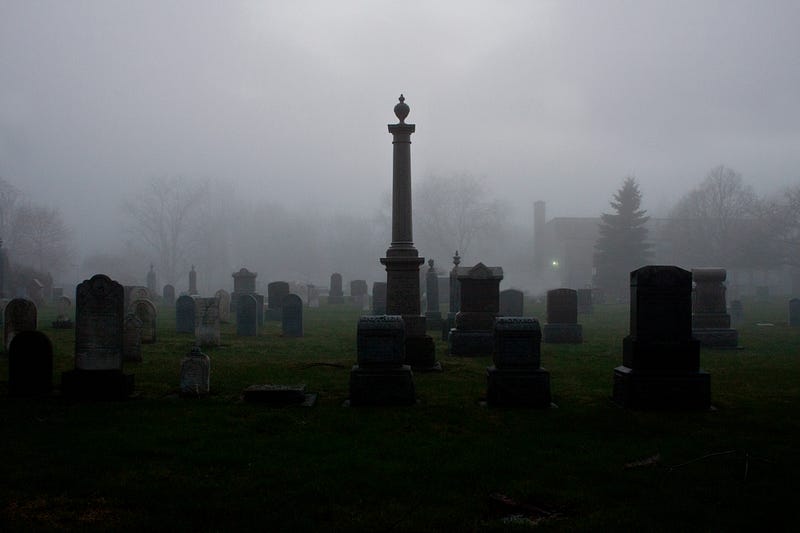
For most people, the process of dying and death itself remains something obscure. Even though there are still many things we don’t know about death and dying, we’re getting closer to deciphering some of the most crucial parts.
This article by Marta Henriques inspired me to finally start posting about death and dying from a scientific perspective.
What are the end-of-life phenomena?
End-of-life phenomena (ELP) are the experiences a person may have, as their body is slowly entering the dying process. These experiences include (but are not limited to) deathbed visions, premonitions about death, and dreams and visitation experiences from deceased loved ones.
The dying process is the physical process of dying, which may start many months before the actual death of the body. During that process, the body starts functioning more slowly, there are no new cells created, and everything is gradually shutting down.
The dying process ends with the “actively dying” phases. During the first phase, the person feels more lethargic and withdrawn. They may start experiencing more ELPs. In the second phase, the body starts showing easily observable signs of dying like changes in breathing, confusion, difficulty in swallowing, and agitation (source).
Witnessing the second phase may be uneasy, because the dying process is rarely like how it’s shown in movies. However, knowing that all these agonizing manifestations are a natural part of dying is usually soothing (source) both for the dying person and their loved ones. Still, it can be quite traumatic to witness a loved one seemingly grasping for air in their final moments. But the premise is that as long as you know that it’s normal and that the person is not in pain or suffering, it will be easier to process.
The brain and body experiences before the active dying can begin a month to a few weeks prior. When the person enters the active dying phase, usually they die within 2–4 days. However, there are many cases of people who die without exhibiting any typical signs of the active dying phase (source).
Predicting death throughout history
One amazing book that details how death and dying have changed throughout history, is “The Hour of Our Death”, by P. Aries (I highly recommend it!).
In that book, Aries tracks the manifestations of death throughout history and explains how death used to be a common affair, that was often public. More specifically, people would gather in the dying person’s house to witness the death. The dying person who could predict their death would earn “bonus societal points” and make their family feel more dignified.
That was mostly because a death premonition meant that the family of the dying person could start the preparations earlier, and inform the town about the upcoming death. More time for preparations equaled a more fashionable death, which was important especially for the rich.
Do we really know when we’re going to die?
Predicting one’s death, therefore, is nothing new. It may have seemed like something mystical, fascinating, and dark many years ago, but now we’re very close to answering exactly how death premonitions work.
When the body enters is dying phase, the brain understands that the organs are shutting down. This is communicated to our consciousness through dreams (e.g. having a dream of meeting a deceased loved one who is waiting), or through emotions that can’t be put into words (premonitions).
Even in cases of acute trauma (e.g. after an accident), people have reported knowing that they won’t make it (source). That is also because the body is shutting down, and the brain correctly recognizes that this is the dying process.
Moreover, pregnant people have successfully “predicted” the death of their baby in utero (source). Once more, there’s nothing metaphysical about it. The body of the pregnant person knows that the embryo is dying, and it sends the information to the brain.
Some people happen to be more in tune with their body and thus they will feel the death approaching. Those who are not so much in contact with their physical sensations, will have the information relayed to them via dreams or visions (source).
The end-of-life dreams and visions mostly serve the purpose of soothing the dying person. Even though it’s most common for someone who is dying to see deceased loved ones (including pets), dying people also see people who are alive but can’t be there with them in their final moments (source).
Conclusion
Despite the fact that most people think of death and dying as a mystical process, the reality is that everything has an explanation. There are many things we have yet to figure out about life and death, but hopefully knowing some facts makes it easier to process them.
Demystifying death and dying will hopefully make them less painful. Just like with mental health or physical health, the more we know about a phenomenon the better we can adapt to it.