
NBA Player Comes Out To Sister At A Gay Nightclub
A bar scene from former NBA player John Amaechi’s memoir raises a key question
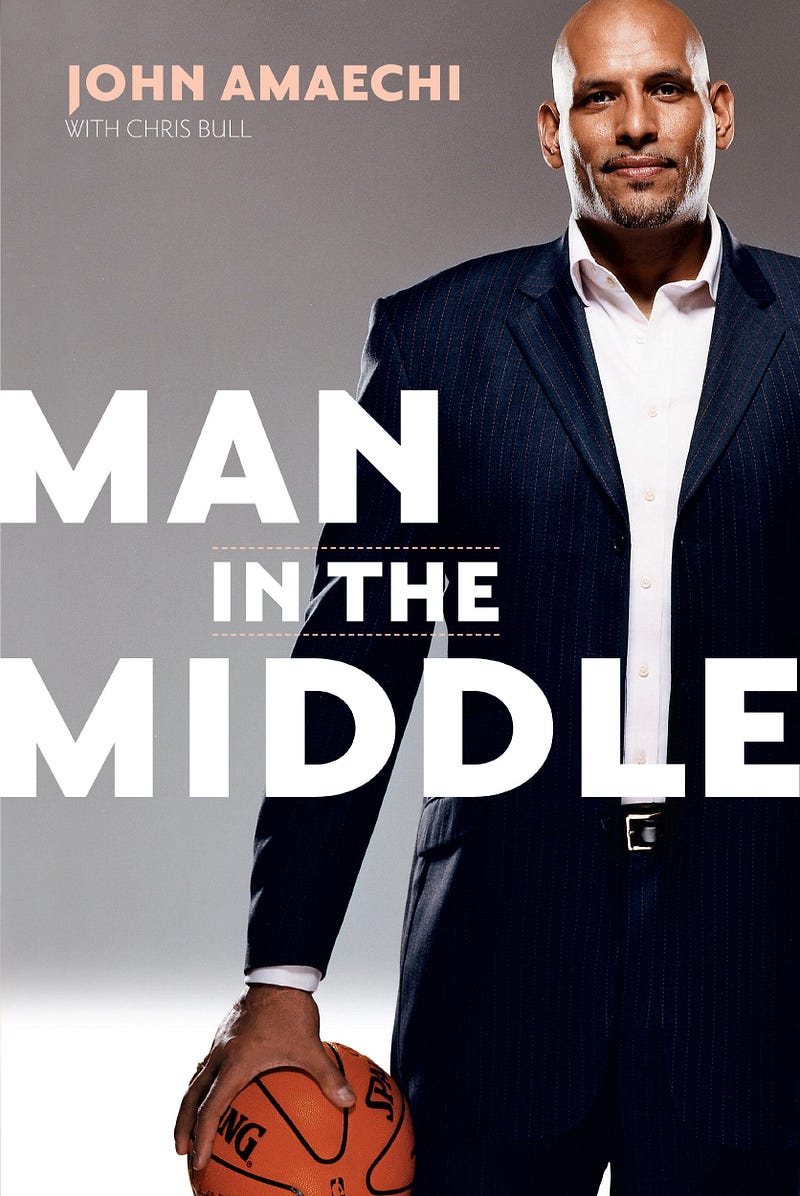
After I read John Amaechi’s book Man In the Middle, I could see the climax scene and feel what the 6-foot-10 basketball player was feeling.
Amaechi was the first NBA athlete to come out as gay after retiring in 2007, but it wasn’t easy.
He hid his sexuality for his entire career because he was afraid NBA teams might not want to give him a contract if they found out he was gay. He was nervous about how his teammates might react if they knew about his sexual orientation.
It turns out his fears and angst were justified.
In an interview on Miami’s The Dan Le Batard Show, former NBA player Tim Hardaway was asked to comment about Amaechi’s coming out. When he said he would distance himself from a player he knew was gay, the radio host asked if he was aware his comments were homophobic.
“Well, you know I hate gay people, so I let it be known. I don’t like gay people and I don’t like to be around gay people. I am homophobic. I don’t like it. It shouldn’t be in the world or in the United States.” — Tim Hardaway Sr.
So now, thanks to Hardaway’s comments, you can understand some of the feelings swirling through Amaechi’s mind as the well-known basketball player went to a gay club on a New Year’s Eve in London with his sister’s friends.
Coming out very nervously
He was playing at the time for the Utah Jazz at the end of his career and one of a handful of players from England to make it to the NBA when his sister invited him to the club Cruz with her friends to celebrate the New Year.
“Cruz is a gay bar,” his sister warned him. “So if you want to come, behave. Be nice to them.”
Amaechi had never been hostile to gay men. But his sister knew enough gay men to know how they are sometimes treated by uber-macho men.
For Amaechi, just being seen by others in the club brought the issue of his sexual orientation to a crisis moment, and this is the scene I couldn’t forget after finishing the book and have used it in my high school English classes.
He started getting hammered at the bar to deal with his crisis, and we’re not talking Coors or Michelobs. John knocked down the stiff drinks.
“It wasn’t clear to me whether I was going as straight, gay, or asexual. Inside I was gay. To the outside world I was not. The reality was that I’d spent the last several years without any erotic or romantic attachments at all.” — John Amaechi
Then he stepped on the dance strobe-lighted dance floor with sculpted male bodies to the pulsating rhythm and blues 70s music with smoke wafting up to the ceiling. It was the kind of where anything can happen and usually does.
A guy danced over towards him, squeezed his ass, and smiled. Another guy came up to him and whispered into his ear, “I know who you are. It’s great to see someone like you come into a place like this.”
That comment made him feel important — that his presence mattered to the gay men in the club who had the courage to live in an often unwelcoming society — but it also made him nervous because he hadn’t come out as gay.
The moment of crisis
Amaechi feared he had blown his meticulously-crafted cover to his sexuality. He retreated to the bathroom. A guy gave him a kiss as he washed his hands right as the club’s doorman opened up the door and witnessed the smooch.
“Oh, I’m going to tell your sister,” he said.
Amaechi realized he would rather come out to his sister than someone else tell her — and so he scribbled out a short, hastily-written note and gave it to his sister at the end of the night, telling her not to read it until the next day.
“I’m not as straight as you think I am,” it said.
A few days later, Amaechi was drinking with a longtime friend at his apartment, and he left another “I’m not as straight as you think I am” note the next morning before he left.
His sister and friend unconditionally accepted his revelation about himself. In fact, his friend said that he’d known he was gay as a teenager.
Why I have my students read this scene
I’ve shared this excerpt from Amaechi’s book with my students because it is a well-written scene, and it spotlights how the attitudes of heterosexual people can have such a negative impact on the life of an LGBTG person.
I’m always nervous about homophobic responses, but my students always have an inclusive attitude to the dilemma John highlights in the scene.
One female gay student told me once a story about holding hands with her girlfriend while walking into the mall, and her mom drove by and jumped out of the car and confronted her on the spot about holding the other girl’s hand.
That story is why I believe Amaechi’s book was so important when it came out in 2007, and why his memoir Man in the Middle is still important.
It’s mostly a sportsbook
It is a great read for basketball fans. It is more about Amaechi’s journey from awkward, overweight, tea-guzzling English kid to becoming a two-time All-Big Ten forward at Penn State en route to playing five years in the NBA.
The book gives interesting details like the fact Amaechi turned down an opportunity to be Shaquel O’Neil’s backup as a Los Angeles Laker to remain loyal to the Orlando Magic, although they didn’t respond in the same way.
His audience is definitely basketball fans. It is about 80 percent sports and his sexual identity feels like a minor motif, though an important one. He seems content to present a behind-the-scenes look at what it takes to become an NBA player.
One thing I didn’t know is that Amaechi was the first undrafted player to start is his first NBA game as a rookie for the Cleveland Cavaliers. He spent the next three years playing overseas, and I enjoyed his overseas odyssey as a hooper.
He made it back to the NBA to play for the Orlando Magic and Utah Jazz.
However, in my opinion, the most important part of Amaechi’s book is it provides a litmus test to show a reader’s attitude towards gay people.
But, if you don’t read the book, remember the scene where Amaechi struggled to come out to see what it’s like to be a gay person in our society.
Thanks for reading my story.
Tagging my sports buddies to share the inner life of an athlete: Scott Younkin, Mick McIntyre, Alan Simpson, Frank Priegue, Michael L Butler, Jameson Steward, Sreese, MarkfromBoston, J.R. Spiers, Adelina Vasile, Deborah Camp, Gerald Sturgill, Harold Zeitung, Craig Stanland, Lisa's Desk Chat, Mike Lewis.
You might also like:
Or check out my YouTube video on types of stories to write on Medium.
Did you know you can become a Medium member for only $5 a month? It is YouTube for writers. Writers earn money for their stories read by other Medium members. You can use my link to join, and I receive a referral bonus : )


