
Mary Karr and George Saunders Can Improve Your First and Second Draft
Tips to hone your craft of writing
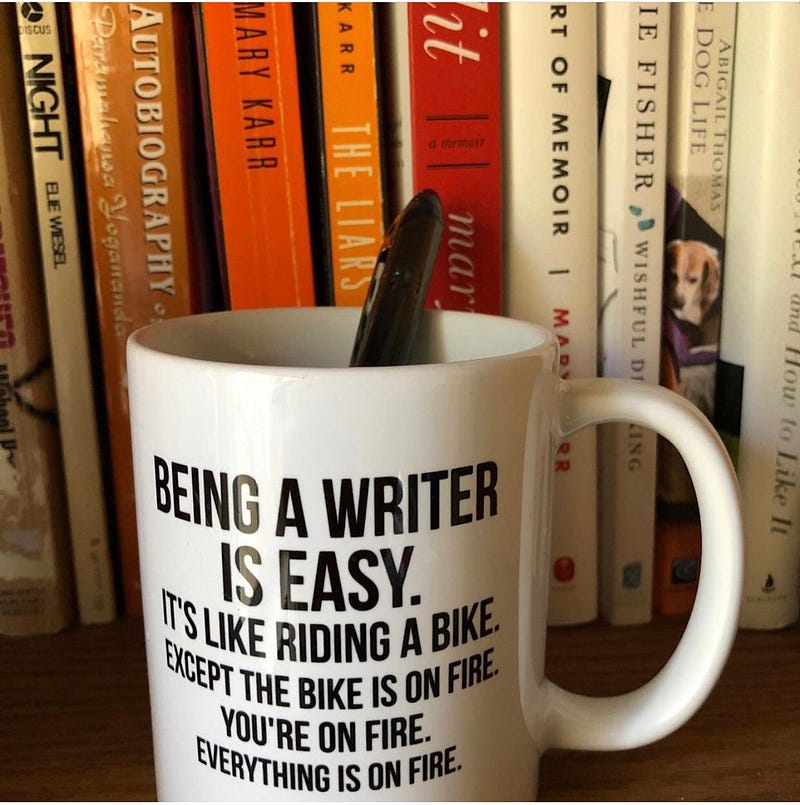
Do you struggle to finish what you start to write?
Maybe, you struggle with the tyranny of perfectionism, wanting every sentence or paragraph to be perfect so that it breaks your creative flow.
Or do you get a project 95% done and keep niggling your story? And a week later you’re noodling and tearing up the pea patch of your story.
Does this sound like your daily writing practice?
Whatever your particular issue, Mary Karr has the solution for your battles with your first draft, and George Saunders can help with the second draft.
Karr is the Queen of Memoir. She has published three memoirs, The Liars Club, Cherry, and Lit, in addition to The Art of Memoir. She teaches creative writing in the MFT program along with Saunders at Syracuse University.
Saunders is an acclaimed short story writer and novelist. His 2017 novel Lincoln in the Bardo won the Man Booker Prize, and his book A Swim In The Pond In The Rain analyzes Russian short stories to study the craft of writing.
Both have helped me to improve at writing my first and second drafts, and so as Jesus said to his disciples, if you have ears to hear, let you hear these gems.
Mary Karr’s advice on first drafts
Mary Karr’s advice on first drafts is: Run down the page naked.
Don’t worry, you can keep your clothes on. This is a metaphor, and what Karr is encouraging writers to do is to worry less and write faster in a first draft.
She says every writer needs two selves — the generative self and editor self, and the idea is to let your generative self be spontaneous and uninhibited as they run down the page naked and to concentrate on just getting a story out.
After all, it is a first draft that you will revise with tips from George Saunders, and I’m not going to complicate it and just let her words resonate with you.
You just have to the editor self step back and let the generative self write. If you don’t worry if your first draft is a little messy, the writing will flow more because you’re allowing space for the generative writer to do his or her thing.
George Saunders’ advice on second drafts
Saunders says he reads his draft as he is someone else reading it the first time. He imagines he has a meter with a positive and negative needle taped on his forehead. His job is to notice his positive or negative reactions to his writing.
When he reads a paragraph, if the negative needle begins to move, he stops and listens to the suggestions that pop into his head on how to improve it.
However, if the negative doesn’t move, he accepts the paragraph as good for this draft and moves on to the next paragraph, and what he does with these micro edits is to infuse his instinctual taste on his work on page after page.
He views negative reactions impersonally as just a way to improve a story.
I’ve used Saunders’ method on a memoir I’m writing, and it’s amazing how if you use this method over and over a passage of writing gradually improves, and it’s shocking to see the difference between the first and fifteenth drafts.
YouTube video for more tips
I go over seven tips on revising from Sauders’ A Swim in The Pond in The Rain in a YouTube video on my channel — that’s focused on the craft of writing.
My video on five tips from Mary Karr is great if you write personal stories in creative nonfiction or memoir-style writing like I primarily do on Medium.
Improve your writing
I love studying the craft of writing and honing my craft. My favorite thing to do is to read a story and analyze what makes that story work. If you find my videos help you improve as a writer, go ahead and click the subscribe button.
And I’m always looking for suggestions for video topics based on challenges you have as a writer. Drop me a suggestion if you have a video idea.
Thanks for reading my story.
You might also like:
Or check out my YouTube video on how to finish what you start to write. Or if you’d simply like to buy me a cup of coffee, I’d greatly appreciate it.


