
NASA’s top 5 greatest missions
Endeavors that have been inspiring us for 60 years.
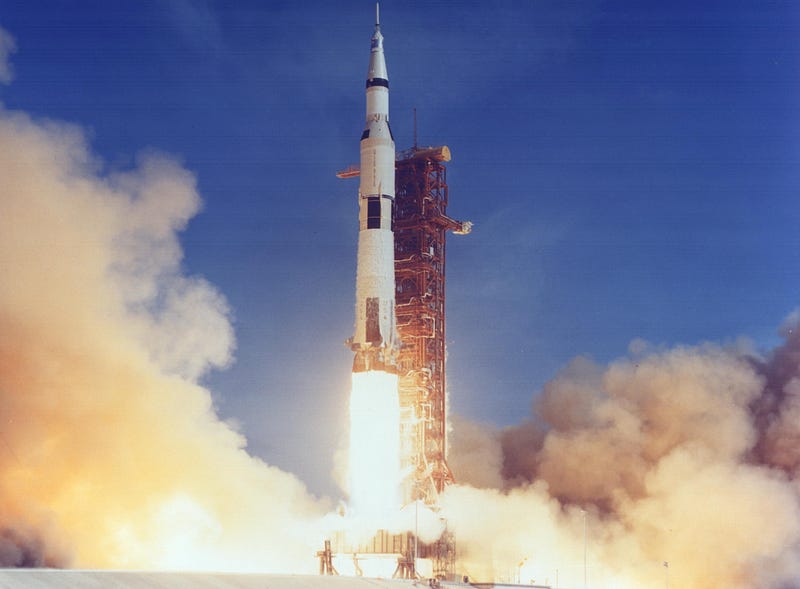
As far as space missions go, NASA has a long record of successful programs that have helped lift the veil on our solar system — and the universe itself — not only for scientists, but for the general public as well.
From achieving what was thought impossible, to showering us with awe-inspiring images of distant worlds, NASA’s scientific endeavors have filled us with a vast array of emotions — from booming pride, to feeling very special and utterly insignificant.
Let’s look at five of their most remarkable undertakings in chronological order.
Apollo
Born as a political tactic during the Cold War to show the nation’s technological superiority, the Apollo program would become NASA’s greatest and most famous mission, achieving the impossible by putting a man on the Moon.
Named after the most loved of all the Greek gods, the Apollo program consisted of 17 missions which ran from 1961 to 1972.
Apollo 1 ended in a major tragedy when a fire broke out during a simulation phase and three astronauts lost their lives. Apollo missions 2–6 were unmanned test flights, while Apollo 7 became the first crewed mission of the program designed to test command and lunar modules.
Apollo 8 was the first manned spacecraft to leave low Earth orbit and to orbit the Moon. Landing on it became just a matter of time.
Apollo 9 and 10 were again crewed test flights, but Apollo 11 became the most famous of all space missions — the first to land a human on an extraterrestrial body.
Apollo 11 was launched from Cape Canaveral on July 16, 1969 and touched down on our only satellite 4 days later. Neil Armstrong and Edwin Aldrin walked on the Moon, while Michael Collins stayed in the command module.
The astronauts took photographs, collected samples and returned safely back home on July 24. They left behind a plaque that reads:
“Here men from the planet Earth first set foot on the Moon July 1969, A.D. We came in peace for all mankind.”
Five of the subsequent six Apollo missions were successful in landing a crew on the Moon, except for Apollo 13 which failed the landing but still managed to return home safely after an explosion on the ship.
Apollo 15 and Apollo 16 crew were the first to drive a car on the Moon, while the last mission — Apollo 17 — was the longest one. The astronauts stayed on our satellite for more than three days and performed three extensive moonwalks.
In three short years, the Apollo program landed 12 men on the Moon and remains the only mission to have achieved this. Humanity has never returned to the Moon afterward, nor has it managed to land on any other object beyond our beloved planet.
Pioneer 10 & 11
Part of a larger Pioneer program initially aimed at exploring the inner solar system, Pioneer 10 and 11 marked a large series of firsts.
Launched in 1972, Pioneer 10 was the first NASA mission to the outer planets of the solar system. It was the first spacecraft placed on a trajectory to leave the solar system and venture into interstellar space. It was also the first space probe to fly beyond Mars, through the main asteroid belt, and to cross the orbits of Jupiter and Neptune.
Originally planned for a 21-month mission for a flyby of Jupiter, Pioneer 10 lasted more than 30 years. It sent its last signal to Earth in January 2003 when it was almost 8 billion miles (12 billion kilometers) away.
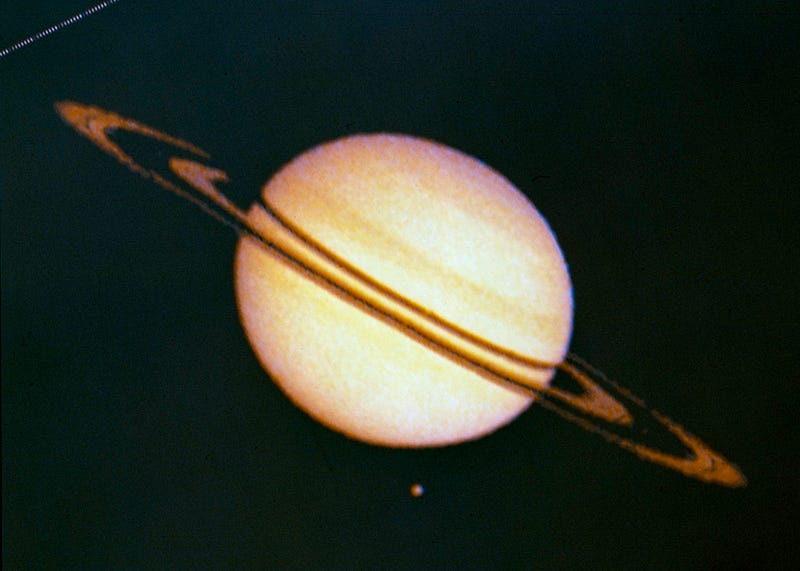
Launched a year after its predecessor, Pioneer 11 was the first space probe to fly past Saturn. The last contact with the probe was established in September 1995.
Besides taking numerous images of Jupiter and Saturn, the Pioneer crafts helped uncover many mysteries surrounding the gas giants, their composition and their moons.
Pioneers 10 and 11 both carry small aluminum plaques with our location in the galaxy and a drawing of a naked man and a woman.
The brainchild of Carl Sagan, these plaques would provide any alien civilization that found them in a distant future with basic information on the civilization that created them — us.
Today, the space probes are no longer in communication with Earth, but they are still moving farther and farther away from us. Pioneer 10 is traveling towards the Taurus constellation, while Pioneer 11 is heading towards the constellation of Aquila.
It will take both of them several million years before they encounter first stars.
Voyager 1 & 2
Launched just a few years after the Pioneers, Voyager 1 & 2’s mission was also to study the gas giants of our outer solar system.
Voyager 1 was sent off after Voyager 2, but overtook its twin ship in December 1977 and reached the Jovian system in April the following year.
It took stunning photos not only of Jupiter, but also of its many moons, discovering two new ones. The biggest surprise came when images of the moon Io revealed a strange yellow-orange and very geologically active world.
Reaching Saturn two years later, the probe found five new satellites and showed that most were made largely of ice. It also provided priceless data on Saturn’s biggest moon Titan which the Cassini-Huygens mission would explore a few decades later.
After its encounter with Saturn, Voyager 1 started a trajectory to escape the solar system at a speed of more than 500 million kilometers (300 million miles) per year.
In 1998, it became the most distant human-made object when, at a distance of 70 AU from the Sun, it overtook Pioneer 10.
In 1990, while heading towards the distant cosmos, Voyager 1 turned around and took one last photograph of the solar system — which would become known as “The Pale Blue Dot”.

The above image inspired Carl Sagan’s book, “Pale Blue Dot: A Vision of the Human Future in Space,” in which he wrote:
“Look again at that dot. That’s here. That’s home. That’s us. On it everyone you love, everyone you know, everyone you ever heard of, every human being who ever was, lived out their lives. The aggregate of our joy and suffering, thousands of confident religions, ideologies, and economic doctrines, every hunter and forager, every hero and coward, every creator and destroyer of civilization, every king and peasant, every young couple in love, every mother and father, hopeful child, inventor and explorer, every teacher of morals, every corrupt politician, every superstar, every supreme leader, every saint and sinner in the history of our species lived there — on a mote of dust suspended in a sunbeam.”
- Carl Sagan
Voyager 1’s sister ship — Voyager 2 — is the only spacecraft designed to study all four gas giants: Jupiter, Saturn, Neptune and Uranus. It discovered many new moons lurking around these planets.
Voyager 2 sent us spectacular images of the Jovian and the Saturnian systems, and detailed photographs of Saturn’s rings. In 1985, it became the first human-made object to fly past Uranus and in 1989, the first to reach Neptune. It relayed back many new facts about these gaseous planets and their satellites, as well as astounding imagery.
Both Voyager spacecraft carry a phonograph record called the Golden Record. Like the Pioneer’s plaques, these disks contain information about their origins, in the form of images, natural sounds, music and greetings in 55 languages.
The Voyagers continue to transmit data to Earth every day. When eventually they run out of electricity to power their instruments, they will silently continue their eternal journey through the cosmos.
Hubble Space Telescope
Put into Earth’s lower orbit in 1990, Hubble revolutionized the way general public envisions the cosmos. Its breathtaking images inspire us and make us appreciate the glory and vastness of the universe we live in.
Who hasn’t stared in awe at the Pillars of Creation in the Eagle Nebula or the Hubble Deep Field showing thousands of galaxies? I could look at the latter for hours, thinking of all the staggering worlds and potential civilizations that might thrive there, as unaware of our existence as we are of theirs.
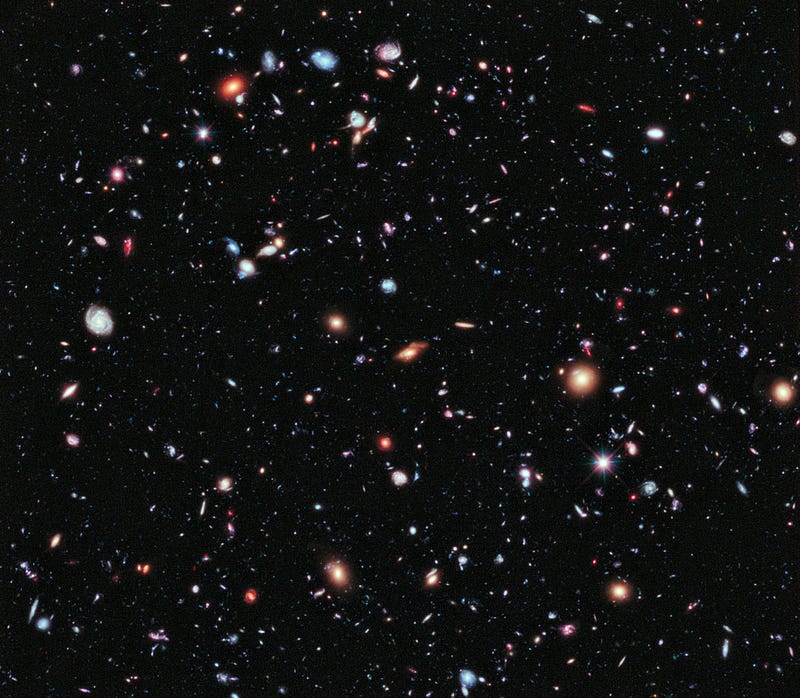
Placed at 560 km (350 mi) above Earth’s surface, Hubble is far above the atmospheric distortions that blur the vision of ground telescopes. It has an unobstructed view of our solar system, distant galaxies as well as the far edge of the universe.
Named after American astronomer Edwin Hubble, the Hubble Space Telescope is a true time machine. We see distant objects as they were millions of years ago, as this is how long it took for light to travel from them and reach us. The Andromeda galaxy being 2.5 million light-years from Earth thus appears as it was 2.5 million years ago.
By measuring a special kind of stars known as Cepheid variables, Hubble has helped astronomers refine the age of the universe, narrowing it down to 13.7 billion years. It also observes stars in various stages of their evolution and even lets us peek inside our neighbors — Magellanic Clouds and Andromeda Galaxy.
The telescope has helped demystify black holes, determine the rate of the universe’s expansion and create a 3-D map of dark matter.
It also provides stunning photos of our closest neighborhood — the planets in our solar system. It has recorded comets crashing into Jupiter, water erupting from Jupiter’s moon Europa, and discovered two of Pluto’s moons.
The Hubble Space Telescopes is one of NASA’s most exceptional missions and has been inspiring the curious minds for the past three decades.
Cassini-Huygens
Sent on its journey in 1997, the Cassini spacecraft’s objective was to study Saturn, its rings and moons. Traveling with a passenger — the European Space Agency’s Huygens probe — it would explore the Saturnian system for 20 years.
Cassini reached Saturn in 2004 and released Huygens to Saturn’s largest moon Titan just a few months later.
Named after the 17th-century Dutch astronomer who discovered Titan, the Huygens probe would become the first man-made object to land on an outer solar system body. Because of Titan’s thick atmosphere, astronomers had no idea on what kind of surface the probe would be landing, making the challenge even greater.
Upon touch down, Huygens discovered an Earth-like world of wet sand and water-ice pebbles. The probe was equipped with several instruments that helped cast light on the satellite’s surface and atmosphere composition. It continued to send data back to Earth for 72 minutes before losing contact with Cassini.
You can watch a time-lapse of its thrilling descent through Titan’s hazy atmosphere in the below video.
Cassini, on the other hand, would send data back to Earth for another two decades. It discovered two new moons of Saturn, evidence of liquid water on one of the satellites — Enceladus –, a giant methane lake on Titan and numerous new facts about Saturn itself.
In 2016, the spacecraft was sent on a series of final flybys of Saturn to provide close-up views of the rings. On the grand finale day on Sept 15, 2017, it plunged into Saturn — as predicted by the mission’s goal — sending us data until the very end.
Bottom line
These are just some of NASA’s most successful endeavors in their attempt to unravel the mysteries of the cosmos and bring its wonders closer to the public, but we could of course cite many more.
Probably the most famous of all NASA’s missions — Apollo — put the first men on the moon. The Pioneers and Voyagers spacecraft gave us unprecedented data on the outer solar system and are traveling towards other stars, carrying information about its origins.
Cassini spacecraft and its probe Huygens helped demystify Saturn and its moons, some of which might have conditions to host life. And the Hubble Space Telescope’s unequaled imagery has been filling us with amazement for decades.
Exciting new missions, such as James Webb Space Telescope and new Mars rovers, are just around the corner. I’m holding my breath to see what other marvels they will uncover.

Thank you for reading my story.


