
NASA’s probe has taken a unique photo of Mars. It shows a bear
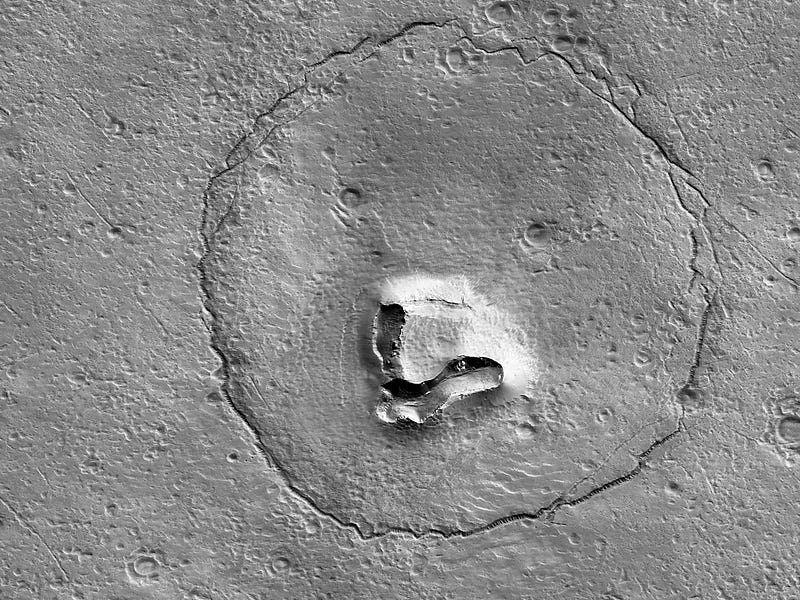
Straight into the lens of the US space probe’s high-resolution camera stares a bear. He has a pair of eyes and a distinctive bear muzzle. His mouth expresses surprise, the same as that of the people who look at the photo showing the Martian bear.
Scientists have been searching for life in space for several decades. Most scientists agree on the fact that it exists. Not only in our Galaxy, but also beyond it. However, as likely as it is that aliens exist in the Universe, it is just as likely that we may never meet them. Or at least not within the next few generations.
A teddy bear can be seen on the surface of Mars
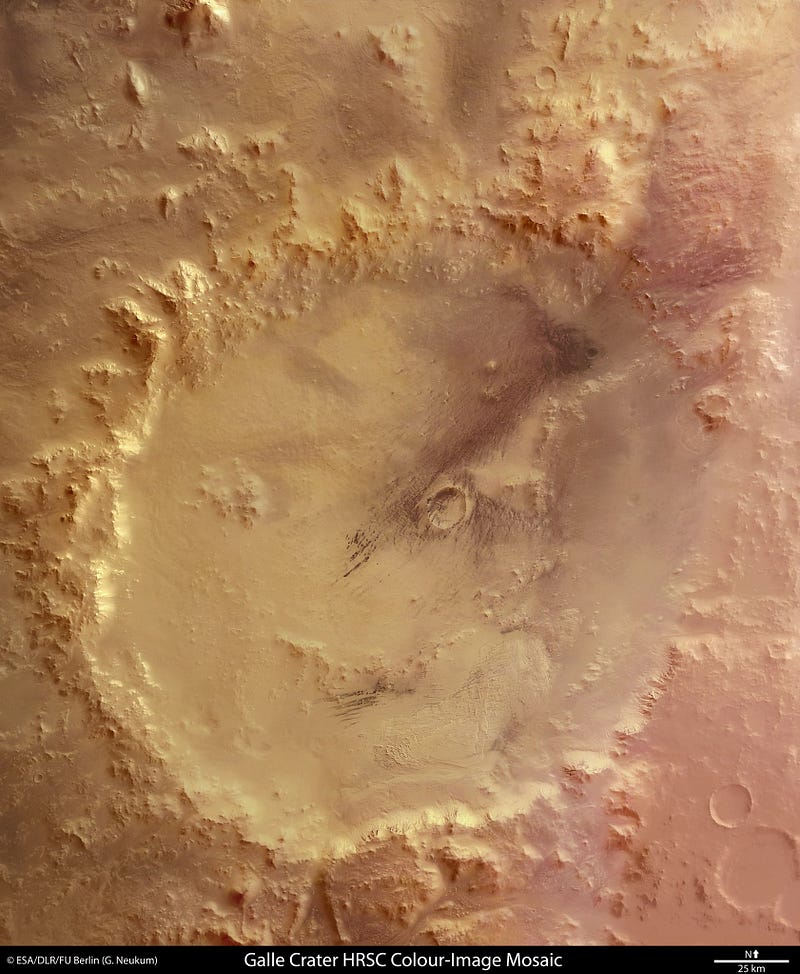
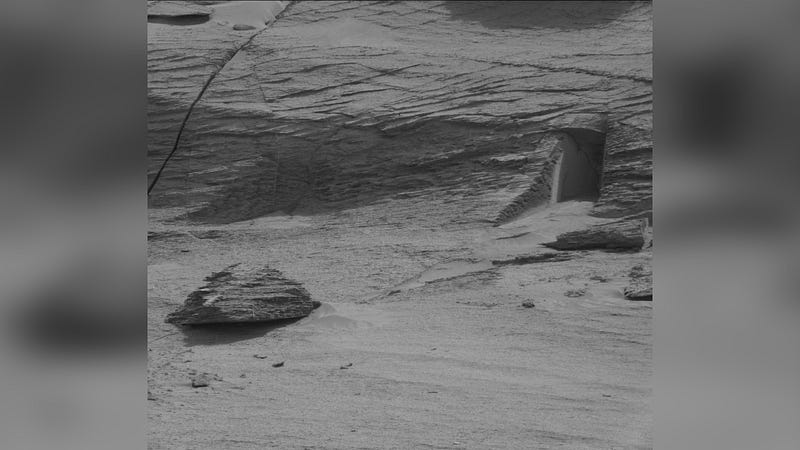
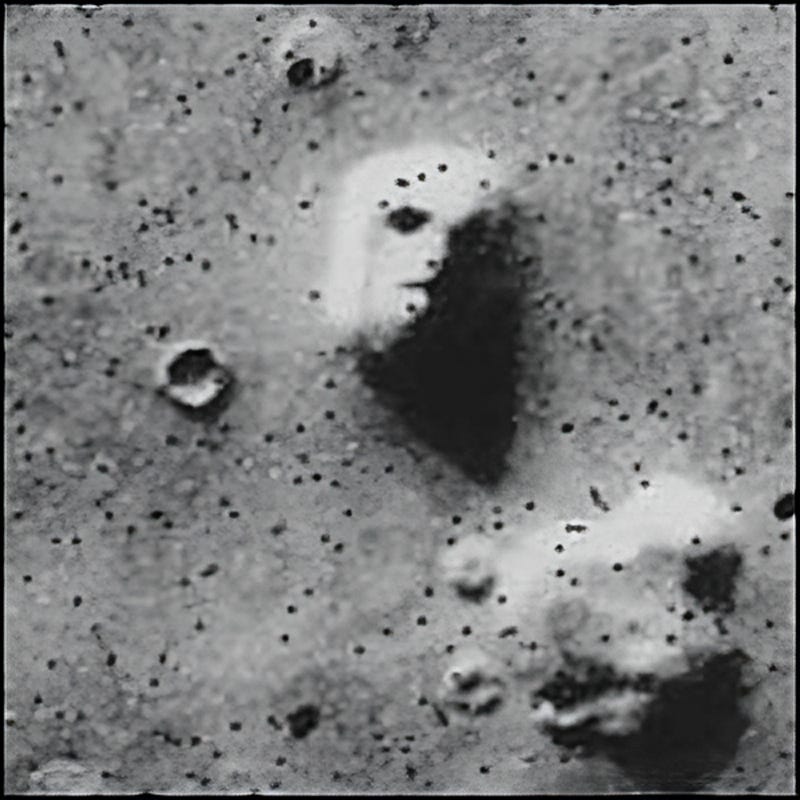
Over the past few years, NASA has already surprised several times with photographs that show mysterious smiling faces or puzzling doors on Mars. Some would certainly like to believe that these are footprints left by “aliens,” but the explanation is much simpler. They are usually surfaces created by natural erosion and melting of permafrost and exposing a larger swath of the Red Planet’s land.
The photo taken by NASA’s Mars Reconnaissance Orbiter space probe is no different. Looking straight into the lens of the HiRISE (High Resolution Imaging Science Experiment) camera is a head that resembles a teddy bear. It has a pair of eyes and a muzzle characteristic of a toy bear.
The bear is the result of the pareidolia phenomenon
The photo was made available by the University of Arizona, but was taken on December 12, 2022. Scientists admit that indeed the surface of Mars visible in the photo resembles a bear. But this is solely due to pareidolia, the psychological phenomenon of seeing familiar shapes in random details, including milk foam, clouds or mountains.
In fact, the rock formation on the Red Planet is probably an impact crater. — “It’s a hill with a sunken V-shaped structure (in the photo it resembles a nose), two craters (eyes visible) and a circular crack, which in the photo is the outline of a head”, NASA researchers say.
Scientists emphasize that the circular crack pattern could be the result of sediment burial. The bear’s muzzle is therefore likely a remnant of an ancient volcano.
Interestingly, last October, NASA astronomers captured a photo of the Sun that looked like it was “smiling.” The star had eyes, a nose and a mouth. What distinguished it from a bear was that the Sun was laughing, not surprised. This is another example of pareidolia. The black spots seen in the photo were coronal holes, which appear on the sun and are a source of solar wind.

What are the goals of the Mars Reconnaissance Orbiter mission?
Mars Reconnaissance Orbiter is continuing its mission. Perhaps in the future it will provide us with more, equally exciting photographs. Among the goals of the MRO are.
- taking detailed pictures of Mars,
- studying the Red Planet’s climate and atmosphere,
- provide data for a model of the planet’s evolution,
- exploring underground water deposits,
- maintaining communications with the Mars Exploration Rover and Curiosity rovers and the Phoenix lander.
The US space probe was launched by NASA toward Mars using an Atlas V rocket on August 12, 2005. It arrived in orbit of the Red Planet on March 10, 2006. 14 days later, the HiRISE camera took the first test image of the planet’s surface. It showed a portion of the Bosporos Planum region in the southern Martian hemisphere. The image showed a phenomenon resembling early morning fog.
In addition, the probe is expected to explore sites that could be used to land manned missions to Mars in the future. The Mars Reconnaissance Orbiter is the most advanced and modern space probe ever sent to the Red Planet.
Cool that you made it to the end of this article. I will be very pleased if you appreciate the effort of creating it and leave some claps here, or maybe even start following me. It would be nice if you also left a tip! Thank you!