
NASA’s Artemis program — When will astronauts return to the moon? What will the lunar base look like?
Humanity last visited the moon in December 1972. Now NASA is preparing the Artemis program. It is to create a permanent lunar base and open the way to further space exploration.
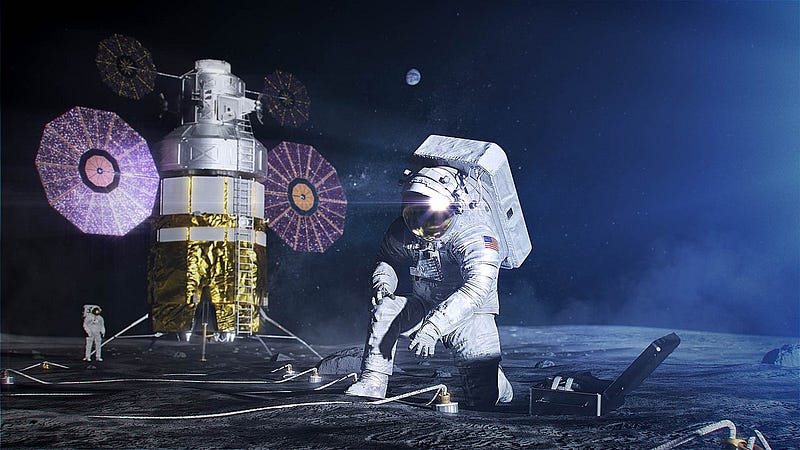

“I believe that our nation should commit itself to the goal of landing a man on the moon and returning him safely to Earth before this decade is over,” U.S. President John F. Kennedy said in April 1961.
At the time, he established the legendary Apollo program. When then-NASA Administrator Jim Bridenstine announced the new lunar program in 2019, he said, “This time we’re going to the Moon to stay on it”.
Artemis is the largest space program since the completion of the International Space Station. An expansive undertaking that aims not only to send the first woman to the Moon, but more importantly to build an orbital station, a gateway to distant space. The Artemis program in many aspects openly refers to the Apollo program. That is, the one that brought us the first landing on the moon.
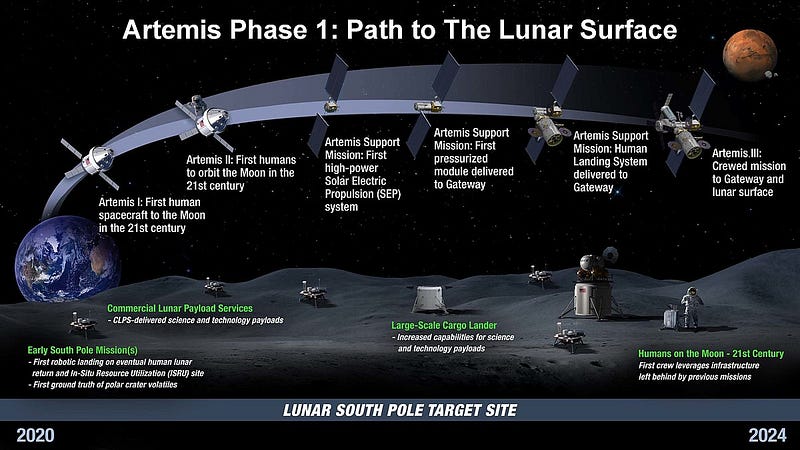

Artemis program — assumptions
However, the Artemis program is intended to be multithreaded and long. Its goals include much more than planting a flag and bringing back to Earth samples of lunar regolith. Above all, Artemis is intended to shift the primary focus of manned mission launches from Earth to a place with much lower, and therefore easier, gravity. And it intends to accomplish this with state-of-the-art technology.
Recall that 2022 marks exactly half a century since Eugene Cernan, astronaut of the Apollo 17 mission, left the last human footprints on the Moon. When he did so, the first scientific hand calculator was on the market. Fifty years later, each of us carries a device in our pocket with more computing power than the computers that were used in the Apollo program.
.png)
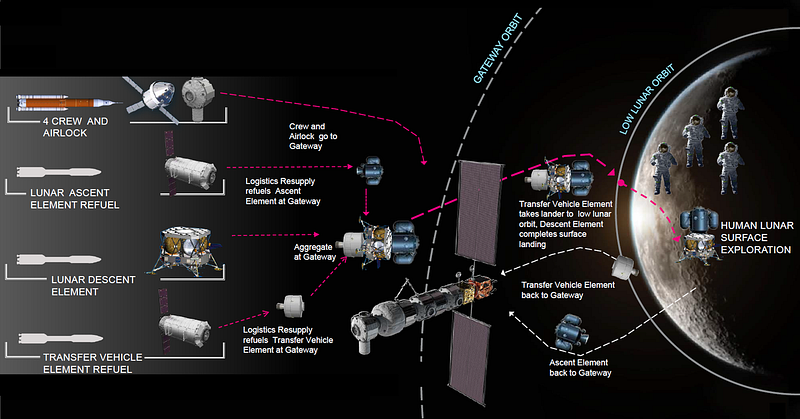
Everything has changed. From the materials that can be used to create modern, lighter space suits. To modern technologies based on artificial intelligence algorithms. To telecommunications capabilities such as the Internet and the numerous satellites in Earth’s orbit. If all the plans of the agencies gathered around the Artemis program are realized, within a decade there should be a transfer station around the Moon to distant space. It is worth adding that we are talking not only about NASA, but also about European, Canadian, Japanese and many other agencies.
But it doesn’t stop there. Space mining is being openly talked about. Including lunar mines of helium-3, which can be used in energy. This helium isotope is supposed to be a very efficient fuel for fusion reactors. The European Space Agency, which has been developing the Moon Village program for over a decade, is thinking about printing habitats from lunar regolith. One thing is certain — the motto of the Artemis mission saying that this time we are going to the Moon in order to stay on it, perfectly reflects the intentions of individual agencies.

Artemis program — SLS rocket and Orion capsule
So far, the only proven method of escaping from Earth are powerful rocket boosters. The Apollo program had its Saturn V, the most powerful rocket in the history of space exploration to date. The Artemis program has the SLS, or Space Launch System rocket. This heavy-lift rocket, under design since 2011, is based on technologies proven in the shuttle program.
This time, too, astronauts will sit in a small spacecraft perched atop a massive rocket. Only now the ship is to be the modern Orion built by Lockheed Martin. This is the same company that constructed, among others, the Viking 1 and Viking 2 Martian landers. The Orion service module is the work of ESA and Airbus. The spacecraft itself is modern, has more space for astronauts and is filled with modern electronics.
Things are worse for SLS. The heavy rocket is getting more delays and errors. Admittedly, delays are natural in the space business. However, problems are said to be better when they occur during tests than during missions. However, many specialists wonder whether the SLS, which already during the design works more than a decade ago was not distinguished by too much innovation, will be up to the task. If the upcoming tests go well and the pace of work is accelerated, there is a chance that the first rocket launch will take place in 2022. A year later, SLS will carry the empty Orion capsule on a journey around the Moon. And in 2024, it will become the force that lifts the first manned mission to the Moon since 1972.
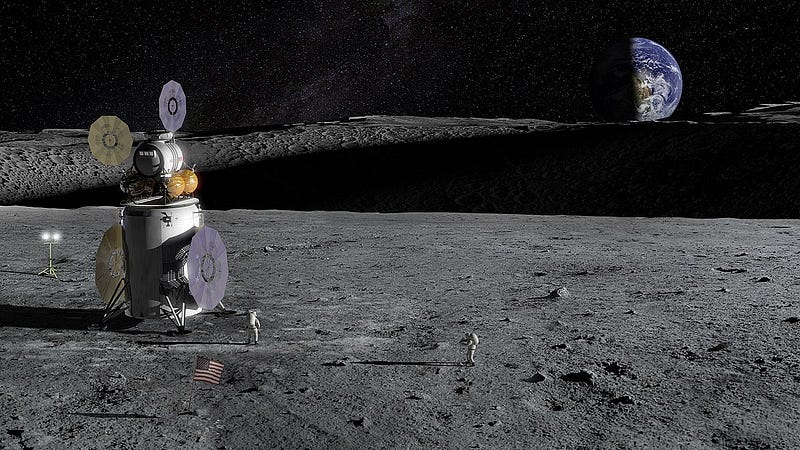

Artemis program — Gateway station
At least that’s the assumption. NASA hopes to send the first female astronaut to the Moon in 2024. The agency is also keen to show broad access to space to a variety of people. And not just, as in the Apollo program, to military pilots of similar stature and education.
But landing on the Moon is only a small step for the Artemis program. The main task is to build an orbital station. Gateway, as this is the name given to the station, is to be a place for scientific research. At the same time, it will also be the initial station for the planned manned Martian missions. Like the International Space Station, Gateway will consist of several modules and can be expanded.
In the same year that the Artemis program was launched, Canada announced its intention to participate in Gateway and contribute to advanced external robotics.
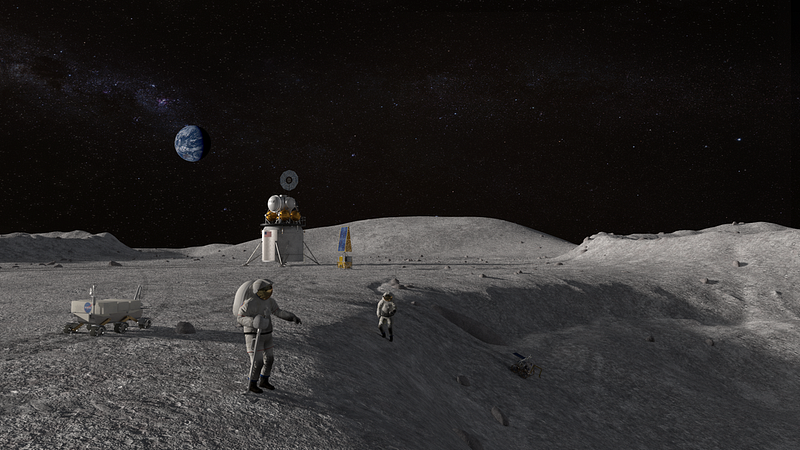
How much will the Artemis program cost?
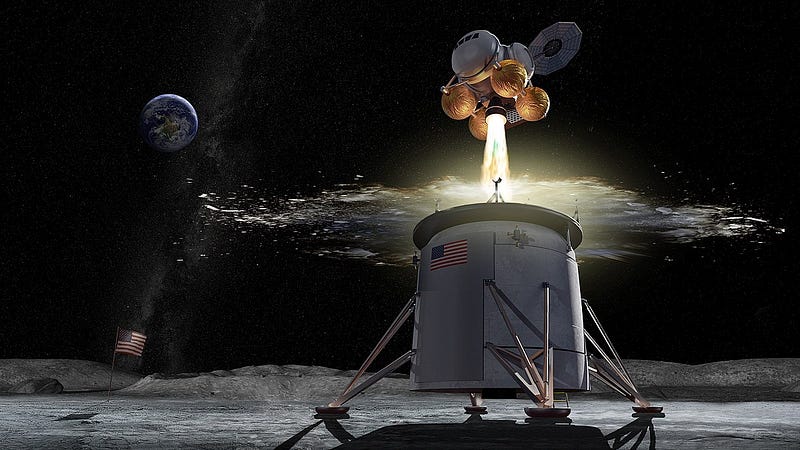
And what about private companies? The big winner of tenders related to the Artemis program is Elon Musk and his SpaceX. First, this company is expected to take care of the logistics and procurement of the station. SpaceX, thanks to Falcon Heavy rockets, is to carry the propulsion and logistics module of the station towards the Moon. On the other hand, the Starship developed by the company has been chosen as the new lander for the Artemis mission.
The question remains about the cost of the venture. NASA figures speak of the need to spend $93 billion by 2025 alone. And here it is worth quoting again the speech of President Kennedy, who argued that:
“No undertaking will be as impressive and none will have a greater impact on future space exploration; yet none will also be more difficult to implement or more costly.”
Cool that you made it to the end of this article. I will be very pleased if you appreciate the effort of creating it and leave some claps here, or maybe even start following me. Thank you!