
Christmas
Nardugan — The Ancient Origin of Christmas Tradition
Everything is interlinked in the world. Christmas celebrations is one of them. Here is the story of Christmas celebrations and their meaning.

December 21, which was celebrated as Saturnalia in the Roman Empire and as Dionysos in the Greek society, was the last day of the year in Central Asian Turkish cultures. According to the Central Asian tradition that has survived until today, the day and night’s never-ending war ends on December 21. After the longest night, the sun appears more each day in the sky, and the days become longer. Accordingly, the new year’s first day was the full moon after December 22 in the Lunar calendar used by the Central Asian Turks.
In Turkish mythology, the white pines, which were the symbol of immortality, were decorated on the new year’s first day. The Central Asian Turks used to tie red ribbons to the tree for their wishes and requests. Thus, December 21, the winter solstice in the Northern Hemisphere, was the Nardugan holiday.
Importance of December 21st
Turks used to celebrate the return of the sun under the holy maple tree at the Nar-Dugan festivities. They would convey their wishes to God by tying tapes to the branches of maple trees. Akcam was the tree of life connecting the heavens and Mother Earth. This symbolism still exists in Anatolian rug designs today. The tree of life, reaching from the ground to the sky, was also present in Sumerian traditions.
In the Turks, the sun was sacred but was not worshipped as God. The sun was just a symbol to remember God`s holiness. Interestingly, long before the emergence of Heavenly religions, Turks had a monotheistic belief system, but this is a topic that requires a separate story.
On December 22, the day prevails from the endless fight of night and day, which is in constant conflict. Therefore, Nar-dugan was very important in Turkish history, symbolizing the day’s rebirth from the night.
Ulgen — Angel of goodness
Ulgen, the angel of goodness of the old Turkish faith, was based on Santa Claus’ legend. He was with a white beard and a long robe and lived in the Golden Mansion in Akcam forests. In the Altai Turks, good spirits were in the sky at the top of the tree. Humans lived in Middle-earth, and evil spirits lived below. Turks carried their traditions and beliefs to the west through migrations from Central Asia over the last 3000 years.
Anatolia, where these beliefs are most widely practiced, is like an extension of the Central Asian Turkish homeland. In the 3rd century A.D., with the migration wave of the Huns from the Caucasus to the Atlantic, the monotheistic Tengri belief of the Turks had a profound effect on polytheistic Europe. While Nardugan turned into Christ’s birthday celebrations on December 25, pine ornaments, wishes, and even gifts, which existed in Turkish culture long before Christianity, were adapted to Christmas Celebrations.
Early Christian origins of Christmas
Every year, December 25 is celebrated as the birthday of Jesus and is known as the Holy Birth or Christ’s Day. The celebrations start on the evening of December 24 and last until the evening of December 25.
There is no definite statement in the Bible regarding the birth date of Jesus. The Roman Catholic Church celebrated the birth of Jesus on January 6 for many years. However, the Christmas Festival date was changed to make the festivities celebrated for the birth of the sun god, which was a pagan tradition on December 25, ineffective. In the 4th century, by the Nicea Consul’s decision, the date of December 25 was defined as Christmas, the holy birth of Jesus, and the date of January 6 as the visit of three eastern sages to the newborn messiah. On the other hand, the Armenian Church continued to celebrate Christmas Feast on January 6 to show that they are not a satellite of the Roman Church.
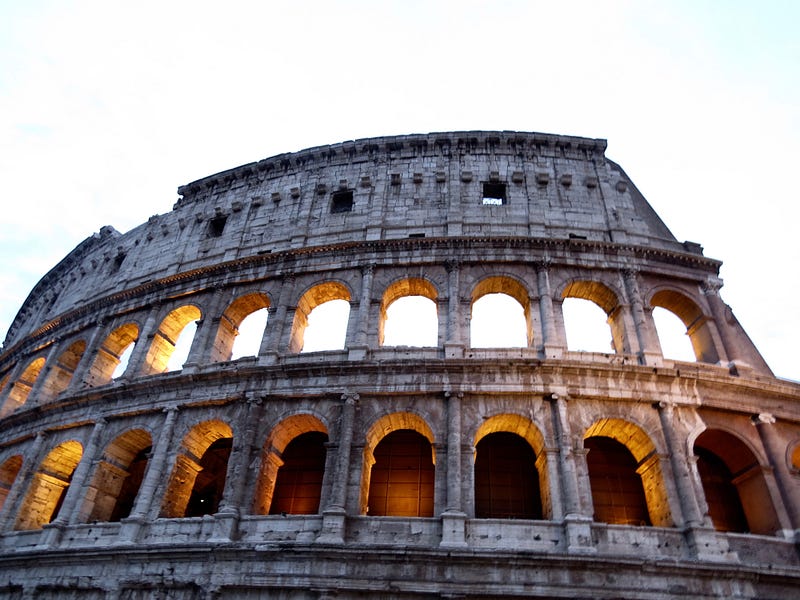
How the Roman Empire adapted Christmas
When the former Roman Emperor Constantine came to power in AD 306, he declared Christianity as the empire’s official religion and began to use it for political purposes. As his first job, he declared December 25 as a National holiday, with the name of “Unconquerable Sunrise”, with the desire to represent his success.
Jesus’ birthday is unknown. Based on the fact that he is a member of the Jewish religion and went to Jerusalem to celebrate Passover and died there, the date of January 6 was reached by going backward from the days when Passover was celebrated (April) in that year. Since the Eastern and Western Churches have chosen different calendars, two different dates had emerged, December 25 and January 6.
In AD 350, Pope Julius declared December 25 as the official Christmas holiday of Christianity, which pagans celebrated as a holiday for centuries.
In 529 AD, the Roman Emperor Justian also made it a public holiday on December 25. During the Council that convened in 567 AD, fasting and preparation period were added to this process, and December 25 took its place in history as Christmas.
Thus, Pagan celebration or festival was adapted to the Christian religion.
Since the beginning of the 20th century, Christmas is globally celebrated in a festive atmosphere, free of religious motifs, and also celebrated by non-Christians.
We are all part of an interwoven web or events and connections no matter where we live, what we believe, and to which culture we belong. As you have seen, Christmas originates from a 3000 years-old ancient tradition.
Therefore…
Let’s remember our global and universal brotherhood and sisterhood and embrace each other with utmost acceptance.
We are the different cells living inside the same and one cosmic body, which is the universe. We all depend on each other. Our traditions and customs are built on a rich heritage of many past cultures and civilizations. So we better respect and tolerate each other instead of trying to prove our supremacy.
With love,
Kenan
Join my weekly newsletter.


