
Mysterious Stone Tomb Unearthed in Japan: A Glimpse into the Past
In Japan’s Saga Prefecture, archaeologists have found a stone coffin from the Yayoi period. At about 2.3 meters long, it is probably the largest coffin ever discovered at the famous Yoshinogari site.
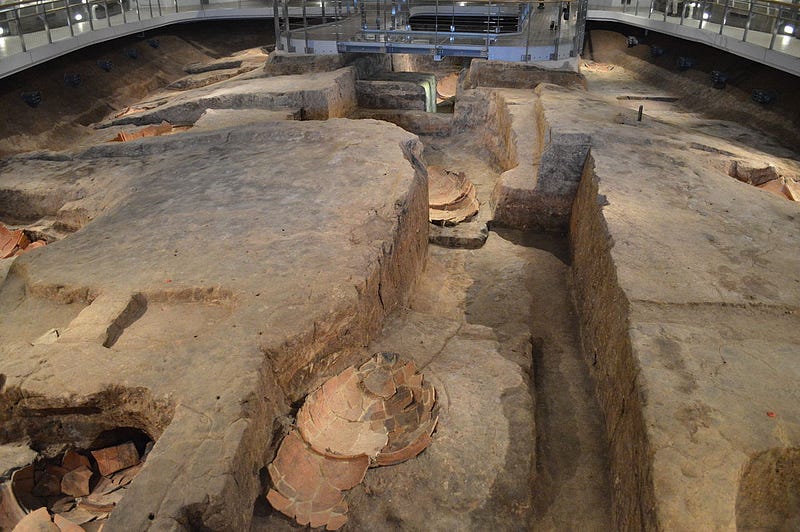
Yoshinogari is an archaeological site located in Japan’s Saga Prefecture, in the northern part of Kiusiu Island. During the Yayoi period (300 B.C.-300 A.D.), a huge settlement of more than 25 hectares was located here. Archaeologists discovered it in 1986 and determined that it served a protective function. It was surrounded by two moats with a rampart, a palisade and guard towers rising on six posts.
Archaeologists have found one of the largest tombs on Kiusiu Island
Since the first excavations in the settlement’s territory, houses have been found sunken into the ground and warehouses that were erected on stilts. Just outside Yoshinogari, researchers have also found an ancient necropolis. Urns containing the ashes of the dead were found there, and researchers identified more than 2,000 burials in total.
A richly furnished barrow was also discovered in the northern part of the cemetery years ago. Now archaeologists have boasted a new find that sheds new light on the history of the ancient Japanese settlement.
Large stone coffin found at Yoshinogari site, announces Saga prefectural government. It was about 2.3 meters long. This means that it is one of the largest coffins of its kind yet discovered.
Coffin from Yamatai state discovered
Monument dates to 2nd-3rd century AD. This is the period when the ancient city of Yamatai already existed. Archaeological and historical evidence suggests that it was to be a hegemon among the 30 tribal states that existed at the time in the Wa (Japan) country area. Its first ruler was the shamaness Himiko. To date, however, disputes persist as to where exactly Yamatai was located.
Archaeological excavations in 2009 from the vicinity of the Hashihaka Tomb near Sakurai City showed that the ancient state was located on the island of Kiu, the very place where the stone coffin was discovered. Representatives of Saga Prefecture relayed that the stone tomb was located on a hill. This suggests that it most likely belonged to an important government official.
The researchers noted that symbols resembling the letter “x” were carved into some parts of the stone coffin. Someone probably created them with a sharp metal tool. Archaeologists believe that in ancient times this shape was meant to signify protection from evil.
The deceased may have been one of the rulers of Yoshinogari
The burial pit itself is circular in shape and about 3.2 meters in diameter. Researchers say it is 1.5 times larger than typical grave pits in Yoshinogari. Although the slab is already broken in several places, archaeologists have not yet opened it. They plan to do so on June 5. Both the remains and the furnishings inside the tomb may reveal the mystery of who was buried there.
“Because the stone coffin is so large, we may also be able to find artifacts and personal items that were buried with the deceased person. However, given the location of the burial and the size of the pit itself, we believe it was a very influential person in Yamatai State,” said Kinya Hosokawa, deputy director of the Prefectural Government’s Department for the Protection and Use of Cultural Property.
Hosokawa also acknowledged that until now, no tomb that belonged to a person in power has been found at the Yoshinogari archaeological site. The authors of the discovery hope that further study of the tomb may prove groundbreaking for the history of Japan and the island of Kius.
Cool that you made it to the end of this article. I will be very pleased if you appreciate the effort of creating it and leave some claps here, or maybe even start following me. It would be nice if you also left a tip! Thank you!


