
Queer Moms Love Movies
#MyFirstTime Not Getting To See The Matrix
Gonna get denied entry like it’s 1999
By the time The Sixth Sense came out, I was back in Familiar Territory, MS and could go see whatever movie I wanted.
But earlier in 1999, I was still in Texas. And Texas believes in freedom for everyone but teenage girls. Which meant that when it came to The Matrix, they weren’t going to let anyone my age in to see it.
My First Time (Not) Seeing The Matrix
Me and my sister devised a foolproof plan we’d executed many times. We bought a ticket for a different movie than the one we were going to see. This time, we got tickets for 10 Things I Hate About You.
One problem.
When we gave the ticket taker our tickets, we saw the cops at the entrance into the auditorium for The Matrix.
So we ended up seeing 10 Things I Hate About You. And it was really good!!!
It introduced me to Heath Ledger before he was christened a white-faced clown god. And let’s not forget the real reason to see the movie: those sweet sweet pre-Save the Last Dance dance moves from Julia Stiles.
Okay, the real reason was this A-M-A-Z-I-N-G poetry reading by Daryl Mitchell.
I was always going to see The Matrix, but I’m glad I wasn’t able to see it that time. It made me see what turned out to be a great movie. I even got a pretty good memory of my sister to turn back to now and again.
My First Time Seeing The Matrix

My first time seeing The Matrix happened while I was still in Texas.
My half-brother came back into my life somewhere around when I was nine years old. The story goes that his mom — one of my dad’s many wives — lost a baby, lost her mind, and ran away from my dad with the kids she had. Years later, he chose to reconnect.
That’s the story my dad tells, anyway. But I’m only now beginning to understand the depth of paranoia, delusion, and deception that consumed him.
It’s sort of like the feeling that consumed Neo. The feeling that there is something wrong with the world. A pattern that very few can see. The conviction that he is one of the few who chose to wake up. The suspicion that he might be one of the only people who can. But if he uses himself as a conduit, he can help others awaken.
I wouldn’t find out what the Matrix even was, though, until I found a way to see the movie.
For all the horrors my half-brother invited into our lives, he did help me figure out this one neat thing. He was an internet wizard. He’s made a pretty big business off of it since then. And way back in 1999, his talents brought him a T-E-R-R-I-B-L-E pirated copy of The Matrix on VHS.
I watched it as soon as I could.
This part is for Matrix fans only
Did you love The Matrix?
Do you want a book that’ll inspire an infinite series of articles from you?
Wouldn’t it be cool if doing both also supported me???
Then you need to read The Matrix and Philosophy.
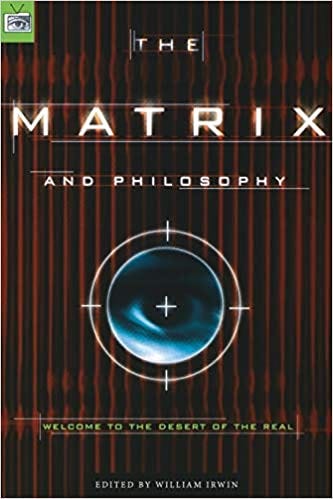
And what better way to read than by subscribing to Audible for a free copy?
This is the book that helped me start figuring out philosophy and theology outside of the bizarre beliefs I was raised to believe. My favorite concept from it is Cafeteria Pluralism, a kind of theology that picks and chooses from each religion or theology like you’re at a buffet.
Why limit yourself to just one Matrix?
THE ADS
Links above contain affiliate links with commissions for me from products or services you purchase.


