
How To Literally Defend Yourself With A Book
Not much literary analysis, just a few tips on how to use a book to kick someone’s ass
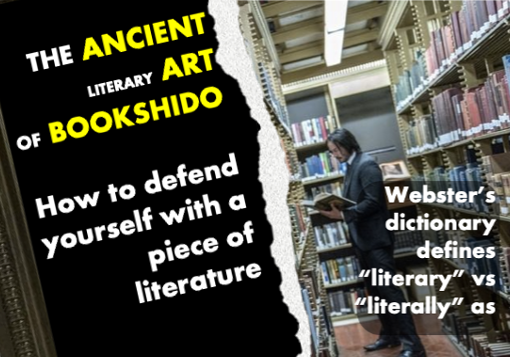
The Ancient Literary Art of BookShido (as popularized in John Wick)
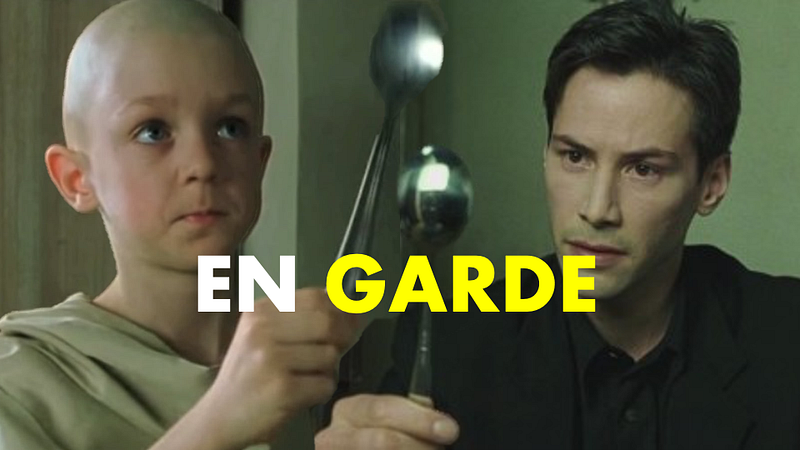
THERE ARE TWO SPOONS
You know the biggest hurdle people have to defending themselves?
They don’t know how to use their body. Or if they’re using a weapon — they don’t know how to use an object as an EXTENSION of their body.
We pick up a knife, a hammer, a spoon, it all feels like trying to juggle with water.
What we need is an object that may as well be an extension of our own body. We hold it every day. Even those of us who don’t ever really OPEN them…we still hold them long enough to admire the covers.
And then, of course, there are those of us who love these things. Can’t get enough of them. But while academics and Twitter fanatics might plunder the depths of these objects for insight and outrage, our goal today is much simpler.
We’re going to learn how to use a book as a defensive weapon.
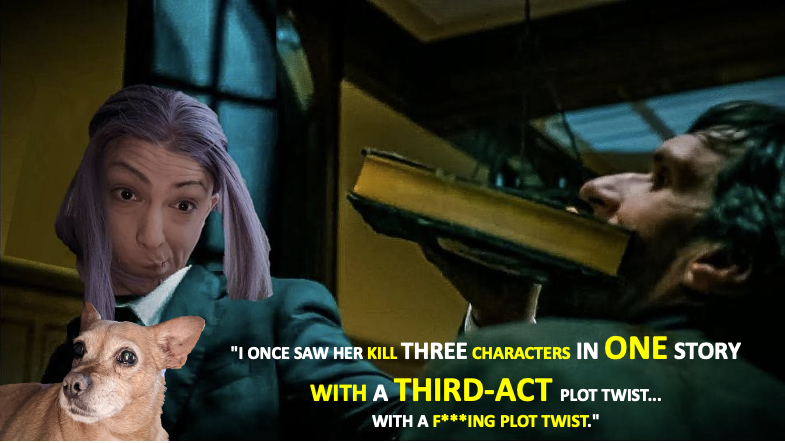
STEP ONE: LOSE THE BOXING GLOVES AND PICK UP A BOOK
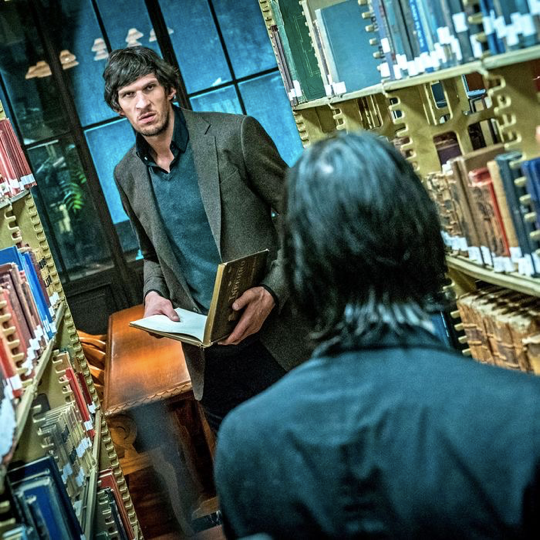
Pick up any of your favorite books. It can be any book of any size, so long as it’s one that you regularly handle.
It should, in fact, be a book you love. Even if that’s your own.
The reason? Because the book you choose will provide you as much emotional security as physical safety.
For me, that’s the second cousin of a book: the moleskin journal (offsite to Amazon). I like that I can hold it in my palm so that the back board of the cover is an extension of my palm.
That lets me hold the book tight and flex the spine into my wrist — as though the moleskin journal is an extension of that bone through my hand.
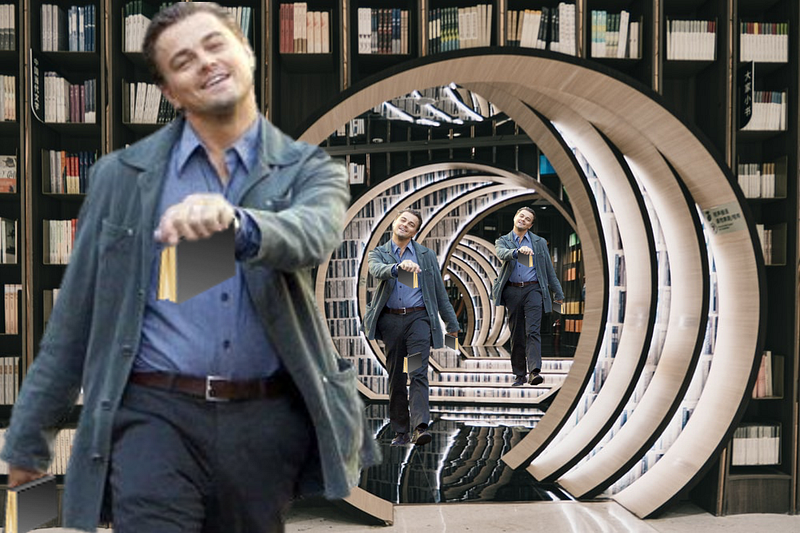
Technically, this is an underhand position, similar to what you’d see from the Highlander. But you can adjust your position quite easily by moving your thumb if you prefer the “overhand” position.
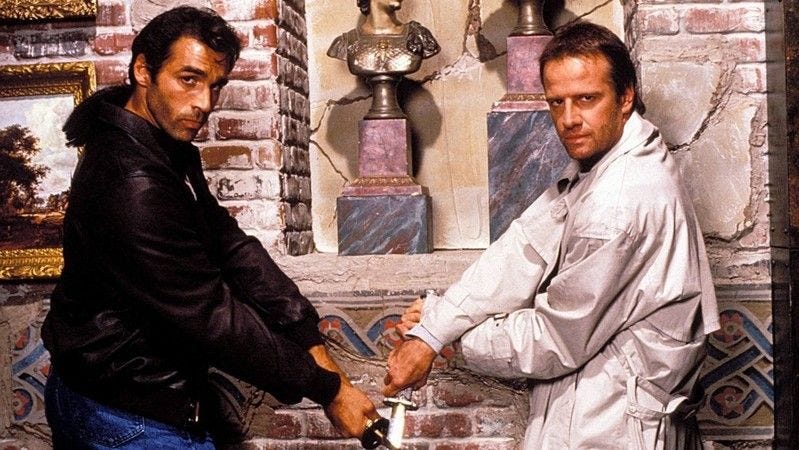
Whether you’re modeling yourself after Connor or Duncan MacLeod (or Connie MacLeod from that one short film we made in high school), the right strategy can instantly turn the right object into the right weapon.
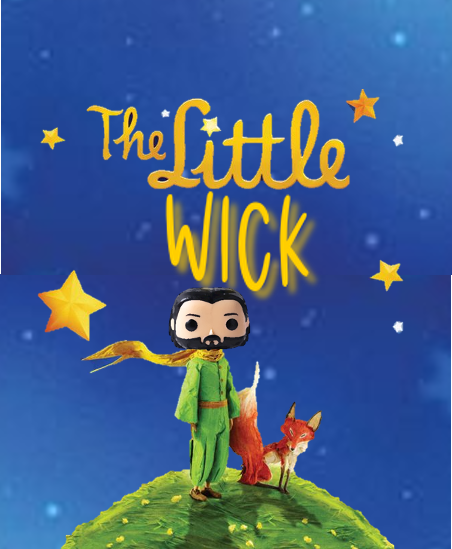
This is the one time the content of the book doesn’t matter as much as the weight of it. Is anyone really going to care that the Little Prince will blow your damn mind if the book is as light as a pillow?
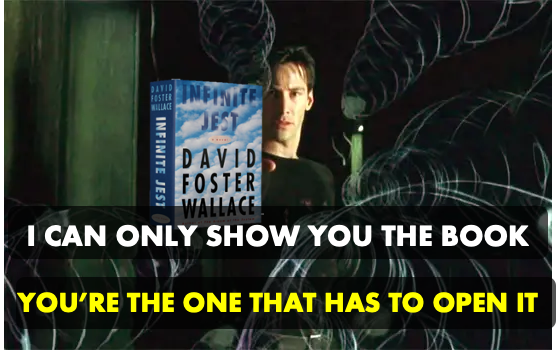
On the other side of the same cover, is anyone going to care that there are no jokes in Infinite Jest when the sheer weight of the thing will knock you out?
The power in that book is pointless, though, if it’s too heavy for you to wield. You have to pick it up, wrap your hand around it, feel the pages, the depth, the texture, whether it melds into your hand with a little pressure or will pop out at the slightest touch.
Even the Little Prince could, in theory, become a kind of weapon if it fits into your hand just so that with a little pressure, it’s thicker than a five-folded piece of paper.
STEP TWO: THROW THE BOOK’S WEIGHT AROUND
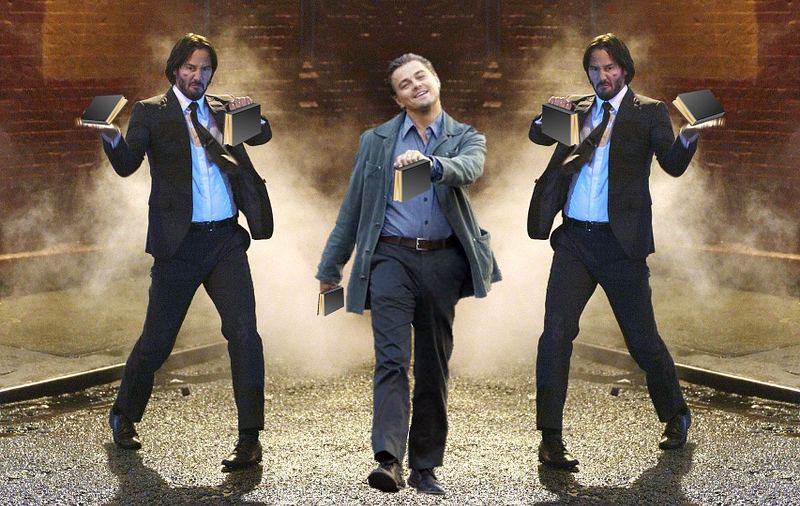
What’s most important is that the object feels comfortable in your hand as you move it through the air.
It’s the only way what comes next will work.
You’re going to make like the Karate Kid and defend yourself by reading a book.
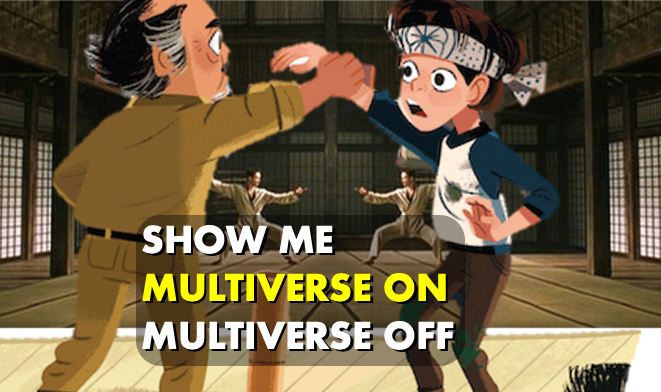
Wait…did that happen??
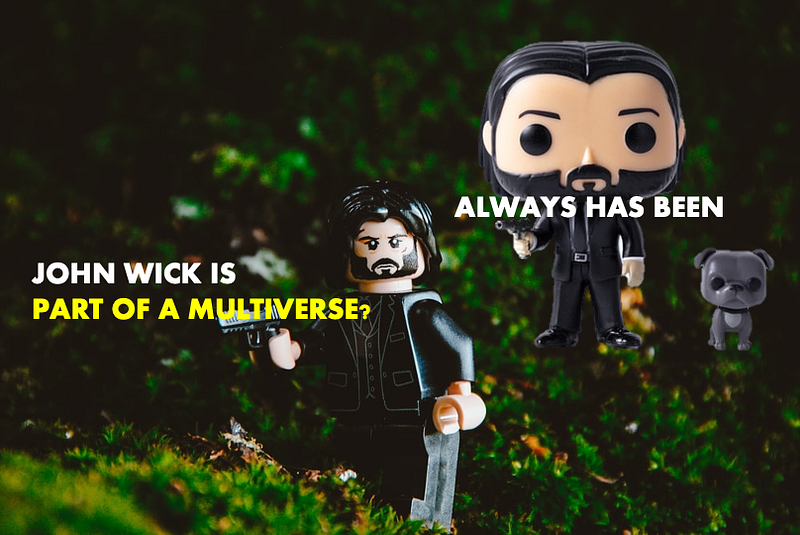
For this maneuver, you hold the book in an underhand position at your side. You raise the book up and over to your other side, like the famous “Wax on, wax off” training strategy. But for you? You’re facing one of the most common questions storytellers face.
AN UNSTOPPABLE FORCE MEETS AN IMMOVABLE PLOT OBSTACLE
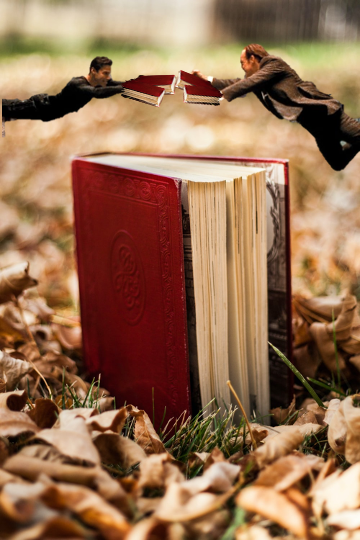
STEP THREE: PROLOGUE ON, PROLOGUE OFF
Imagine a stranger on the Las Vegas strip reaching out to touch your shoulder.
Normally, you’d need to backflip your way off one of those walkways hanging over the road between casinos. But you have your moleskin journal in hand. You’re empowered to swat their touch away and MEAN IT.
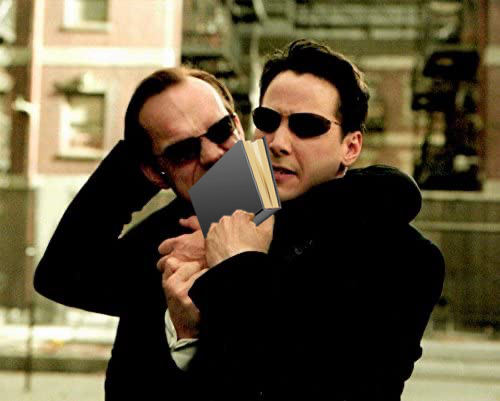
If it was JUST your hand, swatting their hand away would carry no power. It might even be gross. You have to touch them, you know?
IN A PANDEMIC?!
But with your moleskin journal in hand, you apply a little pressure to turn the pliable cover into a story tempered to steel.
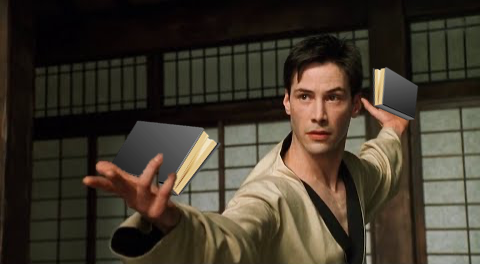
They reach for you —
And you SWAT their hand away by turning your PROLOGUE ON!
They reach again? You turn your PROLOGUE OFF!
It’s as easy as testing the weight of the book and whether it deserves a prologue or is dead weight.
Roll the book to the left. “Prologue on!”
Roll the book to the right. “Prologue off!”
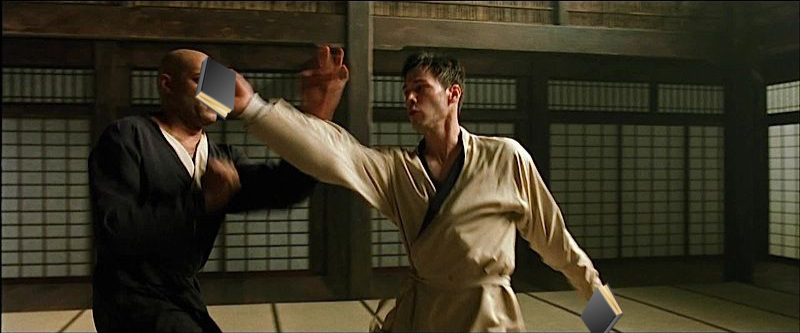
Let the power of the book make each assertion just as strong as the previous. Should you keep the prologue? Should you take it out? No matter what you decide, you can throw this book’s weight around too easily not to adjust for whatever your own narrative throws at you.
STEP FOUR: TURN THE PAGE — WAIT, YOU MISSED SOMETHING
So you have your book in hand. You hold it tight like it’s a single but incredibly thick page you’re turning from the world’s biggest book.
This book is bigger than you!
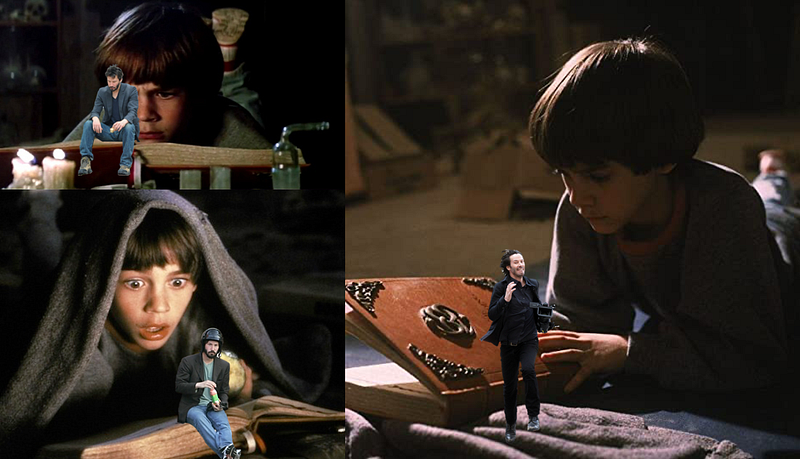
Wow. Look at what’s on the page. Strange to think you’d have missed it if you hadn’t taken such a close look.
Did you miss something on the previous page? Something vital to your survival??
Turn the page! Turn it back!
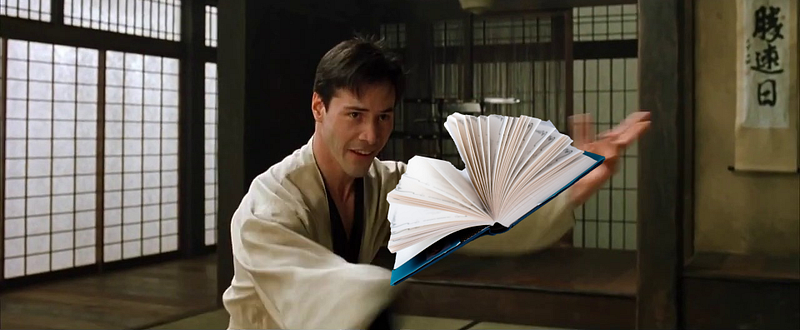
Ah, there’s what you missed. Now you turn back to the next page —
But wait, you missed something else on the previous page. You can feel it.
If your opponent keeps throwing punches, you keep turning the page back and forth. Eventually, they’ll find everything they needed was on the page that kept tripping them up.
BUT STEPHENIE, WHAT IF THEY JUST WON’T STOP?
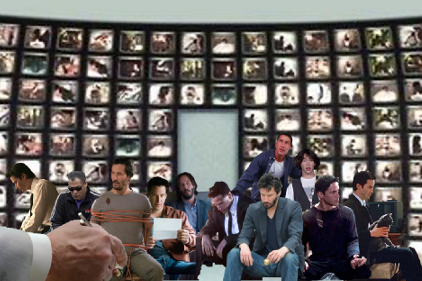
I hear you. Some people won’t take no for an answer. They also won’t take a good book for a distraction.
That’s when you break out the big guns.
STEP FIVE: CONSULT FURTHER REFERENCE MATERIALS
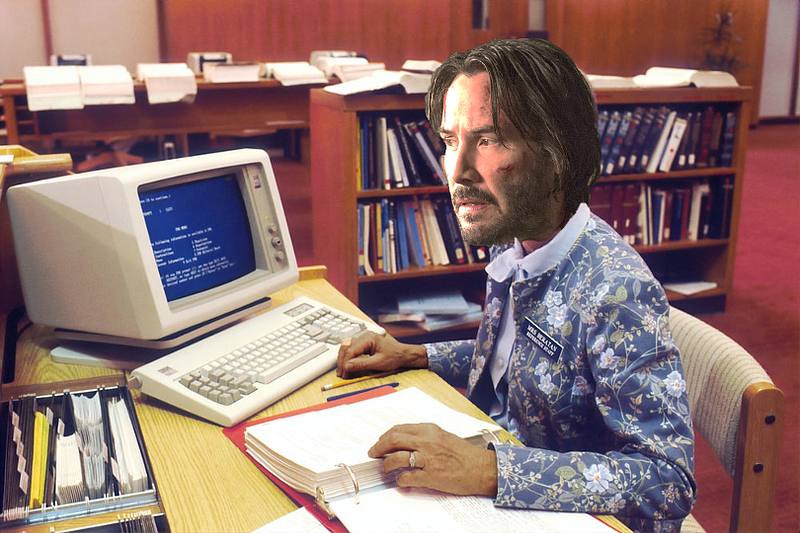
At some point, that one book serves you well but doesn’t serve every part of you. It helps you make room for more than the self-preservation it used to give you.
That expanded space is where you exist now that there’s more of YOU. There are new obstacles. Some of them are overcome with the old book. The old strategies. But some are as new as the newer parts of you.
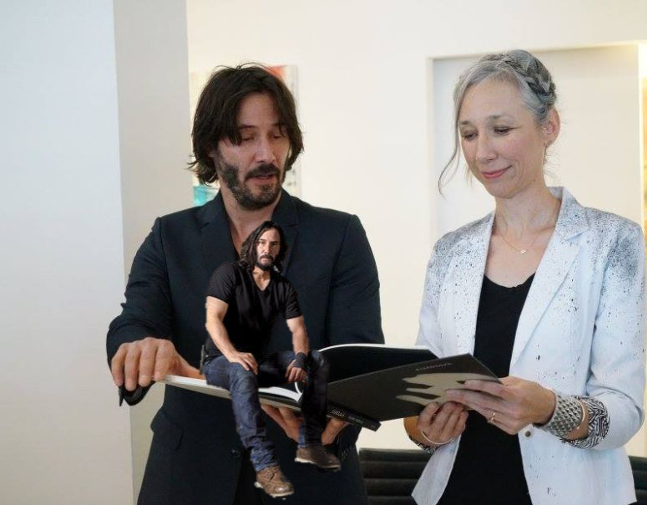
This is when a book may not be what you need.
What you need may be the ideas. The thoughts. The feelings. The stories. The experiences.
You need the kind you can take with you. The kind that last oh, maybe eight minutes on average. Sometimes longer, sometimes shorter, but when they come from a girl named Stephenie, they’re always three times as long she planned (but never quite neverending).
ADDITIONAL READING
What Was John Wick Reading at The New York Public Library? (offsite to NPR)
ADDITIONAL VIEWING (that’s Keanu Reeves and his partner Alexandra Grant ❤ ❤ ❤)
THE ADS
Links above contain affiliate links with commissions for me from products or services you purchase.


