My Twelve Favourite Romantic Comedies
Yes, I love romantic comedies. Don’t look so surprised.
I love romantic comedies. Yet for some reason, whenever I make that statement, people are confused. Apparently, an introverted author of gothic mystery horror thrillers, with an exceedingly dark sense of humour and a penchant for melancholy doomed romance, cannot also be a lover of light, escapist, comedic romance, where love conquers all. Utter nonsense of course. What I enjoy is good storytelling, and like all genres, romantic comedy has its share of gold as well as lead.
Here then are my twelve favourite romantic comedies. At least my twelve favourite romantic comedies today. Such lists can vary depending on my mood, day of the week, position of the moon, and other complicating factors. I’ve tried to avoid films where the romance is more of a subplot, such as Some Like It Hot (1959). More recent films have also been ignored, for which I make no apology. I don’t think a film can be considered a classic until it is at least ten years old. Nor, as is pertinent to this list, can it be considered a favourite until I’ve watched the film in question several times without getting sick of it.
In addition, many (though not all) modern romantic comedies lack wit, chemistry, and, as my wife rather scathingly puts it, romance or comedy. Again, I must reiterate #notallmodernromanticcomedies, but quite a few, if I’m being honest about my preferences. Anyway, without further ado, here is my selection, in chronological order rather than order of merit.
It Happened One Night (1934)
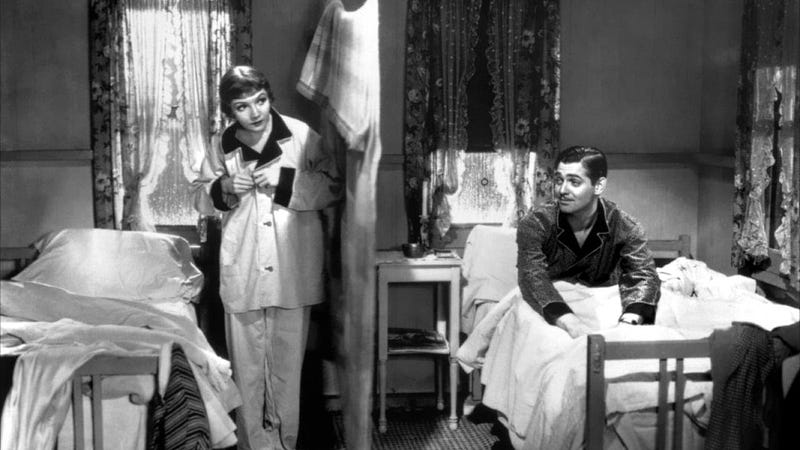
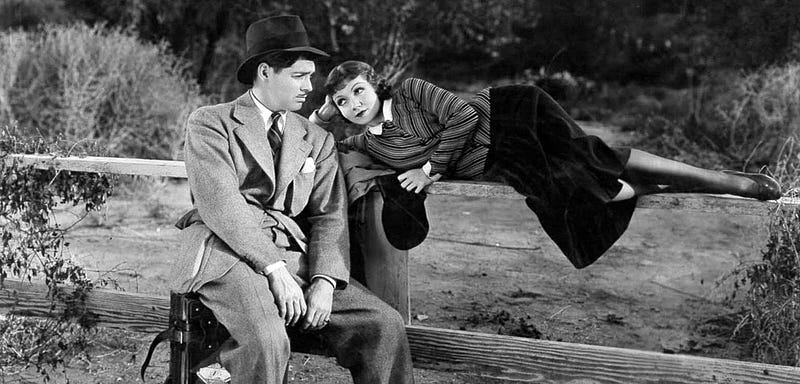
Clark Gable and Claudette Colbert play investigate journalist and runaway heiress respectively, who are thrown together on a long bus journey. Frank Capra’s memorably hilarious, Oscar-winning gem features sublime chemistry between the leads, with Hays Code taunting risqué scenes such as the “Walls of Jericho” bedsheet that divides their shared bedroom. A scene where Gable carries Colbert across a river is particularly amusing, and the hitchhiking scene is another standout.
Bringing Up Baby (1938)
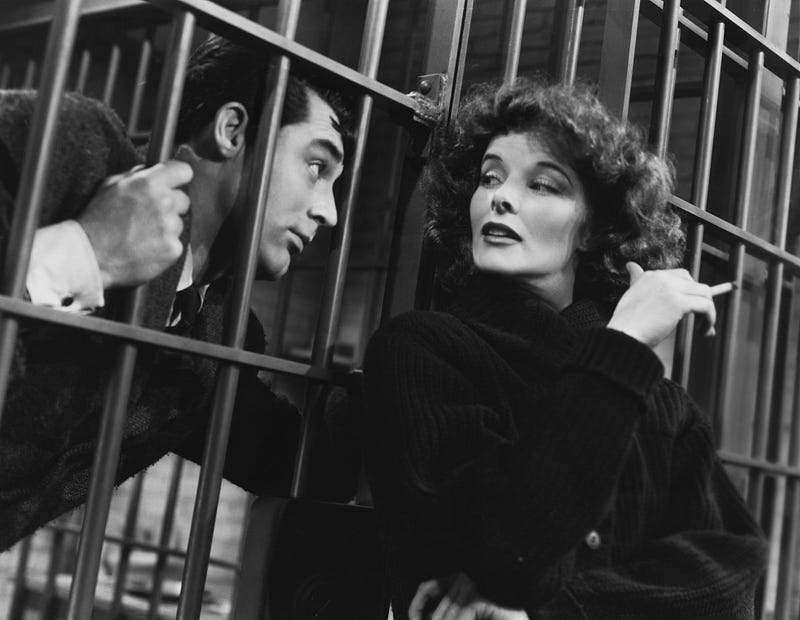
My wife doesn’t consider a film a romantic comedy unless it stars either Cary Grant or Katharine Hepburn, or ideally both. Here is the greatest example of this iconic pairing, pretty much the dictionary definition of “screwball romance”. Hepburn plays another flighty heiress (a lot of them in these kinds of films) who sets her determined sights on bemused paleontologist Grant. Thrown into the mix is Hepburn’s pet leopard named “Baby”, who gets mixed up with a less friendly specimen, for reasons too convoluted and farcical to explain here. One of Howard Hawk’s greatest films.
Ninotchka (1939)
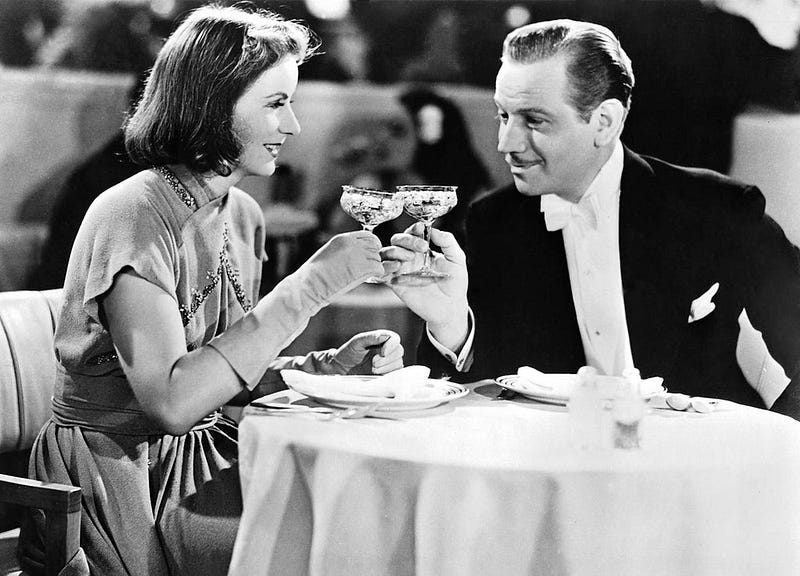
Ernst Lubitsch directed Greta Garbo in what is, for my money, her greatest role. As the eponymous Ninotchka, she plays a stern Soviet in Paris attempting to regain disputed jewels originally liberated from the aristocracy in the revolution, and three fellow countrymen who have been seduced by Western materialism. However, she finds herself drawn to Leon (Melvyn Douglas), a man who represents all she is supposed to despise, and who — unbeknownst to them both — also represents the opposing parties concerning ownership of the jewels. The film’s suggestion that Russian idealism could easily be corrupted by expensive hotels and champagne could have come off as patronising and offensive in less skilled hands, but the script’s lightly comic, cynical edge, combined with Garbo and Douglas’s effortless charm, ensures it does not.
The Philadelphia Story (1940)
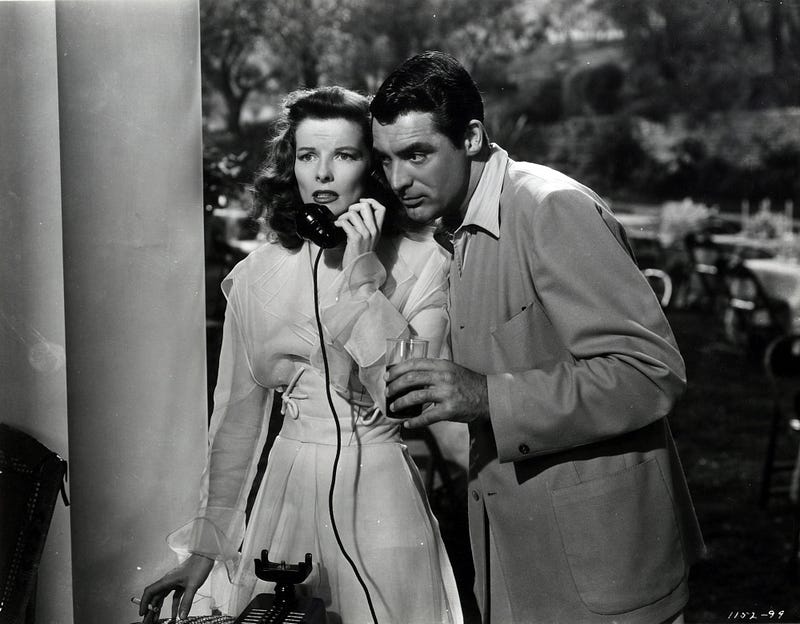
Cary Grant and Katharine Hepburn again. This time they are joined by James Stewart and Ruth Hussey in George Cukor’s tale of a socialite’s journey of self-discovery when a magazine journalist and her ex-husband turn up to her imminent remarriage. The plot — involving a previously married couple divorcing, flirting with other people, then remarrying — was a romantic comedy staple for some years, in order to get around Hays Code censorship requirements concerning extra-marital affairs. The Philadelphia Story is one of the finest examples, with wit and heart to spare, as well as plenty of electricity between the leads.
His Girl Friday (1940)
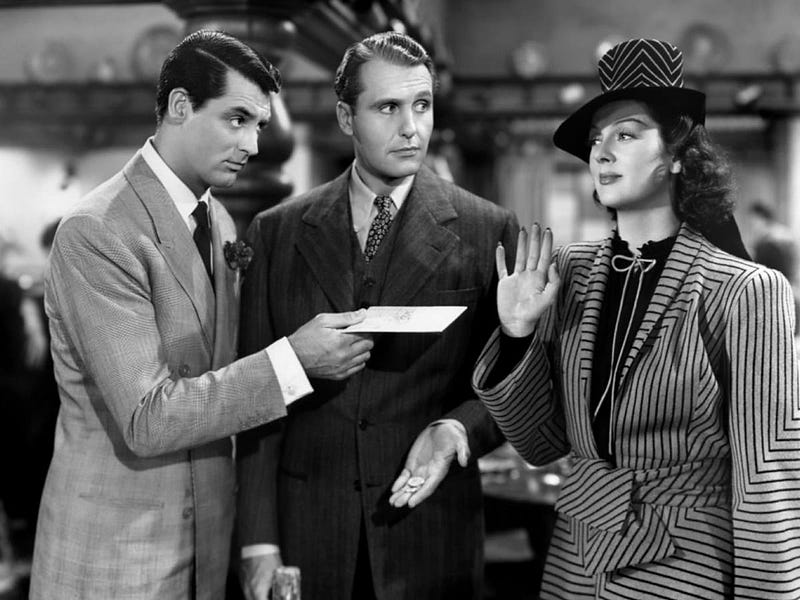
Howard Hawks again, this time directing a remake of The Front Page (1931). However, His Girl Friday is the better film, with Cary Grant and Rosalind Russell crackling with rapid-fire sparring chemistry, as dashing newspaper editor and hotspot reporter respectively. Here, the latter is gender-switched to change the dynamics from macho rivalry to battle of the sexes-style romantic comedy. Although Russell is due to marry the rather vanilla Ralph Bellamy and leave the reporting game, she has one major story left to break — one that could save a man from execution. Over the course of the story, attractions are rekindled (Grant and Russell used to be married, see above re: the Hays Code), and it hardly takes a genius to predict how it will end. But with such sublime performances, working from a brilliant script delivered at breakneck (but not incomprehensible) speed, it is an undoubted classic.
The Lady Eve (1941)
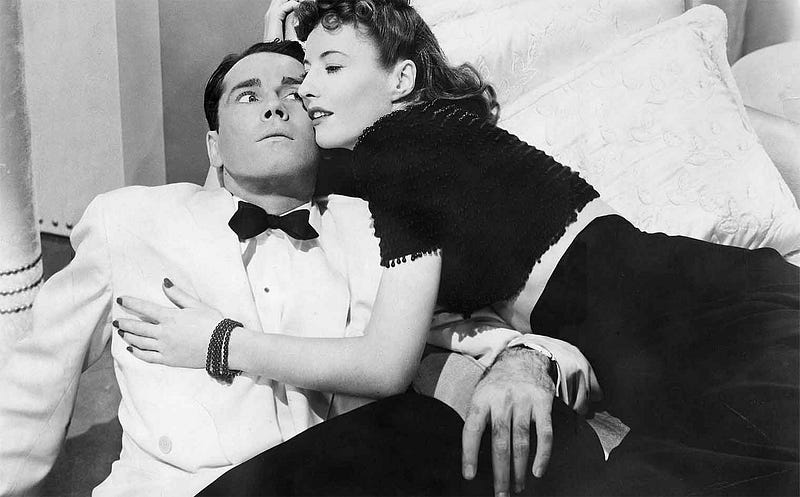
My favourite Preston Sturges film features the dynamite duo of Barbara Stanwyck and Henry Fonda. She works alongside her father as a con artist on a cruise liner, targeting rich pickings. He is heir to a fortune and a target for gold-diggers, though as a scientist he seems more interested in snakes than women. Perhaps that’s why his head is turned by Stanwyck, given her serpentine, manipulative shenanigans. That said, Stanwyck’s comedic talents are more on display here, rather than her perhaps better-known femme fatale persona, as seen in the likes of Double Indemnity (1944). The plot is improbable nonsense from start to finish, but delightfully performed with a light touch and a surplus of wit.
Roman Holiday (1953)
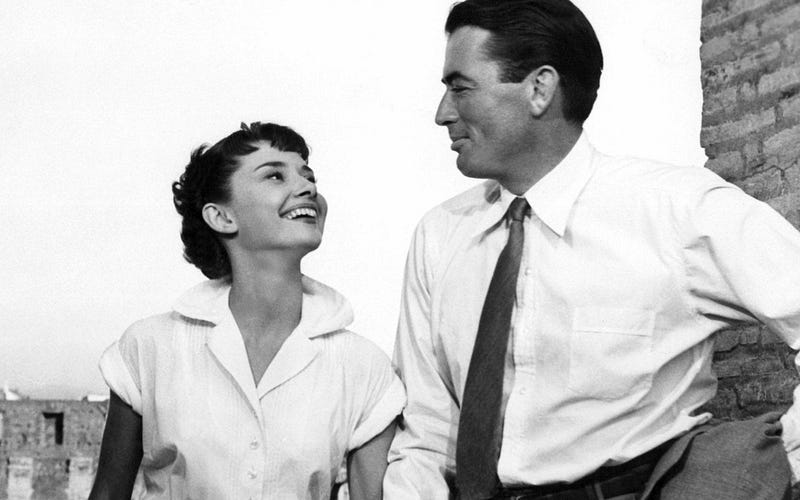
Forget the overrated Breakfast at Tiffany’s (1961), this is the definitive Audrey Hepburn romantic comedy. Here she stars as a princess visiting Rome. Bored and frustrated, she ditches her guardians and absconds with Gregory Peck’s reporter, who initially sees her incognito sightseeing request as a chance for a big scoop. But of course, they fall in love. The impossibly gorgeous pairing of the leads, matched with beautiful locations, and evocative direction from William Wyler, adds up to classic bittersweet romantic cinema of the finest order.
The Apartment (1960)
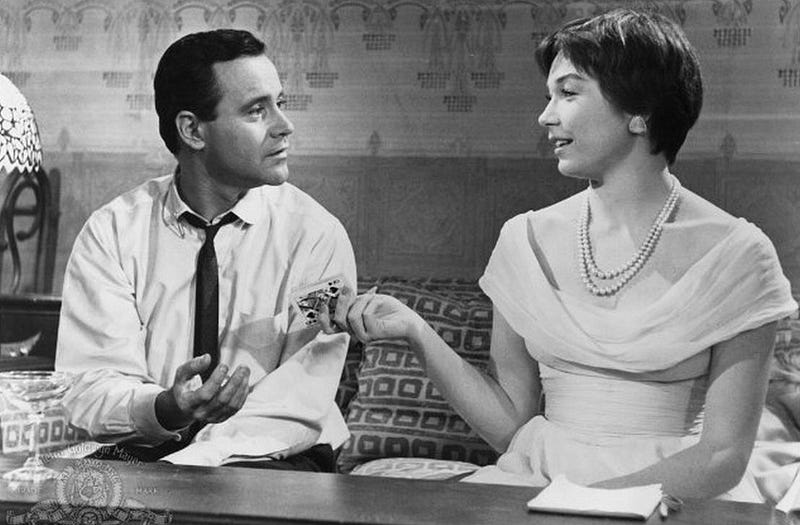
Jack Lemmon’s put-upon salesman falls for Shirley MacLaine’s lift operator in this unusual, Oscar-winning gem from Billy Wilder. It is particularly unusual in that in addition to the expected genre romantic entanglements, the film features a surprisingly forthright expose on sexism in the workplace (for its time). As Lemmon climbs the corporate ladder in return for allowing his superiors to discreetly undertake extra-marital affairs in his apartment, he is appalled to learn the object of his affection is in the dying embers of an affair with big boss Fred MacMurray. With an agreeable melancholia underpinning the wit, this represents Wilder at his very best.
The Graduate (1967)
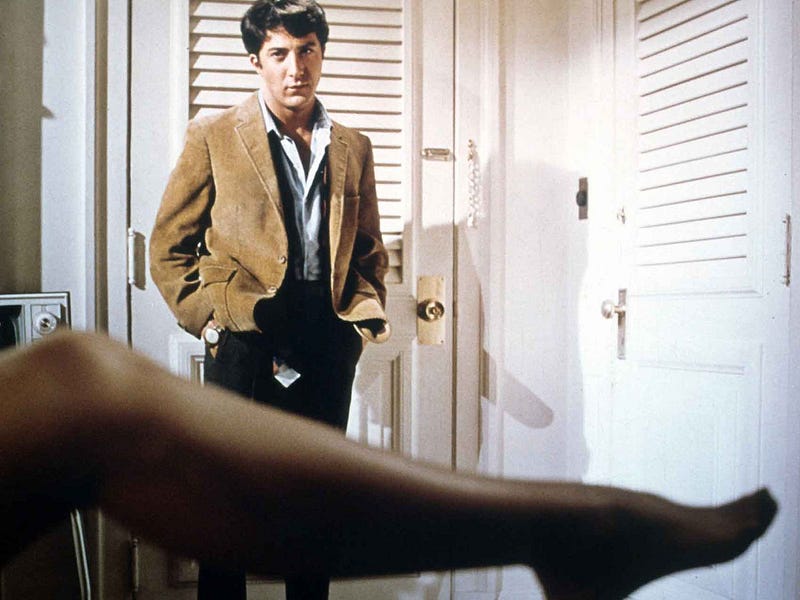
“Mrs Robinson, you’re trying to seduce me!” Dustin Hoffman’s immortal outburst in the face of the significantly older Anne Bancroft’s sexual advances remains a classic line in a classic film. Eventually, he succumbs to lust, only to fall for his lover’s daughter (Katharine Ross). Mike Nichols’s deliciously subversive film has a dark streak of social satire running through its rom-com beats, most notably in the awkward silence of the finale. The last scene on the bus continues just that bit longer than in a conventional romantic comedy, causing clouds of doubt to arise in the viewer’s mind as to exactly how it should be interpreted. Needless to say, the songs of Simon and Garfunkel used in this film — especially “The Sound of Silence”— remain an iconic landmark.
Annie Hall (1977)
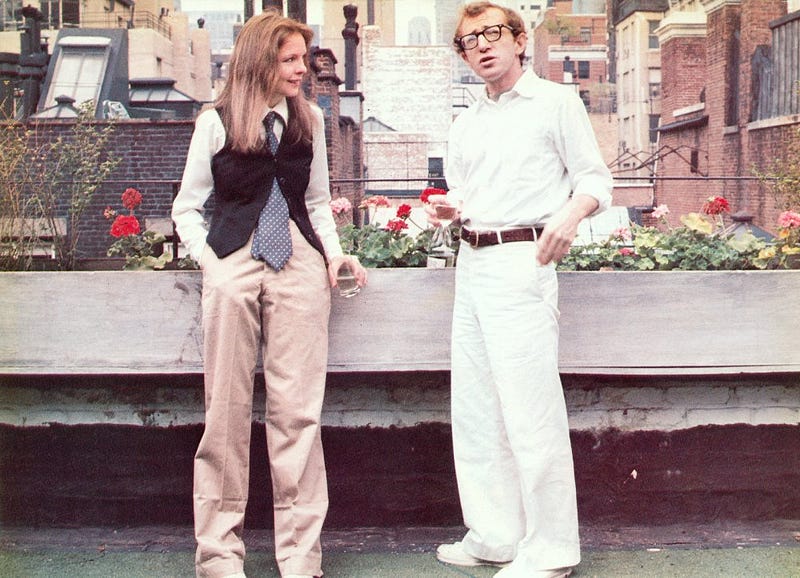
The pinnacle of Woody Allen romantic comedies features Allen on top form as actor/writer/director, as well as Diane Keaton at her most charming and irresistible. Yes, I know some people can’t abide Woody Allen, but for me, he remains a brilliant comedian and great artist. His character here is typically neurotic, insecure, and self-obsessed, but this is nonetheless an honest depiction of the ebb and flow of how people fall in and out of love. It also features some superbly judged and hilarious breaking of the fourth wall, and solid gold one-liners. “I have to go now Duane, because I’m due back on the planet Earth.”
When Harry Met Sally (1989)
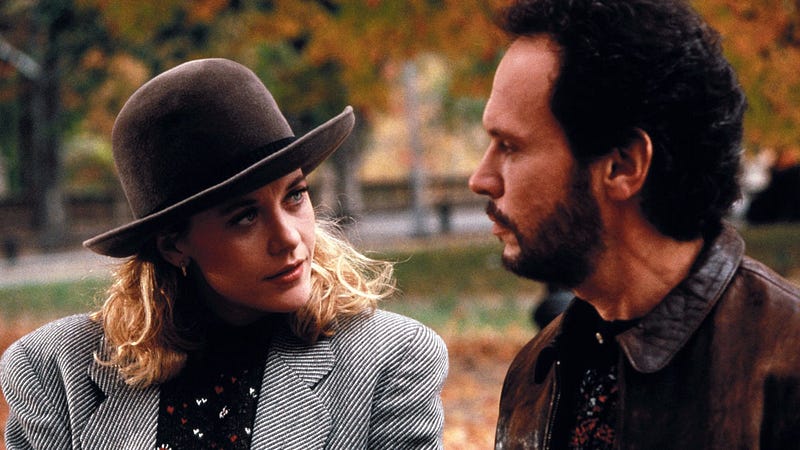
Rob Reiner/Nora Ephron’s classic asks the perennial question: Can men and women be friends, or does sex always get in the way? The film’s answer seems to be an emphatic no, they can’t be friends, and yes, sex does get in the way. I disagree, based on my own personal experience. But that doesn’t interfere with my enjoyment of what is undoubtedly one of the greats of this genre. Billy Crystal and Meg Ryan are magnetic and hugely engaging throughout. Yes, everyone remembers the deli orgasm scene (“I’ll have what she’s having”) but there are so many other wonderful moments; the bookstore scene, Carrie Fisher and Bruno Kirby’s split-screen phone call with friends, older couples interjecting with their stories like a Greek chorus, the New Year’s Eve’s climax… The entire film is wonderful.
Four Weddings and a Funeral (1994)
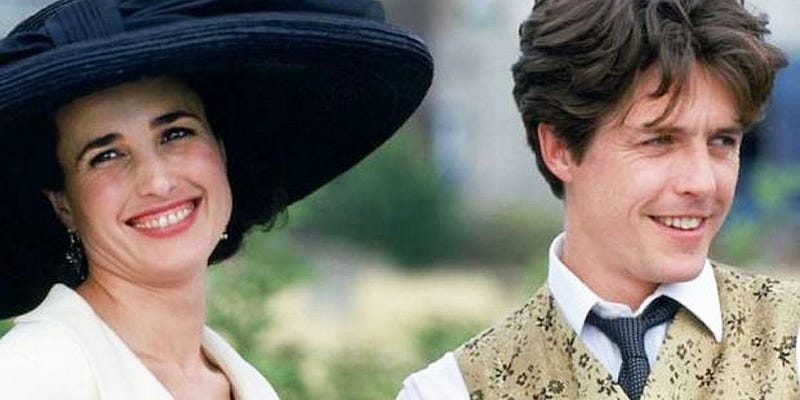
Everyone has their favourite Richard Curtis film. Love Actually (2003) for some. Notting Hill (1999) for others. Or even his adaptation of Bridget Jones’s Diary (2001). For me, however, his screenplay for Four Weddings and a Funeral set the template for the latter-day British rom-com, and has never been bettered. Hugh Grant is amiably bumbling in the lead, whether making inept wedding reception small talk, indulging in f-word strewn panics over being late, or making what might just be the most hilariously convoluted declaration of love in cinema history (to the baffled object of his affection, Andie MacDowell). The embarrassment-of-riches supporting cast includes Kristin Scott-Thomas, Simon Callow, John Hannah, and Rowan Atkinson, and Mike Newell directs with a sure hand. On a personal note, I also love this film, because it reminds me of my halcyon University years.
So there you have it. What favourites of yours did I miss? I fully expect a deluge of more up-to-date titles in the comments, so bring it on. However, comments dismissing my choices purely on the grounds of them being old or in black and white will be met by the immediate and merciless rebuttal of this article.
Author’s note: I hope you enjoyed this article. For more about me and my writing on Medium, please click here. For information on my writing outside Medium, please click here. For a list of my published novels and other works, please click here.