
My Shadow
My first attempt at blackout poetry in my other language
A few weeks ago (or was it months?!), Trisha Traughber encouraged me to start some poetry in my ‘other’ language. I call Swedish my ‘other’ language because I also speak German.
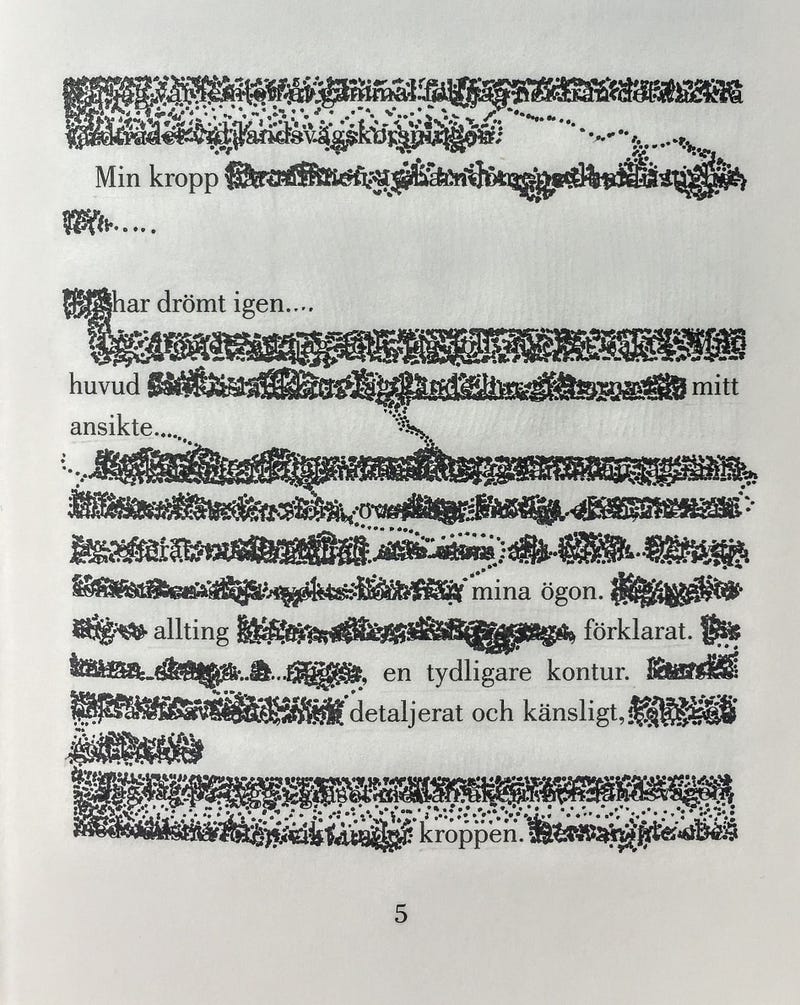
Now, as a native English speaker living in a non-English speaking country and having been here a few years with a reasonable grasp of the language, I decided it was time to try some poetry in Swedish.
After Trisha suggested blackout poetry as a springboard (why didn’t I think of it? It’s what I’d recommend for my nervous or apprehensive poetry students!), I went to the second-hand store and bought a nice hardcover book with really lovely paper.
I thought it would be perfect to start my Swedish blackout journey.
The book is called Min Skugga (My Shadow) by Christine Falkenland. It’s an apt title as I am attempting to create poetry, almost shadow-like, from Falkenland’s original text.
Translation of my first poem:
My body Has dreamed again, Head, my face, my eyes, Everything explained A distinct outline Detailed and sensitive Body.
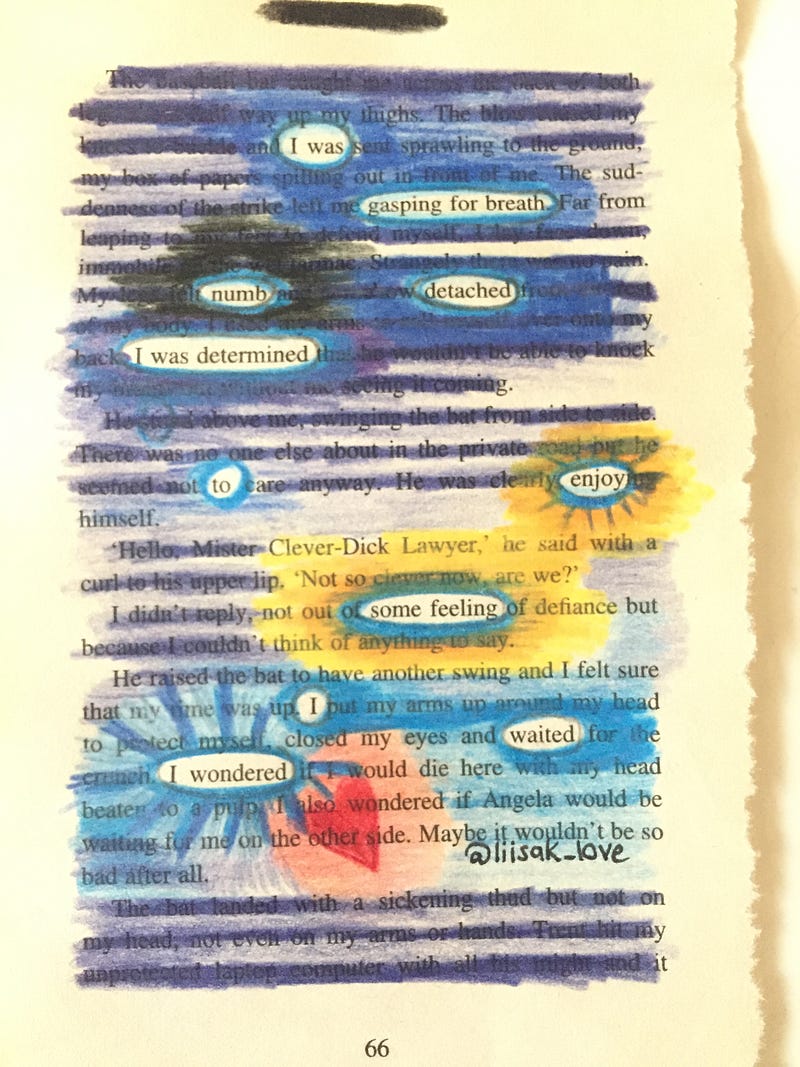
I’ve done quite a bit of blackout poetry in English. I enjoy line and form, making shapes, and using colour. As you can see in the example below, which was originally posted on Instagram, the use of shapes, shading and colour really make the text stand out.
After doing a few pages I have decided I am going to try and do the whole book. I might as well use a few minutes (or many minutes) per day creating my own poetry and art!
Not only will I be focusing on the words and language but also on the type of patterns I use to make the text stand out. It’s a double challenge!
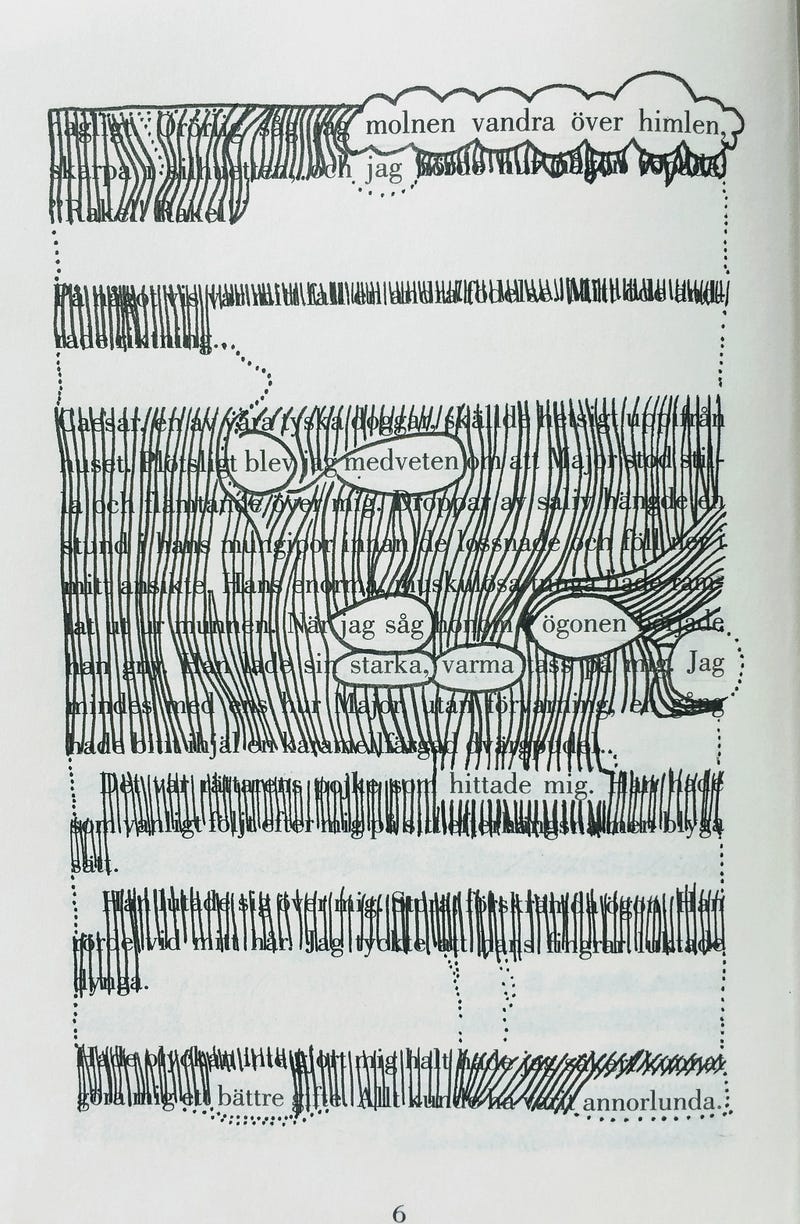
Translation:
Clouds wander over the sky I became conscious I saw eyes, Strong, warm I found me Better Different.
And it’s not an easy process.
Sometimes blackout poetry in my native language is hard — using other’s words to create meaning on a page.
I am not sure I have all the grammatical features correct in the Swedish either, I have never formally learned the language, just picked it up really.
I think the most important thing is I’m trying something new, extending my scope of knowledge of my other language, and being creative.
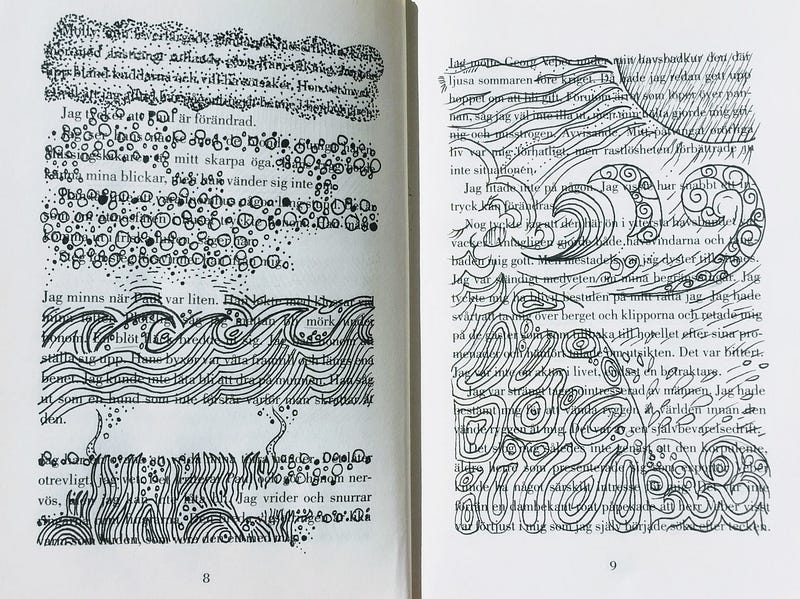
I have attempted making shapes that match the words/poetry. For example wind, waves and cliffs on the right side of the above image match the words on the page. Perhaps I’ll add some colour later? We shall see!
It’s definitely a work in progress, but one that I am enjoying. Let’s see if I can finish the whole book!
~thanks for reading~ tack~
Lisa writes poetry and other things from her home in Finland. She has degrees in English Literature and Political History, and Education, and is a published poet. If you’d like to keep in touch she writes Northern Notes.


