
My Pianist tips for Improvisation
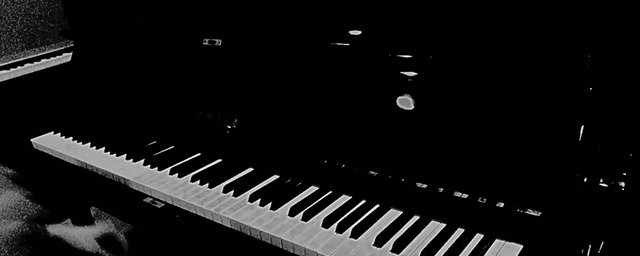
I believe anyone can be a musician. The following principles can apply to creative improvisers of all levels, from beginner to expert. In this article I’ll touch on the following topics on this subject: I. Practice, II. Freedom, III. Exploration, IV. Emotion, V. Creativity
I. Practice. The key to developing any skill is practice. What’s relieving about improvisation is that every second of your time can be put to good use. No excess energy needs to be spent reading music, memorizing pieces, analyzing passages, or writing anything down; the time you put into playing will give you instant feedback, and potential satisfaction. For this reason, a little bit of focused practice can go a very long way, especially if you’re really pushing yourself. Also, make sure you practice and play because you enjoy it. Try to make this as little of an obligation for yourself as possible, make it a goal to enjoy what you do.
It may feel forced at first, especially if you aren’t thrilled with your present ability, but you can learn to enjoy everything you do at the instrument, in some capacity. Even if you’re struggling, there will be enjoyment in the feeling of perseverance, and the inevitable progress that comes from practice over time. Do not set rules for yourself about how often to play. Be self-motivated to practice when it moves you and fits into your life. If you’re not particularly interested in doing this, then you risk forcing something unnecessarily, which can hurt your results. Allow the music to flow, do not be rigid.
II. Freedom. There are no boundaries. Forget any preconceived notions of how music is supposed to sound, or about emulating other artists perfectly. Allow yourself to be inspired by other styles without feeling obligated to them. Challenge yourself and convention by throwing the rule books out the window. Try to dissociate from what your superego or society says. This is the world of the Id. Allow whatever is there in your unconscious to come out, and don’t hold back. You will grow and evolve as a musician.
Think about all the places in our lives where we are pressured to conform to others’ expectations. Look at your piano, and declare that this will be one, maybe even the last, refuge of the individual spirit. As much as others can compromise and impose on your individuality elsewhere, they will not do so here.
III. Exploration. Think of yourself as an explorer of the instrument, and of your imagination. There are epic adventures to embark on in the world of creativity. Do not judge yourself harshly, and do not be discouraged. Listen to what you’re doing at the piano, and change it in real-time, so that it sounds closer and closer to how you would like for it to sound. Think as much about discovering music as creating it: the music is already there in the keyboard, it’s just a matter of you bringing it out.
Remember that new music is always being made in this world, and true innovation happens from experimentation rather than constraint. Try what works, and try what doesn’t work, so that you know the difference. Use your fingers as your guides, to traverse the landscape of the piano. You can look with your eyes, but won’t know what’s really there until you explore with your hands, and analyze with your ears.
IV. Emotion. Allow yourself to feel a variety of emotions while at the instrument. Music joins the mind, heart, and body. Picture yourself channeling individual feelings and moods into your playing. Because music is both abstract and sensory, it can convey inner states and images in complex and authentic ways. By interacting with the piano, you’re having a kind of conversation with yourself and your world, using the universal form of music rather than spoken language.
Remember that piano music can be symbolic and abstract, and express what no other artform can. It can capture the full spectrum of emotion, everything from dramatic, tragic, deep sadness and angst, to the heights of ecstasy, passion, exuberance, and everything in-between: there is no real limitation here. If you feel it in your heart, you can express it in your music. This will inspire you and allow you to have a bigger range of expression.
V. Create. Often, improvisation is about building a toolbox of your own, and then sitting down at the instrument to use what you’ve built, to put preexisting elements together in new ways. All piano music is played using 88 keys and 10 fingers. Come up with your own general musical ideas that you can play in different places on the piano, in different rhythms, and so on.
Think in themes and variations. Build layer upon layer, both in one individual improvisation session, and over time as your running repertoire. Do not consciously or strictly memorize anything, but instead have mental clusters of ideas that you can throw down in the moment. Work these out individually sometimes and revisit where you’ve already gone, but do it in new ways.
I’ll write more on this subject at a later date, and will soon record another improvisation video, but again here is the most recent one, which was from several months ago. You can also watch older videos to get a sense for how my style developed over time, to see me illustrate some of the ideas discussed in this story. Musicians, like all artists, should never stop growing and evolving.


