
A PET OWNER’S NIGHTMARE
My Neighbor’s Dog Was Kidnapped
What a novelist learned about writing and love when his pet was snatched and he had to fight to get it back
Ask my neighbors to tell you the worst thing that can happen to a dog in our small Southern town, and you might hear, “Pick a fight with a cottonmouth.” Or, “Try to herd a pickup truck.”
But those aren’t the worst things that can happen to a dog in our town, not by a long shot.
I know they aren’t because the writer Rick Bragg has a place here, and his dog Speck fought with a cottonmouth and tried to herd a truck. Speck didn’t just survive his collisions with fate. He lived to inspire The Speckled Beauty, Bragg’s memoir of his life with a dog whose adventures might put a veterinarian’s child through college.
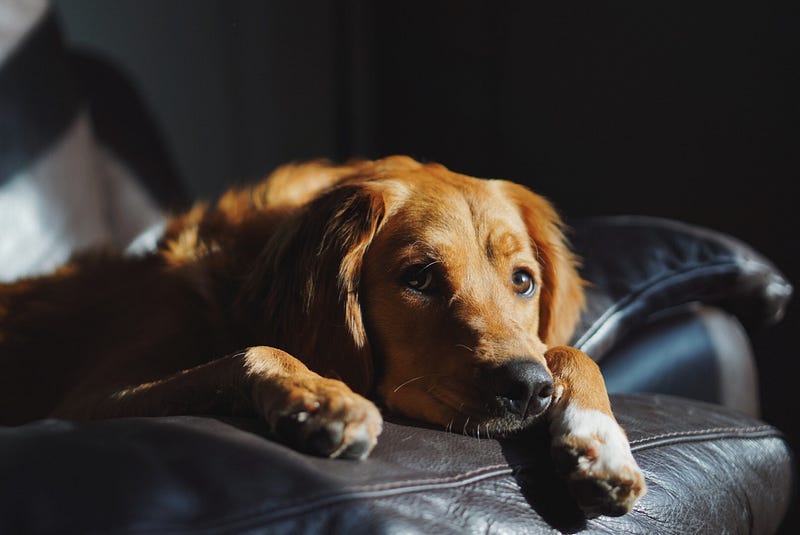
The worst thing that can happen to a dog involved Cormac, a sweet, doe-eyed, dark red golden retriever. He belonged to my friend Sonny Brewer, a writer and former bookstore owner who reveres the novelist Cormac McCarthy.
Cormac was afraid of thunder and lighting, and one stormy night while Sonny was away on a book tour and had entrusted him to a housesitter, he bolted. He vanished for 30 days.
What happened to Cormac during that month would have been surprising anywhere, but it was shocking in a town the newspaper calls Mayberry on the Bay.
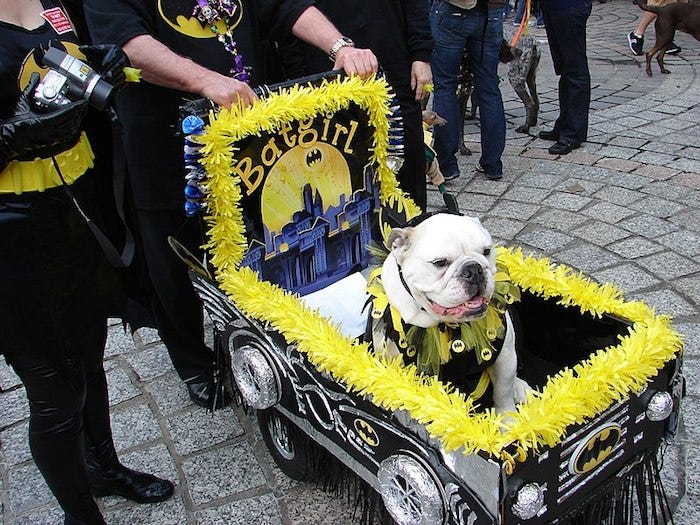

Mayberry isn’t just quiet — it loves dogs. Our parks have water fountains for them, built to their height with bowls underneath, and the Winn-Dixie sells Purina Frosty Paws Frozen Dog Treats. Our Mardi Gras festivities begin with a parade for dogs who wear beads and jesters’ caps as they march (or ride in prams and strollers) through the center of town.
Amid all that love, Cormac was taken by a dognapper. And not by a stranger, but someone in our midst.
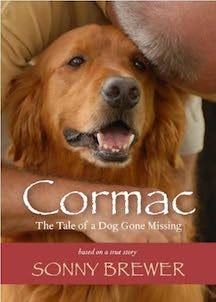
I first heard the alarming story in a book Sonny wrote about the incident, Cormac: The Tale of a Dog Gone Missing. Sonny changed some details to protect people’s privacy and invented others to fill gaps in his memory. But — whatever creative license the book involved — I recognized many of its people and places. And it offers a chilling lesson in how little some of us know our neighbors, even in a town often called one of the friendliest in our state.
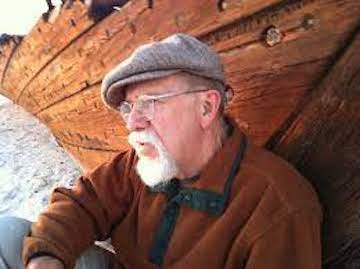
At the heart of the tale lay Sonny’s dream of writing a novel. He ran a used-and-rare bookstore in Mayberry, and after he acquired Cormac, the dog joined him at the shop, keeping an eye on customers while relaxing on a braided-oval rug in the middle of the floor.
Then Sonny caught the break he’d needed. An agent sold a book of his to an imprint of Random House based on the first two hundred pages.
But there was a catch. Sonny had to finish the book within months. To do that, he’d have to stay home and write all day.
Someone else would have to look after his bookstore. And Cormac could no longer stay there during the day. He’d have to be at home with Sonny, whose wife did her own work and whose children were in school.
A chain-link fence enclosed a small part of the yard at the Brewers’ farmhouse on two acres of land on the outskirts of town. But it seemed unfair to confine Cormac to such a tiny patch all day.
Sonny saw a solution in an electronic fence, which involved a thin wire buried in the soil.
“The wire was not expensive, so I’d have the entire two acres circumscribed,” he wrote in Cormac. “With the two ends of the wire connected to a transmitter, and a collar that had a built-in receiver to pick up the wire’s frequency pulse, Cormac would get a mild shock if he tried to cross where the wire was buried. But not before sounding a warning beep so Cormac could engage his superior intelligence and stay away from the ouch place.”
A man from the fence company installed a transmitter on the wall of the barn and gave Cormac a green collar with a receiver attached to it.
For a while the system worked, and when it stopped working and Cormac began to run across the fence, Sonny agreed to pay $250 for a system upgrade. But he didn’t follow up when the installers didn’t show up.
Then catastrophe struck.
Sonny had finished his novel and, with his wife, was on a book tour in San Francisco, two thousand miles away, when his housesitter called.
Cormac — who had no identifying microchip — was missing.
Sonny went on with his book tour, and his wife flew home to begin phoning vets, going door-to-door, and posting signs.
Cormac was still missing when Sonny signed books in Atlanta, in Nashville, and in Blytheville, Arkansas.
‘In New Orleans I told the crowd about Cormac,” Sonny writes in Cormac. “They had more questions and comments about my dog than about my novel. One lady offered to give me a new dog.”
Sonny began began knocking on doors when he arrived home with Cormac still missing. One woman told him he’d come to her house but run away. Another said she once saw a reddish-brown dog in the back of a red pickup truck that hadn’t reappeared. No vet or shelter in or near Mayberry had seen a dog that fit Cormac’s description.
Sonny called the shelters daily, and on day 17, a girl at one of them blurted out that they’d boarded a dog matching Cormac’s description. Enraged, he demanded more details from her manager. The woman insisted that the shelter didn’t give information about animals over the phone.
But Sonny had just spoken to a girl who had given him some. In his two weeks of calls, no one had mentioned that he had to show up in person to receive answers about his dog.
A well-connected friend of Sonny’s — who knew the manager and important newspaper people — threatened to go the media if she didn’t tell him who had Cormac.
Within minutes, Sonny had the name of a man with a golden retriever “rescue network” who had taken his dog to an urban veterinary clinic for “processing.”
“Processing” meant that the clinic neutered Cormac without Sonny’s consent.

Then the clinic had shipped the dog to a rescue group in Connecticut that had put him up for adoption on the internet. In the meantime, a foster owner was caring for him. The original shelter, it seemed, kept goldens for 10 days, then let the network take them.
Somewhere along the way, Cormac had lost his collar, and no one had his name.
Sonny’s luck turned when he called the woman fostering his dog in Connecticut. She held out her phone and let him “talk” to Cormac, who reacted with such joy that she began to sob, sure he’d found his master.
Sonny paid a dog transport service $300 to take Cormac to the parking lot of a Cracker Barrel a few hours north of Mayberry. When he finally had his dog back, he said, “You could not have crow-barred the grin off my face.”
But the question remained: Who snatched Cormac and took him to the shelter that gave him to the golden rescue network?
Sonny eventually had the answer: It was the occupant of the third house he’d visited 17 days after Cormac went missing. She owned the red pickup truck in which his dog had been spotted, and she was indignant when Sonny went to her house and confronted her about driving off with his pet.
She was angry that Cormac kept running past the electric fence. He was bothering her when she collected the mail, she said, and she carted him off to the pound.
“If you are going to have a dog, Mr. Brewer, you are the one who is supposed to tend to that dog,” she scolded. “Not me. As far as I know, you don’t even have to go off to a regular job every day. You should have plenty of time to keep your dog at home. If he comes down here again, I’ll haul him off again.”
‘Writing is a certainly a privilege and a blessing’
You could argue that the moral of all this is that not everyone is friendly, or loves dogs, even in a friendly dog-loving town.
But Sonny drew a different lesson from it when he spoke with the housesitter who had looked after Cormac during his book tour.
“You know,” he told the sitter, “when I was in San Francisco and got the call from you that Cormac was missing, it occurred to me that while I sashayed around being the writer guy I always wanted to be, I was also busy losing something I love.”
Sonny went on: “Maybe I’m reaching here, but all this with Cormac helps me know my life is not just this writing thing. Writing is certainly a privilege and a blessing, but that’s only part of it.”
Apparently Sonny remembered the lesson. Cormac lived, well-loved, for nine more years and died in Sonny’s arms.
These days I sometimes run into Sonny walking his new dog, Bobby, on a beautiful coastal trail that has one of those water fountains built to a dog’s height. Bobby has lots of other well-loved dogs to play with there, and if they fear dognappers, they don’t show it in the least.
Read more about Cormac, about Bobby, and about Sonny’s other writing. You’ll find a review of Rick Bragg’s The Speckled Beauty here.
@JaniceHarayda is an award-winning journalist and critic on the Gulf Coast of Alabama. She has been a writer and editor for Glamour magazine, the book critic for Ohio’s largest newspaper, and a freelancer for many major print and online media.
You might like my story about one of Sonny Brewer’s favorite writers: