
MIDLIFE | MOTHER | DIFFICULTIES
My Mother Only Added to The Stress in My Life
The pressures of midlife
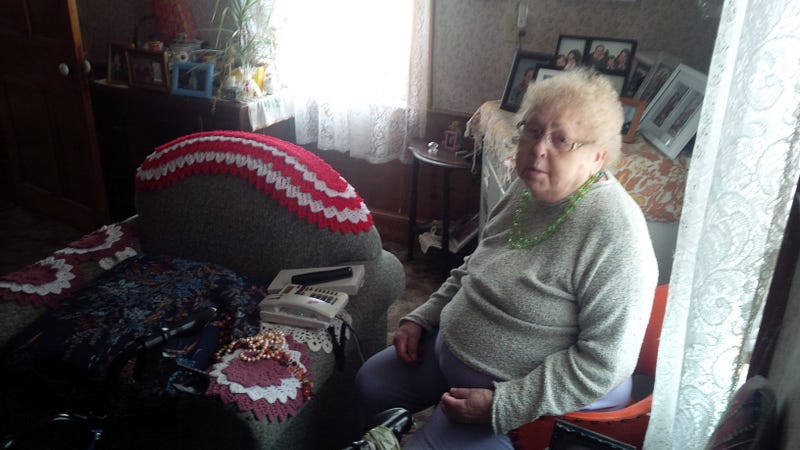
Midlife is not easy for many women. Sandwiched between elderly parents and children/grandchildren. Dealing with work and menopause.
2015 was a period in my life where it was hard to deny the effect stress had on my health.
I was 56 years old. My three children were 33, 32, and 30. All living on their own for years. Not causing any problems or stress in my life.
My mother, on the other hand, didn’t bring me comfort, only problems.
I lived an hour’s drive away so visits were infrequent.
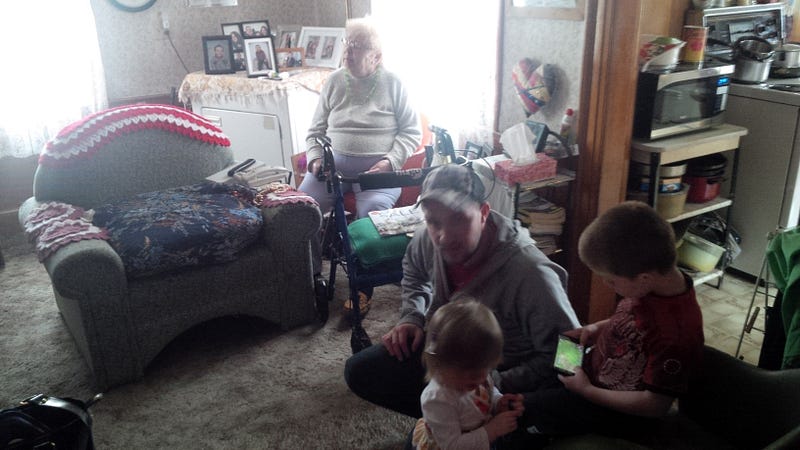
That year had started off with something I’d not experienced before — premature ventricular contractions (PVCs). It took a trip to the emergency department for the diagnosis.
Premature ventricular contractions (PVCs) are extra heartbeats that begin in one of the heart’s two lower pumping chambers (ventricles). These extra beats disrupt the regular heart rhythm, sometimes causing the sensation of a fluttering or a skipped beat in the chest.
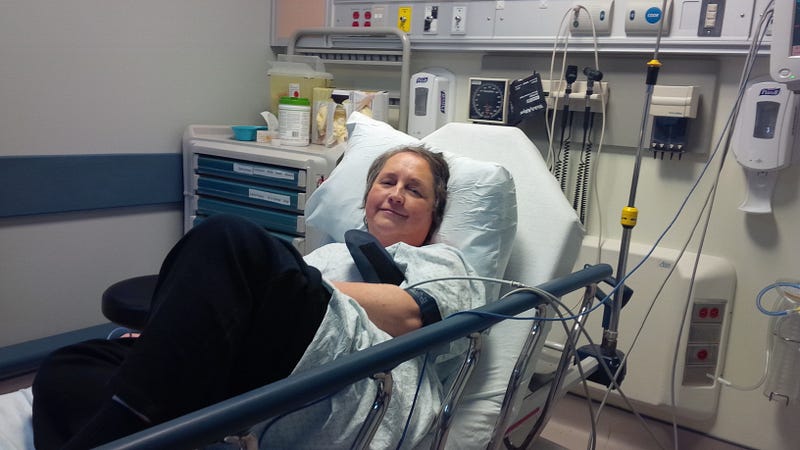
Stress and anxiety was the cause. Increased levels of adrenaline.
Besides dealing with my mother, my husband and I were refinancing our home, switching from a regular mortgage to a flexible mortgage. Selling, buying, and mortgaging homes has always been a major stress for me.
The doctor said since I was already on a beta blocker for a heart arrhythmia, (SVT) supraventricular tachycardia, it was just a matter of waiting it out.
During an episode of SVT, my heart races almost 200 beats per minute. I cannot usually convert back to normal rhythm on my own and must have paramedics or a doctor in the emergency department administer an IV injection of Adenosine, which briefly stops and reboots my heart.
The PVCs went on for a month. Constantly. Adding more stress to my already stressful life.
It was also the first-year anniversary of being on the antidepressant Cymbalta to help manage my chronic pain/fibromyalgia. The drug provided pain relief and gave me increased energy, along with much better sleep.
It was my sixth year on HRT- hormone replacement therapy. I’d started hormone replacement therapy after a hysterectomy at age 50 for two large uterine fibroids. After surgery, I was plagued with constant yeast infections until starting HRT.
I’d been on blood pressure medication for over ten years.
After seeing a new specialist about my heart arrhythmia, I decided to go ahead with a cardiac ablation. This doctor was confident they’d have success this time.
In 2007, I’d gone in for an ablation and it had been unsuccessful. They could not induce the arrhythmia to know where to cauterize and destroy the cells that allow electrical signals to get on the extra pathway in my heart.
Even with medication, I still struggled to manage my fibromyalgia and continued to work the two modified shifts at the NSLC (Nova Scotia Liquor Corporation). I worked every Saturday from 1 to 10 pm as acting manager to avoid the repetitive movements of cash duties which increased my pain.
But the major difficulty was the helplessness I felt in dealing with my mother.
We had heavy snow that winter. My eighty-nine-year-old mother spent days trapped inside her home. My sister and I pointed out the danger of being trapped in her house and that she’d never be able to escape from a fire.
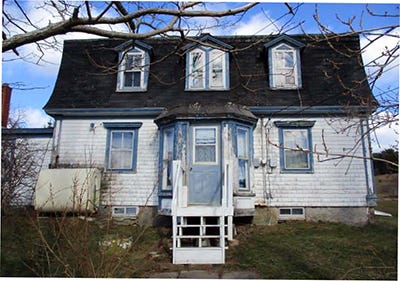
After many long conversations, she agreed to leave her six-bedroom home of 58 years and move into an apartment through a provincial housing program for seniors.
My sister refused to fill out the paperwork because she had done it twice before and when an apartment became available, our mother just laughed and said she wasn’t moving.
I took on the task of filing the paperwork. Everything seemed to be going well with my mother. Like she had finally come to her senses about improving her living situation.
Moving to an apartment meant only 30% of her income would go to rent. She’d no longer struggle to stay warm in the winter. She would be in town and have no worries about property management, or caring for a home in need of major repairs.
Her agreeing to move was a relief. And I naively thought all would be fine. Though knowing my mother as I did. I should have known better.
In June, our third grandchild was born to our son and his common-law wife in British Columbia. My husband and I started making plans for a visit across the country in the following year.
My husband and I also started plans for cleaning up the second floor of my mother’s house. The upstairs was closed off and left unheated. All the stuff stored there was abandoned six years earlier when she’d fallen and broken her wrist. After that fall my sister moved our mother to a downstairs bedroom, eliminating the fear of her falling down the stairs.
In June, I didn’t ask my sister to help with the upstairs cleanup, and she didn’t offer.
My husband was working full-time Monday to Friday. I worked every Saturday and Monday. Sunday was the only day my husband and I could do the one-hour drive to my mother’s to begin work.
It was extra stressful for me because it meant three days of consecutive physical work, which left me tired and in pain for days after.
Our son moved in with his grandmother in 2002, after we’d sold our property next door to my mother. He was nineteen and didn’t want to leave the area he’d grown up in.
Five years later, he moved to British Columbia with a couple of friends. He left much of his belongings behind. Storing most of what he’d someday want in his sister’s basement. Anything left in his old bedroom was considered trash.
My husband and I started the cleanup there.
It took four hours to complete. Much longer than we’d expected. Yet, it was the least cluttered of the four upstairs bedrooms.
We realized we had much more work ahead of us than we’d thought. If the least cluttered room took four hours. How long would the other rooms take? The ones cluttered floor to ceiling. The reality of set in.
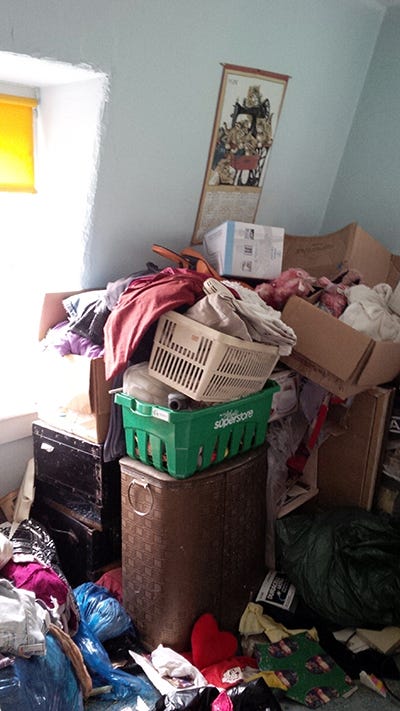
Before we left that afternoon, we started in my mother’s former bedroom — the worst room. Stacks of boxes. Some almost empty, others full of surprises. We didn’t know what we’d find. Anything could be anywhere.
In a drawer full of her clothes, we might find photos or documents. Nothing made sense. When mouse droppings littered the clothes in a bureau drawer, we dumped the contents straight into garbage bags.
Spider webs and mouse turds were everywhere. The window sills were covered with dead flies and mold.
We wore face masks to not breathe in that dusty air.Discouraged by the enormity of the work, we cleared only one corner of the room.
I took boxes of papers home to sort in better working conditions.
During our time there, my mother asked me to bring down a three-drawer storage container for her to sort through.
I carried each drawer downstairs to her. She sat in her chair in the living room, sorting through it. The transistor radio playing next to her.
Before starting this cleanup, I had told her of our plan. She didn’t express any objections to what we were doing so I assumed all was fine.
My husband and I continued with the cleanup again two weeks later on Sunday, June 28, finishing my mother’s bedroom.
We then started in the smallest room. First, we had to force the door open, then clear a path to enter the room.
In this room, I found a piggy bank. I wasn’t sure if it had been mine or my sisters. I asked my sister. The truth of our relationship was revealed in her answer. “Because you wanted it,” she said.
That answer explained so much that had gone on between us in the last fifteen years. Seven of which we had not spoken. The lawsuit our cousins who grew up in our family filed against our mother divided us. I couldn’t turn my back on our cousins. My sister felt she needed to stand by our mother.
My walking doll ended up tossed in an outside building, joining the eighty bags of garbage removed from the upstairs of the house.
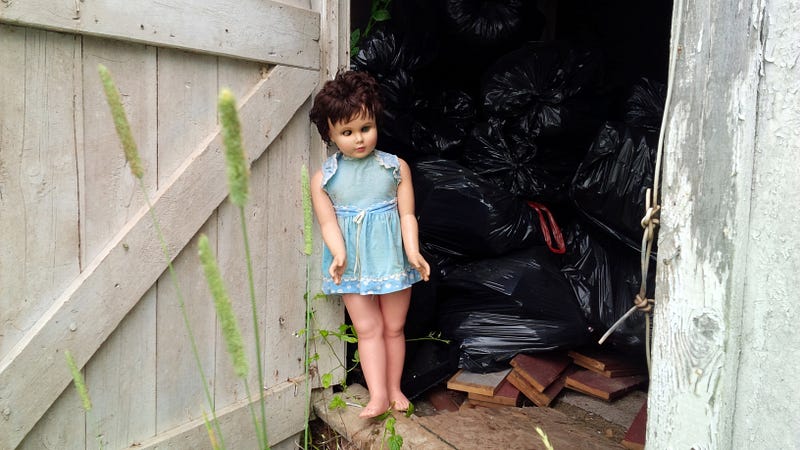
As I carried the doll out, my mother said, “What are you doing with it?”
“Throwing it out,” I said. “It’s too damaged to save.”
“There’s nothing wrong with it,” she said.
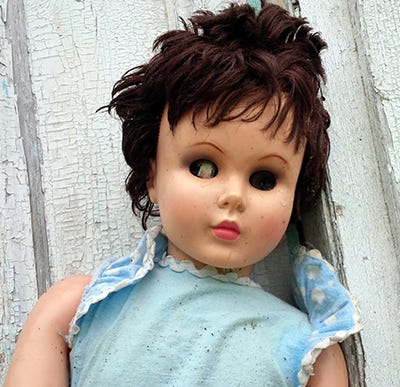
I held it up close to her, and said, “Look at it. Her eyes are rolled back in her head.”
“It looks fine to me,” she said.
I just shook my head and walked away. Typical. My mother had always told me that what I saw wasn’t real. But I was no longer a child she could try to gaslight.
How hard this must have been for her. Seeing so much taken out in garbage bags — her possessions ruined by time and rodents. Stuff old and broken, no longer usable.
Did it make her feel like that?
I had no way to talk with my mother about these deeper issues. Her feelings were something she never expressed. She never had any concern for other people’s feelings either.
Why? I wondered. Why did I think about her feelings when she never thought about mine?
Why did I keep trying to help her when she was so unappreciative of that help?
But I did what I thought a daughter should do.
That was the real depth of my stress. Trying to do the impossible. Trying to make a relationship work that had never worked since the day I was born.
Part of me still clung to the hope that finally we’d come to a peaceful place. I had no idea just how misguided I was. How I hadn’t yet accepted that mother-daughter relationships do not all end like in the movies.
There would be no happy ending to our story.
In just a couple of months, my mother would change her mind about moving. That would lead to an argument between us and we’d be right back to where we started — a relationship that just never got any better.
Barbara Carter Artist and writer with a focus on healing from childhood trauma, alcohol addiction, and living her best authentic life.
Likes to take walks, read, watch TV dramas, and practice Qi-gong, and work on her memoir series BARBARA By The BAY.


