
My Medium Publishing Strategy for the Near Future
As we enter the updated Partner Program, here’s my latest plan:
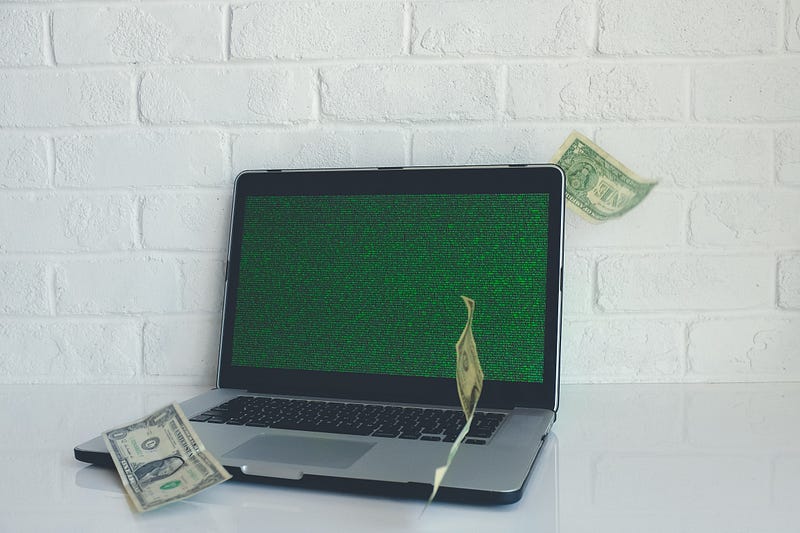
Today, 10/28/19 is the first day of the updated Medium Partner Program. Last week they turned things on their head a little. Starting now, writers will no longer be paid for claps.
We’ll only be paid for read time (a percentage of each reader’s read time per month).
This is on a reader-by-reader basis. A voracious reader will spread her reading ‘share’ over many stories and therefor will water-down her payment. A one-and-done reader will be worth more if all their reading time goes to a couple stories.
While we can speculate six ways ‘till Disney Land, I’ve decided to take a laser-focused approach with my writing.
It doesn’t change much from my previous approach, but I plan to target my tribe even harder. I believe targeted writing will help keep your readers coming back.
- We want to feed our readers’ likes and interests as much as we can.
- We want our work in front of our reader every time she opens Medium.
- We want to publish high-quality writing that keeps old readers coming back and new readers interested.
When you focus on one group of people, they can’t help but find your stories everywhere they turn.
Our readers don’t have any more read time this morning than they did last night. We can’t rely on the mega-clappers to boost our earnings.
The playing field has changed. The metric is now quality.
If we want to keep our reader’s attention all the way to the bottom of a story, it’s our job to hold that attention.
I’m doing five things to keep readers reading my work.
Five things I’m doing to keep my readers reading
1. I use a three-act structure in many of my stories —
I don’t give away the candy store in the first sentence… or the title for that matter. I see this a lot. If I see the title of a story where all the information I need is written in said title, I don’t need to read the story. For example, More than One Hour a Day of Cell Phone Use Causes Brain Tumors (fake title). In my head I say, “OK. Noted. Keep ‘er under an hour a day and I’m good.” I just saved myself 10 minutes of reading time. No need to read that story.
We don’t want that. ESPECIALLY not with the new payment plan. Now, if you use this to deceive your reader it makes you a bad person, no doubt. But you can change the way your story is written to persuade her to read all the way to the end.
If you’ve got something important to say and you say it with only the words required to get your point across (i.e. you don’t pad your stories to get more read time), then you do your reader a FAVOR to persuade her to read all the way to the end.
Open the experience with a strong, non-clever, non-ambiguous title that doesn’t give up the goodies before the first date.
Have an interesting first section that encourages the reader to read the meat of the story in the middle (you are now in the meat of this story, for example). I try to end the ‘first act’ with a little cliffhanger to encourage the reader to read the second act.
My cliffhanger was the sentence about the five things you’re reading now.
I end my stories with a third act — a motivational call to arms, so to speak. I want to empower the reader to take action on what she just learned. To put the reading into practice.
Finally, I end all my stories with the most-important piece of my writing business. I encourage the reader to enroll in my email masterclass. This is how I build my reader’s list — the long-game for earning automated income from your writing.
2. I stay in my lane —
The soul purpose of my work is to help writers and creators make more work that sells and sell more of what they make. This leaves me a lot of writing room, but the space isn’t infinite.
You won’t find me giving relationship advice, political theory, or programming advice. I’m a fourth-generation woodworker, but you won’t find any of that stuff in my writing, save for a silly analogy occasionally.
When I stay in my lane, the algorithm will keep recommending my work to readers in my tribe. They’ve chosen to receive certain types of writing. I want my stories on their home page as much as possible.
I could be wrong, but I believe the new payment change will favor niche writers over the everything/everywhere writers. It’s really hard to build repeat customers if we don’t know what to expect tomorrow.
3. I write my face off —
Most of my stories will be unseen by most of the readers on Medium. This is OK. There are millions. I serve a small, sub-section of these readers. My tribe grows as I continue to serve this niche.
The only way I can continue to serve this niche is to write a lot. I’ve written almost 700 stories in a little over a year. This is how we get our writing in front of our readers. When they see our stories they read our stories. When they read our stories we’ll get paid.
4. I’m not going to focus on story length —
I think this is the wrong approach. I’ll eat crow if I’m wrong. But as long as you get your readers returning to your writing, you’ll earn money from their ‘read share.’ Remember, we’ll get paid on a percentage of each reader’s read-time. If she reads ten of your short stories or one long story, you should average just as much money if your work is the one that keeps her attention.
I know we’ll see a ton of 30-minute mamma-jamma stories from writers trying to game the system, but the average reader doesn’t have time for that. She wants a quit hit while she’s waiting to do something else.
Sure, that’s a sweeping generalization. I go by my personal experience here. I’ve got no attention span. I skim the long stories and read the short ones stem to stern. Maybe you do too.
5. I refuse to let myself get too worked-up about the changes —
Medium is an infant as far as platforms go. They’ve only been paying writers regularly for a couple years. Change is inevitable. This new payment plan will change.
I know the worst thing I can do for my tribe is to pout and abandon them. If I do that I’ve helped no one.
I will keep writing my face off, because it works. My readership is growing and my income is growing (from multiple directions), all thanks to Medium.
Maybe I’ll earn less money this month. That’s OK. If I earn more that’s OK too. I have a big goal for my Medium income, but I don’t need it to eat. I have a bigger strategy for my Medium tribe (I share this strategy below).
Create a publishing plan and stick with it
If you want to grow your readership, you’ve got to keep their attention. If you want to keep their attention, you must produce writing that is always in front of the people you serve.
Whether you write once a week or once a day, if you build a publishing plan you’ll train your readers how often they can expect your work.
Curation helps. A lot. But you can still build a following and a steady readership even if you stories don’t get curated. Although the long-term Medium income does come from curated stories. Non-curated stories die quickly.
…but there’s also better way to earn money from Medium, indirectly.
As creators we’ve got to own our list. And we need to build a list before we need one. If you build your course first, then look for customers later — you’ve designed your business backwards.
When we start with our list first our customers will help tell us what they want and all we have to do is make it and sell it back to them.
Once your email list grows as people buy your first course, you can use the same process to develop subsequent courses. Once you build a big-enough list, you won’t have to advertise at all.
As an indie author, I’ve developed a introductory course on list-building. It’s called the Tribe 1K. I’ll show you how to get your first 1,000 subscribers (or your next 1,000) so you can launch your next book, product, or course using the strategy I described above.
Tap the link below and you’ll get the first lesson today — enrollment is free.
We’re waiting for you.
Enroll in my Email Masterclass. Get Your First 1,000 Subscribers
August Birch (AKA the Book Mechanic) is both a fiction and non-fiction author from Michigan, USA. As a self-appointed guardian of writers and creators, August teaches indies how to make work that sells and how to sell more of that work once it’s created. When he’s not writing or thinking about writing, August carries a pocket knife and shaves his head with a safety razor.


