
My Grandfather Made Really Lousy Curry
I miss that curry every Saturday of my life
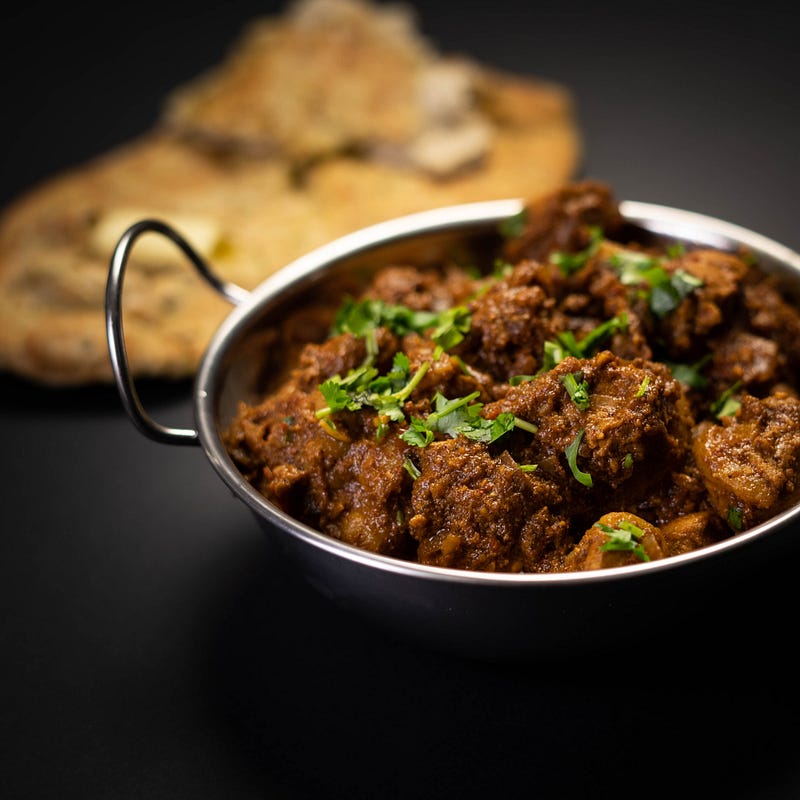
It’s often the strange things we remember about (past) people in our lives. For that reason … never be normal.
I would pay good money to have my grandfather’s watery, blow-the-roof-off-your-mouth, shitty curry again.
I can still smell him if I think about it. I can definitely still taste his curry.
I always felt safe around his smell. He only spoke about things he knew about, and he never offered an opinion. Especially about people.
I have learned we mostly only ever see the facade. And forming opinions on facades is dangerous. We miss out on so much of the real.
He made a sound with his mouth when his tongue sucked on his teeth and he drew a disdainful breath across his tongue (almost like a bird chirp). If that sound came, you knew that you were being judged a fool. And it was best to shut it or check your facts.
My grandmother was an awesome cook. I think I got the genes for cooking from her. But only my grandfather cooked his Saturday morning curry. He would not allow my grandmother near it.
It was awful.
He made it every Saturday for 40 years or more, like clockwork, and it never changed or improved. But I loved sharing the experience with him.
I was eventually allowed to cut the carrot. One big one. Not two. Never two. It would ruin the curry. On my first attempt, I was about 12, I cut it into brunoise. Perfectly. Paul had taught me to cut vegetables. I was quite proud of my effort.
“What is that?” he asked.
“Brunoise of carrot,” I replied.
“What did I ask for?” he asked.
“A carrot cut into thick rounds. But this way is better,” I responded indignantly.
(Intake of breath and the bird chirp sound)
“Let’s hope there is another carrot in the fridge,” he replied. There was. Or his shit curry would have been ruined.
Every Saturday morning he would begin the ritual.
A drive for 6 crusty bread rolls from the only bakery he would buy from, and a piece of beef from the butchers. My grandmother had the rest of the ingredients in the fridge and pantry. There was not much needed beyond a reservoir of water.
It was a simple affair. Unlike a proper Indian curry, this was not complex. It was just hot. Watery, bland, and bloody hot. My grandfather ate a fresh green chili with every meal. It sat on his side plate next to his heavily buttered crusty roll.
His recipe:
1 onion sliced, but not diced. 1 carrot in thick round slices. 1 large potato cut into large cubes (but not the friggin carrot). About 2 cups of diced beef cubes (but not the friggin carrot). 2 garlic cloves. 1 tomato diced (but not the friggin carrot). 3 large chilies with seeds. Salt. Pepper. 127 teaspoons of hot Curry powder. 2 teaspoons of Garam Masala. 1 teaspoon of dried chili powder. 2 bay leaves. 1 tablespoon of vegetable oil. And 82 liters of water.
The trick was to get the curry powder and meat to look like a batch of quick-drying cement. Cook that until the curry powder has started to catch on the bottom of the pot, and only THEN add the water.
Never pre-season the beef. Never braise the beef. We do not want it to taste better. Do not sauté the onion, it’s a waste of time. Just bomb it all in a pot and boil the crap out of it. Apparently, that is perfection.
The first time I ate it, I was about 8 years old. It came with my grandfather’s warning: “It might be a bit hot for you boy,” he said.
MIGHT? The sadistic bastard.
I cried that day. All he said to my grandmother was, “I did warn him!”
But I returned the following Saturday for Round 2. “Are you sure, boy?” he asked. I nodded and that was enough to get my second helping.
I cried again. I was around 16 when I got through a plate with only my eyes watering and a sniffle.
Thank god he finally died and that hurting stopped.
Although it started another type of hurting. One that never really goes away.
I cannot tell you how much I would give for another plate of that shit, with him watching on, a glint in his eyes and a lick of butter on his upper lip from his buttered crusty roll.
I also learned that butter is best if your mouth is burning. Not milk or water. You need oil or butter, the fat coats the molecules of heat and dissipates it.
I did not learn this from my grandfather.
Italians are the masters of food. I know that now after 5 years living here. I had my doubts, but it’s now undeniable. However, the Indians are the masters of spice. They can build such complexity into a dish and an Indian taught me the skill of layering my dishes.
When I was a boy, we had a very talented elderly Indian chef working in my mother’s restaurant, in Durban, Natal. Paul was a throwback to the British Colonial System. Educated by nuns and missionaries at one of the popular and very good religious schools in South Africa.
He bobbled his head but spoke with a perfect Etonian accent. It was delightful.
Incidentally, these schools were dismantled by the National Party when it came to power as nobody wanted educated POC in the Apartheid era. A mistake and throwback the country still pays dearly for today.
And one of the reasons Mandela placed so much emphasis on education when he was released. He was one of the lucky ones educated before the Nationalists achieved their goal of ‘dumbing down’ black (POC) education.
It is/was an unforgivable sin perpetrated by the Afrikaner Nationalists in South Africa. Sadly the ANC learned from their Apartheid ‘masters’ and have carried the tradition on since Mandela passed.
If you lived in Durban, you were familiar with curry. I was fortunate to have Paul as a teacher who did not judge me by my age but by my interest in food. He treated me as a grown-up. I think it is one of the benefits of a third-world upbringing.
Sharp knives in the Third World do not come with a health and safety warning or require parental permission, or an age restriction … the people are too busy living (surviving).
And there are too many other more (really) important things to worry about.
The West mollycoddle our youth and wonder why they are fucking useless when they grow up. This is why.
In Durban, if you want a mango or an avocado, you’ve got to climb the tree before the monkey gets there first. — UveBruce
He taught me the art of layering food by seasoning each ingredient going into a dish. How to judge the complexity of spices — using them judiciously so they do not overpower a dish, but create synergy.
The art of marinading. Seasoning according to the ingredients. Some ingredients need spicing for a long time and some only when actually cooking, like eggs. The judicious use of acidity in my cooking. And sweetness. Fermentation. The wonders of buttermilk, coconut milk, and yogurt. The right amount of oils to create depth, not fatty or oily residue.
Tip: Instead of just adding salt, add a little lemon juice and less salt, it reduces your sodium intake and gives you a delicious ‘extra’ flavour. I find a dish like Spaghetti Carbonara tastes so much better with just the saltiness from the guanciale (or bacon/Pancetta) and a squeeze of lemon instead of adding salt.
Or squeeze fresh lemon on grilled Courgette dusted with grated Parmesan cheese, sweet paprika, and Course Ground Pepper. And remember courgette cooks fast, so 30 seconds cooking 3 mm thick sliced courgette, is ample. One of those cheap ridged pans does a fabulous job. If it’s got grill marks, it’s cooked.
You want that crunch when you bite into them. Served on pasta with olive oil and pounded basil leaves is a delicious, light dinner.
I owe a lot to that man. And to my grandfather.
Anybody else for a plate of extremely hot, shit, watery curry? I think I might make one this coming Saturday, as a Memorial — but I’ll brunoise the bloody carrots.
Uve out.