
I Got Charged For Bread in Venice. Apparently, it’s a Sourdough.
Is bread now the dough that keeps restaurants profitable?
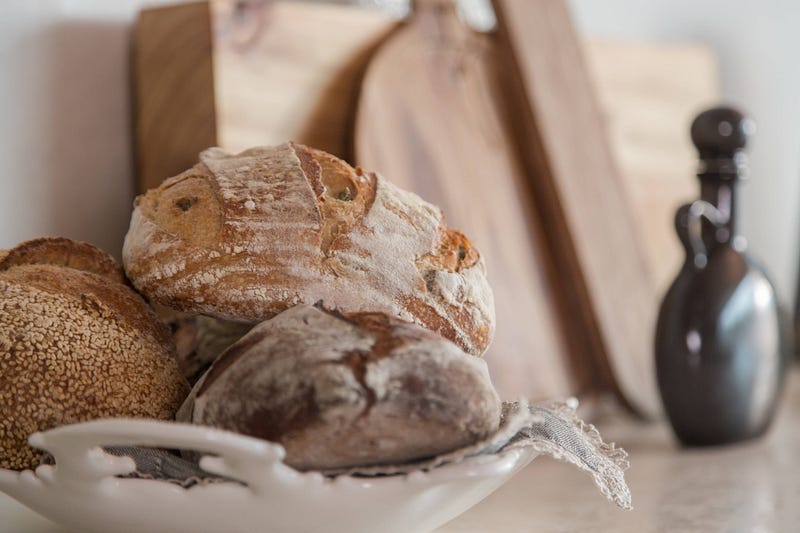
What I can confirm is that it left a sour taste in my mouth.
This is a very new trend in Europe. And while I do not mind paying for good food, I balk at the concept of paying for bread, unless it’s a sandwich. I would prefer it was kneaded into the overall price experience.
Two diners, 8 Euro. For bread. Plus a 5 euro cover charge each. 18 euros before I opened the menu. It’s mental. And “Sorry sir, we do not do tap water.” In other words, if you are near the main canals or St. Marks Square, that means — we are fleecing you by screwing the cap off an 18 cents bottle of water and charging you 5 euros, sir.
Isn’t tap water a human right? For wine I can live with it, it needs to be stored correctly, etc. But water??
Now some eateries go out of their way to ‘earn’ the right to charge for bread and produce something homemade and delicious. But what about others who climb on the bandwagon, and cannot play an instrument?
What about sandwich shops? Do they charge for bread … twice?
On another occasion on the same trip, I got charged for sliced packet of bread. Along with a cover charge. If we are paying, can we start insisting on a specific bread or that it is warmed?
Admittedly Venice is atypical of the norm in Italy. Most Italian eateries put bread and grissini sticks as standard fare. Venice gets away with it because it’s a tourist mecca, and Americans don’t bat an eye. They far outnumber any other tourist ‘genre’ in Venice. And they feel cheated if they don’t overspend on ‘service’ and peripheral crap.
“But we don’t have 20% tipping like the USA does sir,” the manager extolled.
“True,” I reply, “That’s because we are not in America. We also don’t have chlorinated chicken, Donald Trump, 400 “E” numbers per square inch of food nor 2 tons of sugar in a loaf of bread, so should we start doing that too.”
I am always shocked at the service charge Americans stump up for practically anything. I spent roughly $ 13 000.00 dollars a year ON TIPPING. For food. I am in the food industry and ate out a minimum of twice a week with my family.
The word tip comes from the acronym “To Ensure Promptness” — TIP. And there are two schools of thought pertaining to tipping.
The first is that European aristocracy began tipping in the USA as a means to show they were more cultured than their American counterparts, and so a tipping ‘war’ ensued.
Americans did not want to be outdone.
Alternatively, wealthy Americans went to Europe and came back having noted the ‘serf vs. landowner’ arrangement of giving a portion of what you farmed, produced, or made, to the landowner. Americans saw this as a form of tipping and subsequently started tipping to show off after their trip to Europe.
The second reason is far more sinister. It was a continuation of slavery after abolition. Free men found it hard to find work and often took on menial laborer positions like waiters or worked on trains for zero wages, only tips. It is a Southern custom and has spread to the North.
So much so in fact that Georgia declared it “Commercial Bribery” in the legislature in 1915 and outlawed it. But despite this, it grew because restaurant owners realized they could utilize it to augment salary.
And it works. A friend of mine owns a hugely successful restaurant in Atlanta that has an annual tip pool of 3.2 million dollars a year. Nobody working there is remotely interested in the hourly wage. It’s a pittance compared to the tip money.
When I arrived in the USA tipping was 10%. On a recent trip in 2021, to the same State, it was sniffed at if under 20%. The service was not all that prompt, or satisfactory, either. That is a 10% increase in a few years. I very much doubt any unskilled laborer-related workforce has seen that sort of increase in wage packets. If anything, it’s probably dropped.
I hear of restaurants looking to increase tips to 25% of the bill. Where will it end?
If this increased percentage was applied to personal income tax, Americans would hit the roof. And yet if done, the country could afford a social welfare system, repair its infrastructure and mend its 15 000 damaged dams. But Americans would never agree to this.
So why do they accept such high levels of tipping on luxury items like dining out and laundry services?
Americans eat out a lot more than most nations. And I think the waiters are wagging more than just the tiger here. But the real winners are the restaurant owners, of which I was one. If you have a top restaurant, you can pay base wages with the knowledge that tips will sustain the staff.
Surely we have reached a point now where business owners must start remunerating staff properly. Try hiring restaurant staff in Australia for a base salary. You won’t find the staff at all. Australia pays its workforce well, and consequently, the standard of living is high. As with Sweden, Norway, and Denmark. And they are always in the top countries for happiness to live in.
Tipping in the UK is increasing though, and it too is starting to break through the long-accepted 10% mark. Many restaurants are putting a mandatory 12% on tables of 6 or more, on the bill. It’s a slippery slope.
And if you get poor service, the argument with management is frankly, not worth it. The customer is made out to feel like Scrooge.
The UK also has a “volunteer mentality”. Its governments expect people to volunteer to help in key industries (such as the RNLI sea rescue), while they rake off huge profits and support big business. Volunteering is a good thing. Giving back to the community is wonderful, but should not be expected so that big business can benefit. The NHS and Fire Brigades (First Responders) would collapse if it were not for volunteer workers.
It’s just wrong.