
ENVIRONMENT. ECOLOGICAL AWARENESS
My Fight Against Thailand’s Plastic Wastage
Trying your best in a country that seems to be a hopeless case in terms of environmental consciousness
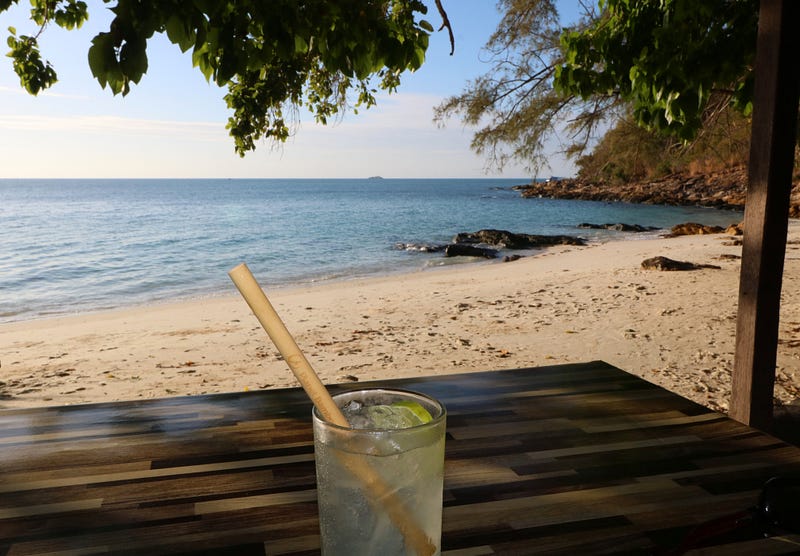
I mean seriously. Have they never heard anything about our world drowning in plastic? I guess no. Because Thailand is swimming in plastic, for sure. They still serve food in a plastic box with a plastic spoon wrapped in plastic and hand it to you in another plastic bag.
Aaaah.
This is something I’ve been working on so hard in the last few years. To reduce my plastic consumption as much as possible. It works pretty well in Germany. There I actually need to buy plastic bags for the trash bin because I don’t get anywhere anything in plastic bags.
In Namibia, it works as well. Since about a year you’ll also have to pay for plastic bags in stores if you want one.
But it is sheer impossible in Thailand. It’s like a lost fight before you even started. But I knew this. I’ve lived here for almost a year in 2019. I had my reusable shopping bags always with me. I had wooden chopsticks and bamboo straws in my pocket. I learned the words “no bag please” in Thai.
I had even found a “refill station” where I bought everything from cornflakes, dried fruits, and oil to soap and shower gel — in my own jars and containers.
But now, coming back after almost two years of pandemic life it seems so much worse. It seems like a lost case. Or maybe I just forgot how hard I fought every day trying to avoid carrying seven plastic bags in each other.
The fight against ignorance and lack of knowledge
I just ordered a drink at the bar. I’ve stayed here for two days now. I’ve ordered every single drink since I arrived with the add-on “please no straw”. 50 percent of my drinks arrived with a plastic straw. Thanks for the effort.
It’s not that they don’t understand me. The waiters at this beach resort speak fluent English. But it’s so in their habits to put a straw in every single drink they’re serving that they simply forget it. Or decide it’s stupid, my request.
They simply don’t understand me. Or the problem.
I don’t think there is something like environmental education happening in the country. I strongly doubt it at least.
My mom didn’t understand why straws are such a problem. She never drinks with a straw and probably hadn’t had one in her hands in the last 10 years.
Well, first of all, you don’t drink cold drinks. You don’t drink anything with ice cubes in it. Plus, you don’t go out. Especially here in Thailand, there is no drink being served without a straw. Except for beer.
So, that is why I carry two bamboo straws with me. Always.
Every step counts
I might not seem like a climate activist but I’m just trying to do my part in saving the planet. By trying to avoid using plastic as much as possible I do believe I can achieve something.
Every step counts.
While I do know, the pandemic was about 10 steps backward in terms of sustainable living on our earth I’m not giving up.
Now, we do use more plastic gloves than ever. One-time use of course. And most of those gloves do not end up in a recycling station. Unfortunately.
We wear masks, day in and day out. We drop them from our pockets, let them be blown off by the wind, or just throw them out in the wind. Because out of our sight means out of our lives, right?
Unfortunately, this is not true.
But nobody seems to care about our environment anymore. While we’re all so focused on trying to avoid getting any skin contact with the virus we are layering up in plastic. It’s ridiculous.
Here I am, paddling through the ocean. Collecting plastic bags, plastic straws, and recently also surgical masks out of the water. I’ve fallen once or twice into the ocean while trying so desperately to pick up that piece of trash with my paddle.
I collect the trash because I believe every piece of plastic I picked from the ocean is one piece less a turtle could feed on. It’s one piece of trash less ending up in a fish stomach. And it does count.
I do pick up trash while believing I’ll find some recycling station, a trash bin, or something where I can drop the plastic waste afterward. I’ve done that for years already. Even when I had no choice but to burn all the trash afterward and almost burned down a village in Ghana.
There has to change something in our minds. Rather sooner than later. And the developed countries should lead by example. And we shouldn’t throw all our environmental awareness out of the window as soon as we travel to a third-world country.
REDUCE the amount of trash you’re producing.
REUSE whatever can be used again.
RECYCLE the rest.
Lead by example. Do the effort. Avoid producing trash. Avoid using plastic. Carry reusable shopping bags with you. Say no to the plastic straw. Get your takeaway food in a Tupperware box.
There are so many ways to do your own little bit of contribution to a more environmentally friendly lifestyle which will lead to a hopefully more sustainable future.
Here are my five items for a sustainable life
- Bamboo straw
- Wooden chopsticks
- Drinking bottle
- Tupperware box
- Reusable shopping bags
There are for sure many more items one can use to reduce plastic consumption. But this is the first step. These items I always have with me despite having a limited amount of luggage I can travel with. I move a lot. I fly a lot. With little baggage.
But not without these items.
Find a refill station
There is a lot more one can do to reduce waste. First of all, find out of there is a refill station in your neighborhood. If yes, check out which products they do have and most probably you can get oils, soaps and washing liquids, cereals, dried foods, and other snacks without ever needing to rip open a plastic packaging again.
It might not be your favorite brand of shampoo. But it’ll wash your hair.
It might not be the oil of your choice, but the food will taste great.
It might not be the exact cereal you used to eat, but it’s still cereal.
It might not be the washing powder you’re used to, but your laundry will get clean.
And, you reduced your usage of plastic enormously!
Final words
This might sound overwhelming to you if you’ve never done any of it. Or it might sound like nothing if you’re part of the zero waste movement. But it doesn’t matter on which side you are.
Start from your point in life and begin with one step. Buy reusable shopping bags and do not get any more plastic shopping bags. And after doing that for a few weeks, go ahead to the next change.
And step by step you’ll reduce more and more plastic out of your everyday life.
And most importantly, others will see this. They might ask you questions, be friendly, kind, and respectful when explaining your behavior. Encourage and motivate others to do the same without pointing at them.
Work yourself up. Step by step. There’s always one more thing you can do to help our planet get greener again. Don’t feel overwhelmed. Think on a small scale. Pick up that coke can and drop it into the nearest bin. Smile, because you freed your neighborhood from one more piece of trash.
Talk about it. Encourage others. Don’t give up.
Thank you.
Join my email list here if you would like to read more essays or sign up for the Medium membership to receive unlimited access to my and other writer’s stories out here (I will receive a commission fee in return).


