avatarMark Tulin

Free AI web copilot to create summaries, insights and extended knowledge, download it at here

2286

Abstract

ots to visit in downtown Santa Barbara. The garden features over 75 different tree and plant species, a koi pond, and a sensory garden. This winding tree looks like it is all roots, and I often stop to analyze its convoluted shape— trying to make sense of nature.</p><p id="e00e">This tree is called the Australian Tea Tree. And those are not roots but trunks. It thrives along the coast, and its dried leaves can be used to make tea.</p><figure id="508b"><img src="https://cdn-images-1.readmedium.com/v2/resize:fit:800/1*6mry5QoMwmREqtp6G5WXOA.jpeg"><figcaption>A photo of a Giant Sequoia at Yosemite by <a href="undefined">Mark Tulin</a></figcaption></figure><p id="dd5f">You’d think a sequoia would have massive roots about a block long, but that’s not the case. The roots only go down 6–12 feet. Despite this, sequoias rarely fall over.</p><p id="1df2">These babies are the longest-living tree species, and they keep growing and growing, partially due to their very effective root system.</p><p id="2786">And thanks to its sturdy foundation, this Empire State Building of trees keeps us looking up.</p><figure id="82cd"><img src="https://cdn-images-1.readmedium.com/v2/resize:fit:800/1*JcYwpW6WQXB7uBl0Dgqxgg.jpeg"><figcaption>Photo of a Philadelphia tree after a tornado by <a href="undefined">Mark Tulin</a></figcaption></figure><p id="2b00">Before moving to California in 2012, I took a picture of this sad sight in my old neighborhood. A tornado hit Philadelphia — which is a rarity. It uprooted this poor Polar, whose botanical name is “Eastern Cottonwood.”</p><p id="e9c8">This picture illustrates the complexity of the tree’s root system. Its roots can reach 15 feet in diameter and absorb 200 gallons of water daily.</p><p id="242b">Roots symbolize stability; when a tree falls over, I feel part of my world is unstable.</p><p id="b580">Trees serve the vital purpose of cleaning the air and supplying a source of beauty amidst the city’s brick and mortar. So whenever I see a down tree, I think we should have a funeral for the poor thing. I’d invite all the tree lovers, birds, and other life forms. A squirrel could even give the eulogy.</p><p id="ee69">May you rest in peace, dear tree.</p><p id="ddd3">Please read my other recent tree posts: <a href="https://readmedium.

Options

com/the-dream-tree-a8244ddc4a39">The Dream Tree</a>,<a href="https://readmedium.com/palm-shadows-1711077afa52"> Palm Shadows</a>, and <a href="https://readmedium.com/palm-trees-in-california-faf4bf27b12e">Palm Trees in California.</a></p><div id="529b" class="link-block"> <a href="https://readmedium.com/the-dream-tree-a8244ddc4a39"> <div> <div> <h2>The Dream Tree</h2> <div><h3>Its story and legacy</h3></div> <div><p>medium.com</p></div> </div> <div> <div style="background-image: url(https://miro.readmedium.com/v2/resize:fit:320/1*[email protected])"></div> </div> </div> </a> </div><div id="0c73" class="link-block"> <a href="https://readmedium.com/palm-shadows-1711077afa52"> <div> <div> <h2>Palm Shadows</h2> <div><h3>Haiku</h3></div> <div><p>medium.com</p></div> </div> <div> <div style="background-image: url(https://miro.readmedium.com/v2/resize:fit:320/1*[email protected])"></div> </div> </div> </a> </div><div id="869e" class="link-block"> <a href="https://readmedium.com/palm-trees-in-california-faf4bf27b12e"> <div> <div> <h2>Palm Trees in California</h2> <div><h3>A symbol of life in transition</h3></div> <div><p>medium.com</p></div> </div> <div> <div style="background-image: url(https://miro.readmedium.com/v2/resize:fit:320/1*[email protected])"></div> </div> </div> </a> </div><p id="5dee">© 2021 Mark Tulin</p><p id="4922"><a href="undefined">Mark Tulin</a></p><p id="77fb"><b>If you enjoyed this article, please use my affiliate link to <a href="https://mftulin.medium.com/membership">become a member today</a>. You’ll get unlimited access to everything I write, plus everything else on Medium. I’ll receive a portion of your $5 monthly subscription fee at no additional cost to you.</b></p></article></body>

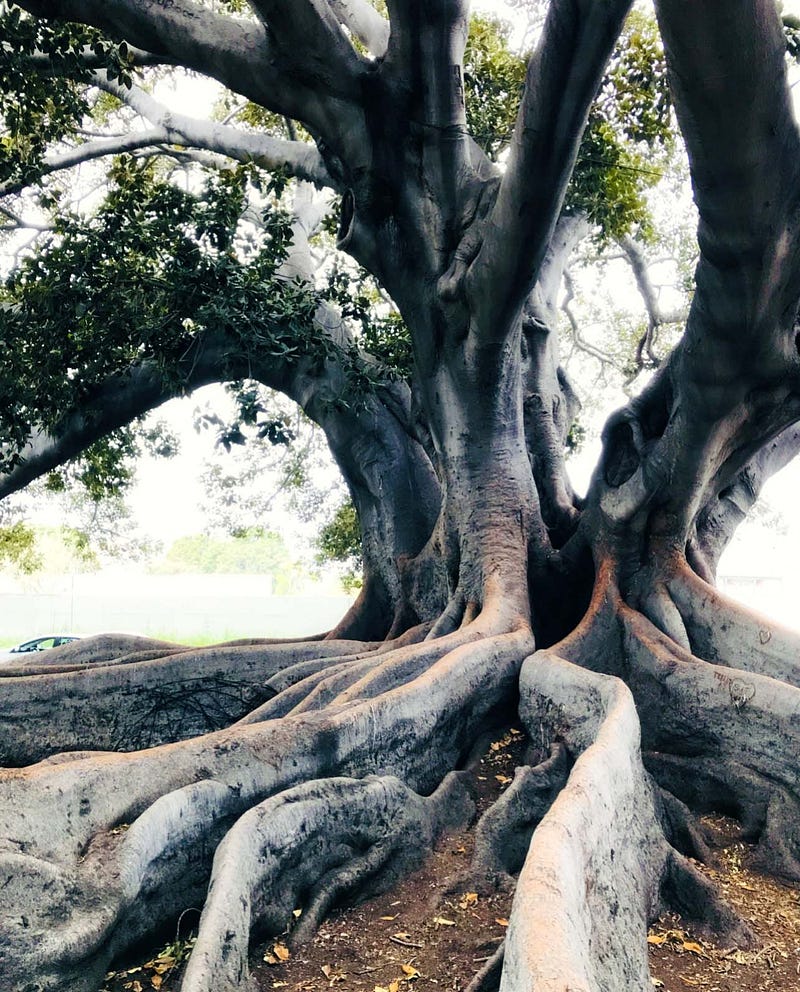
Photo of Moreton Bay Fig Tree in Santa Barbara by Mark Tulin

My Favorite Tree Roots

Photos and reflections

A tree root usually grows underground, secures the plant, absorbs minerals and water from the soil, and stores food. However, some tree roots grow above the ground in humid climates or when weather erodes the soil. An example is my favorite tree root, the Moreton Bay Fig in Santa Barbara, California. I liken its massive roots to dinosaur feet.

It has a famous history as well.

A seaman visiting Santa Barbara In 1876 presented a seedling of an Australian Moreton Bay Fig tree to a local girl who planted it at 201 State Street. After the girl moved away a year later, her girlfriend, Adeline Crabb, transplanted the tree to the corner of Montecito and Chapala streets. The tree became the biggest Moreton Bay Fig in the United States. The widest spread of the branches is 198 feet (60 m). The trunk diameter above the buttress roots is 12.5 feet.

It could provide shade for an entire city block.
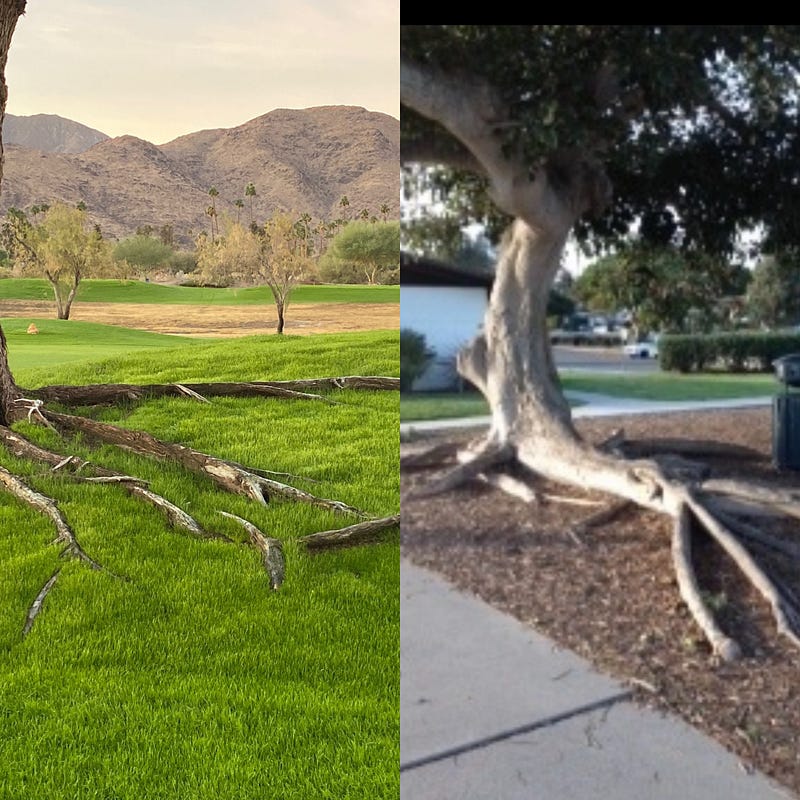
Tree Roots in Palm Springs by Alice and Mark Tulin

I call the tree root on the left Desert Roots, located on a Palm Springs golf course — and who knows how many guys in PING hats plunked balls off its bark.

The one on the right, I call Yoga Tree. When I see its roots, I think of outstretched legs, hands on the ground, and a torso stretched into an upward dog. So, I figure, if a tree can do yoga, so can I.
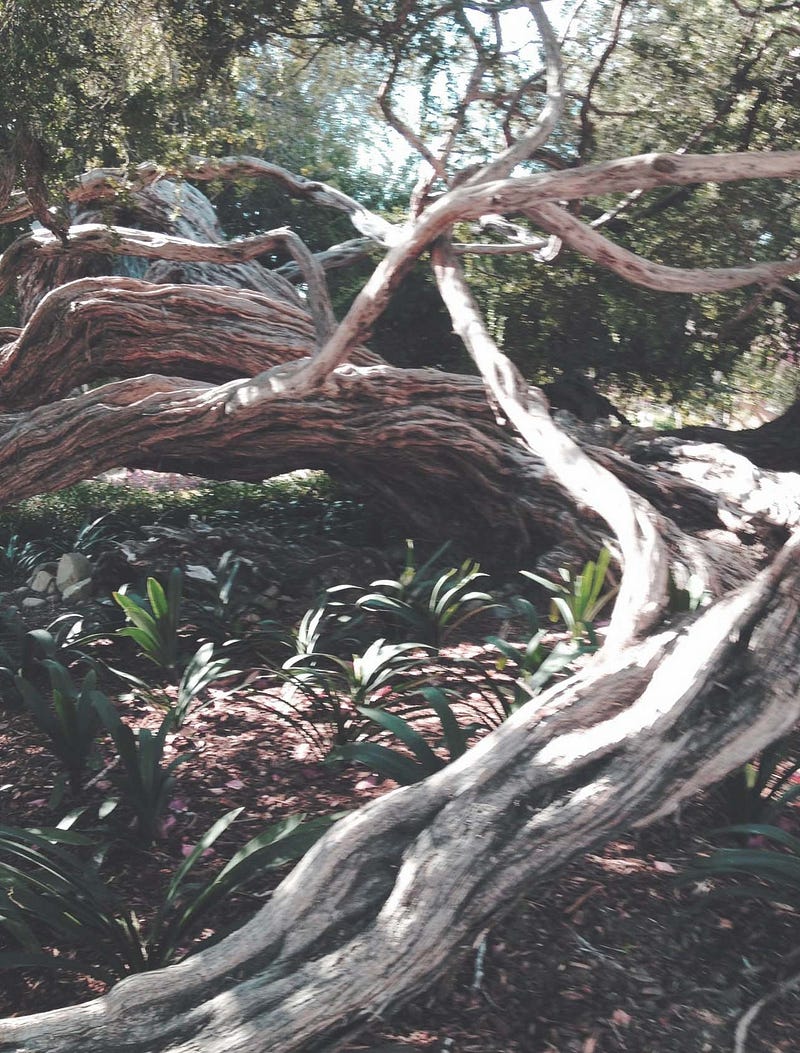
Tree trunks at the Alice Keck Park in Santa Barbara by Mark Tulin

I found this beauty in the Alice Keck Park Memorial Garden, one of my favorite spots to visit in downtown Santa Barbara. The garden features over 75 different tree and plant species, a koi pond, and a sensory garden. This winding tree looks like it is all roots, and I often stop to analyze its convoluted shape— trying to make sense of nature.

This tree is called the Australian Tea Tree. And those are not roots but trunks. It thrives along the coast, and its dried leaves can be used to make tea.
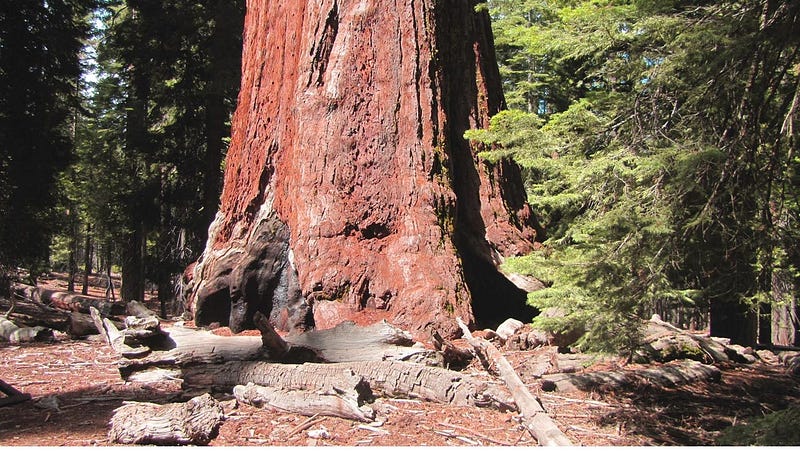
A photo of a Giant Sequoia at Yosemite by Mark Tulin

You’d think a sequoia would have massive roots about a block long, but that’s not the case. The roots only go down 6–12 feet. Despite this, sequoias rarely fall over.

These babies are the longest-living tree species, and they keep growing and growing, partially due to their very effective root system.

And thanks to its sturdy foundation, this Empire State Building of trees keeps us looking up.
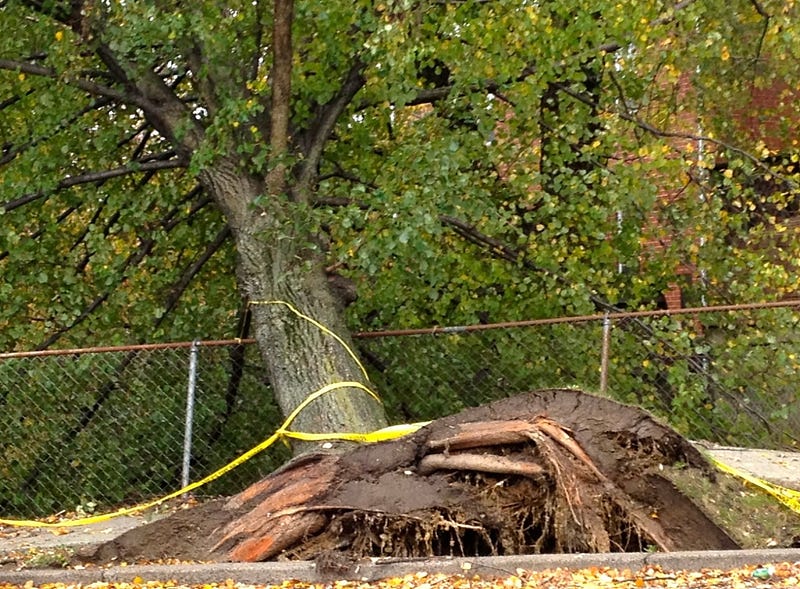
Photo of a Philadelphia tree after a tornado by Mark Tulin

Before moving to California in 2012, I took a picture of this sad sight in my old neighborhood. A tornado hit Philadelphia — which is a rarity. It uprooted this poor Polar, whose botanical name is “Eastern Cottonwood.”

This picture illustrates the complexity of the tree’s root system. Its roots can reach 15 feet in diameter and absorb 200 gallons of water daily.

Roots symbolize stability; when a tree falls over, I feel part of my world is unstable.

Trees serve the vital purpose of cleaning the air and supplying a source of beauty amidst the city’s brick and mortar. So whenever I see a down tree, I think we should have a funeral for the poor thing. I’d invite all the tree lovers, birds, and other life forms. A squirrel could even give the eulogy.

May you rest in peace, dear tree.

Please read my other recent tree posts: The Dream Tree, Palm Shadows, and Palm Trees in California.

© 2021 Mark Tulin

Mark Tulin

If you enjoyed this article, please use my affiliate link to become a member today. You’ll get unlimited access to everything I write, plus everything else on Medium. I’ll receive a portion of your $5 monthly subscription fee at no additional cost to you.

Trees
Roots
Nature
Beauty
Photography
Recommended from ReadMedium