avatarAnthony Mersino

Free AI web copilot to create summaries, insights and extended knowledge, download it at here

3777

Abstract

the right thing. And handoffs create problems, a theme we will see in the next graphic as well.</p><figure id="2db1"><img src="https://cdn-images-1.readmedium.com/v2/resize:fit:800/0*TPD8wgRDsQtq3OBk.png"><figcaption>Source: What is Agile, <a href="https://blog.crisp.se/wp-content/uploads/2013/08/20130820-What-is-Agile.pdf">https://blog.crisp.se/wp-content/uploads/2013/08/20130820-What-is-Agile.pdf</a></figcaption></figure><h1 id="1af2">#5 — Minimize Handoffs</h1><p id="5c1f">Summary: Handoffs represent one of the biggest sources of risk and information loss.</p><p id="5e77">Traditional software development includes a lot of handoffs from one specialist group to another. Unfortunately, many organizations continue this bad practice even when trying to use agile ways of working.</p><p id="84a4">This diagram comes from a video by Kniberg’s colleague at Crisp, Jimmy Janlen. Janlen describes a 50% knowledge loss at each handoff, a figure that he is quoting from Mary and Tom Poppiendick.</p><figure id="2dc3"><img src="https://cdn-images-1.readmedium.com/v2/resize:fit:800/0*BPLfZQIw2hzuVHFw.png"><figcaption>Source: YouTube — Brief Explanation of Agile, This is Agile, <a href="https://youtu.be/Tj-lavaMkxU">https://youtu.be/Tj-lavaMkxU</a></figcaption></figure><h1 id="f261">#6 — Making Sense of the MVP (Minimum Viable Product)</h1><p id="1db2">As you are building, you want to build in such a way that you maximize feedback and build only what is needed. The term Minimum Viable Product means many different things and people are often confused. Henrik does a great job of explaining it with this diagram and the Youtube video.</p><p id="1b57">Key Idea: Build so that you maximize feedback and can course correct. MVP can mean many different things and people are often confused — Kniberg explains it well with the diagram and YouTube Video.</p><figure id="98ff"><img src="https://cdn-images-1.readmedium.com/v2/resize:fit:800/0*Hxuc9ebhYm-afI-F.png"><figcaption>Source: YouTube, Making Sense of MVP (Minimum Viable Product), <a href="https://youtu.be/0P7nCmln7PM">https://youtu.be/0P7nCmln7PM</a></figcaption></figure><h1 id="770e">#7 — Cannonball vs. Missile</h1><p id="f8a5">Henrik describes traditional ways of development as a cannonball while agile is more like a missile that constantly adjusts course until it hits the desired target.</p><p id="001c">Key Idea: The cannonball or plan-driven approach works great in situations where the customer knows exactly what they want, the team knows how to build it and nothing is likely to change.</p><figure id="f45b"><img src="https://cdn-images-1.readmedium.com/v2/resize:fit:800/0*5AVq_I8wNXQlnyCE.png"><figcaption></figcaption></figure><figure id="d942"><img src="https://cdn-images-1.readmedium.com/v2/resize:fit:800/0*_nHE5XA70pUuUwTD.png"><figcaption>Source: What is Agile, <a href="https://blog.crisp.se/wp-content/uploads/2013/08/20130820-What-is-Agile.pdf">https://blog.crisp.se/wp-content/uploads/2013/08/20130820-What-is-Agile.pdf</a></figcaption></figure><h1 id="1f93">#8 — Forecasting a Release</h1><p id="c3b7">Henrik simplifies the forecasting process in agile projects with what I like to call, <a href="https://readmedium.com/creating-reality-based-forecasts-in-agile-projects-64bbe71c1033">reality-based forecasting</a>. Using anything other than the team’s velocity is only going to lead to problems or set the team up for failure.</p><p id="e995">Key Idea: The most honest and realistic forecasts are based on the team’s actual velocity and their estimate of the size of the backlog. Favorite quote from the video: “If your organization doesn’t like truth and honesty, it probably won’t like agile.”</p><figure id="2c47"><img src="https://cdn-images-1.readmedium.com/v2/resize:fit:800/0*TnpE-c

Options

dQz_an1WCH.png"><figcaption>Source: YouTube Product Owner in a Nutshell, <a href="https://youtu.be/502ILHjX9EE">https://youtu.be/502ILHjX9EE</a></figcaption></figure><h1 id="0224">#9 — Long Projects Tend to Get Longer</h1><p id="33d7">Key Idea: The longer your project, the more likely you will be to have scope creep and get interrupted, which will create a vicious cycle.</p><p id="ba68">Keep your projects as short as possible. Break long initiatives down into small manageable chunks and then get each one done as quickly as possible.</p><figure id="1aaf"><img src="https://cdn-images-1.readmedium.com/v2/resize:fit:800/0*gMxRujhLyIEjLz_N.png"><figcaption>Source: What is Agile, <a href="https://blog.crisp.se/wp-content/uploads/2013/08/20130820-What-is-Agile.pdf">https://blog.crisp.se/wp-content/uploads/2013/08/20130820-What-is-Agile.pdf</a></figcaption></figure><h1 id="3214">#10 — Kanban</h1><p id="f7e1">This diagram from Henrik and the videos that explain how to use it has been very helpful to me over the years and something I have shared multiple times.</p><p id="a82d">Key Idea: There are lots of ways to leverage Kanban to organize and improve your process. Kniberg provides suggestions on how to set up your Kanban board with ideas that range from the simple to the complex.</p><figure id="40ae"><img src="https://cdn-images-1.readmedium.com/v2/resize:fit:800/0*CmcT5noXOo7irQ05.png"><figcaption>Source: Crisp Blog, <a href="https://blog.crisp.se/2009/11/16/henrikkniberg/kanban-kick-start-example">https://blog.crisp.se/2009/11/16/henrikkniberg/kanban-kick-start-example</a></figcaption></figure><p id="ee9d">This is also explained in detail in Kniberg’s YouTube video, Kanban and Scrum Making the Best of Both. <a href="https://youtu.be/DiblGG_Ctio">https://youtu.be/DiblGG_Ctio</a></p><p id="ffe1">So that’s it. I love the diagrams and I thank Henrik Kniberg and his team for creating them to help people better understand and use agile ways of working.</p><p id="828c">In <a href="https://readmedium.com/there-is-no-spotify-model-for-scaling-agile-a062e4a9c6dc">my related post</a>, I take a look at one of the most widely imitated images from Spotify and I will share the reasons I believe that image is leading many people astray by <a href="https://readmedium.com/there-is-no-spotify-model-for-scaling-agile-a062e4a9c6dc">adopting the Spotify Model</a>.</p><p id="1074">You can <a href="https://drive.google.com/file/d/1fjM1ijQoFkivETDjhGs-wq8lJBSczuzd/view?usp=sharing">download the pdf version here</a>.</p><p id="8fe5"><i>Anthony Mersino is the founder of Vitality Chicago, an Agile Training and Coaching firm devoted to helping Teams THRIVE and Organizations TRANSFORM. He is also the author of two books, <a href="https://www.amazon.com/Agile-Project-Management-2nd-Success/dp/B0BWHLF796/ref=sr_1_4?qid=1678677970&amp;refinements=p_27%3AAnthony+C+Mersino&amp;s=books&amp;sr=1-4&amp;text=Anthony+C+Mersino">Agile Project Management</a>, and <a href="https://amzn.to/1OEPoPY">Emotional Intelligence for Project Managers</a>.</i></p><h1 id="a730">If you enjoyed this post, you might be interested in the following infographics:</h1><ul><li><a href="https://readmedium.com/downloadable-agile-principles-scrum-tip-sheet-6710ba0da2c3">Downloadable Agile Principles & Scrum Tip Sheet</a></li><li><a href="https://readmedium.com/agile-terminology-cheat-sheet-902cf0ae9422">Agile Terminology Cheat Sheet</a></li><li><a href="https://readmedium.com/most-agile-transformations-will-fail-828bb2174b0d">Most Agile Transformations Will Fail</a></li><li><a href="https://readmedium.com/5-key-differences-between-agile-adoption-agile-transformation-b24049faef6c">5 Key Differences Between Agile Adoption & Agile Transformation</a></li></ul></article></body>

My Favorite Agile Illustrations from Henrik Kniberg of Spotify Fame

As a coach at Spotify, Henrik Kniberg has created some terrific illustrations to help people understand agile concepts.
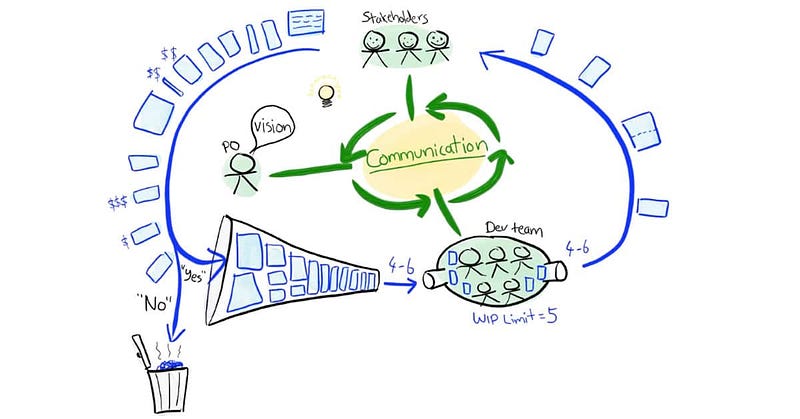
Most people in the Agile community are familiar with Spotify and have read articles or watched videos about agility at Spotify. Some have even mistakenly mimicked the language used at Spotify in hopes it might make them more agile. We can thank Henrik Kniberg for all that we know about Spotify, as Kniberg has been a prolific author and video producer since even before he worked with Spotify.

What I really appreciate about Henrik are the great agile illustrations he has created. A picture is worth a thousand words. As a trainer and coach, I appreciate great graphics that help convey topics that would be hard to explain. Many of my personal favorite images come from Henrik Kniberg.

Without sounding too much like hero-worship, here are my favorite agile diagrams from Henrik Kniberg and his colleagues at Spotify.

#1 — Maximize Value not Output

Key Idea: Focus on producing things that are valuable, not just creating more stuff.

Teams will always have more work than they can complete and more output isn’t necessarily better. The Standish Group claims that 64% of features in applications are rarely or never used — this represents waste and opportunity cost.
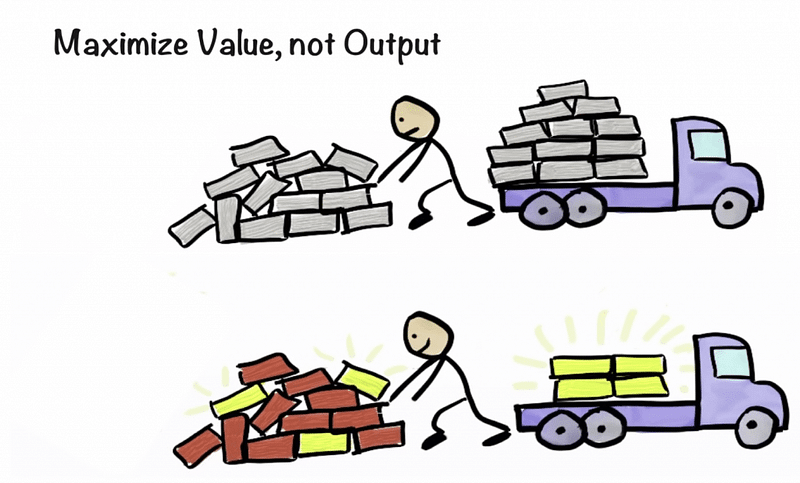
Source: What is Agile, https://blog.crisp.se/wp-content/uploads/2013/08/20130820-What-is-Agile.pdf

#2 — Product Owners Need to Say No

Key Idea: An important part of the Product Owner role is to say “No” so that backlogs don’t just keep growing. A backlog with requests that are over 6 months old is not very agile!

I tell everyone to watch this video! If I show this video to a new agile team, the idea of someone saying no usually resonates with the team.
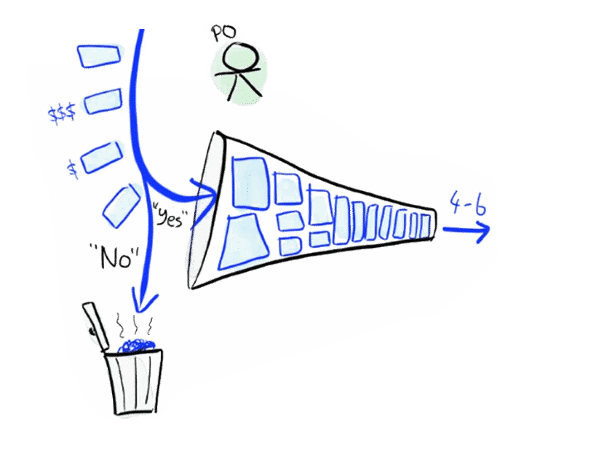
Source: YouTube Product Owner in a Nutshell, https://youtu.be/502ILHjX9EE

#3 — Backlog Refinement is Simply Communication

Key Idea: Communications is the key. In product backlog refinement, the team talks directly to the users, customers or stakeholders to find out what they need. It seems simple but many people are not accustomed to working this way.
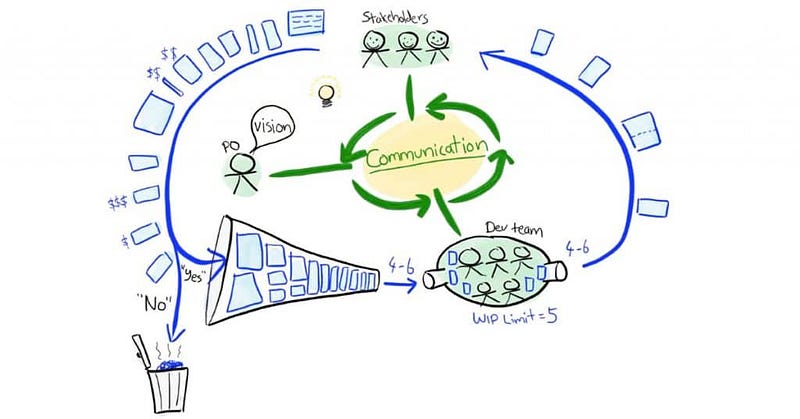
Source: YouTube Product Owner in a Nutshell, https://youtu.be/502ILHjX9EE

#4 — Minimize the Distance Between Maker and User

Key Idea: Minimize the distance (and time) between the people making the software and those using the software. Short feedback loops are essential to building the right thing.

This builds on the previous item. Henrik talks about the need to minimize the distance between the people making the software and those using the software. Short feedback loops are essential to building the right thing. And handoffs create problems, a theme we will see in the next graphic as well.
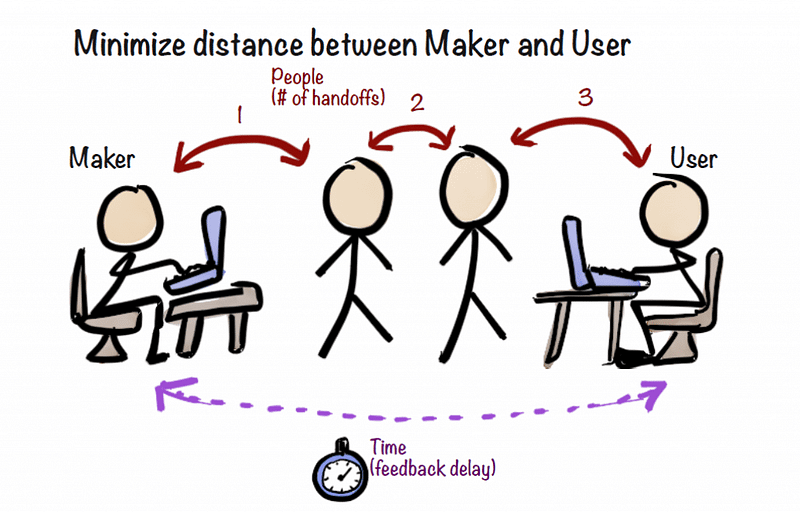
Source: What is Agile, https://blog.crisp.se/wp-content/uploads/2013/08/20130820-What-is-Agile.pdf

#5 — Minimize Handoffs

Summary: Handoffs represent one of the biggest sources of risk and information loss.

Traditional software development includes a lot of handoffs from one specialist group to another. Unfortunately, many organizations continue this bad practice even when trying to use agile ways of working.

This diagram comes from a video by Kniberg’s colleague at Crisp, Jimmy Janlen. Janlen describes a 50% knowledge loss at each handoff, a figure that he is quoting from Mary and Tom Poppiendick.
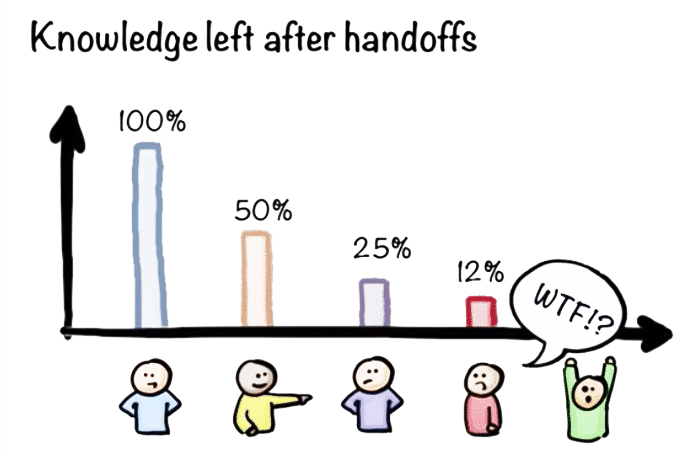
Source: YouTube — Brief Explanation of Agile, This is Agile, https://youtu.be/Tj-lavaMkxU

#6 — Making Sense of the MVP (Minimum Viable Product)

As you are building, you want to build in such a way that you maximize feedback and build only what is needed. The term Minimum Viable Product means many different things and people are often confused. Henrik does a great job of explaining it with this diagram and the Youtube video.

Key Idea: Build so that you maximize feedback and can course correct. MVP can mean many different things and people are often confused — Kniberg explains it well with the diagram and YouTube Video.
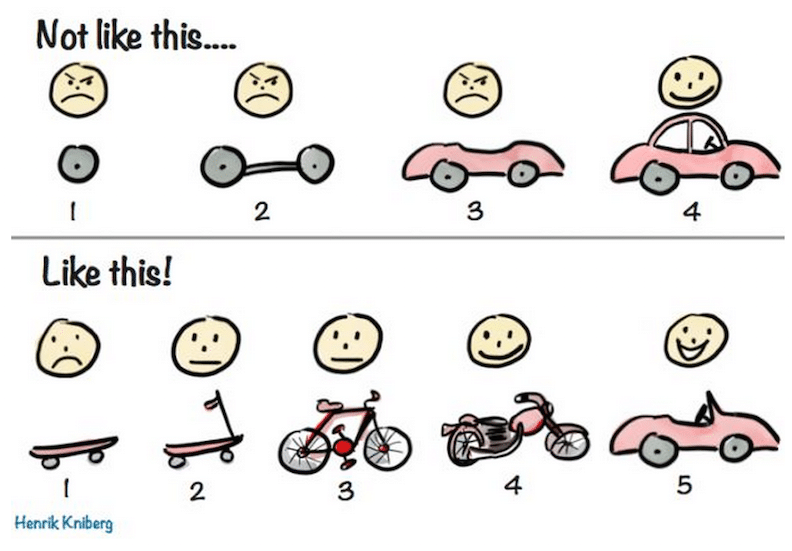
Source: YouTube, Making Sense of MVP (Minimum Viable Product), https://youtu.be/0P7nCmln7PM

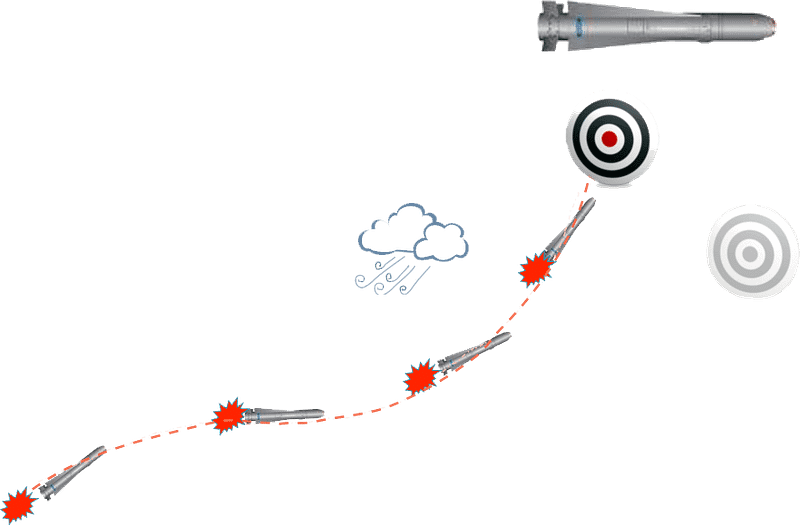
#7 — Cannonball vs. Missile

Henrik describes traditional ways of development as a cannonball while agile is more like a missile that constantly adjusts course until it hits the desired target.

Key Idea: The cannonball or plan-driven approach works great in situations where the customer knows exactly what they want, the team knows how to build it and nothing is likely to change.
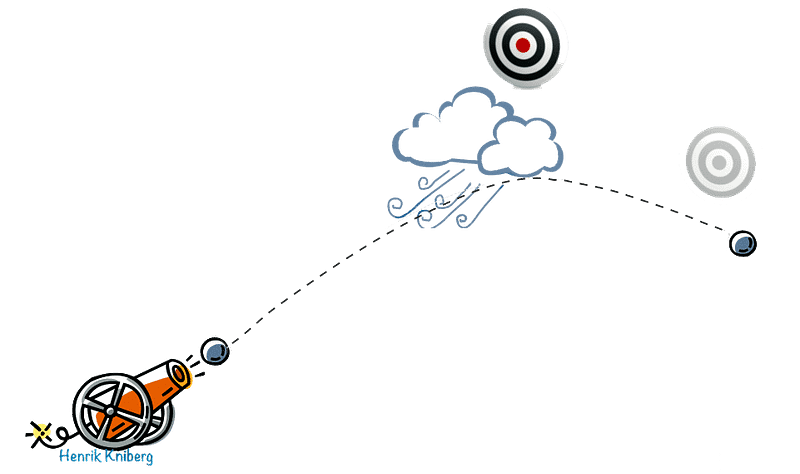
Source: What is Agile, https://blog.crisp.se/wp-content/uploads/2013/08/20130820-What-is-Agile.pdf

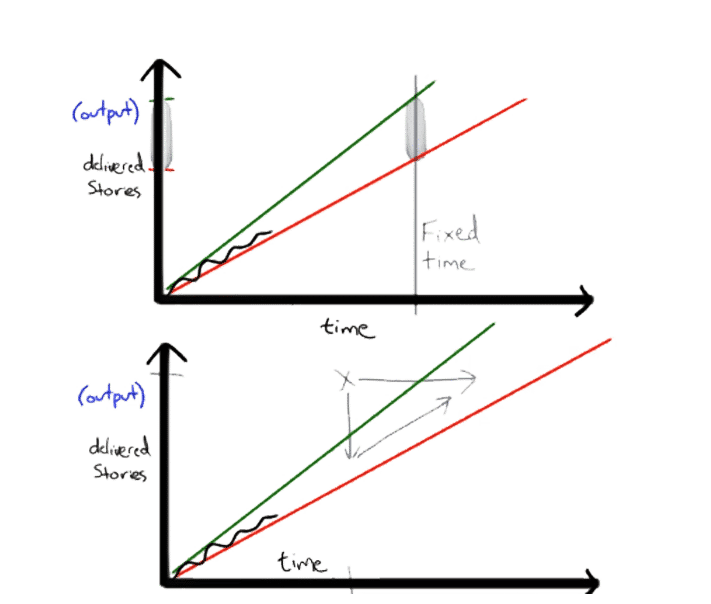
#8 — Forecasting a Release

Henrik simplifies the forecasting process in agile projects with what I like to call, reality-based forecasting. Using anything other than the team’s velocity is only going to lead to problems or set the team up for failure.

Key Idea: The most honest and realistic forecasts are based on the team’s actual velocity and their estimate of the size of the backlog. Favorite quote from the video: “If your organization doesn’t like truth and honesty, it probably won’t like agile.”
Source: YouTube Product Owner in a Nutshell, https://youtu.be/502ILHjX9EE

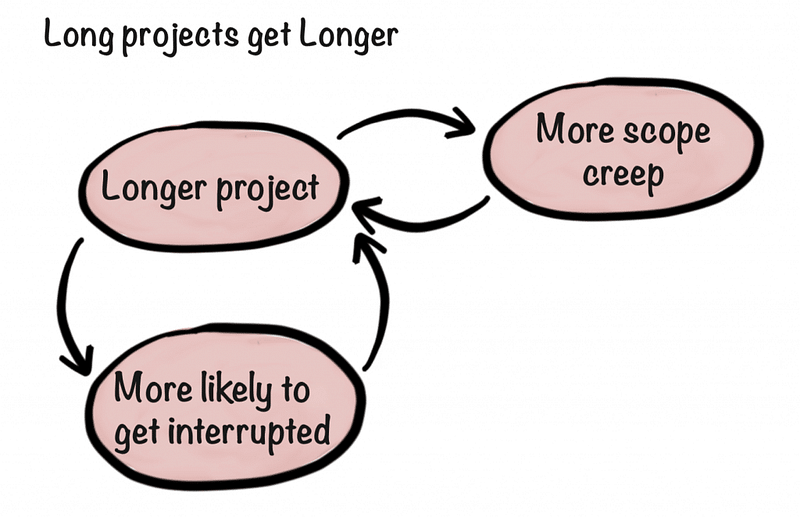
#9 — Long Projects Tend to Get Longer

Key Idea: The longer your project, the more likely you will be to have scope creep and get interrupted, which will create a vicious cycle.

Keep your projects as short as possible. Break long initiatives down into small manageable chunks and then get each one done as quickly as possible.
Source: What is Agile, https://blog.crisp.se/wp-content/uploads/2013/08/20130820-What-is-Agile.pdf

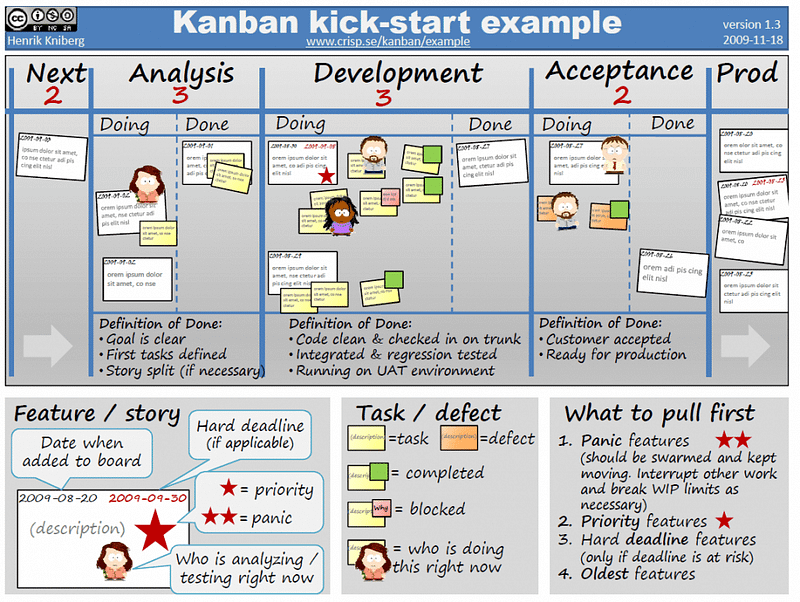
#10 — Kanban

This diagram from Henrik and the videos that explain how to use it has been very helpful to me over the years and something I have shared multiple times.

Key Idea: There are lots of ways to leverage Kanban to organize and improve your process. Kniberg provides suggestions on how to set up your Kanban board with ideas that range from the simple to the complex.
Source: Crisp Blog, https://blog.crisp.se/2009/11/16/henrikkniberg/kanban-kick-start-example

This is also explained in detail in Kniberg’s YouTube video, Kanban and Scrum Making the Best of Both. https://youtu.be/DiblGG_Ctio

So that’s it. I love the diagrams and I thank Henrik Kniberg and his team for creating them to help people better understand and use agile ways of working.

In my related post, I take a look at one of the most widely imitated images from Spotify and I will share the reasons I believe that image is leading many people astray by adopting the Spotify Model.

You can download the pdf version here.

Anthony Mersino is the founder of Vitality Chicago, an Agile Training and Coaching firm devoted to helping Teams THRIVE and Organizations TRANSFORM. He is also the author of two books, Agile Project Management, and Emotional Intelligence for Project Managers.

If you enjoyed this post, you might be interested in the following infographics:

Agile
Scrum
Spotify
Agile Mindset
Agile Project Management
Recommended from ReadMedium